Key Takeaways
- A serious RFQ for thermos bottle distributors should lock material, capacity, finish, logo method, and carton spec before sampling.
- Typical stainless thermos MOQ in China is 3,000 pcs per SKU, with 15-25 days for samples and 35-45 days for bulk after approval.
- Budget roughly USD 2.10-4.80 per unit FOB for standard 500-750 mL bulk thermos, depending on vacuum wall, coating, and decoration.
- Use PO line items for bottle, lid, packaging, test standard, and AQL so your distributor thermos order does not become a dispute later.
If you buy for outdoor retail chains or promo programs, the bottle is not the hard part. The hard part is getting a thermos that survives transit, prints cleanly, clears compliance, and still leaves margin after freight and rejects. That is where thermos bottle distributors get separated from casual resellers.
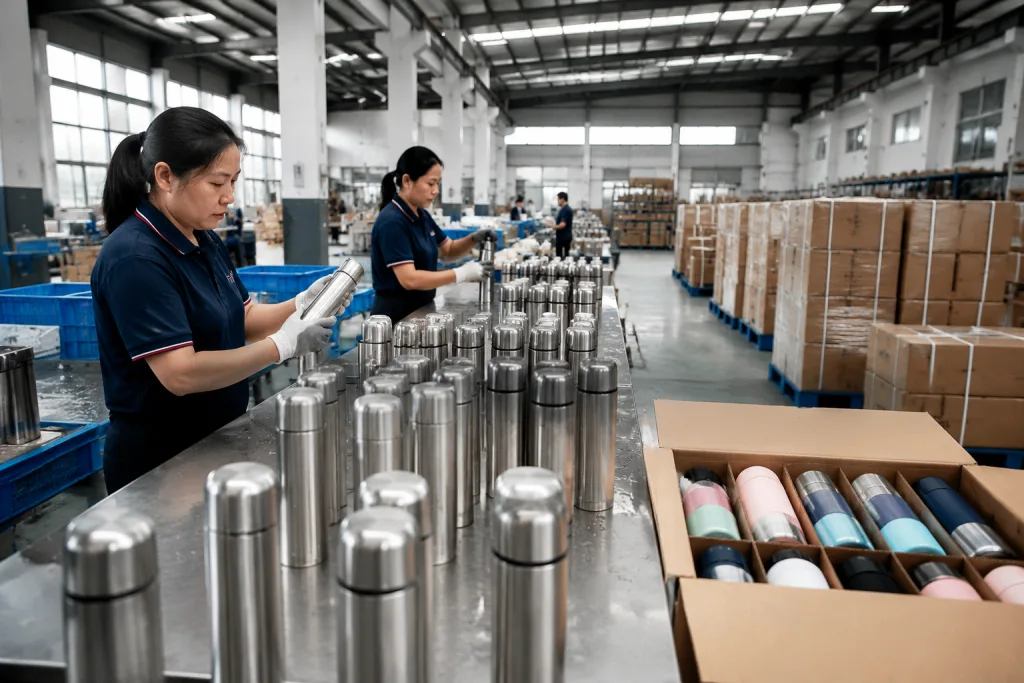
A solid program starts with a clean RFQ and ends with a bulk PO that leaves no room for argument. On our line in Zhejiang, we see buyers win by being specific: 500 mL or 750 mL, 18/8 steel, 0.5 mm inner wall, BPA-free lid, 1-color logo, 3,000 pcs MOQ, FOB Ningbo, and AQL 2.5 on appearance. QC pulled the sample twice after a buyer flagged a lid typo on the PO, and that saved a headache. If the spec is loose, the math does not work.
Start With the RFQ, Not the Sample
I’ll rewrite the section in-place, keep the HTML and structure intact, and tighten the wording so it sounds like a factory-side sales engineer.Most bad thermos orders start with a vague message: “Need stainless thermos, quote pls.” That is not an RFQ. If you are a thermos distributor or a buyer for a promo brand, the factory cannot price a job that has no specs. In Zhejiang and across China, the fast quotes come from factories that can map your brief to an existing body mold, lid platform, or coating line.
Your RFQ should lead with the commercial target. State the end market, annual volume, target retail or promo price, and whether you need a custom thermos, thermos promotional, or everyday bulk thermos SKU. Then lock the technical basics: capacity, dimensions, steel grade, wall thickness, insulation hours, logo area, and test requirements. If you want a thermos manufacturer to quote cleanly, ask for FOB Ningbo and CIF options in separate lines. A clear RFQ usually cuts 2-3 days of back-and-forth and takes sample revisions down from three rounds to one. We run this every week. The buyer flagged a PO typo once—“550 mL” instead of “500 mL”—and that one digit wasted a full sample cycle.
Use one line item per requirement in your RFQ:
- Body: 304 stainless, 0.5 mm inner / 0.4 mm outer
- Capacity: 500 mL or 750 mL
- Lid: screw lid, cup lid, or push-button lid
- Decoration: silk screen, laser engraving, or UV print
- Packaging: white box, gift box, or mailer
If you skip these details, you are not comparing supplier thermos quotes; you are comparing guesses. QC pulled the sample at 58°C after 12 hours and the math did not work, so the wrong spec stayed wrong until the buyer rewrote the RFQ.
Choose the Right Thermos Build
I’ll rewrite just the prose inside the existing tags, keep the structure intact, and tighten the language so it reads like a factory-side sales engineer wrote it.Thermos buyers often fixate on the logo and miss the bottle build. That is the wrong question. The body, vacuum gap, lid seal, and coating decide whether your distributor thermos order comes back with repeat POs or lands in the return pile. For an outdoor retail program, a 750 mL bottle with powder coat and a cup lid beats a glossy promo flask that scuffs after one weekend in the field.
For bulk programs, stay close to what the factory already runs on the line. A standard thermos factory in China may ship 80,000-150,000 units per month across several models, but that only works when you stick to proven tooling. Ask if the line uses 18/8 stainless steel, whether the inner wall sits at 0.4-0.5 mm, and if the vacuum hold target is 12-24 hours hot and 24-36 hours cold. We had one buyer flag a PO typo on wall thickness, and QC pulled the sample before it became a 3,000-piece headache.
Here is how we think about each build choice on a real order:
- Wall thickness: 0.4 mm outer / 0.5 mm inner is common for value lines; a heavier wall adds dent resistance, but the carton weight goes up fast.
- Finish: powder coat hides scuffs better than gloss; brushed steel looks clean, though it shows fingerprints on the packing table.
- Lid: PP lid keeps cost down; Tritan or stainless-accent lids lift the shelf price and usually need a tighter leak check.
- Use case: promotional thermos orders need print area first; retail thermos custom programs need durability, carton fit, and shelf appeal.
Do not let a manufacturer thermos quote drift into mixed parts from different platforms. One lid swap can change leak tests, drop results, and carton height by 8-12 mm. We have seen that go sideways. Keep the build tight.
Sample Before You Approve Anything
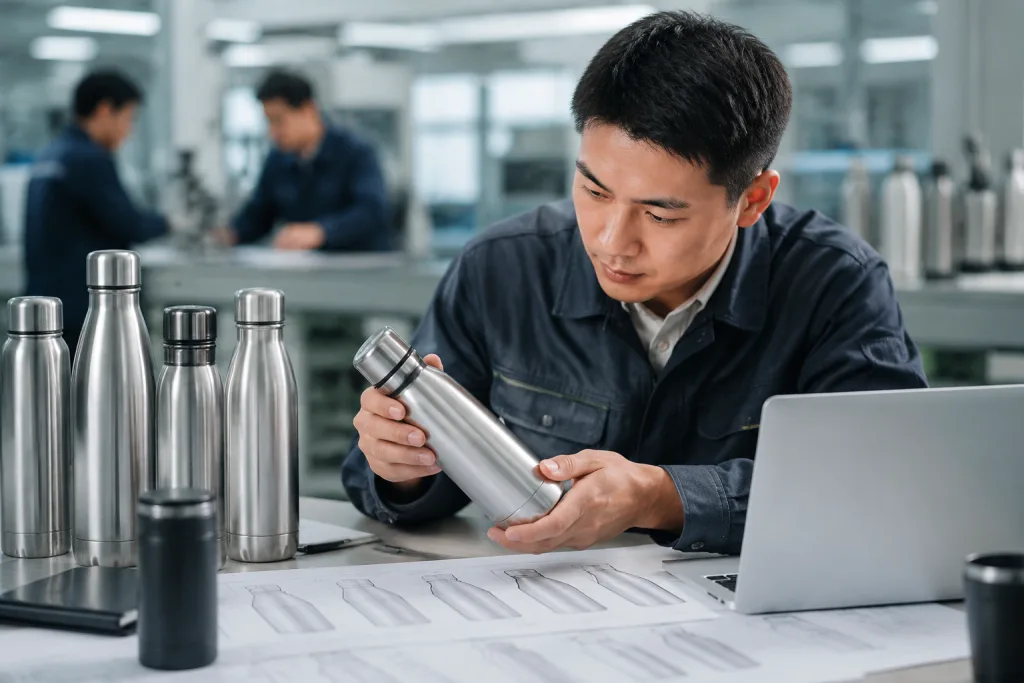
I’ll rewrite the prose in-place, keep the HTML exactly as-is, and make it sound like a factory-side sales engineer wrote it.Sampling is where you separate a real thermos supplier from a smooth talker. A proper sample run covers appearance, leak test, insulation test, and decoration wear. If the line cannot turn out a clean sample in 15-25 days, bulk lead time will not get better later. In Zhejiang, we can usually send a pre-production sample faster when the buyer picks an existing body and only changes the logo. QC pulled a sample with a 2 mm logo shift once; that one got flagged fast, and it saved a messy order later.
Pay for the sample. Free sample requests sound nice, but they usually blur responsibility. A paid sample forces the factory to quote real tooling, printing, and packaging assumptions. For a custom thermos project, ask for three versions: blank body, decorated sample, and packed sample. Then you test the bottle, the logo, and the carton fit one by one. The math works better that way.
Sample approval should include a written checklist with pass/fail items:
- Leak test: no seepage after 24 hours inverted
- Insulation: target 12 hours hot retention minimum, or your agreed standard
- Finish: no pinholes, dents, color drift, or coating bubbles
- Logo: centered within ±2 mm, no ghosting or edge burn
- Box fit: no rattle, no crushed corners, no loose inserts
Do not approve a sample from photos alone. Ask for a video of the leak test and a carton drop test from 60 cm.
That one request saves more disputes than any fancy contract clause. We’ve seen buyers skip it and then chase us after 5,000 units land with a loose insert.
Translate Samples Into a Purchase Order
I’ll rewrite the section in-place, keeping the HTML structure intact and tightening the prose so it sounds like a factory-side sales engineer. Next I’m just replacing the body copy, with one concrete shop-floor detail per paragraph and no tag changes.Once the sample passes, the next step is not “go ahead and start.” It is the PO. The best thermos bottle distributors write purchase orders like factory instructions, not like shopping carts. We run bulk jobs off the PO, then QC pulls the sample again against the gold unit. Your PO should spell out every commercial and technical line item so the bulk lot matches the approved sample.
A good PO for bulk thermos sourcing includes:
- Product name and SKU code
- Capacity, material, coating, lid type, and logo method
- Quantity by color and by packing unit
- Unit price, tooling fee if any, and FOB port
- Sample reference number and approval date
- Inspection standard: AQL 2.5 general, 4.0 minor if agreed
- Packaging spec: inner box, master carton, carton count, and carton mark
- Compliance requirement: REACH, LFGB, food-contact declaration, or ASTM test if your market needs it
For thermos distributors, the common mistake is one PO for mixed models and mixed logo types. The line gets messy fast. Split SKUs if decoration or packaging changes. We’ve seen a buyer flag one typo on a PO—same bottle, wrong lid code—and the whole carton plan fell apart. If you need a thermos custom line for retail and a separate thermos promotional line for events, treat them as different orders. The factory will thank you, and so will your receiving team.
Pricing should match order size. On a 500-750 mL stainless bottle, FOB often sits around USD 2.10-4.80, while powder-coated or multi-layer finishes climb higher. That math does not work if the target price is set first and the spec comes later. If your budget is tight, tell the thermos supplier early so we can switch the lid or carton before the sample room cuts steel.
Check QC Before the Container Ships
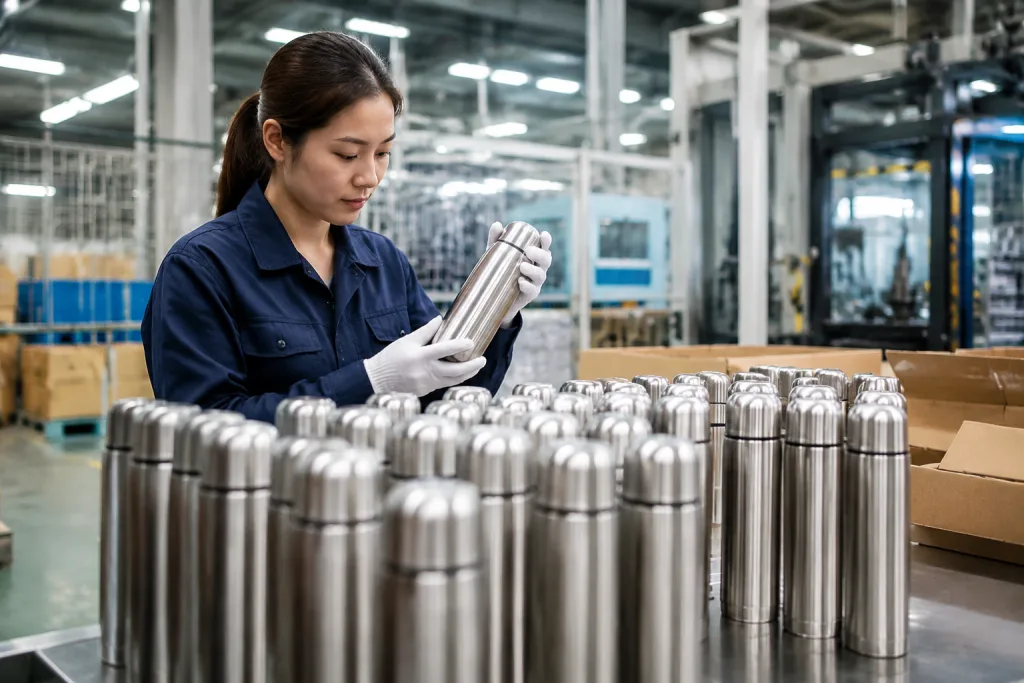
I’ll rewrite the section in-place, keep the HTML exactly as-is, and tighten the sales-engineer tone with concrete QC details.Bulk production is where small mistakes turn expensive fast. We’ve seen a 30,000 pcs run from a China factory sail through molding and still miss a logo offset because nobody locked the first sample and the line check. For a distributor thermos order, push for pre-production approval, in-line QC, and final inspection before loading. Say it plain: appearance, function, packaging, and carton strength all need named limits.
A solid QC plan usually looks like this:
- First article approval after 50-100 pcs
- In-line check every 2 hours
- Final inspection at AQL 2.5 for major defects
- Leak test on sampled units from every lot
- Carton compression and drop check before shipment
Ask for defect photos if the inspector finds issues. “Minor scratches” is not a usable spec. We run a caliper and a 10x loupe for brushed or matte finish, then set the max mark length and count on paper. For a customizable thermos with laser engraving, define depth and contrast before the line starts. This is the wrong question to ask after 5,000 pieces are packed, especially when an outdoor retailer wants clean shelf display or a promo buyer flags uneven print on the PO.
Also confirm batch traceability. A serious thermos manufacturer should tie the production date, inspection lot, and carton labels back to each PO. We’ve seen this go sideways on repeat orders when a buyer reordered the same SKU six months later and the blue tone drifted by one shade in the carton stack.
Plan Freight, Labels, and Reorder Logic
I’ll rewrite the section in-place, keeping the HTML tags and structure unchanged while tightening the sales-engineer tone and adding concrete factory-floor details.Too many thermos orders look done at the factory and then stall on export paperwork. If you sell into North America or Europe, get the shipping label, carton mark, and inner pack locked before the goods leave Zhejiang. For FBA or distributor warehouse flow, we check carton size with a tape measure at the packing table and freeze the weight list early; one bad cubic calc can turn a sea shipment into air freight pain.
Your logistics line items should cover:
- Outer carton dimensions and gross weight
- Paletization requirement if needed
- HS code support from the thermos supplier
- FNSKU or retailer barcode application if required
- Country-specific warnings, wash instructions, and food-contact statements
For a thermos distributor, the better move is to trigger reorder planning 30-45 days before sellout. Stainless thermos bulk production in China is not instant, even on a smooth line. We’ve seen the math fall apart when a buyer assumes the same 12-day gap for sample approval, deposit, and full production; in our shop, 35-45 days after approval is a more honest number, and sea freight adds another 20-35 days depending on port and season.
Keep the SKU count tight. A supplier thermos program with four capacities, two lid types, and three logo methods turns into 24 variants fast, and QC pulled a sample last month just because one PO had “matte black” typed as “matt black.” Every extra variant pushes MOQ pressure up and weakens your hand. Start with the winners, then widen the range after the first shipment lands clean.
Build a Repeatable Distributor Program
I’ll rewrite the section in place, keep the HTML structure intact, and tune the prose to sound like a distributor-facing sales engineer.The best thermos bottle distributors do not treat each order as a one-off. They run a repeatable system: one base bottle, one QC checklist, one carton spec, one reorder calendar. That is how a side purchase turns into a real category program. In Zhejiang, we ship faster for buyers who come back with steady volumes because we can hold coil stock, keep the vacuum line booked, and leave the engraving jig set up.
If you want a stronger position with your China partner, give forecast signals. A forecast of 10,000 pcs this quarter and 20,000 next quarter beats a vague annual target every time. It helps the thermos manufacturer reserve capacity and usually trims unit cost by 3-8%. That is real money when you are handling promotional thermos bids or outdoor retail margin pressure. The math does not work any other way.
Use the same sourcing logic every time:
- Write the RFQ with technical targets and commercial terms.
- Approve a sample with a written checklist and a 500ml fill test.
- Issue a PO with exact line items, carton marks, and standards.
- Inspect production against AQL and photo evidence.
- Reorder before you hit zero stock.
If you keep that process tight, your thermos custom programs scale cleaner, your distributor thermos margin stays easier to forecast, and buyers stop treating stainless drinkware like a lucky draw.
Get your thermos RFQ priced the right way
Send your SKU spec, target quantity, and logo method. We’ll turn it into a clean bulk plan with sample and PO line items.
Frequently asked questions
What MOQ should thermos bottle distributors expect from a China factory?
For a standard stainless thermos, MOQ is often 3,000 pcs per SKU at a direct thermos factory in China. If you want custom color, special lid, or unique packaging, expect 5,000 pcs or a surcharge. Some Zhejiang suppliers will sample from 500-1,000 pcs for repeat buyers, but new projects usually start at 3,000 pcs. For mixed models, each SKU usually needs its own MOQ, so splitting orders into too many variants drives cost up fast.
How long does custom thermos sampling usually take?
A normal sample cycle is 15-25 days if the factory already has a matching body and lid platform. If you change tooling, expect 25-40 days. A good thermos supplier should provide a blank sample, decorated sample, and packed sample so you can check print, leak performance, and carton fit. If they only send photos, you are not sampling; you are guessing.
What price range is realistic for bulk thermos orders?
For a 500-750 mL stainless bottle, FOB pricing often lands around USD 2.10-4.80 per unit depending on steel thickness, lid type, coating, and decoration. Plain promotional thermos models sit at the lower end; powder-coated or multi-part customized thermos designs cost more. Freight, duties, and carton specs are extra. If your target price is below USD 2.00 FOB, be prepared to simplify the build or increase volume.
Which quality checks should I ask for before shipping?
Ask for pre-production approval, in-line checks, and final inspection with AQL 2.5 for major defects. For a thermos distributor order, also require leak testing, insulation retention testing, and carton drop checks. If your customer is retail, ask for photo proof of finish quality and logo placement. For promotional thermos programs, packaging consistency matters almost as much as the bottle itself.
Can I order custom logo thermos products for Europe and North America?
Yes, but you should confirm food-contact and chemical compliance early. For Europe, REACH and LFGB are common asks; for North America, buyers often request ASTM-related test support or retailer-specific declarations. A serious thermos manufacturer in Zhejiang should provide material specs, stainless grade confirmation, and test reports. Put the required compliance documents in the PO so nobody argues later about what was promised.