Key Takeaways
- A 0.5 mm wall, 18/8 stainless steel, and a 24-hour heat-retention target are basic, not premium, for thermal bottle wholesale bulk.
- AQL 2.5 for critical defects and 4.0 for major defects is a practical starting point for drinkware bulk inspections.
- A 3,000- to 5,000-unit MOQ and 25-35 day lead time are common for customized wholesale canteen or wholesale growler orders in China.
- Most returns come from lids, seals, coating chips, and carton damage, not the bottle body itself.
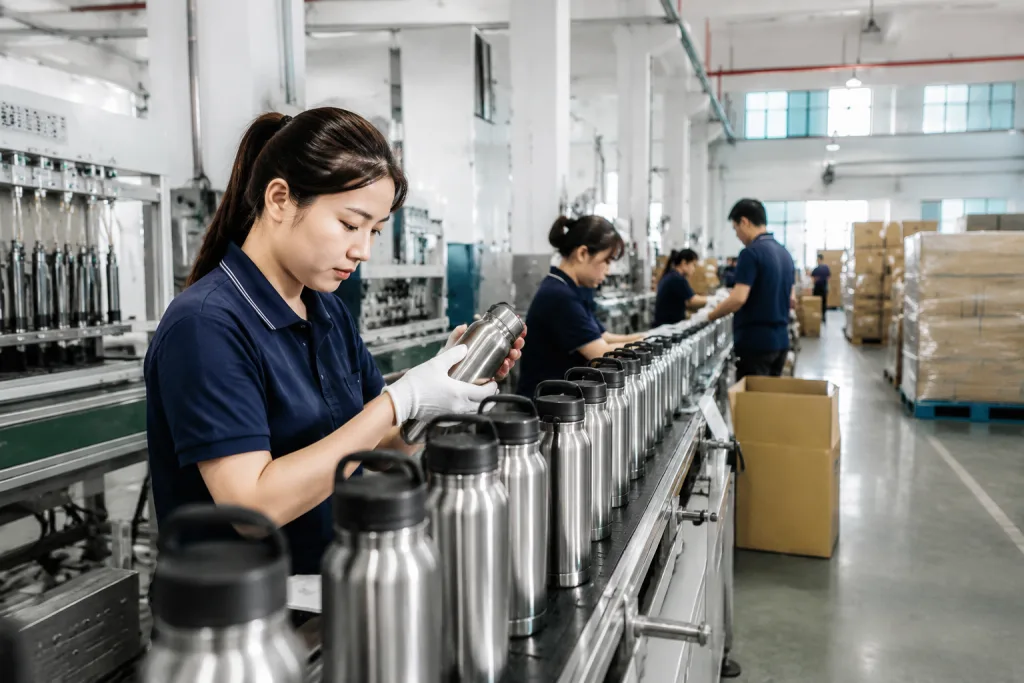
If you buy thermal bottle wholesale bulk, the real risk is not the headline price. It is the carton that looks clean on the sample sheet and then comes back with vacuum loss, lid leaks, paint scuffs, or pack-out issues at the warehouse. We run these lines in Zhejiang every week, and the factories that keep reorders are the ones that hold spec across 50,000 units, not the ones quoting the lowest FOB on day one.
You are buying margin, brand reputation, and repeat orders. So think like a production engineer, not a catalog buyer. We start with wall thickness, stainless grade, lid torque, coating adhesion, and a QC plan that catches failures before you send the balance payment; on one 500-piece pre-shipment check, QC pulled three lids that failed the torque gauge at 1.8 N·m. That is the real math, and it is the right question to ask whether you source wholesale drinkware or a bulk canteen line.
Where bulk orders usually fail
I’ll rewrite the section in-place, keep the HTML tags intact, and tighten the language so it reads like a factory-side sales engineer wrote it.Most bulk orders blow up in four spots: insulation, sealing, coating, and packaging. The bottle body is usually the easy part. The vacuum gap is where we lose performance if draw depth, weld quality, or evacuation drifts. If you are buying thermal bottle wholesale bulk, ask for a thermal retention target by test method, not a slogan. A solid spec is 12 hours hot above 60°C and 24 hours cold below 10°C, tested at 20°C ambient.
Leakage comes next. A lid can pass a quick hand check and still fail after repeated opening, torque swing, or drop impact. For canteen wholesale and wholesale drinkware programs, we split the body spec from the closure spec. State gasket material, thread engagement, and whether the lid must survive 500 open-close cycles. We had a buyer flag a PO typo on the cap code once, and QC pulled the sample fast; that kind of slip turns into returns if nobody catches it. For bulk drinkware shipped into distribution, the math does not work any other way.
Surface defects are the third failure mode. Powder coat pinholes, uneven spray, laser marks that burn through the finish, and decal misregistration show up all the time in drinkware bulk. If you want a premium feel, ask for an adhesion test and a defined abrasion test, not “good finish.” Packaging is the fourth issue. A bottle can clear the line and still arrive with dented corners if the inner tray, carton strength, and drop-test standard are loose. On a recent 1,200-carton export run, one 3 mm carton crush was enough to trigger claims. In China, packing is product quality.
Spec the bottle body properly
I’ll keep the tags and structure intact, then tighten the prose so it sounds like a factory-side sales engineer wrote it. Next I’m rewriting the three paragraphs with concrete specs, line-floor detail, and fewer AI-style transitions.For the bottle body, start with the metal and the drawing. 304 stainless steel is the normal baseline for most wholesale drinkware orders; 316 makes sense only when the use case needs stronger corrosion resistance, and the buyer should be ready to pay for it. For a standard insulated bottle, 0.4-0.5 mm inner and outer walls is the range we run most often. If a factory quotes a thinner gauge, you may save a few cents, but dent resistance drops and the line gets harder to hold steady. A 6% price cut is not a win if QC pulls three bent shells from the same lot.
Wall thickness has to match capacity and target weight. A 500 ml bottle at 0.45 mm does not behave like an 800 ml body at the same gauge, and that is where the buyer flagged it on one PO with a wrong neck finish code. Ask for dimensional tolerance on diameter, neck finish, and height. If you are sourcing a bulk canteen or canteen bulk line, specify the body weight range and compare the sample, the pre-production sample, and the mass-production sample. We run into this all the time on the line in Zhejiang: one polished sample can look perfect, then the next 2,000 pcs drift if the tooling setup is loose. Repeatability pays the bill.
Specify the internal treatment too. A proper cleaning and passivation process cuts odor and residue issues, and it is the difference between a clean first shipment and a customer complaint. If the factory cannot explain how it removes oil, polishing dust, and weld contamination, the math does not work. A good shop will show the process: alkaline wash, water rinse, passivation bath, then a quick wipe check before packing. Weak shops dodge the question. That 3% gap disappears fast once a buyer rejects a carton for smell.
Lid and seal failures cost the most
I’m rewriting this section in-place, keeping the HTML structure intact and tightening the sales-engineering voice. I’ll preserve the heading and tags, add a few concrete factory details, and strip the AI-ish phrasing.Lid defects are the fastest way to turn a profitable wholesale canteen order into a claims problem. The bottle body can pass inspection, but if the gasket swells, the flip top cracks, or the thread depth shifts by 0.3 mm, the buyer flags it fast. For thermal bottle wholesale bulk, put the lid material, gasket material, and assembly method in writing. Silicone gaskets are standard, but we still pin down hardness, food-contact declaration, and compression set before the line starts.
Hot-fill and temperature cycling expose weak lids. A cap that feels tight at 25°C can loosen after 12 hot-cold cycles, and we’ve seen that go sideways on test shelves. If you are buying wholesale growler, beer growler wholesale, or beer tumbler bulk products, pressure and seal performance matter more because carbonation loads the closure. This is the wrong question to ask: “Will the lid fit?” The real question is whether the geometry holds under heat, chill, and shaking. A growler mouth is not a straight bottle neck.
Torque testing belongs in the QC plan. So does leak testing upright, inverted, and on its side. On one batch of alcohol flask bulk, QC pulled the sample and found one cap under-torqued by 0.6 N·m because the operator skipped the second pass. Ask the factory whether the lid is hand assembled or line assembled; the defect pattern changes. For drinkware wholesale buyers, this is where labor variance shows first. You can ship bulk drinkware all day, but a weak seal still creates a field failure.
Decorations and coatings break brand trust
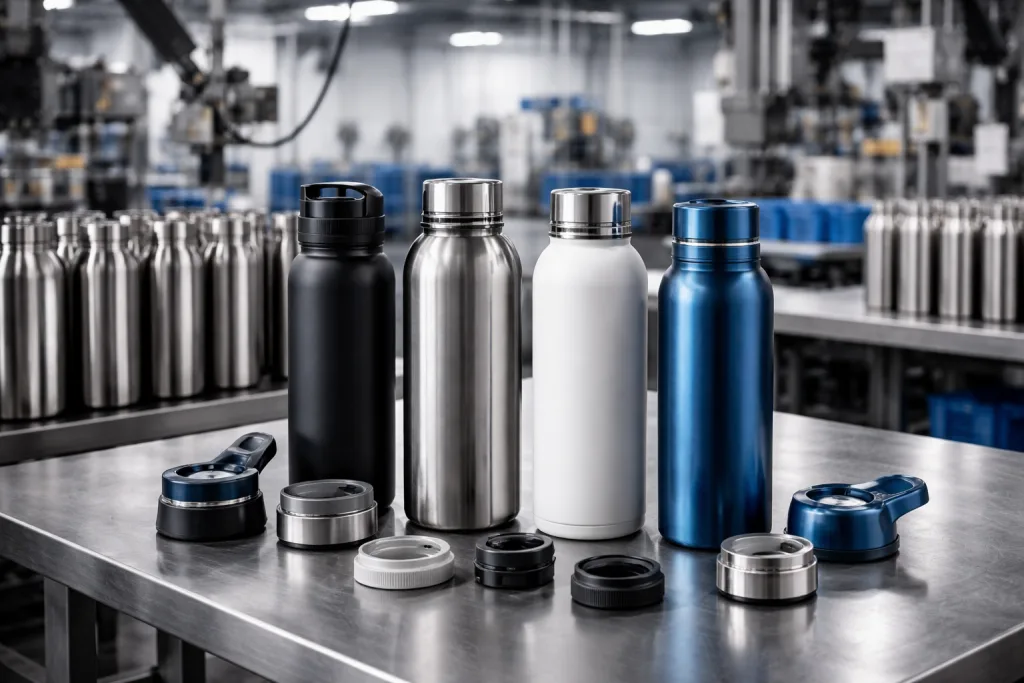
I’ll rewrite the section in place, keep the HTML tags exactly as-is, and tighten the prose so it sounds like a factory-side sales engineer wrote it.Decoration is where a lot of buyers misread process stability. Silkscreen looks simple until we run 10,000 units and the registration walks 0.5 mm, the ink lays heavy on one side, or the logo scuffs in transit. Laser engraving holds up better, but on coated bodies the power setting has to be tight or you get substrate color showing through. If your brand wants a premium finish, the spec should spell out the Pantone target, logo size tolerance, and the allowed side-to-side variation.
Powder coating and spray paint need their own checks. Ask for cross-hatch adhesion, salt-spray results where the market needs it, and abrasion resistance that matches handling on the line and retail display. For beer growler wholesale and beer growler wholesale bulk programs, dark finishes and high-traffic caps show scratches faster than buyers expect. A bulk growler or growler bulk order can look clean on the sample table and still come back with scuffing after one shipping lane. We’ve seen it. That is why coating thickness and curing time matter; on our line we track both, because rework burns cash fast in Zhejiang export production.
If you are buying wholesale canteen or bulk canteen lines with custom graphics, ask whether decoration happens before or after final assembly. That changes the rejection rate. A logo placed before assembly may stay cleaner during handling, but it can also hide body defects that should have been caught earlier. The buyer flagged it once on a PO typo too—wrong artwork code, 2,000 pieces at risk. A direct buyer should ask for photo approvals at pre-production, inline, and final stages. That is the cheapest way to keep bulk drinkware consistent.
Packaging decides export damage rates
I’ll rewrite the three paragraphs in-place, keep the HTML tags untouched, and make the tone sound like a factory-side sales engineer.Packaging gets treated like overhead, but for wholesale drinkware it is part of the product. A bottle that clears IQC can still show up dented if the carton spec is weak or the inner tray lets it rattle. If you ship to Amazon, distributors, or retail chains, set the pack by drop test and compression target, not by how nice the box looks. For thermal bottle wholesale bulk orders, a plain corrugated outer carton with a clear edge crush resistance spec usually beats a fancy box that collapses on the line.
Use ISTA-style thinking, even if the factory never says it that way. Ask for transit simulation, carton drop height, and pallet pattern; we run a 600 mm drop test on sample cartons before a big order. If you do FBA, lock the inner barcode and FNSKU placement before mass production. If you do not, the master carton data still matters, because warehouse handling can do more damage than a molding defect. The same logic applies to beer tumbler wholesale bulk, drinkware bulk, and drinkware wholesale orders.
Pack-out discipline is where export damage rates are won or lost. A bottle with a loose lid, an exposed spout, or a missing insert can pass final inspection and still fail in distribution; QC pulled the sample, then the buyer flagged a dent at the neck after a 1.2 m drop. If the factory is in Zhejiang, ask how they split packing lines by SKU and whether barcode checks happen during carton sealing. That is not overkill. It saves a credit note.
Build a QC plan that catches drift
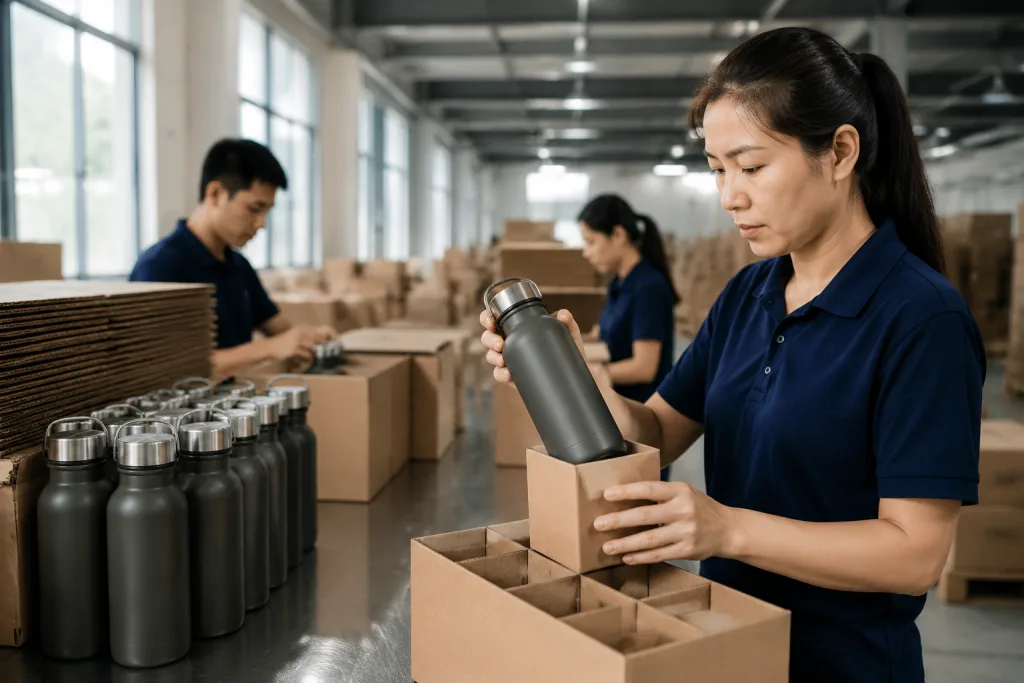
I’ll rewrite the section in place, keep the HTML structure unchanged, and tighten the language so it reads like a factory-side QC note.A QC plan is the cheapest insurance in thermal bottle wholesale bulk sourcing. We start at incoming material check, move to inline checks, then finish with final random inspection. For a real order, we run AQL 2.5 for critical defects and AQL 4.0 for major defects, tied to lot size. Critical defects are the ones that kill a shipment: leaking lids, food-safe material mismatch, missing vacuum, sharp edges. Major defects are print errors, color shift, and functional issues that do not leak right away but still miss the spec.
Write the checkpoints down. Vacuum test, leak test, thermal retention test, coating adhesion, drop test, and carton compression all belong in the purchase order or QC appendix. On the line, QC pulled the sample with a 0.2 mm gap at the cap seat, and that kind of miss becomes a buyer complaint fast. For wholesale growler and wholesale growler-style items, add pressure or seal verification if the use case calls for it. For alcohol flask wholesale and alcohol flask in bulk, dimensional consistency and cap fit matter because a 1 mm offset shows up immediately at the counter. If the product goes to a chain or distributor, ask for a golden sample and a retained sample from every production run.
Do not let the supplier self-certify the whole lot. Good factories in China can hand over test data, but first-order risk and custom work still need third-party verification. We have seen this go sideways when a buyer accepted only the factory sheet and the carton drop test never happened. In Zhejiang, the better plants know the math does not work any other way. If a factory ships 50,000 units/month and holds the same defect ceiling, that is a line worth paying for.
How to compare quotes without getting fooled
I’ll rewrite the three paragraphs in place, keep the HTML tags exactly as-is, and tighten the sales-engineer tone so it sounds like a factory-side quote review.Price checks only mean something when the spec matches line for line. If one supplier quotes a 500 ml bottle with 0.45 mm walls, 304 steel, powder coat, and a tested lid, while another sends a “similar” bottle with thinner metal and no retention test, you are not comparing the same item. That cheap quote turns into claims, replacements, and extra freight. For thermal bottle wholesale bulk, run the full landed math: unit price, decoration charge, packing cost, test fee, tooling share, and a defect allowance based on what QC actually sees on the line.
Ask every factory for the same pack of documents: product spec sheet, material declaration, test report, packing detail, and lead time. If they cannot pin down MOQ, production lead time, and sample timeline in writing, the quote is shaky. We see this all the time in Hangzhou: MOQ starts around 3,000 units for custom stainless drinkware, with 25-35 days for production after sample approval. That is normal. If a supplier throws out a low MOQ with no premium, the math does not work. Check where they cut corners.
For brand owners, the real question is not “Who is cheapest?” It is “Who holds spec, protects the carton, and flags deviations before we ship?” The buyer on one order once missed a 2 mm carton typo, and the pallet labels were off by a country code; fixing that ate the margin fast. That is how you source wholesale canteen, bulk drinkware, or a best wholesale drink bottle program that still pays on the second reorder.
Source thermal bottles with fewer surprises
Send your target capacity, logo method, and monthly demand. We’ll spec the weak points first, then quote the right build for China export.
Frequently asked questions
What MOQ should I expect for thermal bottle wholesale bulk?
For custom thermal bottle wholesale bulk, a realistic MOQ is often 3,000-5,000 units per SKU in China, especially if you need custom color, logo, or packaging. Simple stock items can be lower, sometimes 500-1,000 units, but once you add molded lids, laser engraving, or special cartons, the economics change. If a supplier offers 200 units with full customization and the same unit price, ask what process is being skipped. In Zhejiang factories with proper line planning, MOQ is usually tied to coating setup, packaging runs, and printing yield.
How do I reduce leakage claims on insulated bottles?
Treat the lid as a separate product. Specify gasket material, thread depth, torque range, and leak test orientation. A practical QC plan should include upright, inverted, and side leak tests at room temperature and after heat cycling. For hot and cold use, a lid that passes one quick test may still fail after expansion and contraction. In bulk canteen or wholesale growler programs, leaks often come from seal compression or assembly variation, not the bottle body. Require a retained sample and a pre-shipment leak audit before balance payment.
What materials are best for wholesale drinkware?
For most wholesale drinkware, 304 stainless steel is the practical baseline because it balances cost, corrosion resistance, and availability. If the product will face harsher liquids or a more premium positioning, 316 can be justified, but it raises cost. Ask for material certificates and confirm the food-contact declarations for the bottle body, lid, and gasket. For alcohol flask wholesale bulk or beer tumbler wholesale bulk, the same material discipline applies even if the product shape is different. The better supplier in China will document the material grade by component.
What lead time is normal from factories in China?
For customized insulated bottles, a normal lead time is 25-35 days after sample approval, not counting ocean freight. If tooling changes are needed, add time for sample correction and approval rounds. Stock models can move faster, but the moment you request custom coating, logo, or packaging, the schedule expands. A factory in Zhejiang with a 50,000-unit monthly output can still miss your ship date if you approve artwork late or change the lid spec mid-run. Clear sign-off on samples is the simplest way to keep the schedule stable.
How do I compare beer growler wholesale bulk quotes fairly?
Compare the full spec, not just the price. For beer growler wholesale bulk, check stainless grade, wall thickness, closure type, coating method, carton strength, and whether the quote includes leak testing. Also confirm if the price covers one-color logo, full-color print, or only blank units. A lower quote may omit packaging upgrades or use thinner material. Ask for unit weight, carton count, and AQL standard. If two suppliers in China quote the same shape but one cannot provide test data, the cheaper option is usually not cheaper after defects and replacements.