Key Takeaways
- Thermal bottle vendors in China usually quote at MOQ tiers from 500 to 3,000 units, with better pricing after 1,000 units.
- A typical custom canteen order needs 25 to 40 days for sample and 30 to 45 days for mass production, depending on decoration and lids.
- Decoration can shift landed cost by 12% to 35%, especially for laser engraving, 4-color print, or full-wrap packaging.
- A disciplined buyer checks AQL 2.5, REACH, and leak testing before approving canteen manufacturers or canteen suppliers.
If you are sourcing from thermal bottle vendors, the first mistake is chasing the lowest unit price without checking tooling, MOQ, and decoration method. We see this on the line all the time. A bottle that looks cheap at 1,000 units can turn expensive once you add lids, packaging, compliance tests, and freight from China to your warehouse. Buyers in Europe and North America need a clean cost model before they sign off.
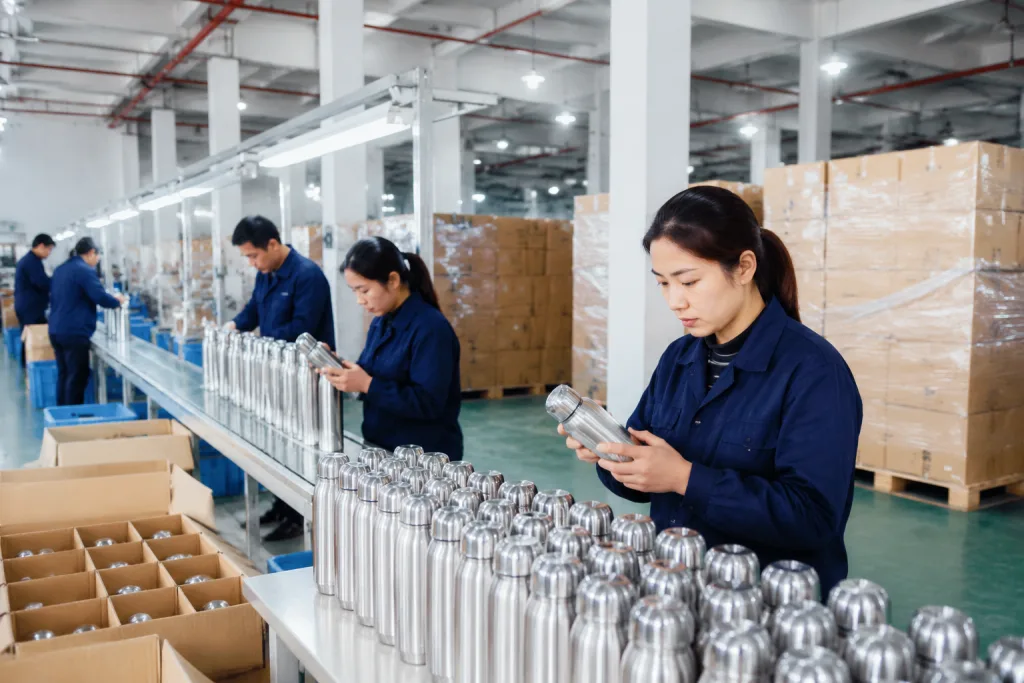
At BottleForge in Zhejiang, we treat every order as a production plan, not a catalog quote. QC pulled the sample, checked the lid seal, and found a 0.3 mm gap once on a 500 ml run. That is the job: match your custom drinkware brief to the right factory process, then lock a lead time you can ship against. If you are buying canteen custom programs, a custom growler line, or a customizable drinkware range for retail or promotion, the numbers matter more than the adjectives.
What actually drives unit cost
I’ll rewrite the section in-place, keeping the HTML structure and tightening the sales tone while preserving the specific numbers and terms.When you compare thermal bottle vendors, start with the cost stack, not the headline unit price. The bottle body is only one piece. Stainless grade, wall thickness, cap assembly, silicone seals, surface finish, and packaging all move the final number. A 18/8 stainless steel double-wall bottle with a powder-coated finish does not cost the same as a plain brushed body. The line shows it every day.
For a practical benchmark from a canteen factory in Zhejiang, a 500 ml vacuum bottle might sit around USD 2.10 to 3.40 FOB at 1,000 units, depending on specs. Move to 5,000 units and the same model can drop 12% to 20% because steel, cartons, and labor spread over more pieces. We had one buyer flag a PO typo on carton count, and that alone changed the landed math. If you want a custom drinkware bundle with gift box, hangtag, and barcode sticker, add another USD 0.18 to 0.60 per set.
- Body material: 201 stainless is cheaper, but 304/18-8 is the safer B2B choice for canteen manufacturers selling into Europe and North America.
- Decoration: one-color silkscreen is usually the lowest-cost branding; laser engraving and wrap print raise price.
- Cap system: a flip lid, straw lid, or insulated screw cap can add USD 0.25 to 1.20.
- Packaging: retail cartons and master carton drop tests add cost, but they protect distributor drinkware shipments better.
If you want canteen promotional pricing, be careful with ultra-low quotes. They often leave out testing, secondary packaging, or freight assumptions. This is the wrong question to ask if the quote looks cheap but the MOQ is 5,000 and the carton spec is missing. In China, a real quote should split product price, decoration, and export packing. We run it that way because the buyer learns fast when QC pulled the sample and the numbers no longer matched.
MOQ tiers that make sense
I’ll rewrite the section in-place, keep the HTML structure intact, and tighten the language so it sounds like a factory-side sales engineer.MOQ is where a lot of buyers read the market wrong. Thermal bottle vendors are not set up the same way. A stock-item supplier can start lower; a factory that opens new tooling wants a bigger commitment. The right number depends on whether you are buying for a distributor program, a retail launch, or a promo run.
In Zhejiang, we usually quote three workable tiers. At 500 units, you can test a design, but the unit cost stays high and the color card is thin. At 1,000 to 3,000 units, that is the sweet spot for most canteen customized and customized drinkware orders. Above 5,000 units, the math starts to work better, especially for canteen distributors who need repeatable margin and steady replenishment.
Common MOQ ranges
- 500 units: good for market validation, but packaging options stay limited and lid choices shrink fast.
- 1,000 units: the most common threshold for custom canteen and customizable canteen jobs.
- 3,000 units: better for distributor canteen pricing and multi-SKU retail programs.
- 5,000+ units: fit for canteen vendors running seasonal campaigns and chain-store rollouts.
MOQ is not only a quantity question; SKU complexity changes the count. Three colors, two lid styles, and mixed box art can turn into three separate runs on the line. QC pulled a sample like that once, and the buyer flagged it because the PO listed one item code but the factory sheet had three. Better to keep the spec clean than force a low MOQ and pay for delays, rework, or weak margin.
Lead times by production stage
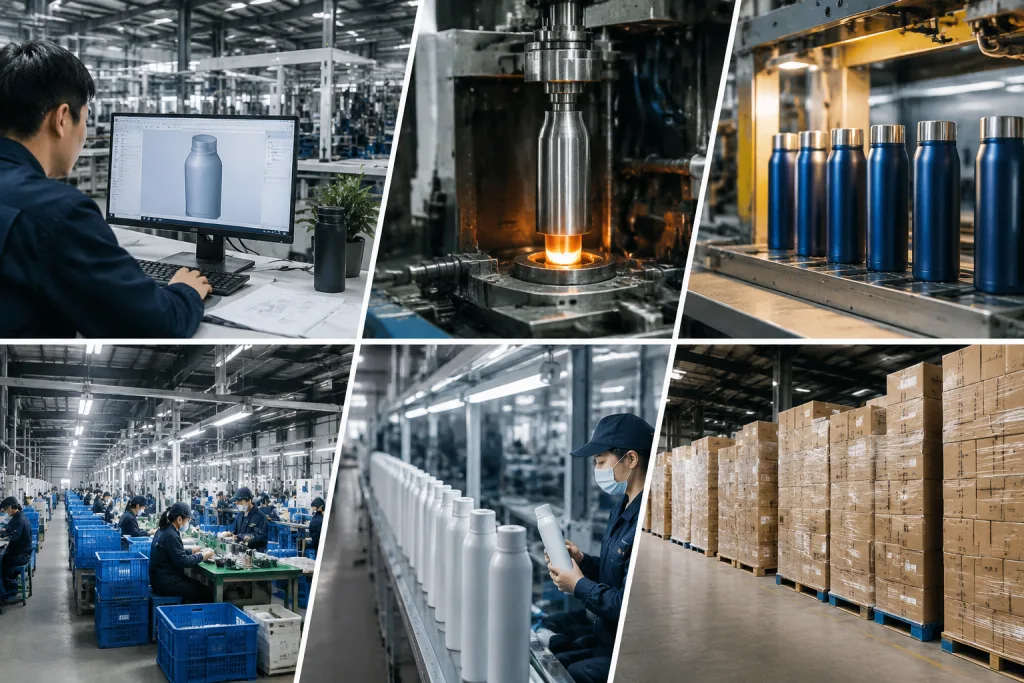
I’ll rewrite the section in place, keep the HTML exactly as-is, and tighten the sales-engineer tone with concrete factory details and cleaner lead-time math.Lead time is where a thermal bottle vendor proves it is a factory, not a trading desk. A real Zhejiang line gives you a stage-by-stage sheet: artwork sign-off, sample making, raw material booking, production, QC, and export loading. If someone only throws out “30 days,” ask for the split. That number by itself is useless.
For a standard custom drinkware order, we run 5 to 10 days for sample development if no new tooling is needed. If the buyer wants a new cap mold or a shaped growler body, the sample stage usually moves to 15 to 25 days. Mass production is 25 to 40 days for plain painted bottles, and 35 to 50 days for a custom growler or insulated canteen promo run. QC pulled a 500 ml sample off the line, and the buyer flagged a lid color typo on the PO—that sort of thing can eat two days fast.
“Short lead time is not magic; it comes from stocked materials, clean artwork, and a factory that keeps molding, printing, and packing under one roof.”
Shipping time is a different clock. From China to a West Coast U.S. port, ocean transit is about 18 to 28 days; to Northern Europe, it is 28 to 40 days, depending on the vessel and transshipment. If you need shelf-ready stock for a distributor drinkware program, count back from the in-store date, not the PO date. A canteen manufacturer with 100,000 units per month still misses the window if art approval lands late or the buyer changes the lid at the last minute. That is the wrong question to ask.
Specs that change your landed cost
I’ll keep the HTML structure intact and rewrite the copy to sound like a hands-on factory sales engineer, with sharper specifics and fewer generic phrases.Not every bottle spec hits landed cost the same way. Two thermal bottles can look identical on the shelf, then split hard on freight and margin because of wall thickness, finish, and lid build. A 0.5 mm outer wall versus 0.4 mm looks small on paper, but on the line it changes grams per piece, carton count, and what you pay to move a full container. For Europe shipments, that extra weight can move the number more than buyers expect.
For canteen customized programs, read the spec like a production sheet, not a brochure. Vacuum level, heat retention, and gasket fit decide how many complaints you get back. We ship 12-hour hot and 24-hour cold claims only after test reports, leak checks, and retention data from our own lab or an ASTM method. REACH, LFGB where needed, and carton drop tests belong in the PO; QC pulled the sample at 1.2 m drop, and that saved one buyer from a costly return round.
- Stainless thickness: thinner steel cuts unit price, but dent resistance drops fast in transit.
- Coating: powder coat holds up well; UV print moves faster, but scuffs sooner on retail shelves.
- Lid complexity: a one-piece lid is cheaper than a two-stage sip cap with extra seals.
- Branding area: a larger print zone adds setup time and raises the scrap rate.
For canteen distributors, the right spec is the one that keeps shelf appeal, complaint rate, and replenishment cost in line. The math does not work if you chase the lowest FOB and ignore breakage or rework. We’ve seen this go sideways when a buyer flagged a carton typo on the PO, then the whole shipment had to wait for a reprint. A vendor who can talk through that tradeoff cleanly is usually the safer bet.
How to compare vendor quotes
I’ll rewrite the section in place, keep the HTML exactly as-is, and make the prose sound like a real sales engineer wrote it.To compare thermal bottle vendors properly, put every quote into the same worksheet. A low quote with no carton detail is not the same offer as a full one. Ask for the same model, same MOQ, same decoration, same packing, and the same incoterm. FOB China is the clean baseline for B2B buyers because it splits product cost from freight and lets you control the shipping lane.
Then check what is actually included. Does the quote cover sampling, mold charge, test reports, barcode labels, and master carton marks? Does the factory use one steel grade for all colorways, or does a special coating on black or matte finishes add RMB 1.20 per piece? Is the lead time tied to material arrival or only line capacity? We’ve had buyers flag a PO typo on carton marks and the whole job slid by 4 days. Good thermal bottle suppliers answer this straight.
- Confirm unit price by MOQ tier: 500, 1,000, 3,000, and 5,000 units.
- Split costs into product, decoration, packaging, and testing.
- Ask for a sample timeline and a mass-production timeline separately.
- Request photos or videos of the actual line, not only product renders.
- Check whether the factory can support repeat orders within 10 to 15 days after replenishment approval.
If you are a distributor buying canteens, this method protects margin. If you are a brand owner launching custom canteen lines, it helps you forecast landed cost without hand-waving. If you are buying customized drinkware for campaigns, it stops the usual mess where a low quote turns into a higher total once shipping cartons, test fees, and label work get added back in. We run this comparison every week; the math does not work any other way.
What a good China factory should prove
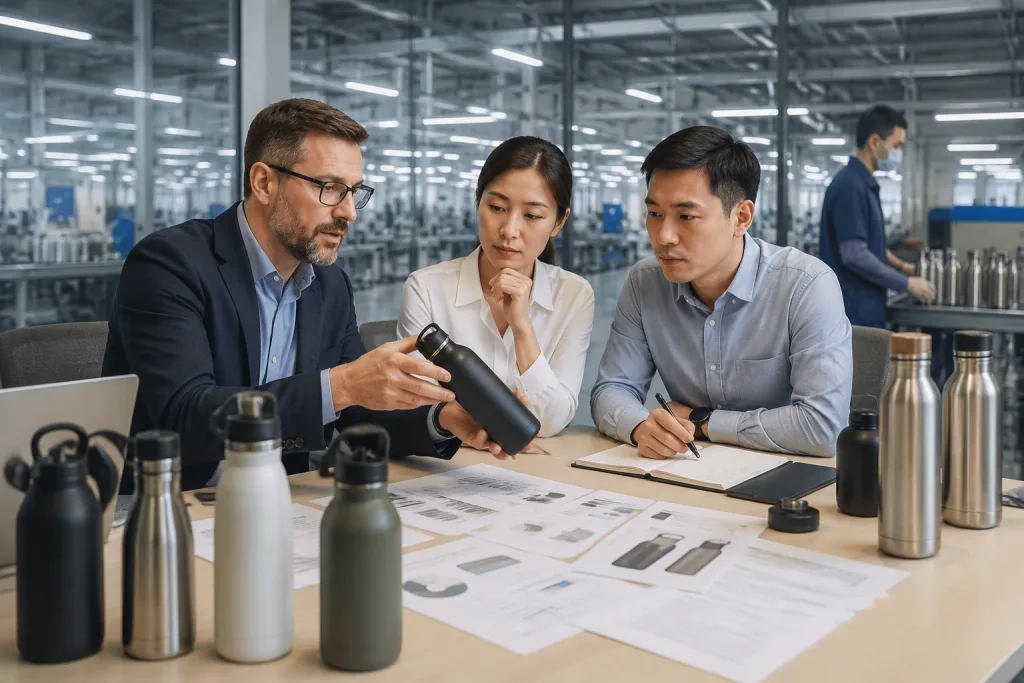
I’ll rewrite the section in-place, keep the HTML structure untouched, and make the prose sound like a factory-side sales engineer.A real canteen factory should prove capability, not just send pretty photos. In Zhejiang and across China, solid vendors can show factory audit files, the production flow, QC checkpoints, and finished-goods storage. We look for process control because thermal bottles are repeat runs; one bad neck dimension or cap torque issue can sink a batch. If a factory says it can handle canteen distributor programs, ask how many units it ships per month and what AQL it runs.
For most export buyers, a practical benchmark is AQL 2.5 for critical and major defects, plus 100% leak testing on insulated models. We run pressure checks on the line with a simple water bath and cap-torque gauge, because “looks fine” is not a QC standard. Ask for BSCI if social compliance matters to your retail chain, and request REACH or the right declarations before you place a big order. If the supplier cannot explain whether they are the canteen manufacturer or just a trading layer, keep digging.
Mixed programs tell you a lot. A factory that can manage custom drinkware, custom growler, and customized growler projects in one facility usually has better planning discipline, but that does not make it the right fit for every order. We’ve seen this go sideways when a buyer chased a low quote and the MOQ was 5,000 pieces while the real line setup only made sense at 20,000. Choose the factory whose tooling, packing table, and lead time match your job, not the one with the loudest sales pitch.
For China sourcing, the strongest signal is simple: the vendor can tell you the exact bottlenecks before you ask. If they mention mold lead time, closure sourcing, or packing damage rates without bluffing, you’re talking to a real operator. That is what you want from thermal bottle vendors in Zhejiang or anywhere else in China.
Get a quote built around your real numbers
Send your target MOQ, lid style, and delivery date. We will map the cost, lead time, and compliance needs before production starts.
Frequently asked questions
What is a normal MOQ for thermal bottle vendors?
For most custom drinkware programs, a normal MOQ is 1,000 units per design and color. Some stock-focused thermal bottle vendors will quote 500 units, but pricing is usually 12% to 25% higher and decoration options are narrower. At 3,000 units, you usually get better carton efficiency and better FOB pricing. If you need multiple lid styles or mixed colors, treat each variant as a separate production run. That is standard practice in China and especially in Zhejiang factories that run export lines.
How long does a custom canteen order take?
A standard custom canteen order usually needs 5 to 10 days for sampling and 25 to 40 days for production after sample approval. If you add new tooling, unusual lid parts, or special packaging, the timeline can extend to 45 to 60 days. Ocean freight from China adds another 18 to 40 days depending on destination. If you are a distributor canteen buyer, plan backward from your shelf date, not your purchase order date.
Which costing items get missed most often?
The most commonly missed items are packaging, decoration setup, leak testing, and export cartons. A quote may show only the bottle body, but your landed cost will also include print plates, laser setup, barcode labels, and sometimes inner trays. For canteen promotional orders, these extras can add USD 0.20 to 0.80 per unit. Always ask the canteen supplier to break out FOB product price, sample fee, and any mold or artwork charges before you compare offers.
What quality checks should I ask for?
Ask for AQL 2.5 inspection on major defects, 100% leak testing on insulated models, and retention test results for hot and cold performance. For Europe, request REACH-related declarations and material specs; for U.S. retail, ask about food-contact compliance and carton drop testing. A serious canteen manufacturer should also share photos or video from the QC line. If they cannot show this, they are not yet a reliable long-term canteen vendor.
Can I mix custom growler and bottle SKUs in one order?
Yes, but only if the factory is set up for it. A canteen factory may allow one production window for custom growler and thermal bottle SKUs, but each shape, lid, and decoration method can change the actual MOQ. In practice, mixed orders work best when the base material and coating are similar. If you are a canteen distributor, ask for a master schedule so each SKU ships on time instead of waiting for the slowest item.