Key Takeaways
- Most thermal bottle private label orders sit at 1,000-3,000 units; MOQ below 500 usually increases unit cost by 20-40%.
- A basic 500ml 304 stainless bottle often lands at USD 2.10-3.40 FOB Zhejiang, while multi-layer vacuum builds can add 15-30%.
- Typical lead time is 25-35 days after sample approval for stock tooling, and 40-55 days if you need custom color, logo, and packaging.
- AQL 2.5 for critical defects and 4.0 for minor defects is a practical inspection target for distributor drinkware orders.
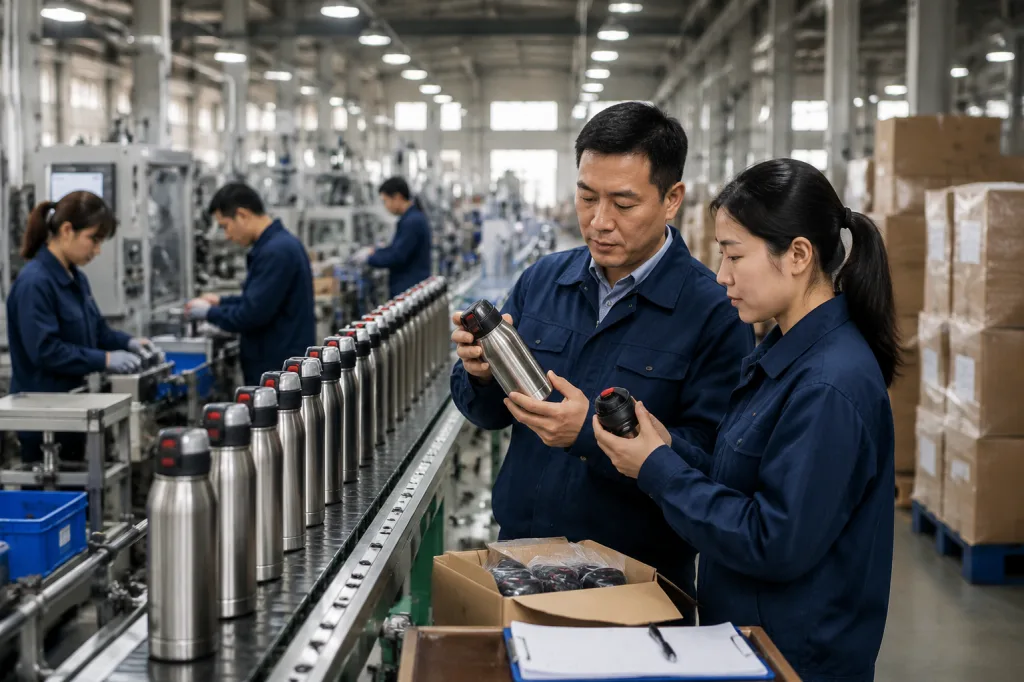
If you are buying thermal bottle private label product for the first time, the hard part is not picking a color. The hard part is reading the quote sheet. We see one spec land at USD 1.85 and another at USD 4.60 because the gap sits in the bottle build, print method, and loss rate on the line. A 25-day promise is not the same as a 55-day promise, and the buyer who skips that math usually pays for it later.
That spread usually comes from three things: bottle structure, decoration method, and how much process control the factory actually runs. On our side, QC pulled the sample twice on a 500 ml bottle with a 73 mm body, and one scratch on the powder coat was enough to stop the run. In Zhejiang, the better result comes from matching the spec to the sales channel, not stacking every feature into one PO. If you want a clean launch, start with a workable MOQ, a timeline that the line can hold, and a factory that can show repeatability, not just a fast reply.
What Actually Sets Your Cost
I’ll rewrite the prose in-place, keep the HTML exactly as-is, and tune the wording to sound like a factory-side sales engineer.When buyers ask for a thermal bottle private label quote, they often compare only capacity and logo. That is too shallow. The real cost stack starts with liner grade, lid structure, finish, and packout. A plain 500ml 304 stainless bottle with a PP screw lid, one-color silkscreen, and kraft box may leave the factory at USD 2.10-2.80 FOB Zhejiang. Add a 316 inner wall, powder coating, laser logo, and retail box, and the number moves to USD 3.60-5.20. We run this math every week; the buyer flagged it after a PO typo on “304” vs “316” turned into a re-quote.
Wall thickness changes the bill more than first-time buyers expect. A 0.35mm inner wall is cheaper, but a 0.40-0.45mm build usually gives better dent resistance and steadier heat retention. That extra metal costs money, and the line feels it when the forming die starts pulling thin. If you are sourcing from a canteen factory or canteen manufacturer in China, ask for a cut sample and check whether the bottle uses 304 or 316 inside, and whether the outer shell is 201 or 304. QC pulled the sample on one order and found a 0.33mm reading at the rim; this is the wrong question to ask if you only chase the lowest unit price.
Decoration changes the quote too. One-color silkscreen is the lowest-cost option. Laser engraving costs more upfront, but it avoids ink wear. Full wrap UV print, embossed branding, or soft-touch coating can add 8-25% depending on order size. Packaging is another quiet driver: plain export carton is cheap, but if you need shelf-ready packaging for a canteen distributor or distributor drinkware channel, the box, insert, barcode, and label setup can add USD 0.20-0.75 per unit. We’ve seen this go sideways when a buyer wanted retail cartons at a 1,000 pcs MOQ; the math doesn’t work unless you spread the tooling and print setup across a bigger run.
MOQ Tiers That Make Sense
I’ll rewrite the section in place, keep the HTML structure intact, and tighten the prose so it sounds like a factory-side sales engineer wrote it.MOQ is not a random number. It comes from material buys, color batch size, and the setup time on the decoration line. For a standard thermal bottle private label program, 500 units works for a market test, but the unit price is usually weak. At 1,000 units, many Zhejiang factories can quote a sensible FOB price, especially when the bottle body uses stock tooling and the lid is a standard mold. At 3,000 units, the numbers usually make sense on both price and flexibility.
If you need a canteen customizable product with a custom lid or special finish, the MOQ goes up. A custom lid mold often needs 3,000-5,000 units per color to cover setup. For a canteen customizable finish like gradient spray, matte powder, or rubber paint, the color batch can push the minimum higher too. We’ve seen buyers flag a “low MOQ” quote, then get hit with a surcharge for mixed colors or mixed logos. The math does not work any other way.
- 500 units: good for launch testing, weak for margin
- 1,000 units: common for distributor canteen orders
- 3,000 units: stable pricing for custom drinkware programs
- 5,000+ units: better for canteen distributors building regional stock
If you are a canteen vendor or distributor canteen buyer, do not chase the lowest MOQ only. A 500-unit order that misses your margin target is a dead end. QC pulled the sample on a 1,000-unit job last month because the PO typo said “matte blakc,” and that kind of slip burns time fast. A reliable canteen supplier in Zhejiang will tell you the real threshold, not just nod and take the order.
Lead Time by Order Type
I’ll keep the HTML structure exactly as-is and rewrite only the prose to sound like a factory-side sales engineer. I’m checking the section for timing details, then I’ll tighten the wording and keep the numbers intact.Lead time needs to be broken into stages, not sold as one flat number. For stock tooling and standard packaging, sample sign-off to shipment usually runs 25-35 days. That covers raw material booking, molding, inspection, and carton packing on the line. If you add custom color matching, lid printing, or retail packaging, plan on 40-55 days. New mold work or a new vacuum cup structure pushes it to 60-75 days, and that is standard for China production.
Before production starts, time is already moving. Sample approval alone can take 7-12 days when the buyer wants a printed logo and Pantone match. If you are talking with a canteen manufacturer in Zhejiang, ask for monthly output of 200,000-350,000 units. That number tells you if your order gets a clean slot or lands behind bigger PO commitments. We have seen small factories quote the same ship date as a larger canteen plant, then miss it when peak season hits. The math does not work.
Practical rule: if you need goods in under 30 days, use stock bottle + stock lid + one simple logo method. Anything more complex belongs in a 40-day plan.
For Amazon or retail launches, add time for carton marks, FNSKU labels, palletizing, and carton-drop testing. QC pulled the sample on a 1.2 m drop check before, and the buyer flagged it because the outer carton print was off by 3 mm. That is not extra polish. It is what keeps the launch from turning into a warehouse mess.
How Decoration Changes Margin
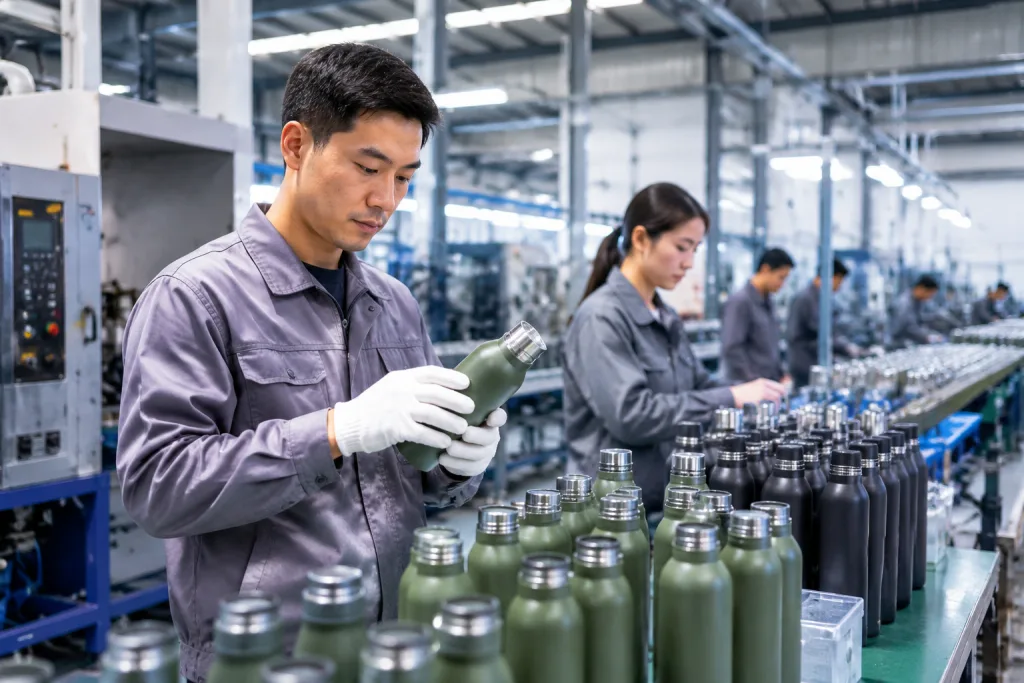
I’ll rewrite the section in place, keep the HTML structure unchanged, and tighten the sales-engineer tone with more factory-floor detail.Decoration is where a lot of buyers burn margin without seeing it early. A canteen promotional program can look cheap in the RFQ, then jump once you add two Pantone colors or a large print panel. Silkscreen still wins on simple logos, especially on matte powder coat. Laser engraving looks cleaner and holds up well, but it needs bare stainless or a coated surface with the right contrast. UV print gives stronger shelf impact, though setup time and rework risk are both higher.
For a canteen customized program, pick the decoration method by channel, not by personal taste. If you sell through a distributor drinkware network, a one-color logo and clean carton labeling usually do the job. If you are building a premium custom growler or customized growler for hospitality, laser or full-color print can support a higher ticket. For a customizable growler in sports or beer merchandising, we run the line for abrasion resistance and dishwasher tolerance first; flashy art is the wrong question to ask.
Decoration also moves yield. A full wrap or tight alignment spec can push reject rates up by 1-3% when the shop is not disciplined, and we have seen that go sideways fast. The math does not work if you ignore rework in landed cost. A solid canteen factory will show you the sequence: printing, curing, leak test, insulation test, final inspection. Last month QC pulled one sample because the logo shifted 2 mm on the side seam; that is the kind of miss a real canteen manufacturer catches before shipment, not after.
What Good QC Looks Like
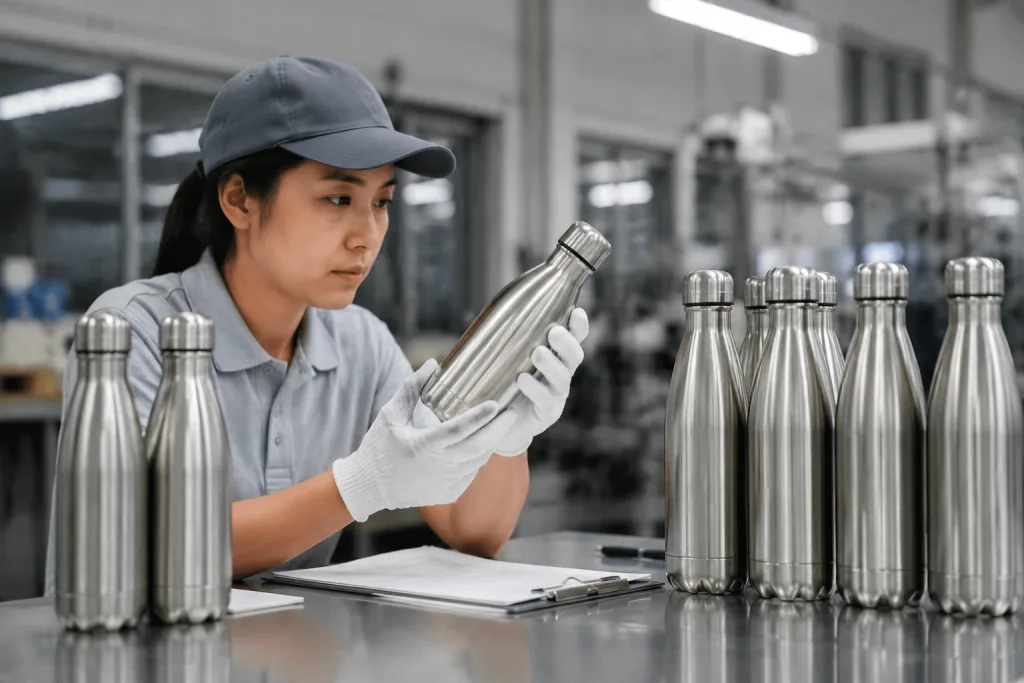
I’ll rewrite the section in place, keep the HTML structure unchanged, and tighten the sales-engineer tone with concrete QC details.For private label drinkware, QC belongs in the PO, not in someone’s memory. Put the inspection level on paper before production starts. A clean baseline is AQL 2.5 for critical defects like leakage, weak vacuum hold, or cap failure, and AQL 4.0 for minor cosmetic marks. We run this way on export orders for Europe and North America. It keeps the buyer and the line on the same page.
For thermal performance, spell out the test method. A 500ml stainless bottle can be filled with 95°C water, then checked at 6 hours and 12 hours for internal temperature. If the supplier says 12-hour hot retention, ask for ambient temperature, lid torque, and sealing method. QC pulled the sample on a Monday morning with a 3mm gasket check, and the numbers changed once we wrote the method down. That is the part buyers miss.
- Leak test each lid style at assembly
- Vacuum retention check on sample batches
- Coating adhesion check for powder-coated surfaces
- Drop test for shipping cartons if you use distributor canteen channels
This is where a real canteen supplier earns trust. They do not just send a shiny sample. They keep the line under control so the approved piece and the shipment match, carton by carton.
Sourcing Strategy for Buyers
I’ll rewrite this section in-place, keep the HTML exactly as-is, and tune the tone to sound like a buyer-side sales engineer with sharper factory details.If you are a procurement manager, split launch risk from scale risk. Run the first thermal bottle private label order on stock tooling, then move custom features to the second PO. We do this a lot. It keeps cash in real sell-through, not in guesses. A first order of 1,000-2,000 units is usually enough to read retail pull, especially with one bottle size, one lid type, and two colorways.
For distributors, the math changes. You care about reorder speed, not just the first shipment. Work with canteen distributors and canteen suppliers in China that keep color, packaging, and accessory matching steady across repeat runs. A good canteen vendor in Zhejiang will log mold numbers, ink codes, and carton specs so the April reorder matches the January lot. QC pulled the sample on a 1.5 mm logo shift last month, and that is the kind of miss that hurts channel trust.
Do not over-customize early. A customized canteen with four finishes, three logo placements, and bespoke packaging looks strong in a deck, but it often adds 15-30% to cost and pushes lead time out by two weeks or more. We’ve seen that go sideways. If the market is still unproven, keep the base product stable, cap the custom work, and work with a supplier in China who can quote the real process charges without hiding extras in the carton line.
Get a real quote, not a guess
Send your capacity, lid style, logo method, and target MOQ. We will return a clear FOB Zhejiang price and lead time with no filler.
Frequently asked questions
What is a realistic MOQ for thermal bottle private label orders?
For most standard products, 1,000 units is a practical MOQ and 3,000 units gives better pricing. If you ask for a custom lid, special coating, or mixed colors, the MOQ can rise to 5,000 units. Below 500 units, many factories in Zhejiang will still take the order, but your unit price often increases by 20-40% because setup cost is spread over fewer bottles.
How much does a private label thermal bottle cost FOB China?
A simple 500ml 304 stainless bottle with a stock lid, one-color logo, and plain carton often costs USD 2.10-2.80 FOB Zhejiang. If you upgrade to 316 inner steel, powder coat, laser logo, and retail packaging, expect USD 3.60-5.20. Final price depends on wall thickness, lid structure, print method, and order size.
How long does production take after I approve the sample?
For stock tooling and simple decoration, 25-35 days is common after sample approval. If you add custom color matching, special packaging, or a new lid mold, plan on 40-55 days. New mold projects can run 60-75 days. If a factory in China promises faster than that, ask what steps they are skipping.
What quality standards should I ask for?
Use AQL 2.5 for critical defects and AQL 4.0 for minor defects. For thermal performance, specify the test temperature, fill volume, and retention target in hours. Also request leak testing, vacuum checks, and coating adhesion checks. If you sell in North America or Europe, ask for REACH-compliant materials and keep the test documents on file.
Can I order mixed styles as a distributor?
Yes, but mixed styles usually raise handling cost and slow the line. A distributor drinkware program with two bottle colors and one logo is manageable at 3,000 units. If you mix multiple lids, box types, and decoration methods, the factory may add USD 0.15-0.40 per unit and 5-7 days to lead time. Keep the structure simple if you need repeat orders.