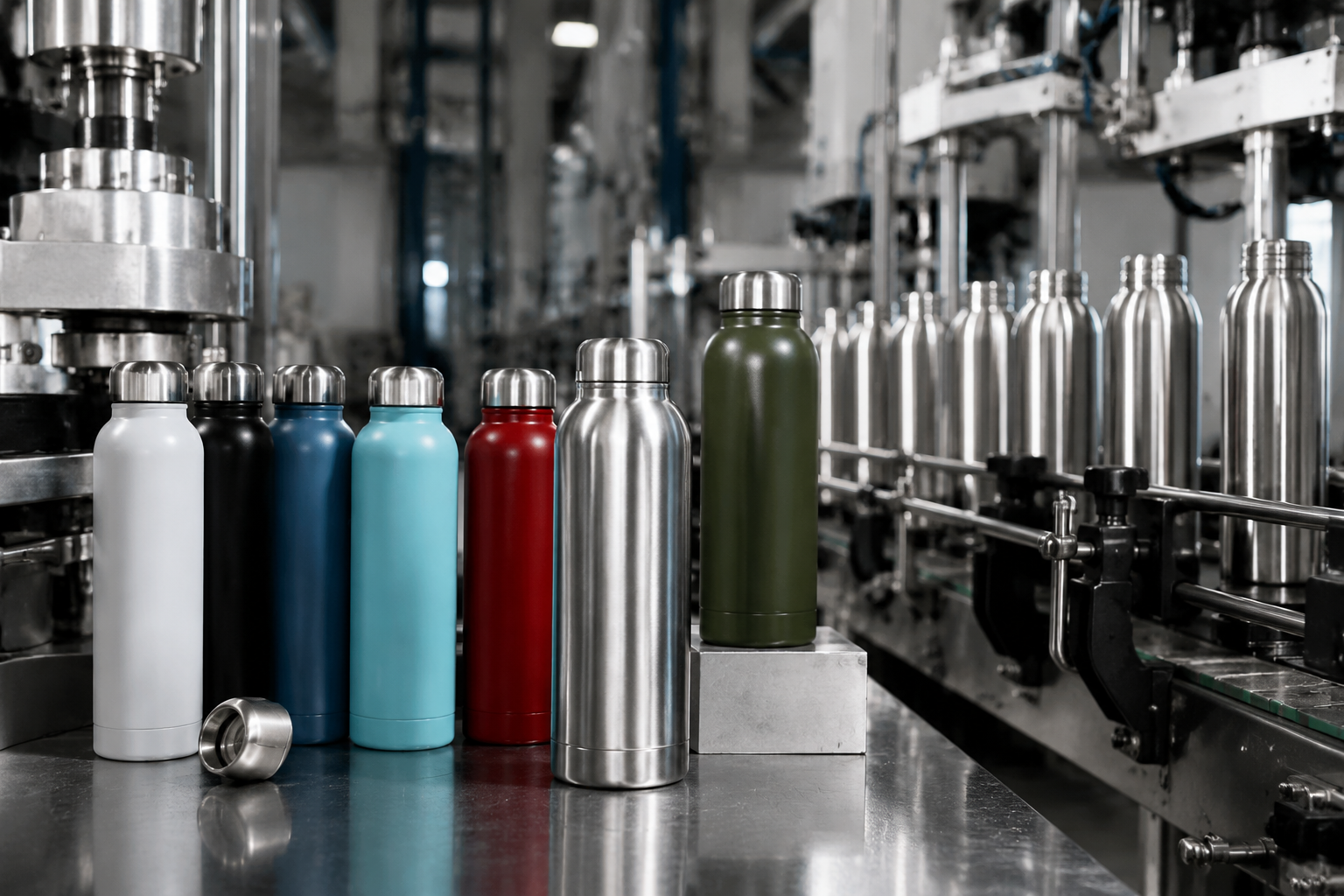
Key Takeaways
- A basic thermal bottle customized order often starts around FOB USD 2.10-3.80 at 1,000 pcs, before freight and duties.
- MOQ is usually 500-1,000 pcs for standard tooling, while complex shapes or custom lids can push MOQ to 3,000 pcs.
- Sampling normally takes 5-10 days, and mass production takes 20-35 days after sample approval.
- For stainless vacuum bottles, 304 inner walls, 201 outer walls, and 0.4-0.5 mm thickness are common buyer specs.
` tags, keep the HTML structure intact, and tighten the copy to sound like a factory-side sales engineer.
When you buy a thermal bottle customized for retail, corporate gifting, or marketplace resale, the real question is not “can it be done?” It is “what will it cost me, how long will it take, and where do I lose margin?” We see the same mistake again and again: buyers fixate on the logo and ignore decoration fees, sample lead time, vacuum bottle test requirements, and the jump from a 500-piece order to a 5,000-piece order. That gap is where the budget slips.
If you are sourcing from a canteen factory in Zhejiang or elsewhere in China, you need the numbers before you ask for artwork approval. A stainless thermal bottle can show FOB USD 2.10 on paper and still turn costly after coating, laser engraving, Pantone matching, and carton inserts. We run those jobs in Hangzhou every week, and QC pulled one sample last month because the lid print was 1.5 mm off-center. Buyers who do well treat customized drinkware like a production plan, not a design brief—the math does not work any other way.
What actually drives your cost
I’ll rewrite the prose in place, keep every tag and list intact, and trim the AI-sounding phrasing while adding a few factory-floor details.The bottle is only part of the bill. For a thermal bottle customized order, cost is driven by body material, lid structure, decoration method, and packaging. A plain 500 ml stainless steel bottle with a PP lid and one-color silk screen can land around FOB USD 2.10-2.90 at 1,000 pcs. Switch to powder coating, laser engraving, or a soft-touch finish and you usually add USD 0.15-0.60 per unit. Add a stainless steel cup lid, tea filter, or carry handle, and the quote moves again. On the line, we see the same PO typo a lot: buyer asks for “matte” but the sample card says “frosted,” and that changes the finish setup.
Material choice matters more than most buyers expect. A 304 inner liner with 201 outer shell is a common commercial spec because it keeps performance and price in line. Full 304 construction costs more, but it gives you a cleaner sales story. Wall thickness matters too: 0.4 mm is cost-efficient, 0.5 mm feels more solid, and anything thicker raises forming and welding cost. If you want a canteen customized for sports or outdoor use, lid sealing and drop resistance matter more than a fancy finish. QC pulled the sample after a 1.2 m drop test because the cap popped once; that is the wrong place to save money.
- Body material: 201, 304, or 316 stainless steel
- Capacity: 350 ml, 500 ml, 750 ml, 1,000 ml
- Decoration: silk screen, laser, UV, transfer print
- Packaging: plain box, color box, gift set, master carton inserts
In Zhejiang, buyers often think they are comparing bottle prices, but they are comparing process bundles. A canteen supplier quoting USD 2.40 may be cheaper than a USD 2.15 quote once you add one-color wrap print, a custom box, and testing to ASTM or ISO-related internal standards. We’ve seen this go sideways on a 5,000 pcs order: the low quote skipped carton inserts, then the buyer flagged crushed lids at receipt and the freight savings disappeared fast.
MOQ tiers that make sense
I’ll rewrite the section in place, keep the HTML structure intact, and make the copy sound like a factory-side sales engineer wrote it.MOQ is not a random number. Stainless forming, vacuum sealing, coating, and print setup all take line time and scrap material. On a Zhejiang shop floor, we can usually hold 500 pcs for stock shapes with one decoration method, but once the buyer wants a custom bottle shape, a colored lid, or mixed parts, the number moves up fast. This is the wrong question to ask if you want a promo drop to work. The real question is what can run cleanly without slowing QC or bloating rework.
Here is the range we see most often at the line:
- 500 pcs: simple logo print on an existing mold, narrow color choice
- 1,000 pcs: common MOQ for custom drinkware with standard packaging
- 3,000 pcs: custom color, upgraded lid, or private-label carton
- 5,000+ pcs: new shape, new tooling, or deeper customization
If you are a bottle distributor, start with the body and upgrade branding first. A customizable bottle with a stock lid ships faster and keeps landed cost under control. A full custom bottle project means tooling cost, sample approval, and a validation cycle that often runs 12 days instead of 18. For a custom growler or customized growler, MOQ is usually higher because capacity, neck finish, and cap torque matter more than the artwork.
We get better results when buyers split the order into a 500-1,000 pcs pilot and a 3,000 pcs replenishment PO. That gives the factory room to keep unit cost down while you check sell-through. QC pulled the sample on one run because the PO typo said 5000 pcs, not 5,000 pcs, and the buyer flagged it before we cut the carton plates. That kind of split order is the cleanest way to avoid dead stock on the first shipment.
Lead time from sample to shipment
I’ll keep the HTML exactly as-is and rewrite only the prose, with tighter buyer-side language and a few concrete shop-floor details. Then I’ll do a quick pass to make sure the timing numbers and the blockquote still read cleanly.Lead time is where a lot of buyers miss the launch window. A thermal bottle customized job usually has three clocks: sampling, approval, and mass production. If your artwork is ready and we already run that base model, samples can go out in 5-10 days. If the buyer flags a new color, a new cap, or a new packaging insert, sampling stretches to 12-18 days. That is normal in China, especially when the order has mixed materials or printed safety warnings for Europe and North America.
Mass production usually takes 20-35 days after sample approval and deposit. If the order needs a new mold, add 25-45 days for tooling and trial runs; the math does not work any other way. For a seasonal canteen promo order, we do not promise end-to-end delivery under 30 days unless it is based on existing stock. For a distributor canteen program with repeat SKUs, we can cut time by holding blank inventory and adding final branding later. On the line, QC pulled a sample with one wrong lid color last week, and that one small miss would have cost the ship date.
Practical rule: if you need retail-ready goods in under 45 days, choose an existing shape, one decoration method, and simple packaging.
A Zhejiang-based canteen supplier with stable output can usually ship 200,000-300,000 units per month across mixed drinkware categories, but your slot still depends on material stock and the decoration queue. If you are ordering a customized drinkware range with several SKU colors, ask for a line-by-line schedule. A PO typo on the carton count can throw off the whole plan, and we have seen that go sideways fast. That is the difference between a usable production plan and a vague promise.
Specs buyers should lock first
I’ll rewrite the section in place, keep the HTML structure unchanged, and tighten the buyer-language so it sounds like a factory-side sales engineer wrote it.Price talk comes later. First lock the spec. If you skip that step, every quote uses a different assumption, and the math falls apart fast. For a stainless thermal bottle, the minimum sheet should pin down capacity, material grade, wall thickness, lid type, surface finish, and the test standard. We have seen a buyer compare two samples and blame the factory, when one PO said 0.4 mm and the other sample landed at 0.6 mm. Same product name. Different cost.
For most B2B runs, start with 500 ml, 304 inner liner, 201 outer shell, 0.4-0.5 mm wall thickness, powder coat or matte finish, silicone sealing ring, and a leak test before packing. That spec works on the line and keeps MOQ pricing sane. If the bottle is for outdoor use or a premium shelf, move to 316 inside or a double-wall lid structure. For a canteen promo order, a silicone carry loop and one-color print usually beat decorative metal parts on margin.
- 304/201 combo: value-driven commercial standard
- Full 304: premium positioning and stronger corrosion resistance
- Laser logo: durable, no ink wear, good for corporate gifts
- Silk screen: lower cost, best for simple branding
If you sell through Amazon or regional retail, packaging and compliance matter as much as the bottle. Ask for REACH-related material declarations, drop-test packaging, and barcode placement for FNSKU or local retail labels. QC pulled the sample box on a 1.2 m drop test, and the corner crush told us more than the brochure ever did. A canteen manufacturer in China should quote those items line by line, not hide them inside a glossy catalog.
Pricing by buyer type
I’ll rewrite just the prose, keep the HTML tags and structure intact, and make the copy sound like a factory-side sales engineer wrote it.The right pricing model follows the buyer, not the catalog. A brand owner launching private label cares about margin and a clean finish. A canteen distributor wants repeat orders and no surprises on stock. A gift agency pays for visual punch and box presentation. A canteen manufacturer should quote each case on its own numbers, because the buying logic is different.
For brand owners, a thermal bottle customized with a color coating and laser logo is usually the safest mix. At 1,000 pcs, FOB often lands at USD 2.80-4.50, depending on material, lid style, and carton spec. For distributors, stock-friendly shapes with logo print often sit at USD 2.10-3.20, and that keeps reorder risk down. For promo buyers, the price drops fast when decoration stays simple and the pack is plain. QC pulled a sample with a 2 mm logo shift once, and the buyer flagged it; the math does not work if you chase the lowest headline quote.
If you buy canteen customized items for a chain, campus, or event program, ask your canteen suppliers to split unit price, print setup, packaging cost, and carton loading. That is how you compare offers from different canteen manufacturers and canteen vendors in China without guessing. On our line, a PO typo on carton count can change the whole landed cost, so we check it twice before we ship.
Freight gets ignored too often. A 500 ml bottle packed 48 pcs per carton can swing hard in landed cost if the carton size wastes space. We have seen this go sideways: a 3 mm gap in the insert turned into one extra pallet on the truck. Good packaging engineering can save 8-15% in freight and warehouse space, which beats shaving USD 0.05 off the factory price.
How to avoid expensive mistakes
I’ll keep the HTML structure intact and rewrite the prose in a more natural buyer-facing voice, with concrete factory details and fewer generic phrases.Most cost overruns come from buyers approving too fast. We see it on the line all the time. The first slip is changing artwork after sampling, when the screen plate or laser file is already set. The second is mixing two lid styles in one run without checking assembly time. The third is asking a canteen factory for “best price” without giving material grade, decoration method, or pack-out level. In China, vague RFQs usually get vague quotes.
Do not skip the sample just because the artwork looks simple. On our side, a printed bottle can shift 10-15% in color if the coating or curing temp moves, and the buyer flags it fast. A laser logo may look sharp on screen but come out too faint on a matte body. We once had a wide-mouth custom growler pass visual check and still fail leak testing after repeated torque cycles. For customized growler work, cap seal performance and thread fit matter more than logo placement.
Ask for the following before you approve production:
- Pre-production sample: one approved reference sample
- AQL inspection level: commonly 2.5 major, 4.0 minor
- Leak test: 100% or sampling-based, depending on order size
- Packaging confirmation: drop-safe inner pack and carton marks
Work with suppliers who know both customization and export compliance. A canteen distributor in North America may need carton labels, item codes, and UPCs in one fixed spot. A European buyer may ask for REACH-related statements and cleaner packaging data. We’ve seen this go sideways when the PO has a typo in the barcode number. Good canteen suppliers in Zhejiang do more than make the bottle; they keep chargebacks off your desk.
Get a quote with real cost and lead time
Send your capacity, material, logo method, and target MOQ. We’ll price it clearly and map the fastest production route from Zhejiang.
Frequently asked questions
What is the usual FOB price for a thermal bottle customized order?
For a standard 500 ml stainless steel bottle, FOB pricing usually starts around USD 2.10-2.90 at 1,000 pcs with simple logo print. If you add powder coating, laser engraving, or upgraded packaging, the price often moves to USD 3.00-4.50. A full 304 body, premium lid, or gift box can push it higher. The final figure depends on material grade, wall thickness, decoration method, and carton spec. A good canteen supplier should break these costs out separately, not hide them in one lump price.
How long does sampling take for a custom canteen?
If the mold already exists and you only change logo or color, sample lead time is usually 5-10 days. If you need a new lid, new surface finish, or custom packaging insert, plan on 12-18 days. For a true customized canteen with new tooling, sample development can take 25-45 days because the factory needs mold trial, vacuum testing, and adjustment. In Zhejiang, experienced canteen manufacturers can move faster, but only if your artwork and spec sheet are complete.
What MOQ should I expect from a canteen manufacturer?
For standard shapes, MOQ is often 500-1,000 pcs. For custom colors, special lids, or branded packaging, 3,000 pcs is more common. If you want a new mold or a complex custom growler format, MOQ can start at 5,000 pcs or more. A canteen factory sets MOQ based on setup time, coating batch size, and packaging efficiency. If you are a canteen distributor, ask for a pilot run and a replenishment plan so you do not overbuy the first shipment.
Which decoration method is best for custom drinkware?
For durable branding, laser engraving is usually the most practical because it does not wear off. For low-cost bulk orders, silk screen printing is still the cheapest option if your artwork is simple. UV print works well for full-color logos, but it can add cost and needs careful curing control. If you are ordering customizable drinkware for corporate gifts or distributor drinkware programs, choose the method that matches your sales price, not just the appearance. A decorative method that costs USD 0.40 per unit can destroy margin on a low-ticket item.
Can you support compliance for Europe and North America?
Yes, but you need to ask for it early. For Europe, buyers often request REACH-related material declarations and clear packaging data. For North America, they may ask for food-contact declarations, carton labeling, and Amazon-ready barcodes or FNSKU labels. A Zhejiang canteen supplier should also be able to provide internal leak tests and AQL inspection reports. If you need a canteen promotional order for retail, confirm compliance requirements before sampling so you do not redesign packaging after approval.