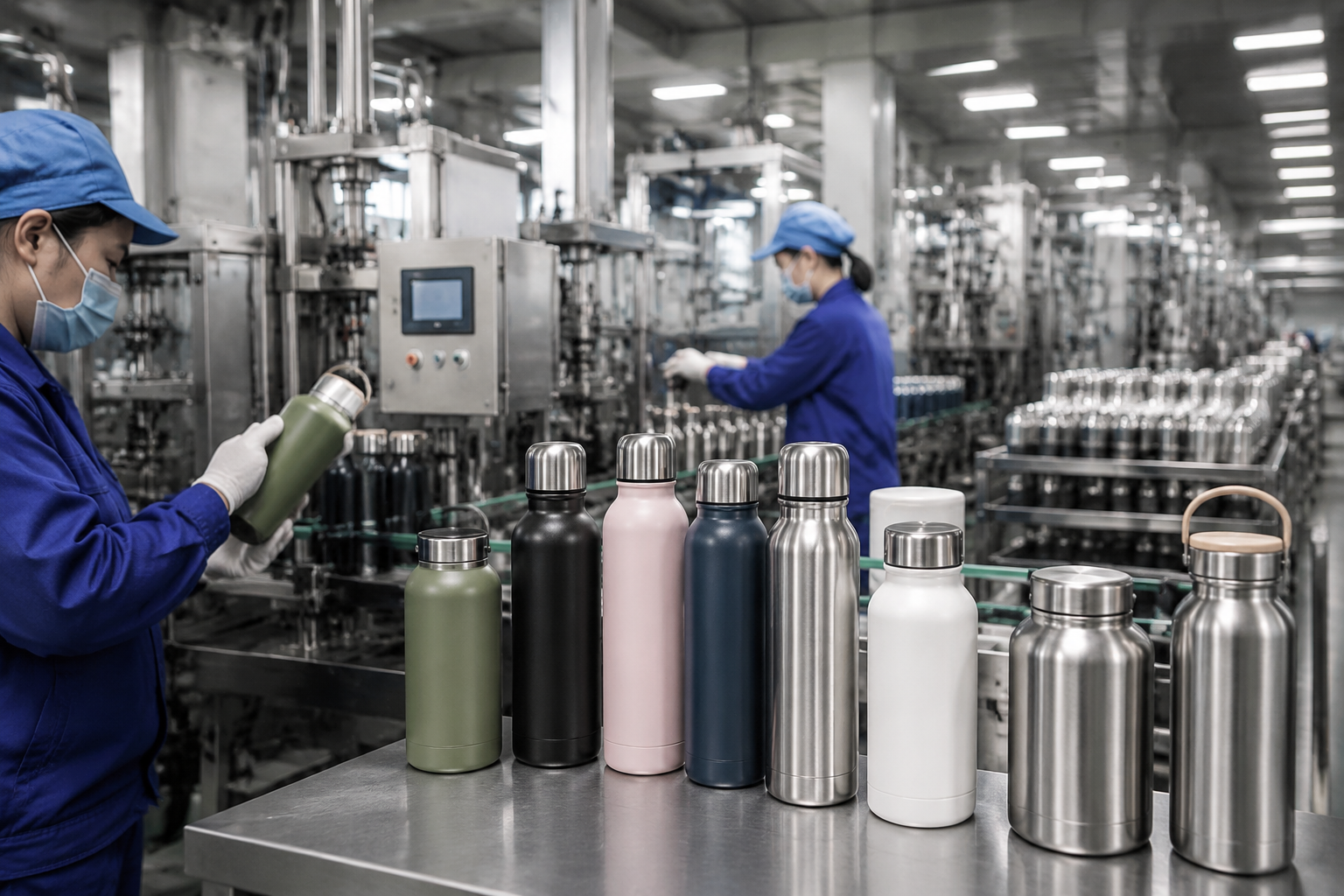
Key Takeaways
- Tea bottle wholesale pricing usually lands at USD 1.10-3.80/unit depending on material, lid, and decoration.
- A practical MOQ for custom tea bottles is often 500-1,000 pcs; fully custom tooling starts much higher.
- Typical lead time is 20-35 days for standard orders and 35-55 days for custom packaging or complex lids.
- Freight, AQL inspection, and carton specs can change landed cost by 8-15% even when unit price looks stable.
If you are sourcing tea bottle wholesale for a retail launch, an Amazon listing, a hotel program, or a promo run, the real question is not “what looks good?” It is “what lands at the right cost, in the right quantity, on the right date.” In Zhejiang and across China, plenty of factories can make a passable bottle. The gap is whether they hold tolerances, quote straight, and ship on schedule.
For procurement managers, the trouble usually starts with fuzzy pricing. One supplier quotes USD 1.20, another USD 2.40, and both call it competitive. Then you find the first price skips decoration, the second assumes 10,000 units, and neither covers the extra 12 to 18 days lost when packaging changes. We run into this on the line all the time. This guide breaks down the real cost drivers, MOQ tiers, and lead-time ranges you should expect when buying tea bottle wholesale or related bulk drinkware and wholesale drinkware.
What actually sets unit cost
I’ll rewrite the section in place, keep the HTML exactly intact, and tighten the sales-engineer tone while preserving the numbers and structure.When you compare quotes for tea bottle wholesale, do not start with unit price. Start with the stack under it. Material choice drives the spread: 304 stainless steel bodies, borosilicate glass, Tritan-style copolyester, and aluminum all sit in different cost bands. A 350 ml double-wall stainless tea bottle with a tea infuser and basic laser logo usually starts around USD 1.65-2.20 at 1,000 pcs. Add powder coating, a silicone sleeve, and a custom gift box, and that same bottle moves to USD 2.60-3.80. We run this math on the line every week.
Decoration is not free. Silk screen printing usually adds USD 0.05-0.18 per color per location, and laser engraving cuts recurring cost but needs cleaner setup control. Lid complexity matters too. A simple PP screw lid costs less than a leakproof flip lid with a removable strainer, and a collapsible infuser basket adds another USD 0.08-0.22. QC pulled the sample last month and found a 1.2 mm gap on one lid ring; that kind of miss turns into rework, then the buyer flags it. In Zhejiang, we see buyers chase the headline number and miss packaging, test reports, and carton size. That is the wrong question to ask for wholesale drinkware; the full spec sheet decides the real landed cost.
- 304 stainless tea bottle: best balance of cost and durability for repeat orders
- Borosilicate glass: stronger shelf appeal, but higher breakage risk in transit
- Tritan or copolyester: lighter to ship, easier for retail display programs
- Custom lid or infuser: higher unit cost, but better conversion and repeat use
MOQ tiers that make sense
I’ll rewrite the section in place, keep the HTML structure untouched, and tighten the sales-engineer tone with concrete factory detail and cleaner MOQ language.MOQ is where a lot of sourcing plans fall apart. We see buyers ask for 200 pcs, full-color print, a custom box, and mixed SKUs, then call it a trial order. It is not. For tea bottle wholesale, a workable MOQ is usually 500-1,000 pcs per color for standard models, 1,000-3,000 pcs for custom packaging, and 3,000-5,000 pcs if you want a new mold or a proprietary lid. Tooling and line setup in China do not get cheaper just because the first PO is small.
The clean rule is simple: one body color, one lid color, one print position. That is how we run the line when a buyer wants the best landed cost. If you need a retail assortment, split it into tiers instead of one messy composite order. We see the same pattern on canteen wholesale, drinkware bulk, and mixed bulk drinkware programs. At BottleForge in Hangzhou, Zhejiang, a standard run can be booked at 80,000 units per month, but MOQ still shifts with the model, print method, and box spec. QC pulled one sample last week because the buyer’s PO said “matte white” and the artwork file showed “off-white.” That kind of typo costs time.
Low MOQ is possible. Low cost is a different question. If you want a competitive landed price, keep the spec tight and the forecast steady.
Lead time from PO to ship
I’ll rewrite the section in place, keep the HTML structure unchanged, and tighten the sales-engineer tone with more concrete sourcing detail.For procurement, lead time usually matters more than unit cost because a stockout hurts more than a 10-cent gap. A normal tea bottle wholesale order with existing molds and standard decoration runs 20-35 days after artwork approval and deposit. If the buyer adds custom packaging, extra testing, or a new lid color, we quote 30-45 days. New tooling or deeper engineering changes push it to 45-60 days, and that is where the line slows down if sample sign-off drags.
The schedule is straightforward: 2-5 days for sample confirmation, 3-7 days for artwork and carton approval, 12-20 days for production on standard products, and 3-7 days for packing plus pre-shipment inspection. QC pulled the sample with a 0.3 mm lid gap once, and the buyer flagged it before we ran the full order. Sea freight to Europe or North America adds another 18-40 days, depending on port pair and peak season. If your launch date is fixed, build the PO backward from arrival, not from ship date. This is the right way to handle wholesale drinkware, a seasonal promotion, or a niche best wholesale drink bottle line for tea, infusion, or cold brew use.
- Sample lead time: 5-10 days for stock components
- Production lead time: 20-35 days for standard orders
- Inspection and packing: 3-7 days
- Ocean transit: 18-40 days depending on lane and congestion
Material choices buyers keep ignoring
I’ll keep the tags and rewrite the prose with a more factory-side voice, adding a few concrete floor details while trimming the AI-ish phrasing.Most buyers ask price first. The material decides the real cost. For hot tea, 304 stainless steel gives solid durability and decent insulation at a fair factory price. We run 0.5 mm wall tubes on this line, and the buyer usually cares more about denting than about the brochure copy. If the bottle is for shelf display, borosilicate glass looks cleaner and wipes down fast, but you have to budget for breakage and heavier freight. For cold brew or flavored water, Tritan-style plastics cut weight and work better for gym and travel channels. That changes tea bottle wholesale pricing, carton count, pallet loading, and claim rates.
If your portfolio also includes bulk canteen, canteen bulk, wholesale canteen, or canteen wholesale programs, standardize the parts where you can. Shared lids, shared gaskets, and shared cartons cut changeover time on the line. The same approach helps with beer tumbler wholesale or beer tumbler bulk orders. Fewer variants means fewer mix-ups, and QC pulled a sample last month that failed only because the cap thread was 0.3 mm off. In Zhejiang, the real delay is spec drift, not the machine.
Check compliance early. For North America and Europe, ask for food-contact declarations, REACH where relevant, and the test reports your importer needs on file. If you source in China, put the test standard in the purchase order, not just in email. The buyer flagged a PO typo on our desk before; one missing digit on the standard turned into a three-day back-and-forth, and that math does not work.
Decoration and packaging costs
I’m rewriting the section in-place, keeping the HTML tags and the existing product terms intact, while tightening the sales-engineer voice and adding a few concrete factory details.Decoration is where a sourcing team turns a decent margin into a thin one. For tea bottle wholesale, one-color silk screen on a smooth body is still the lowest-cost route. We run it on the line with a 120 mesh screen, and it stays clean if the artwork is simple. Laser engraving looks sharper and holds up better on stainless steel, but the buyer has to accept a plain metal tone. Full-wrap UV printing and gradient graphics cost more, and QC pulled the sample when the Pantone drift went past 2 Delta E. If your brand needs shelf punch, pay for it; if this is for corporate gifting, that is the wrong question to ask.
Packaging is part of the quote, not an extra line item. A plain kraft box usually adds USD 0.12-0.30, while a printed gift box can add USD 0.45-1.10 depending on board thickness, finish, and insert style. We had one PO with the FNSKU in the wrong spot, and that typo cost a day on rework. If you are shipping through Amazon FBA, lock carton size, barcode position, and label location before we start production. If you are going into retail, ask for a drop test and compression spec on the master carton; 5 kg on the top box is a real test, not a guess. The same packaging discipline applies to growler wholesale, bulk growler, and beer growler wholesale programs, where broken units and shelf-ready presentation both hit the math.
Packaging can add 15-30% to perceived value and only 5-12% to actual unit cost if you keep the structure simple.
How to compare supplier quotes
I’ll rewrite the section in place, keep the HTML structure intact, and make the copy sound like a factory-side sales engineer with sharper pricing details.When you collect quotes from factories in China, line them up on the same spec sheet. A proper quote for tea bottle wholesale should spell out 304 or 316 grade, 500 ml or 750 ml capacity, 0.45 mm or 0.6 mm wall thickness, finish, logo method, lid type, carton count, and who pays for testing. One supplier gave us FOB Ningbo and another sent EXW Zhejiang with a typo on the lid color, so the buyer flagged it fast. That is not a fair comparison. Ask for landed-cost math, not just the unit price.
Run a short checklist. Confirm whether samples are included and whether the buyer pays sample freight; on one job, the sample box was 1.2 kg and the courier bill was higher than the sample itself. Ask which AQL the factory uses for final inspection; we run AQL 2.5 for major defects and 4.0 for minor defects, but your acceptance limit should be written down before PO day. If you also source bulk drinkware, drinkware bulk, or even alcohol flask wholesale and alcohol flask bulk, check whether the line can pack mixed SKUs without mixing labels or cartons. This is the wrong question to ask only after production starts.
- Check whether the quote includes logo, box, and inner tray
- Confirm FOB port and incoterms before comparing prices
- Ask for carton size to estimate freight and cube efficiency
- Request test documents before paying for mass production
A practical buying plan
I’ll rewrite the three paragraphs in a more field-tested sales tone, keep every tag and the existing keywords intact, and make the buying plan feel specific and grounded.If you want a clean sourcing result, start with the commercial target, not the product sketch. Decide whether your program needs the lowest first cash outlay, the lowest landed cost, or the strongest shelf price. Those are different targets, and they rarely use the same bottle. For tea bottle wholesale, the first order we run is usually 1,000-3,000 pcs of one model, one print method, and one packaging spec. That gives you room to push on price without filling the warehouse with dead stock.
Then line up the rest of the range. If your catalog also includes beer growler bulk, beer growler in bulk, or beer growler wholesale bulk, keep the supplier list tight and split food-contact, pressure, and leak checks by product type. Same story for alcohol flask bulk, alcohol flask in bulk, and alcohol flask wholesale bulk programs. Different products, different compliance routes, different carton math. At BottleForge in Hangzhou, Zhejiang, we get the cleanest orders when the buyer sends a forecast window, target FOB, required test standards, and carton size before sample sign-off. We once had a PO with a 32mm carton typo, and the buyer flagged it after QC pulled the sample. That is the wrong place to improvise.
If you are building a long-term tea program, treat the first PO like a validation run. Lock the supplier, inspect the first batch, then move in 2,000-5,000 unit steps once the defect rate stays below AQL 2.5 and the freight lane holds. We’ve seen this go sideways when buyers jump straight to 10,000 pcs after one clean sample. The math does not work.
Request a quote with real landed cost
Send your target volume, logo file, carton spec, and destination port. We’ll reply with FOB pricing, MOQ, and lead time you can actually plan around.
Frequently asked questions
What is a normal MOQ for tea bottle wholesale orders?
For standard models, a normal MOQ is 500-1,000 pcs per color. If you want custom packaging or a special finish, expect 1,000-3,000 pcs. New molds, proprietary lids, or deep structural changes usually start at 3,000-5,000 pcs because tooling and setup costs need volume to make sense.
How much does a tea bottle cost in wholesale?
A typical tea bottle wholesale price is USD 1.10-3.80 per unit, depending on material, capacity, lid type, and branding. A simple stainless steel bottle with one-color print sits near the low end. Double-wall insulation, premium packaging, or laser logo work pushes the price up fast.
How long does production usually take in China?
For existing molds and standard decoration, plan 20-35 days after artwork approval and deposit. Add 5-10 days if you need custom packaging or extra testing. If you request a new mold or major design change, 45-60 days is more realistic. Ocean freight adds another 18-40 days.
What should I check before approving a supplier quote?
Check material grade, capacity, wall thickness, logo method, lid type, carton count, and incoterms. Ask for sample cost, lead time, and whether the quote includes packaging. For quality, specify AQL targets and request food-contact or REACH-related documents if you sell into Europe or North America.
Can I combine tea bottles with other drinkware in one order?
Yes, but only if the factory has the right lines and a controlled QC process. Many buyers combine tea bottle wholesale with bulk drinkware or wholesale drinkware to reduce vendor count and freight cost. Just avoid mixing products with very different compliance or packaging needs, such as insulated bottles and alcohol flask wholesale bulk items, unless the supplier is experienced across categories.