Key Takeaways
- A typical tea bottle private labeling MOQ starts at 1,000 units, with factory lead time around 25-35 days after sample approval.
- Expect FOB China pricing around USD 2.10-4.80 per unit depending on steel grade, lid complexity, and print method.
- For retail-ready custom drinkware, insist on REACH, food-contact declarations, AQL 2.5 inspection, and carton drop testing.
- A Zhejiang canteen factory with 300,000 units/month capacity is more stable for repeat programs than a small trading setup.
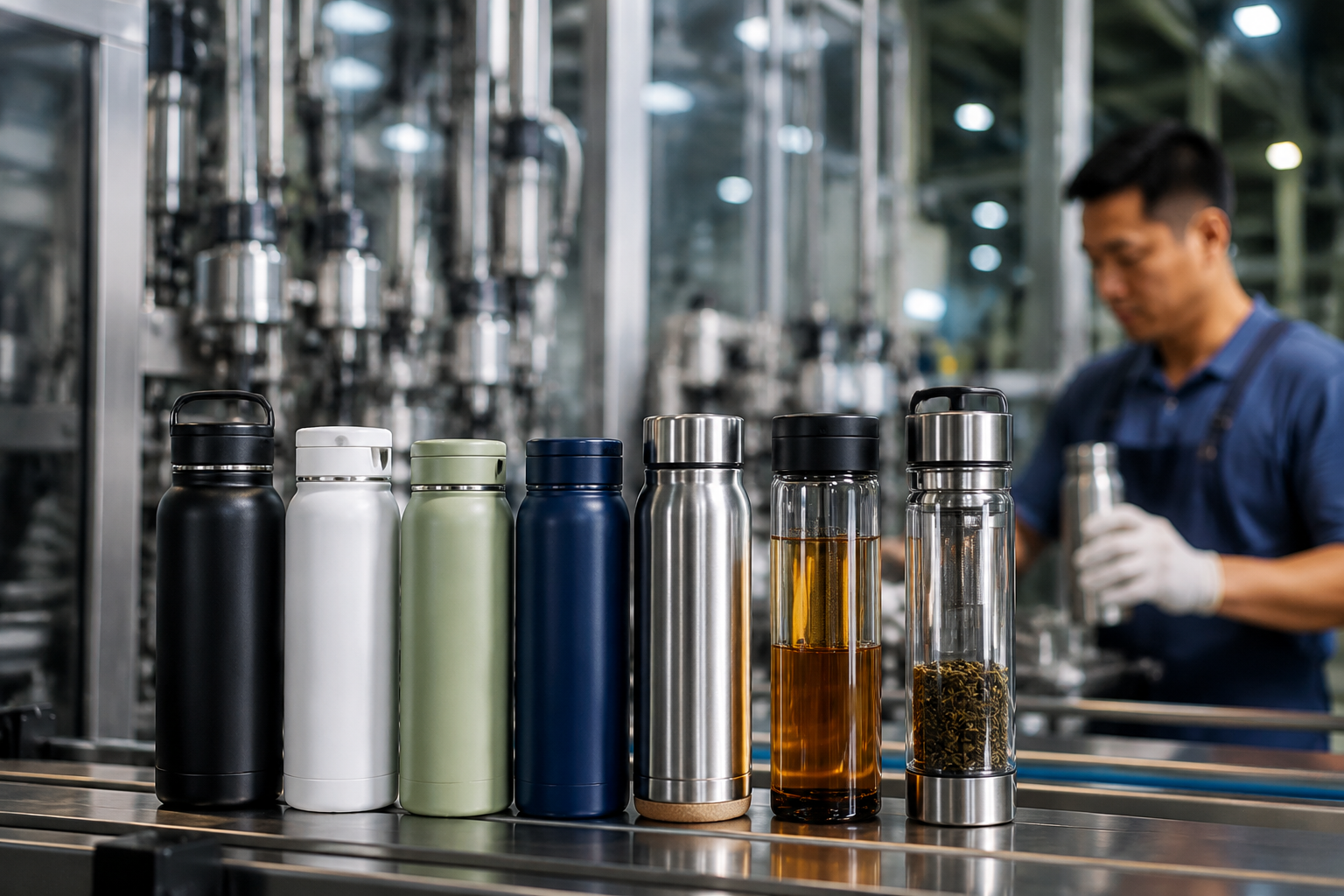
You are not buying a “tea bottle.” You are buying a retail unit that still has to pass procurement, sampling, logo sign-off, carton packing, ocean freight, and the first unboxing on the customer’s desk. Miss one spec, and you usually pay for it in rework or a late launch. Tea bottle private labeling needs the same control we run on any custom drinkware order.
At our Zhejiang factory, we see this every week from Europe and North America: a buyer wants 5,000 units, a clean logo, food-safe materials, and a landed price that still leaves margin after freight. That setup is normal. The part that goes wrong is the spec sheet, the QC checkpoints, and picking a canteen manufacturer or canteen supplier that can hold tolerance on a repeat order. One PO typo on a 500 ml bottle can slow the line for a day. Here is how a real order should move from inquiry to carton close.
The buyer arrives with a deadline
I’ll rewrite the section in place, keep the HTML tags untouched, and tune the prose to sound like a factory-side sales engineer. Then I’ll return only the HTML.Picture the PO: a European brand owner wants 5,000 custom tea bottles for a spring promo, matte body, laser logo, and a one-color print on the cap band. The cartons must go to an Amazon prep center and still work for distributor accounts. Simple on paper. In the line, it turns into capacity, insulation, tea filter design, box crush strength, barcode placement, and whether the lid keeps a silicone seal tight after 50 open-close cycles.
Start with the use case, not the decoration. For loose leaf tea, we run a strainer basket with enough depth so the mesh does not choke; 28 mm is a cleaner spec than “small.” For office gifting, a slimmer customized drinkware profile sells faster than a bulky thermal canteen. For a canteen promotional program, keep the print simple and pack tighter. For a premium retail SKU, the presentation box carries real weight.
At this point, a real canteen factory asks for capacity, target retail price, preferred material, and the market standard you need to clear. In China, especially Zhejiang, we also ask if you need BSCI, REACH, LFGB, or FDA-style food-contact documents. QC pulled a sample last week and the buyer flagged the carton print, not the bottle. That is not paperwork theater; it is the difference between a clean import and a stuck shipment.
Choose the bottle spec first
I’ll keep the HTML intact and rewrite only the prose, with a tighter factory-floor sales tone and the numbers preserved. Next I’m checking the exact section shape, then I’ll patch it in one pass.Tea bottles usually start with 304 stainless steel. We use 316 only when the buyer asks for extra corrosion resistance, or glass when the brand wants the tea visible on shelf. For most B2B runs, 304 is the right call. Shell thickness normally sits at 0.35-0.5 mm, and the inner liner on insulated models at 0.4-0.6 mm. Go thinner and the bottle dents on the line. Go thicker and your cost, weight, and carton count all climb.
For a private-label tea bottle, the lid is where buyers get burned. We’ve seen a cheap lid pass first sample and then fail after 500 opening cycles. If the bottle carries hot tea, specify odor-free silicone for the gasket, not a mystery TPE blend. Ask QC to run an inverted leak test for 10 minutes. If there is a tea infuser, test it with fine loose tea, not just big herbal pieces that hide the problem.
- Capacity: 350 ml, 500 ml, and 750 ml are the common retail sizes.
- Finish: powder coat, brushed steel, matte spray, or UV print.
- Decoration: silkscreen, laser engraving, water transfer, or heat transfer.
- Packout: individual box, master carton, or Amazon-ready FNSKU labeling.
If you are also sourcing a custom growler or customizable growler for the same brand, keep the decoration and carton logic aligned so your line sheet stays clean. We’ve seen this go sideways when the buyer treats a canteen customized program and a tea bottle order as two separate jobs, then loses the chance to share lids, cartons, and inserts.
Sampling exposes the real factory
I’ll rewrite the section in place, keeping the HTML structure intact and making the prose sound like a factory-side sales engineer wrote it.Sampling is where a tea bottle factory shows whether the sell sheet matches the line. The first sample has to lock down bottle shape, logo position, lid thread, infuser fit, and color match. Do not approve it on looks alone. We run a 50-cycle open-close test, fill it with 90°C water, shake it, turn it upside down, then pack it in a carton and check whether the insert keeps the bottle centered. QC pulled a sample last month and found a 1.5 mm offset at the cap seat. Small gap. Big leak risk.
A Zhejiang factory should give you a sample lead time of 5-10 days for standard decoration and 10-15 days for new tooling or a tricky cap. Sample fees usually sit around USD 30-120, depending on logo method and freight. That is cheap insurance. If a tea bottle vendor says “perfect sample in 24 hours” but shows no resin sheet, no gasket spec, and no test log, the math does not work. You are buying sales talk, not engineering.
“If the sample cannot pass a leak test and a repeat-open test, do not start price talks yet. Fix the structure first.”
Ask for material certificates first, especially for food-contact plastics, silicone seals, and any painted part. A solid supplier should also show batch traceability and production photos from the same line that will run your order. We once caught a PO typo on a 5000 pcs run: the buyer wrote “PP lid” but the approved sample used Tritan, and the whole quote changed. That is how you tell a real factory from a broker with one good sample.
Pricing that actually makes sense
I’ll rewrite the prose in place, keep the HTML structure unchanged, and make it sound like a factory-side sales engineer wrote it.For FOB China, tea bottle private labeling usually lands at USD 2.10-4.80 per unit for standard 304 stainless models. Add a premium lid, double-wall vacuum body, complex print, or a gift box, and the number moves to USD 5.50-8.50. Glass tea bottles can look cheaper on paper, but packing and breakage control push the real landed cost up. A custom canteen with a plain one-color logo is not the same order as a fully packaged customized canteen for retail shelves.
The quote should split out material, decoration, packaging, and tooling. If the supplier sends one flat number, push back and ask for the assumptions. You need the steel grade, whether the finish is spray or powder, whether the logo is one-color silkscreen or laser, and whether the lid includes a tea basket. We had a buyer flag a PO typo on the lid spec once, and QC pulled the sample right back to the desk. A canteen distributor often replies faster, but a canteen factory or canteen manufacturers group usually gives a cleaner cost sheet and fewer surprises on repeat orders.
- MOQ: 1,000 units for standard custom drinkware; 3,000 units for special colors or unique molds.
- Lead time: 25-35 days after sample approval and deposit.
- Payment: usually 30% deposit, 70% before shipment or against copy BL for established accounts.
- Capacity: a mid-size Zhejiang line can produce 300,000 units per month across multiple bottle types.
If your brand needs canteen customizable packaging for a retail chain, do not save USD 0.08 on the insert and lose the shelf presentation. We’ve seen that go sideways on the line: the bottle passed, the box looked cheap, and the buyer pushed the program back one season. Buyers of canteen promotional items often miss how much the box drives perceived value. In distributor canteen programs, that matters as much as the bottle itself.
QC should be boring and measurable
I’ll rewrite the section in place, keep every HTML tag intact, and make the prose sound like a factory-side sales engineer—specific, measurable, and less polished.QC is where a lot of projects get hurt. We run it on numbers, not “we checked it carefully.” Lock AQL before production starts. For export drinkware, AQL 2.5 is standard for major defects, and we usually tighten leakage, logo misprint, and coating blemish checks beyond that. A lid that leaks is a reject, not a remark.
Your inspection checklist should cover dimensions, wall thickness, finish adhesion, odor, threading, gasket fit, and carton compression. We measure wall thickness with a caliper to 0.3 mm on the line, and that catches real problems fast. If the bottle is sold as customized drinkware for office use, one dented master carton can trigger a chargeback at destination. The buyer flagged a typo on the outer carton once; the math did not work in their favor. For Amazon-style fulfillment, confirm FNSKU placement, carton labels, and polybag warnings before cargo leaves China.
Good factories in Zhejiang offer in-line inspection plus final random inspection. Ask for photos at each stage, not just the final pallet. QC pulled the sample, found a loose gasket on batch 3, and that saved a headache. If you work with a canteen distributor rather than the factory itself, ask for the same documents anyway: production schedule, incoming material check, in-process QC, and final inspection report. Paperwork is not decoration; it is how you control risk from 12 days away.
Shipping, documents, and the repeat order
I’ll rewrite the three paragraphs in place, keeping the HTML tags and all existing specifics intact while making the prose sound like a factory-side sales engineer.Once production clears final inspection, pack and ship with no guessing. Check carton count, gross weight, net weight, and pallet spec before the truck leaves. A 500 ml insulated tea bottle usually packs out at 0.35-0.55 kg per unit, so the loading math is the part that bites. If you ship FOB China, the commercial invoice, packing list, and HS code description need to match the actual goods. For Europe, keep REACH and food-contact papers ready. For North America, buyers usually ask for compliance declarations and traceability records.
This is where repeat orders are won or lost. A serious canteen manufacturer keeps your mold, print files, and packing spec on file, so the second run holds the same color and carton layout. We’ve seen this go sideways when a buyer changed the lid Pantone on the PO and then blamed the line. If you are building a catalog, line up your tea bottle range with any custom canteen, customizable canteen, or distributor canteen program you already sell. That makes cross-selling easier for canteen suppliers, canteen vendors, and retail accounts without rebuilding the spec every time.
What you want from the first order is not just on-time shipment. You want a process you can repeat at 10,000 units, then 30,000 units, then a new market launch, and the math does not work any other way. That is why the better buyers treat China sourcing like an engineering job, not a shopping trip. A Zhejiang factory with stable monthly output, clear QC, and straight sampling will save more over three seasons than the lowest quote ever will.
Send your spec and get a factory quote
We can review your tea bottle private labeling brief, confirm MOQ, and quote from our Zhejiang production line with practical lead times and QC details.
Frequently asked questions
What is the usual MOQ for tea bottle private labeling?
For standard tea bottle private labeling, MOQ is usually 1,000 units per design and color. If you need a special cap, custom mold, or unique Pantone spray finish, some canteen manufacturers will move the MOQ to 3,000 units. For mixed orders across sizes, ask whether the factory allows shared material or shared packaging. A factory in Zhejiang with 300,000 units/month capacity is more likely to support reorders at the same spec than a small trading desk.
How much should I budget per unit?
For FOB China, budget about USD 2.10-4.80 per unit for a standard 304 stainless tea bottle with basic custom logo work. A premium lid, double-wall vacuum body, and gift box can push it to USD 5.50-8.50. Glass models can look cheaper on paper, but breakage and packing often reduce the savings. Always separate bottle cost, decoration, carton, and any tooling so you can compare real landed cost, not just quote headlines.
What QC documents should I request?
Ask for material declarations, REACH or food-contact compliance if needed, AQL 2.5 inspection results, leak test records, and carton drop test evidence. If your product goes into Amazon, request FNSKU label confirmation and outer carton label photos. For a custom drinkware program, also keep sample approval photos and signed pre-production confirmation. That paper trail protects you when a dispute comes back three months later.
Can I combine tea bottles with other drinkware in one order?
Yes, if the factory line and packaging logic fit. Many buyers combine tea bottle private labeling with a custom growler, customizable growler, or canteen promotional line to share artwork and shipping. The catch is that each SKU still needs its own QC and carton spec. A canteen supplier can sometimes bundle this better than a fragmented vendor set, but only if the production schedules align and the molds are compatible.
How long does a first order take from sample to shipment?
Plan on 5-15 days for sampling and approval, then 25-35 days for mass production after deposit. If you request new tooling, special packaging, or a new print method, add another 7-10 days. Sea freight to Europe or North America can add 20-40 days depending on route. A realistic calendar matters more than a fast promise, especially when your launch date is fixed by a retailer or distributor canteen campaign.