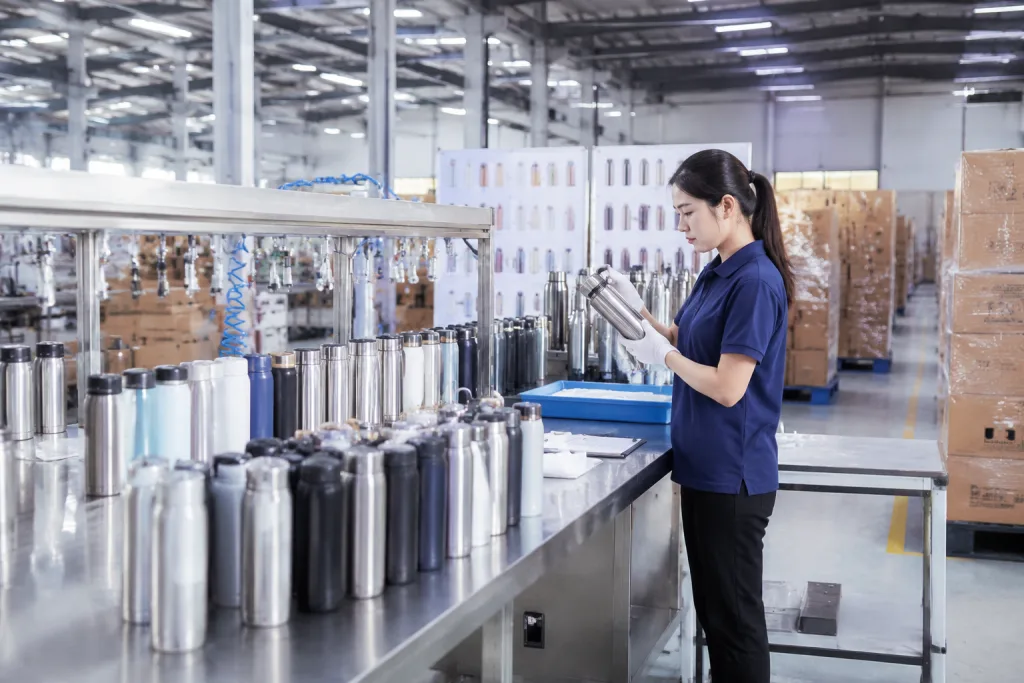
Key Takeaways
- A realistic MOQ for a tea bottle program is often 3,000 units per style, with 25–35 days lead time after sample approval.
- For stainless tea bottles, 304 inner walls at 0.4–0.6 mm and lids with silicone seals are the usual baseline for export orders.
- Insist on AQL 2.5 for critical defects, carton drop testing, and a pre-shipment count; small leaks become big chargebacks in North America and Europe.
- If you need custom drinkware for retail, lock art, carton layout, and FNSKU or barcode placement before mass production starts.
- Zhejiang factories with 80,000+ units/month capacity can support repeat canteen distributor programs, but only if specs are frozen early.
You are not buying “just a bottle.” You are buying a repeat order that has to survive ocean freight, carton drops, warehouse picking, retail shelves, and the first customer complaint. That is why a tea bottle distributor needs a supplier who can quote cleanly, hold the same Pantone shade on the second run, and ship on schedule. In Zhejiang and across China, the factories that do this well usually talk in numbers: 3,000 units per style, 25–35 day production, AQL 2.5, and clear material specs. We run the same way on the line.
Here is the real issue. Tea bottles look simple, but once you add an infuser, a lid, a laser logo, cartons, and retail labels, the order can go sideways in small ways that eat margin fast. QC pulled the sample on a 0.5 mm lid gap before, and that saved one buyer from a leaky shipment. A good canteen factory does not just make samples; it locks the spec, checks the closure, and keeps the variance under control before the goods leave the warehouse. That is the difference between a workable custom drinkware program and a headache you keep paying for.
Start With the Retail Use Case
I’ll rewrite just the prose, keep the HTML structure intact, and make it sound like a factory-side sales engineer wrote it.A tea bottle distributor should start with the retail shelf, not the factory catalog. Ask where the bottle sits: travel mug, office tea bottle, gift item, or a sports-adjacent bottle with an infuser. That choice changes the lid, the body, and the packaging spend. A 500 ml stainless tea bottle with a tea basket is a different job from a 750 ml growler-style bottle for cold brew or iced tea. We had a buyer flag that exact mismatch on a PO last month.
For export buyers, the spec usually falls into one of three lanes:
- Stainless tea bottle: 304 inside, 201 or 304 outside depending on price target, 0.4–0.6 mm wall thickness.
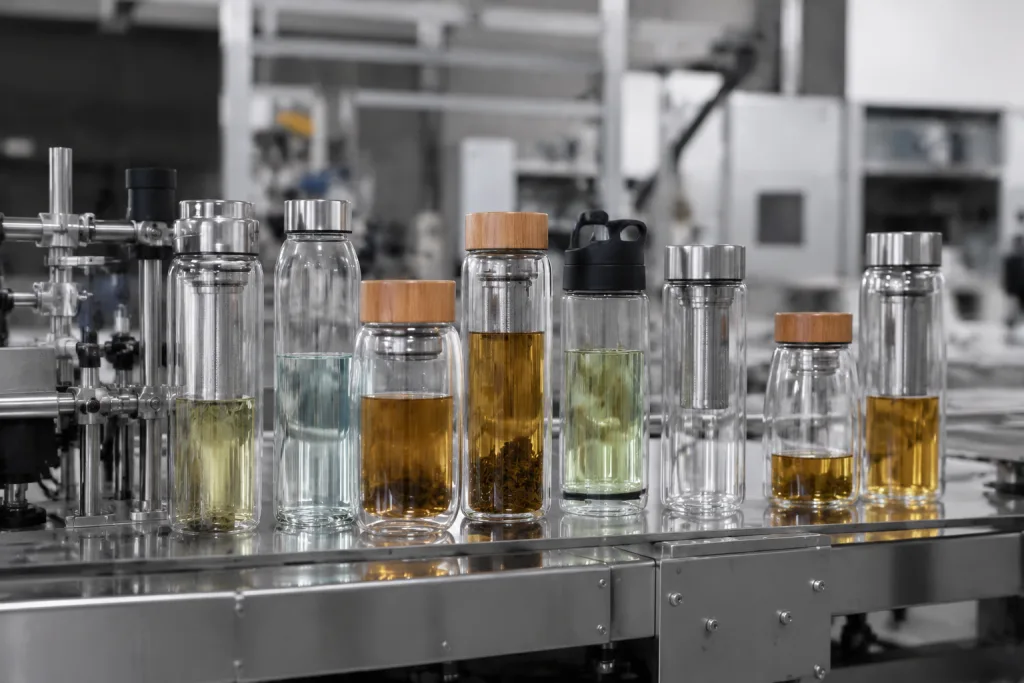
- Glass tea bottle: borosilicate body with silicone sleeve, better for premium shelf placement but breakage risk goes up in transit.
- Hybrid custom drinkware: stainless body with removable infuser, the cleaner choice for repeat distribution volume.
Do not turn the first call into a design debate. Ask for target price, sell-through target, and channel first. If your retail customer wants a $6.50 landed item, a polished double-wall customized canteen with a complex lid will miss the number. If you need a promotional canteen under $2.20 FOB, the line needs a simpler body and one printing method. That is the wrong question to ask if you start with decoration. QC pulled a sample with a 0.8 mm lid gap once, and the math did not work.
Lock the Spec Before Sampling
I’ll keep the HTML structure intact and rewrite the prose to sound like a factory-side sales engineer, with tighter specs and a few concrete shop-floor details.Sampling is where sourcing gets expensive if the spec is loose. A canteen maker can turn out almost anything once, but the second run is the one that matters. Before you ask for samples, send a one-page spec sheet with exact capacity, target dimensions, finish, logo method, carton count, and test items. If you need a customizable canteen with a tea infuser, call out basket hole size, gasket material, and whether the lid must open with one hand. We run into pushback here all the time, and the buyer usually loses that argument.
The most common buyer mistake is writing “similar to sample” in the email. That is not a spec. It leaves room for back-and-forth and, worse, gives the line room to improvise. Better language looks like this:
Capacity: 500 ml ± 10 ml; inner 304 stainless steel, 0.5 mm; outer 201 or 304 depending on quote; lid PP with silicone ring; leak test 60 seconds inverted; logo laser engraved 30 x 18 mm; master carton 24 pcs; outer carton 5-layer export grade.
If your tea bottle distributor program is for Amazon or retail, lock the barcode area before sample approval. A canteen supplier in Zhejiang can place FNSKU or EAN labels, but only if the art file and carton map are clear; we had one PO where the buyer typed the barcode size wrong by 10 mm, and QC pulled the sample before it went further. For colored finishes, set Pantone tolerance at ΔE 2.0 if the brand is strict. Otherwise shade drift shows up on the second production lot, and then the math does not work.
Price the Order Like a Buyer
I’ll rewrite the section in-place, keep the HTML exactly as-is, and make the copy sound like a buyer-side sales engineer with concrete pricing detail.Unit price is only one line in the quote. A sharp canteen distributor checks mold, printing, packaging, carton size, and defect allowance before they talk margin. For a standard 500 ml tea bottle, FOB China pricing usually runs from about $2.10 to $4.80, depending on steel grade, lid build, and decoration. A printed customized drinkware order with a plain box can stay near the low end; a premium canteen custom order with an infuser and powder coating will land higher. We’ve seen buyers focus on unit price and miss a $0.18 carton hit. The math doesn’t work.
Ask the canteen factory to break these lines out:
- Unit price at 3,000 pcs, 5,000 pcs, and 10,000 pcs
- Sample charge and refund policy
- Tooling or mold cost, if any
- Printing setup fee
- Individual box and master carton cost
This is where a canteen supplier shows whether it knows export buying. A clean quote also states Incoterms, usually FOB Ningbo or FOB Shanghai for Zhejiang shipments, plus lead time in calendar days. If a vendor says “fast delivery” but cannot tell you 28 days versus 42 days, that is sales talk, not procurement. QC pulled the sample on a 500 ml line last month and found a 1.2 mm lid gap; that kind of detail is what the buyer flags. You need a number you can schedule against.
For a distributor drinkware program, I prefer one landed-cost model before sample approval. Add freight, duties, inland delivery, and carton damage allowance. Once you do that, you can compare a canteen promotional item against a more durable canteen customizable item and see which one makes margin in your channel. We ship this way all the time, and it saves argument later. A PO typo on carton count can turn a good quote into a mess.

QC the Sample Like a Factory
I’ll rewrite this section in-place, keeping the HTML intact and tightening the sales-engineer tone with a few concrete factory details.When the first sample lands, don’t judge the finish alone. Treat it like a return from the warehouse. Fill it with 90°C water, tighten the lid, flip it for 3 minutes, then check the silicone seal and thread for seepage. If the bottle has a tea basket, shake it and see whether it rattles or rubs the inner wall. On stainless bodies, we run a light across the seam, weld line, and polish to catch dull spots before the line starts.
A serious canteen vendor will take a plain inspection checklist. This is the same checklist we use before mass production, and the math works better than guessing.
- Appearance: no dents, no coating bubbles, no sharp edges
- Function: lid opens smoothly, no cross-threading, no leak after inversion
- Fit: gasket seated fully, infuser stable, sleeve aligned
- Marking: logo centered, readable, and within tolerance
If you are comparing canteen manufacturers, ask which one can support pre-production samples, a golden sample, and sealed reference approval. We keep one signed sample on file in Hangzhou and match bulk output to that piece. QC pulled the sample again when a buyer flagged a 0.8 mm logo shift, and that saved a 3,000-piece headache. For a tea bottle distributor, that reference beats a polished sample photo every time, because you have something real to compare when the carton opens.
Check packaging at the same time. A custom canteen can fail in transit because the box is loose, not because the bottle is bad. A 5-layer export carton with the right dividers often saves more money than shaving a few cents off the unit price.
Run Production With Control Points
I’ll rewrite the section in-place, keeping the HTML exactly as-is and tightening the prose to sound like a factory-side sales engineer.Once the sample is signed off, production control matters more than fresh ideas. A Zhejiang canteen factory should run incoming material inspection, first-article approval, in-line checks, and final inspection before packing. For a 5,000-unit order, ask for photos or short video at each gate. We run it that way on the line, and it saves arguments later.
For beverage hardware, the control points are straightforward. Stainless tube wall thickness should hold near the approved range, usually 0.4–0.6 mm for mainstream export models. The coating needs an even cure, and the neck-ring threads must not chew the lid. If the order includes a straw or infuser, QC should confirm food-contact material compliance for REACH in Europe and the FDA-side declarations for the U.S. market.
This is where inspection standards pay off. AQL 2.5 is common for major defects, while some buyers push harder on leakage and missing parts. That pushback is fair. We’ve seen a loose gasket turn into a retail return in 12 days, and the buyer flagged it fast. Ask whether the factory uses lid torque testing and whether the batch record shows the result.
A plant running 80,000 to 120,000 units per month can still miss details if the spec is sloppy. Capacity does not fix a vague PO. It only works when the order is locked down, and a typo on the cap color code can still stop packing.
Ship, Label, and Reorder Cleanly
I’ll rewrite just the prose, keep the HTML untouched, and make it sound like a buyer-facing sales engineer wrote it.Shipping is where first-time buyers give margin back. A tea bottle distributor should lock down carton dimensions, pallet pattern, and whether the pack is built for retail shelf or bulk warehouse intake. We run this check on the line before packing; one 2 mm carton change can throw off a pallet. If you sell into Amazon or a similar platform, barcode placement and carton marks need to match the receiving plan exactly. If you use FNSKU, print the label on a flat, readable panel, not across a seam.
For European destinations, check packaging compliance and stay away from mixed-material packs that make recycling messy. For North America, keep the carton count steady and hold master carton weight under the receiving limit. We had a buyer flag a 14.8 kg master carton because their DC cap was 15 kg, and the math did not work. If the order goes into a distributor network, a clean rebox cuts labor. If it goes straight to stores, the canteen custom outer box should look retail-ready, not like something pulled off the last pallet.
Reorders are where the relationship starts paying back. Keep one file with the approved sample, artwork, box dieline, carton spec, and QC photos. QC pulled the sample against the PO once and caught a typo in the carton code before we shipped; that saved a messy claim. A good canteen distributors program should not make you explain the same product from zero every time. When the supplier is organized, reordering turns into a 2-day approval cycle instead of a 2-week back-and-forth. That is the standard you want from a canteen supplier, whether you buy from China or elsewhere.
Send your tea bottle spec for a real quote
We can review capacity, MOQ, artwork, and QC before sampling so your first order from Zhejiang lands on target.
Frequently asked questions
What MOQ should I expect from a tea bottle distributor order?
For a standard stainless tea bottle, 3,000 pieces per style is a realistic MOQ in China, especially from Zhejiang factories. If you need multiple colors, the factory may ask for 500–1,000 pcs per color within that total. Simple printing can sometimes go lower, but once you add a custom lid, infuser, or special box, the economics usually push MOQ back up. If a canteen manufacturer offers 500 pcs on a fully customized model, check whether the price includes tooling, packing, and repeatable QC. A low MOQ is useful only if the unit stays consistent on reorder.
How much does a custom tea bottle usually cost FOB China?
For a 500 ml stainless model, FOB China prices often sit around $2.10 to $4.80 per unit, depending on steel grade, wall thickness, print method, and packaging. Laser engraving is usually cleaner and more durable than simple pad print, but it can add cost. A canteen promotional bottle with basic single-wall construction may be cheaper, while a double-wall insulated custom drinkware model with an infuser will land higher. Ask the canteen supplier to quote at 3,000, 5,000, and 10,000 pcs so you can see the real volume break. Do not compare sample prices to mass-production pricing.
What QC checks matter most for tea bottles?
Leak testing, lid torque, gasket fit, and coating adhesion matter most. For stainless models, invert the bottle filled with hot water for at least 60 seconds and inspect the seal. Check the thread for cross-threading, the infuser for rattling, and the body for dents or polishing marks. Use AQL 2.5 for general defects and tighter control on critical issues like leakage or missing parts. A canteen factory should also keep one sealed golden sample and match production to it. If you are buying for retail, carton compression and drop testing matter as much as the bottle itself.
Can I order branded tea bottles for Amazon or retail shelves?
Yes, but the packaging has to be planned early. If you are selling through Amazon, the carton and unit label should accommodate FNSKU placement, and the artwork should leave a clean barcode zone. For retail shelves, the box design needs to match shelf width and opening orientation. A canteen customized for retail also needs consistent color, legible logo placement, and a stable hanging or stacking format if the channel requires it. A good canteen vendor in China will ask for your barcode file, carton pack plan, and master carton dimensions before production starts. That is normal and saves rework.
How do I choose between stainless and glass tea bottles?
Choose stainless if you need durability, lower breakage risk, and easier distribution. Choose glass if your channel values a premium tea experience and you can handle higher carton protection and breakage allowance. A borosilicate glass bottle with a silicone sleeve often looks better on shelf, but it is less forgiving in transit than a stainless customized canteen. Stainless is usually the safer choice for distributor drinkware programs because returns are lower and freight damage is easier to control. If the buyer wants a more upscale gift item, glass can work, but the packaging cost will rise.