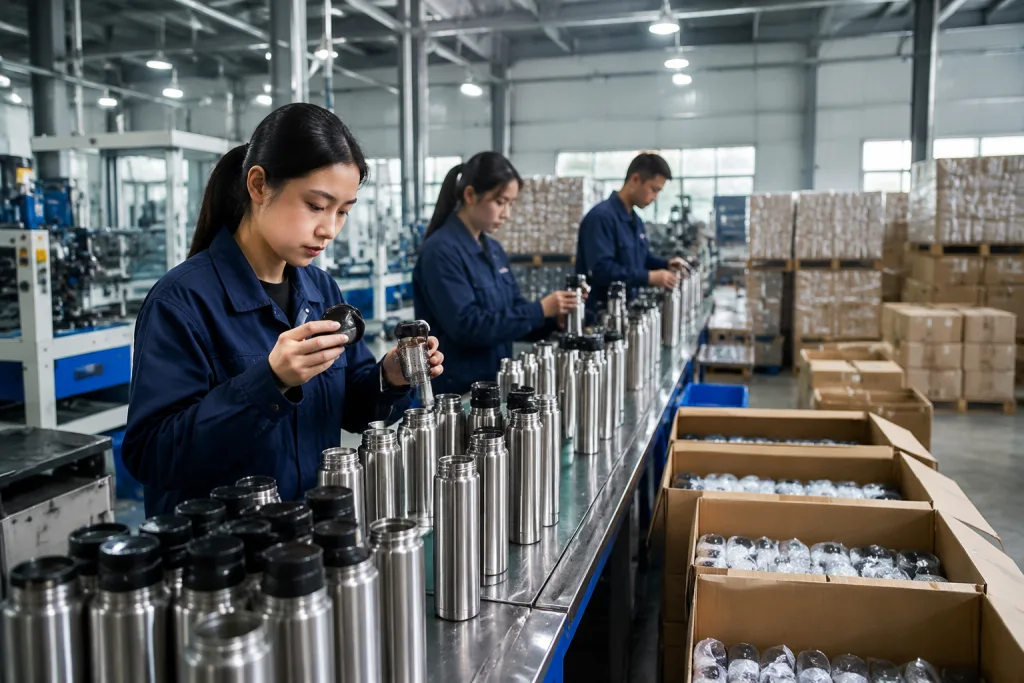
Key Takeaways
- A 0.8 mm silicone gasket and a 24-hour inverted leak test catch most lid failures before shipment
- For tea infusers, 304 stainless at 0.4-0.5 mm wall thickness is usually safer than thin mystery steel
- A factory that ships 600,000 units/month should still quote MOQs clearly, often 1,000-3,000 pcs per SKU
- FOB Zhejiang pricing for a basic tea bottle customizable model often starts around USD 2.10-3.80 depending on finish and tooling
Most buyers do not lose money on a tea bottle customizable order because the concept was weak. They lose money when the factory misses the details. A lid that leaks in a 1,200-carton shipment, a tea infuser that rusts after two wash cycles, or a powder coat that chips in transit turns a clean PO into a claims file. We run into this all the time on 500 pcs MOQ trials: the sample looks fine on the bench, then the line exposes the weak point.
The real question is not “Can you make it?” That is the wrong question to ask. The better question is “Where does it fail, and what goes into the spec so it does not fail again?” At BottleForge Industrial in Zhejiang, QC pulled the sample and the same four issues showed up again and again: weak seals, unstable print, bad tolerances, and poor material picks. Once you lock those down, sourcing custom drinkware for Europe or North America gets a lot simpler.
Where tea bottles usually fail
I’ll rewrite the section in place, keep the HTML exactly as-is, and tighten the prose so it reads like a factory-side sales engineer wrote it.The first failure is usually mechanical, not visual. Buyers sign off on a sample, then the run shows up with lids that squeak, threads that bind, or gaskets sitting off-center. On a tea bottle customizable order, that turns into leaks, returns, and ugly reviews once the stock hits distributor channels or Amazon-style fulfillment. “Better quality” is the wrong ask. We run the line by spec, so the weak point has to be named in black and white.
Start with the closure. Hot tea changes pressure. A cap that passes a quick hand check can still fail after a 70-80°C fill and a truck ride. We ask for an inverted leak test for 24 hours at room temperature, plus a thermal cycle from hot fill to cool-down. For a canteen customized as a tea bottle, lock down thread tolerance, gasket hardness, and torque range. The lid should not depend on operator feel. QC pulled the sample once and found the seal material missing from the drawing; the buyer flagged it, and that typo would have cost a full PO. If the canteen manufacturer cannot name the seal material, ask again. A serious canteen factory in China or Zhejiang will put it on the sheet.
- Use food-grade silicone gaskets, not generic rubber.
- Specify cap torque and thread engagement depth.
- Ask for 100% leak testing on pilot runs.
Materials that quietly ruin orders
I’ll rewrite the section in place, keep the HTML structure intact, and tighten the wording so it reads like a factory-side sales engineer wrote it.Material mistakes eat margin because photos hide them. A matte black finish looks fine until the first carton rubs the corner. A tea infuser mesh looks neat until the weld pulls out on the line. We’ve had a buyer flag a custom growler because the spec said “stainless” but not the grade; it passed visual check and still spotted after acidic tea sat in it for 72 hours. Low unit price is where this goes sideways.
For insulated tea bottles, 304 stainless is the sane baseline. If the bottle will sit on hot tea for 6 to 8 hours or go through aggressive washing, ask whether both liners use 304 or the factory mixes grades to shave cost. For single-wall stainless, 0.4 mm to 0.5 mm is the range we run most often; anything thinner dents fast in transit and QC will catch it by hand. Glass needs a borosilicate test report, not a sales reply that says “high borosilicate.” For a canteen custom order, put the material callout on the PO and the carton mark. That helps with customs, compliance, and the first return claim.
Cheap steel costs more once you add rework, freight, and chargebacks.
Print and logo problems
I’ll rewrite this section in-place, keeping the HTML structure intact and tightening the sales-engineer tone. Next I’m preserving the list while making the prose more specific, less generic, and more factory-grounded.Brand owners usually catch this after the cartons are on the water. The logo sits 2 mm left of center, the laser line is too light, or the silkscreen starts lifting after three dishwasher cycles. That turns a customized canteen into a distributor headache fast. We’ve seen a clean sample fail on the line because the jig was loose by 1.5 mm or the operator rushed the fixture change. For canteen promotional projects, repeatability beats fancy decoration.
Pick the marking method by use, not by taste. Laser engraving holds on stainless and usually takes shipping scuffs better than ink. Silkscreen works for a one-color logo, but only if the curing time and adhesion check are right. If you want a premium look on customized drinkware, ask for a rub test, a dishwasher test where it applies, and a placement tolerance of ±1.5 mm. For a canteen distributor covering multiple SKUs, lock the artwork file, Pantone code, and logo size into the approved sample. “Same as last time” is the wrong question to ask. One PO typo on logo width can send the whole batch back to artwork. A canteen manufacturer in Zhejiang should run a sample seal process, not just send a sales email.
- Specify the decoration method per SKU.
- Approve a signed golden sample.
- Require rub and adhesion tests for printed logos.
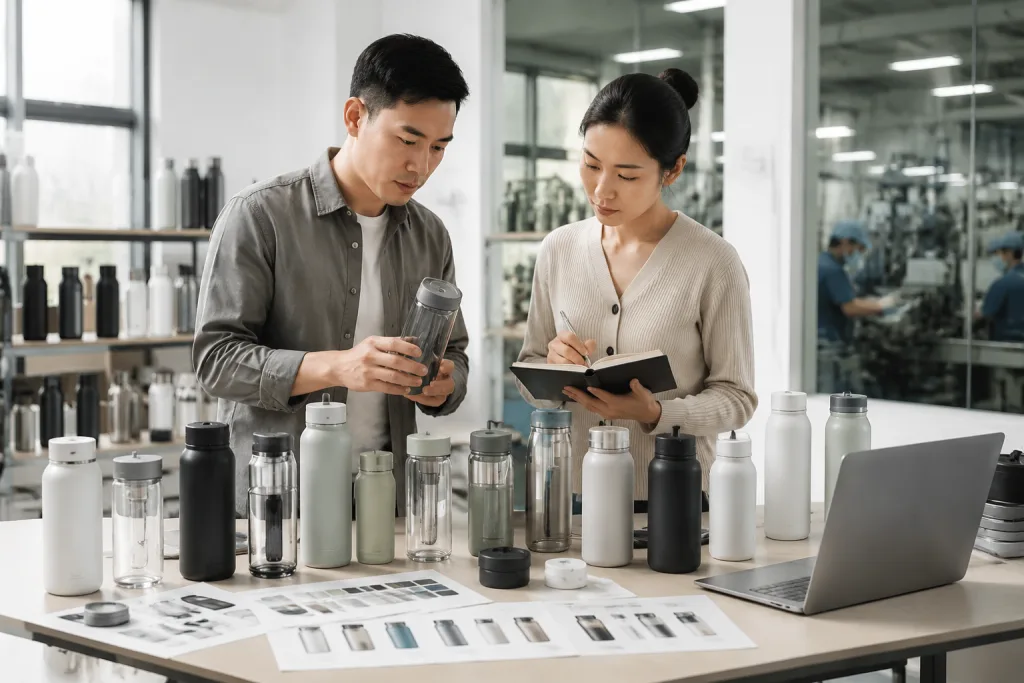
Infuser and tea path design
I’ll keep the HTML exactly as-is and rewrite only the prose, pushing it toward a seasoned factory-side sales engineer voice with a few concrete shop-floor details.A tea bottle customizable order lives or dies on the tea path. If the infuser basket is too fine, it clogs. Too open, and leaf bits slip through. If the basket sits too close to the wall, heat moves off-center and the brew goes patchy. Buyers often ask for “premium tea function” and stop there. That is the wrong question to ask, and it is how a canteen supplier ships a nice-looking bottle that drinks badly.
For loose-leaf tea, lock down mesh aperture, basket volume, and removal clearance. We usually see a practical mesh range around 0.5-0.8 mm, but the leaf format decides the final call. Herbal blends with fine particles need a tighter mesh and a flow test on the line. If the bottle also serves as a custom growler for cold brew or non-carbonated drinks, the filter has to come out fast and rinse clean. We’ve seen this go sideways in Germany and the US: residue stays in the insert, then the buyer flags it even though the bottle passes leak test. For a customizable growler or canteen customizable design, ask the factory for a section drawing that shows the cleaning path before mass production.
On the factory floor, weld quality and basket roundness decide whether the part runs smooth. A basket that is oval by 1-2 mm can jam at the neck. QC pulled the sample with a go/no-go gauge, and that check catches problems before we ship. If you are working with a canteen factory in Zhejiang, put basket diameter, neck ID, and pull-out force on the inspection sheet. That is where the hidden failures sit.
Packaging failures in transit
I’ll rewrite just this section, keep the HTML structure intact, and tune the prose to sound like a factory-side sales engineer.Buyers often blame the bottle when the carton was the real failure. We’ve seen a 18-day sea shipment land with dented shoulders and scratched caps even though the bottle passed in-house tests, because the inner pack had too much play. This shows up a lot on customized growler orders: the unit is heavier, the neck finish sits exposed, and the box takes the hit. For canteen distributors, packaging is part of product quality.
Write the pack spec with the shipping lane in mind. Inner trays need enough compression resistance to stop movement; if the bottle rattles in the box, the line is already wrong. For export cartons, ask for drop testing at 60-80 cm based on final pack weight, not a guessed number. If the order goes into FBA, check carton dimensions, FNSKU placement, and master carton labeling before production starts. A canteen promotional set with accessories needs foam, paperboard, or molded pulp that actually locks the insert and lid; QC pulled the sample here and found the lid sliding 12 mm. Zhejiang factories that run serious volume can sort the packaging, but they need the target market, freight mode, and carton limit from you early. Change the box after mass production starts, and you pay twice.
- Confirm drop-test requirements before tooling.
- Lock carton dimensions for Amazon or retail use.
- Use packaging that stops accessory movement.
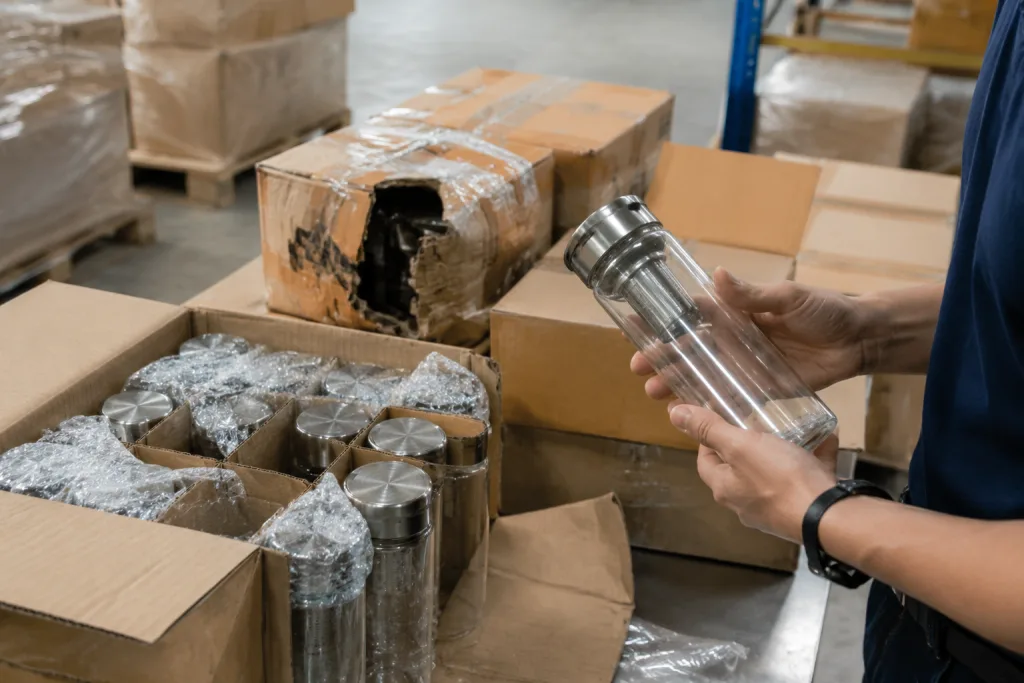
How to spec the order cleanly
I’ll rewrite the section in-place, keep the HTML intact, and make it sound like a sales engineer who’s seen the line and the RFQ back-and-forth.If you want a canteen customized without surprises, the RFQ has to read like a production sheet, not a mood board. The buyers who get clean quotes send one page with body material, insulation build, capacity, lid type, logo method, packaging, test standard, and pass/fail terms. That is how a canteen vendor or canteen manufacturer keeps the pricing straight and avoids “we assumed” later. Clean specs cut the ping-pong.
Use the right references. For a hot-and-cold stainless bottle, ask for heat-retention and cold-retention targets under the same test method, not two different lab setups. For compliance, ask for REACH, food-contact declarations, BPA-free status for polymer parts, and LFGB or FDA papers if your market needs them. For quality, set AQL for critical, major, and minor defects; we’ve seen buyers write “standard QC,” then argue about a 3 mm scratch after the goods land. A canteen manufacturer in Zhejiang should give you MOQ, lead time, and monthly output without playing games. At BottleForge, our monthly capacity is 600,000 units and standard lead time is 25-35 days after sample approval, but that number is not the lesson. The lesson is simple: get the supplier’s number in writing, then hold them to it.
Here is the short version: if the order is for retail, distributor, or promotion, put the risk points into the spec. Seal material. Logo method. Test conditions. Packaging limits. Defect rules. We had one PO with the lid code typed wrong by one character, and the buyer flagged it only after sample sign-off. Once those details are locked, the price in USD means something.
Send your spec, not just your logo
We’ll turn your tea bottle customizable idea into a build sheet with MOQ, lead time, and QC checkpoints that actually protect the order.
Frequently asked questions
What MOQ should I expect for tea bottle customizable orders?
For most tea bottle customizable projects, MOQ sits around 1,000-3,000 pcs per SKU if you want normal packaging and standard decoration. If you need new tooling, double-wall insulation, or custom lids, some canteen manufacturers in Zhejiang will ask for 3,000-5,000 pcs to cover setup. A simple color change or logo-only job can be lower, but price usually rises. The right move is to ask the canteen factory to separate tooling, sample, and production costs so you can see the real break-even.
What price range is realistic for custom drinkware?
For FOB Zhejiang, a basic stainless tea bottle customizable model often lands around USD 2.10-3.80 depending on capacity, lid, finish, and print method. Vacuum-insulated versions with better lids and packaging usually move into USD 4.20-7.50, sometimes more if you add a tea infuser or premium coating. A customized growler with heavier gauge steel or a complex lid will cost more. Always ask for a full quote with carton count, sample charge, and any tooling line item so you can compare canteen suppliers fairly.
How do I reduce leakage claims on a canteen custom order?
Use a gasket spec, not just a photo approval. Ask for food-grade silicone, define hardness, and require 24-hour inverted leak testing on pilot lots and AQL-controlled checks on mass production. For hot-fill tea bottles, also test after thermal cycling because pressure changes expose weak threads and poor closure geometry. If the canteen vendor cannot tell you the gasket material, torque range, and seal method, you are not ready to place the PO.
What compliance documents should I request from China?
For Europe and North America, ask for REACH-related declarations, food-contact material statements, and if relevant FDA or LFGB support documents for the bottle and lid components. If the decoration uses inks or coatings, ask for chemical compliance on those too. A canteen manufacturer in China should also be able to provide a basic factory audit profile such as BSCI if your retail customer requires it. Do not assume the stainless body automatically covers the whole product; the cap, gasket, and tea basket matter as much.
Can I use one design for retail and promotional channels?
Yes, but only if you separate the specifications. Retail needs stronger packaging, tighter logo placement, and better surface finish. Canteen promotional orders can be simpler, but they still need leak control and decent carton protection. If you plan to sell through distributors, build one core canteen customizable platform and then vary color, logo, or accessory pack. That keeps your tooling cost lower while letting canteen distributors and canteen vendors quote multiple channels from the same base product.