Key Takeaways
- Typical MOQ starts at 500 units, with 35-45 day lead time after sample approval
- A reliable tea bottle custom made order should specify 304 or 316 stainless steel, 0.4-0.5 mm wall thickness, and REACH-compliant contact materials
- For Europe and North America, ask for leak testing, AQL 2.5 inspection, and carton drop-test data before shipment
- A China canteen factory in Zhejiang should be able to support OEM artwork, FDA/LFGB/REACH documentation, and monthly output above 200,000 units
You do not place a tea bottle custom made order by picking a color and hoping it lands. If you are a procurement manager, brand owner, or distributor, the job is to lock down heat retention, leak risk, decoration wear, and landed cost before the first sample leaves the line. That is where most buyers burn weeks: loose specs, fantasy lead times, and QC language that does not hold up on the shop floor.
We run these orders every month in Zhejiang, and the pattern is plain. The serious buyers treat a tea bottle like a spec sheet, not a gift item. They ask for 500 to 10,000 units, a 35 to 45 day production window, and a supplier who can talk lid torque, gasket material, and coating adhesion without bluffing. The buyer flagged a 0.3 mm gap on one sample last week, and that kind of detail is what keeps a custom drinkware project sellable.
Start With the Buyer’s Use Case
I’ll rewrite the section in-place, keep the HTML tags exactly, and make the wording sound like a factory-side sales engineer wrote it.Start with use, not decoration. A tea bottle for an office desk is a different job from a bottle in an outdoor bundle or a corporate gift box. If the buyer wants tea to stay at 70-85°C after 3 hours, we run a double-wall vacuum body. If the bottle has a tea infuser, the mesh aperture, basket volume, and lid seal matter more than the print method.
For a real brief, write it like this: 500 ml capacity, 304 stainless steel inner and outer, powder-coated exterior, removable infuser, PP lid with silicone seal, and no flavor transfer after 24 hours. That gives the factory something we can quote against. If you only say “customizable drinkware,” QC will pull a sample that looks neat and still miss the job. Good canteen suppliers ask for beverage type, holding time, target retail price, and packing format because the math changes with each one.
In Zhejiang, we see distributors walk in with a vague tea idea and leave with a spec that actually fits the channel. Fine. What matters is whether the order is for Amazon FBA, a retail shelf, a promo pack, or a distributor canteen program. A custom canteen for a corporate campaign can live with a simpler lid, while a premium customized canteen for retail needs tighter sealing and cleaner finish lines.
Choose the Right Build Spec
I’ll rewrite the section in-place, keep the HTML tags and list structure intact, and make the prose sound like a factory sales engineer rather than generic copy.Once the use case is fixed, lock the build spec. For tea bottles, we split it into four parts: body, lid, tea basket, and finish. The body should be 18/8 stainless steel if you want steady corrosion resistance. For hot tea service, 0.4 to 0.5 mm wall thickness is the range we run most often; thinner walls dent in transit, and thicker ones push up both cost and net weight. If you sell into Europe, ask for REACH compliance on coatings and seals. If you sell in North America, ask for FDA food-contact statements and the test reports that back them up.
The lid is where a lot of canteen custom jobs go sideways. A screw lid with one silicone ring is cheaper, but a dual-seal structure cuts leakage claims in real shipments. If the bottle has a tea basket, confirm whether it is stainless steel, BPA-free PP, or a hybrid build. Ask for the exact mesh size; loose leaf and fine herbal blends behave differently, and the buyer flagged this on a 50 mm basket sample we shipped last month. A retail distributor order should not use the same lid as a promotional gift pack unless the claim rate can be accepted.
- Body material: 304 or 316 stainless steel
- Wall thickness: 0.4-0.5 mm for mainstream vacuum bottles
- Seal material: food-grade silicone
- Decoration: powder coat, UV print, laser engraving, or silk screen
If you want a growler-style body instead of a narrow tea flask, the fill opening and handle geometry change the tooling and the price. We’ve seen this go sideways when a PO typo called for a 68 mm mouth but the sample drawing showed 58 mm, and the mold quote had to be redone. That is why a canteen factory should quote from a drawing, not from a photo.
Sample Before You Commit
I’ll rewrite the section in-place, keeping the HTML exactly as-is and tightening the prose for a more seasoned sales-engineer voice.A sample is not a formality. It is the first QC gate. For a tea bottle custom made order, approve the sample on capacity, fit, leakage, smell, finish, and print alignment. We run a 7-day sample cycle only after artwork and technical details are locked. If the lid color or logo position keeps changing, the schedule slips. That one is on the buyer, not the line.
Test the sample like a buyer, not like a designer. Fill it with 95°C water, close it, invert it for 5 minutes, then leave it on a desk for 24 hours. Check for sweating, seal creep, and lid torque. If the bottle has a straw or infuser, see whether tea leaves clog the basket and whether the user can clean it in under 2 minutes. For a canteen customized project, the end user cares about cleaning time, not marketing copy.
Do not approve a sample only because the logo looks sharp. If the gasket fails, the whole order becomes a refund problem.
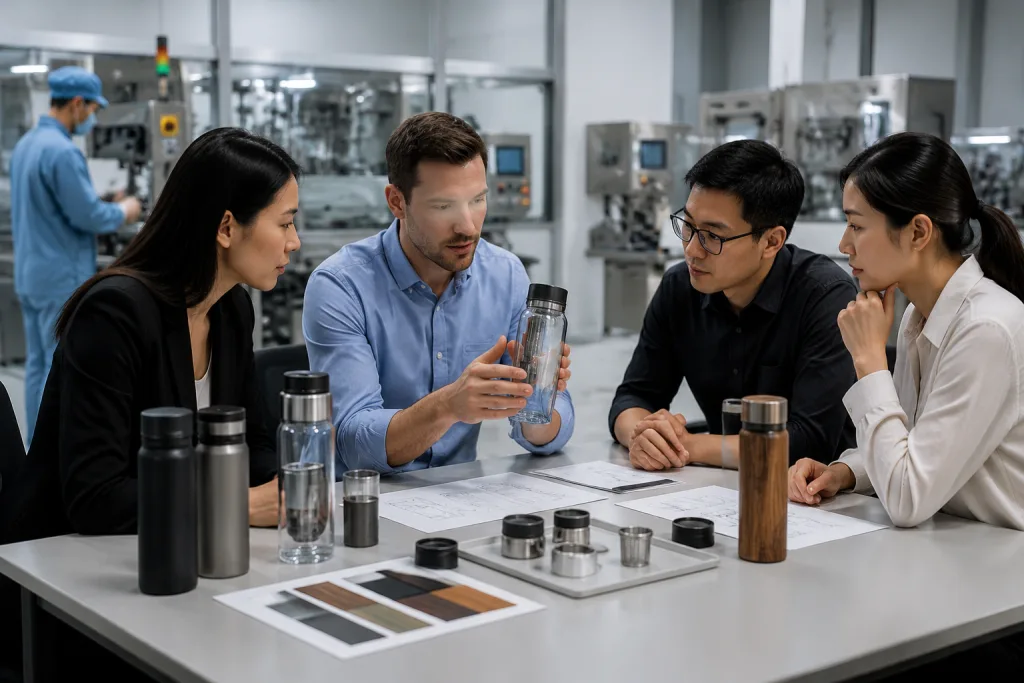
We keep a small sample bank in Hangzhou for repeat canteen manufacturers and canteen distributors, so buyers can compare 3 lid systems side by side. That beats guessing from catalog photos. If your project includes a custom growler format or a distributor growler bundle, sample the bottle and outer carton together. We’ve seen the math go sideways when a nice bottle ships in a weak box.
Price the Order Honestly
I’ll rewrite the section in-place, keep the HTML tags intact, and tighten the pricing language so it reads like a buyer-facing sales engineer note.Most buyers ask for one unit price. That is the wrong question. Drinkware pricing is a stack of parts, and we see it on the line every week. A 500 ml tea bottle custom made in 304 stainless steel usually sits around USD 3.20 to 4.80 FOB China at 1,000 units, with the spread driven by lid structure, surface finish, and print method. Add a tea infuser, laser engraving, and a premium carton, and the number moves to USD 5.50 to 7.20 FOB. At 500 units, the MOQ bites harder because setup labor and tooling are spread over fewer pieces.
Do not compare quotes unless the assumptions match. One canteen supplier may include the inner box and master carton, while another quotes the bare bottle only. We have had buyers flag a PO typo on “wrap print” versus “one-color silk screen,” and that kind of slip changes the math fast. If you work with canteen distributors, ask for three price points: economy, mid-tier, and retail-ready. That gives you a real channel plan.
FOB China is still the cleanest base for many importers, especially when you source from Zhejiang and book your own freight. But the landed-cost sheet still needs a 3%-5% buffer for defects, carton crush, and customs checks. QC pulled the sample once and found a lid gap of 0.8 mm, which would have turned into claims later. A smart distributor drinkware buyer does not chase the lowest quote; they price the risk per sellable unit.
Run QC Like a Real Importer
I’ll rewrite the three paragraphs in a more field-tested buyer voice, keep the HTML untouched, and make sure the QC details sound like something a factory team actually checks on the line.QC starts before mass production. Your pre-production sample sets the logo position, Pantone code, carton spec, and sealing standard. Then we run in-line checks on the first 20%-30% of the order, especially if this is your first run with a canteen factory. Once the line is stable, AQL 2.5 for major defects and AQL 4.0 for minor defects is the normal reference. That is plain import discipline.
For tea bottles, we check leak resistance, coating adhesion, vacuum retention, and lid thread consistency. If you are buying a customizable canteen with a matte finish, rub resistance matters too. QC pulled the sample and ran a tape test in 30 seconds; that catches a bad coating faster than any catalog photo. For REACH-sensitive markets, ask for confirmation on inks, seals, and the black pigment in gaskets, because that is where problems usually show up.
We also check carton compression and drop performance. A distributor canteen order can look perfect at the factory and still land with dented corners if the outer carton is weak. Ask for a drop test from 80 cm to 100 cm, matched to your pack style. If your bottle is sold as a canteen promotional item, the math is simple: damaged cartons drive returns faster than bottle defects.
Work With the Right Factory Type
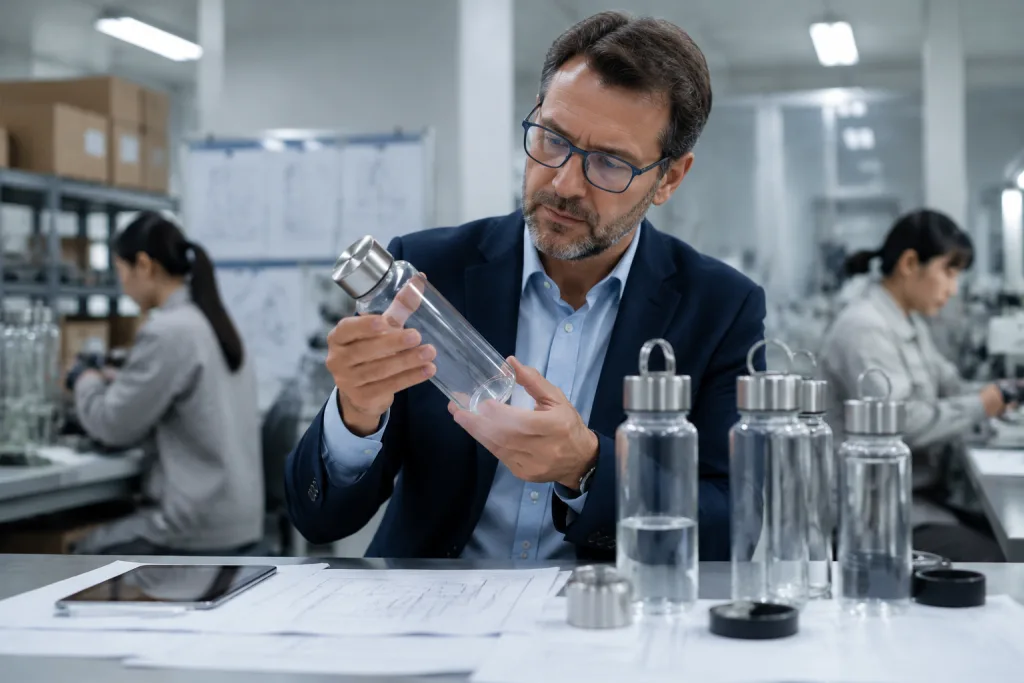
I’ll rewrite the section in-place, keeping the HTML tags and structure unchanged while making the prose sound like a real factory-side sales engineer.There is a real gap between a trading desk and a factory that runs the line. A factory can lock mold change timing, seal compound, and print tolerance down to the millimeter; a trader usually cannot. A trading company still makes sense for mixed categories, but if your order depends on repeat color control or a fixed infuser shape, go direct to the tea bottle factory or ask for the shell maker’s name. We’ve seen the second order go sideways because the buyer never checked who actually built the body.
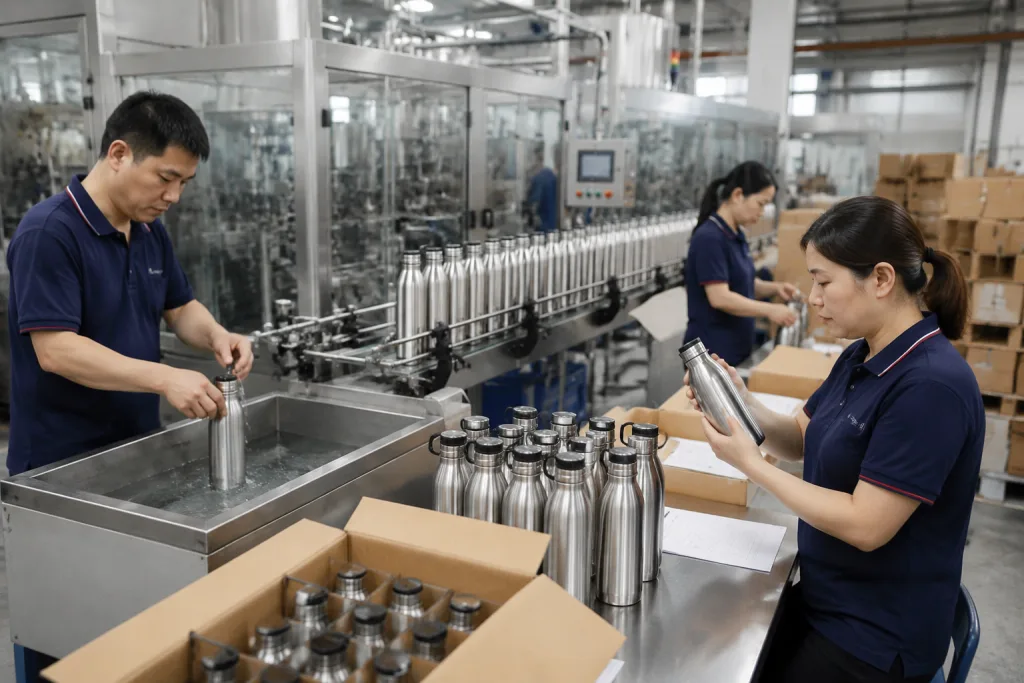
In Zhejiang, the stronger plants run separate lines for vacuum forming, polishing, coating, assembly, and packing. A solid China factory should be able to ship more than 200,000 units a month across standard drinkware, and a tea bottle line should give you 35 to 45 days after sample approval. If a supplier cannot state monthly output or the real MOQ, the math does not work. QC pulled one sample last month with a 0.8 mm lid gap, and that was enough to reject the batch.
For buyers running custom canteen programs, ask about private label support, barcode application, and retailer carton labels. If you sell through distributors or Amazon, those jobs save real hours. A good supplier list should show who handles FNSKU labels, which carton size fits the pallet plan, and whether mixed-SKU packing is run by one team or passed around the floor. One PO typo on carton count can hold a shipment for 12 days.
That is the split in plain terms: a canteen distributor may care about speed, a brand owner may care about shelf look, and a procurement team may care about defect rate. The factory has to answer all three without drifting into vague promises. We ship better when the buyer asks for the inspection standard, the packing spec, and the photo of the first carton off the line.
Send your tea bottle spec for a fast quote
We can review your drawing, confirm MOQ, and quote from Zhejiang with practical QC and packaging details, not guesswork.
Frequently asked questions
What MOQ should I expect for a tea bottle custom made order?
For a standard tea bottle custom made project, MOQ is usually 500 units per color or per design. If the order needs a special lid, custom mold, or deep logo embossing, MOQ can move to 1,000 units or more. For simpler customization such as laser engraving on a standard body, some Zhejiang factories can support 300 units, but the unit price will be higher. If you are buying for a distributor canteen program, ask whether mixed colors can be combined under one total MOQ. That can help reduce inventory risk without changing the factory’s setup economics.
How long does production take after sample approval?
For a normal tea bottle custom made order, production is usually 35 to 45 days after pre-production sample approval and deposit receipt. If you need new tooling, special coating colors, or seasonal peak scheduling, allow 50 to 60 days. Shipment timing also depends on carton printing and third-party inspection. A serious canteen manufacturer in Zhejiang should tell you the schedule line by line: material prep, forming, coating, assembly, QC, and packing. If they only say “about one month,” that is too loose for a real B2B buying plan.
Which compliance documents should I ask for?
For Europe, ask for REACH-related material confirmation and, where needed, LFGB or food-contact test support. For North America, ask for FDA food-contact statements and any relevant migration test data. If your bottle includes silicone seals, inks, or a powder-coated surface, those components should also be covered. A reliable canteen supplier should be able to provide carton markings, country of origin, and product photos for your compliance file. If you are importing as a distributor canteen program, keep the test reports tied to the exact SKU and batch number.
Is laser engraving better than silk screen for tea bottles?
It depends on the price point and use case. Laser engraving is durable and works well on stainless steel, especially for premium customized drinkware or corporate gifts. Silk screen is cheaper for larger color logos but can wear sooner if the bottle is washed aggressively. For a tea bottle custom made order, laser engraving often adds around USD 0.20 to 0.60 per unit, while silk screen is usually lower. If you need a canteen promotional item with short-term brand exposure, silk screen can be enough. If you need a retail product with long service life, laser is usually the safer option.
Can I order a custom canteen style instead of a slim tea bottle?
Yes. Many buyers shift from a slim tea bottle to a custom canteen, customized canteen, or customizable canteen shape when they want a broader retail look or better hand feel. That change usually affects capacity, handle design, lid type, and tooling cost. A growler-style body may need a wider opening and heavier wall structure, which raises the FOB price. If you are a canteen distributor or canteen vendor, ask the factory to quote both options with the same decoration method so you can compare unit economics and sell-through potential.