Key Takeaways
- For suppliers water bottles, a realistic MOQ is often 500-3,000 pcs per SKU, while 300 pcs is only workable on limited stock or simple decoration.
- A capable canteen manufacturer should quote lead time clearly: 25-35 days for standard custom drinkware, 40-55 days for multi-color or molded parts.
- 304 stainless steel is common for custom canteen and custom growler programs; wall thickness usually sits around 0.4-0.6 mm for vacuum bottles.
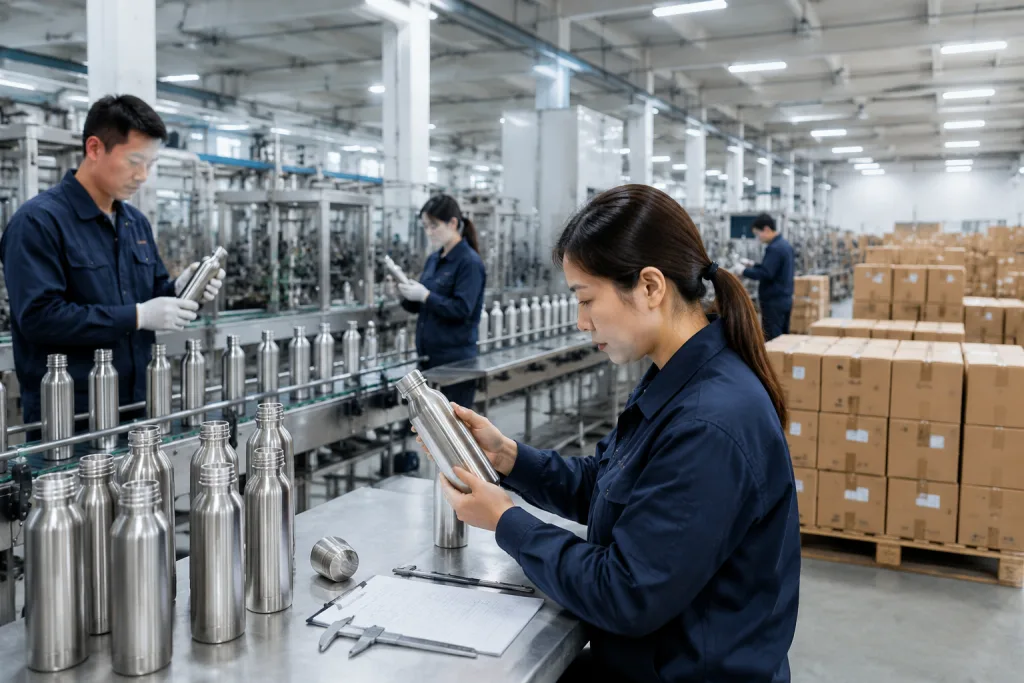
- Ask for AQL 2.5 inspection, REACH paperwork, and monthly capacity; a strong canteen factory in Zhejiang may run 200,000-500,000 units per month.
If you are sourcing suppliers water bottles, the first mistake is usually the same: people compare catalog photos, not purchase terms. A nice 500 ml bottle means little if the canteen factory cannot hold color across 3,000 pcs, misses REACH, or turns a 25-day lead time into 60 days after artwork approval. We run into this all the time. In Zhejiang and across China, the gap between a solid canteen supplier and a risky one is not the brochure; it is spec control, testing, and how they handle repeat orders.
The buying decision is not just product selection. You need the right factory capability, the right decoration method, and the right commercial model for your channel. A canteen distributor may need low MOQ and fast turn, while a brand owner may need customized drinkware with stable PMS color, AQL inspection, and carton labeling for FNSKU or retail. That is the real question, not who has the slickest photos. The framework below focuses on those trade-offs, not marketing talk.
Start With the Sales Channel
I’ll rewrite the section in-place, keep the HTML tags intact, and make the prose sound like a factory-side sales engineer wrote it.Before you compare samples, lock the sales channel first. A distributor drinkware order for supermarkets or regional wholesale is a different job from a canteen promotional run for events, gyms, or outdoor campaigns. If you are a canteen distributor, the line cares about price stability, repeatability, and cartons that survive pallet moves. If you are a brand owner, you care more about finish, decoration accuracy, and whether we can repeat the same customized drinkware batch 6 months later without the buyer flagging shade drift.
That channel choice drives the spec sheet. A canteen vendor running promotions can accept lower material complexity and simpler artwork, while a premium distributor canteen program may need matte powder coating, laser engraving, and individually barcoded cartons. If the bottle is going into Amazon or retail, ask about FNSKU labels, master carton dimensions, and case pack quantity on the first call. A 5% unit-price gap means little if the freight bill jumps because the carton is 8 mm too wide.
For suppliers water bottles, the wrong channel fit gets expensive fast. A low-cost canteen promotional bottle with a 20-day lead time can work for a giveaway, but it is the wrong question to ask for a retail launch that needs tighter QC. We’ve seen this go sideways when a buyer wanted both gift pricing and retail-grade inspection; the math doesn’t work. In Zhejiang and other China manufacturing hubs, factories often run both, but they will not optimize both on the same production line unless you state the business model on day one.
Pick the Right Bottle Structure
I’ll rewrite the prose only, keep the HTML structure intact, and tune it to sound like a factory-side sales engineer.Material choice is not about fashion. It is about thermal retention, compliance, and how the buyer will actually use the bottle. For custom canteen programs, 18/8 stainless steel is the safe default because it holds up in repeat washing and resists corrosion; we run into fewer complaints on that spec than on cheaper grades. Typical vacuum walls are 0.4-0.6 mm, and double-wall construction usually keeps drinks hot or cold longer than single-wall aluminum, though the landed cost goes up. A 750 ml vacuum bottle is often the sweet spot for outdoor retail; 500 ml fits sports and the daily commute better.
If you need customizable canteen items for youth, office, or school accounts, the cap system matters as much as the body. Flip lids, straw lids, and screw caps change leak risk, cleaning time, and how fast a kid can drink on the bus. For a custom growler, 64 oz or 128 oz stainless formats are common, but the lid seal and pressure handling matter more than the silhouette. We’ve seen buyers flag a PO that asked for a “wide mouth” but sent a 42 mm neck spec, and that mistake slows the line fast.
Glass and Tritan also have a place, but only when the job matches the material. Glass is better for flavor purity and premium shelf appeal, yet it is a rough fit for distributor growler orders where breakage eats margin; that’s the wrong question to ask if the buyer only wants fewer claims. Tritan works for customized drinkware when you need clarity and impact resistance, but confirm food-contact compliance and heat limits before you lock the artwork. A practical canteen factory should show material traceability and QC records, not just sample photos, and we usually expect that batch card on the 3rd sample round.
Choose Decoration for Scale
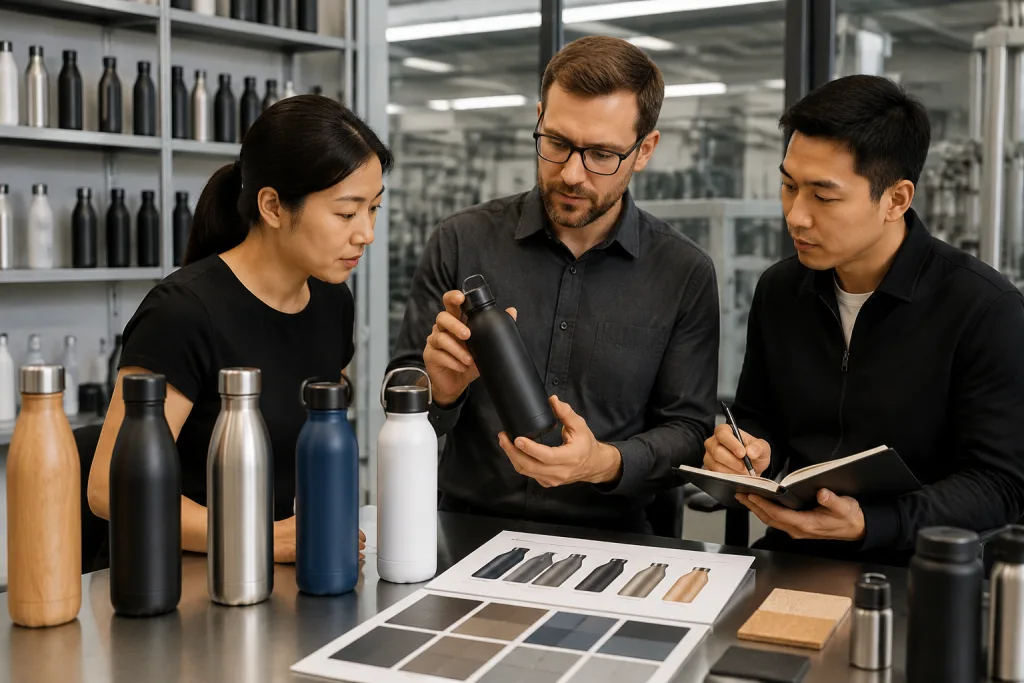
I’ll rewrite the section in place, keep the HTML tags unchanged, and tighten the language so it sounds like a factory-side sales engineer wrote it.Decoration choice drives both unit price and scrap rate. For a simple canteen custom order, silk screen printing is still the lowest-cost way to put a single-color logo on a matte body. We run this on a 4-color press with a 120 mesh screen. Laser engraving costs more per piece, but it holds up and does not wear like ink. UV printing can handle complex graphics, but curved bottles need stable fixtures and clean surface prep, or the line starts throwing rejects. If the artwork has gradients or more than two spot colors, ask whether the factory really runs that job, or only basic one-color work.
For custom drinkware, the decoration method has to match the sales channel. A canteen promo run can take screen print because speed and unit cost win. A retail program for a premium canteen manufacturer can justify laser or full-wrap print, because the finish looks intentional and the return rate stays lower. We’ve seen this go sideways when a buyer approved a blank sample with a PDF logo mockup, then complained the first decorated lot missed the tone. Ask for a decorated pre-production sample. That is the real check.
Be clear on color tolerance. If the brand is strict, ask for PMS matching and agree the acceptance window in writing. QC pulled one sample at ±5% variance and the buyer flagged it anyway, so yes, this is the wrong question to leave vague. A solid canteen supplier should tell you whether the print passes a 50-cycle dishwasher test or a rub test with a dry cloth. If the factory cannot name the test method, you are buying hope, not product.
Check Factory Capability, Not Promises
I’ll rewrite the section in place, keep the HTML exactly as-is, and tighten the sales-engineer tone with more concrete factory detail and fewer filler phrases.Factories differ more than traders admit. A real canteen factory in Zhejiang may run rotary forming, welding, vacuuming, powder coating, and packing in one site, while a trading desk may only coordinate outsourced steps. That gap shows up fast on the line. Each handoff adds delay and defect risk, and we’ve seen a lid gasket size typo on a PO turn into a 3,000-piece hold. If your order includes customized canteen bodies, special lids, and custom cartons, ask who owns each process and where the QC gate sits.
Look for numbers you can check. Monthly capacity should be stated in units, not vague words like “large output.” A serious canteen manufacturer should tell you whether the line runs 200,000 units per month or 500,000 units per month, and whether your SKU will sit on the same line as other projects. Ask for sample lead time, mass-production lead time, and repeat-order lead time separately. A factory that quotes 7 days for samples and 30 days for production is usually more credible than one promising everything in 10 days. The math does not work otherwise.
Ask about certifications and audits too. BSCI helps if your retail customer expects social compliance. REACH matters for Europe, and FDA-related declarations may matter for North America depending on materials and coatings. QC pulled the sample, and the wall certificate did not save a batch when the buyer flagged a coating issue on a 0.3 mm lip edge. A factory in China with a clean audit file still needs product-specific testing; the certificate on the wall does not replace batch-level checks. For canteen suppliers and canteen distributors, the real question is whether the factory can produce the paperwork your importer needs without delay.
Set MOQ and Price Logic
I’ll rewrite the section in place, keep the HTML tags and structure untouched, and tighten the sales logic so it reads like a factory-side buyer note.MOQ is where a lot of buyers lose margin. For suppliers water bottles, the fair MOQ depends on decoration, lid type, and pack-out. A single-color print may start at 500-1,000 pcs; once you add a multi-color logo and a new lid, 3,000 pcs is normal. We’ve seen buyers push for 100 pcs on a full custom bottle, and that only works with stock parts or hand work. The math does not work otherwise.
Read price as a system, not one number. A stainless custom canteen at USD 3.20 FOB Zhejiang can beat one at USD 3.55, but if the lower quote leaves out the inner box, carton marks, or export test fees, your landed cost goes up. Ask for the split: product, decoration, packaging, sampling charges. QC pulled one carton last week and the buyer flagged a 12 mm outer box mismatch; that kind of miss adds cost fast. For distributor drinkware, a cleaner carton layout can save more than a 10-cent drop in bottle price when you ship full containers.
Use three numbers together: MOQ, FOB price, and lead time. If one canteen supplier is 25% cheaper but needs 15 extra days and a 2,000 pc MOQ, that can still be the right call for a brand launch. If you need weekly replenishment, it is the wrong question to ask. We run this on the line all the time: the cheapest quote is often the one that slips on delivery. Trade a little unit price for a stable schedule, and you usually sleep better.
Protect Quality at Shipment
I’ll rewrite the section in-place, keep the HTML tags untouched, and make the prose sound like a factory-side sales engineer wrote it.Quality control belongs in the PO, not in a handshake. For custom growler and customized drinkware orders, we ask the factory to sign off on AQL 2.5 for critical defects and spell out the major defects: leaks, coating peel, logo off-position, and dents over your limit. We had a buyer flag a 2 mm logo shift on a 500 ml bottle last quarter, and the line had to rework the whole run. Small scratches can pass on utility bottles. They do not pass on a premium retail program. Put the acceptance standard in writing before the first sample hits QC.
Packaging is part of quality. If the bottle weighs 420 g or more, test the outer carton for crush strength and drop resistance; we have seen a 6-corner drop fail at 80 cm and wipe out the margin on the shipment. A distributor canteen order that breaks in transit kills the savings from a lower unit cost. For export orders, ask the canteen manufacturers for carton size, net weight, gross weight, and pallet count so freight math is not guesswork. If the order goes into a warehouse, confirm GS1 barcodes, Amazon FNSKU, or customer SKU stickers before we print the carton marks.
Push for pre-shipment photos, random carton checks, and one sealed retention sample. QC pulled the sample on a 3,000-piece run once and caught a typo on the master carton label before the container closed. We keep one approved sample for every order. If a claim shows up later, you need the real reference, not a memory. The factories that handle export work cleanly know this process; the ones that push back usually cost more after the ship date.
Send your specs, get a factory quote
We quote MOQ, lead time, and FOB terms clearly from Zhejiang, with sample support for canteen custom, custom growler, and other custom drinkware programs.
Frequently asked questions
What is a normal MOQ for suppliers water bottles?
For most custom drinkware projects, a normal MOQ is 500-1,000 pcs for simple logo printing and 1,500-3,000 pcs for custom colors, special lids, or custom packaging. If you need canteen customized artwork with multiple print positions, the MOQ can rise to 3,000 pcs or more. Stock items can be lower, but then your canteen supplier may limit color choice and decoration. If you are testing a new market, ask for one pilot SKU at 300-500 pcs and a second order plan, because many canteen manufacturers in Zhejiang will price the first order differently from repeat production.
How do I compare canteen factory quotes fairly?
Compare five items together: FOB price, MOQ, lead time, packaging, and testing scope. A quote at USD 2.85 FOB China can be worse than USD 3.10 if the cheaper one excludes inner box printing, AQL inspection, or REACH documents. Ask whether the canteen factory is quoting from blank stock, semi-finished inventory, or full custom production. Also check if the lead time is 25 days, 35 days, or 50 days, because freight and launch timing can matter more than a 20-cent unit gap.
What decoration works best for customized drinkware?
For a simple logo, silk screen printing is usually the most cost-effective. For a premium customized canteen or customized growler, laser engraving gives better durability and a cleaner retail look. UV printing is useful for full-color graphics, but you should check the surface curve and fixture quality first. If you want a canteen promotional item for events, screen print is normally enough. If the product is for retail or a premium distributor drinkware program, laser or a high-quality wrap finish is often worth the extra USD 0.20-0.80 per unit.
Can a canteen supplier support Amazon or retail packaging?
Yes, if the factory is used to export work. A capable canteen supplier should handle retail inner boxes, barcode labels, carton marks, and pallet requirements. For Amazon, ask whether they can apply FNSKU labels and pack to your case quantity, usually 6, 12, or 24 pcs per carton depending on bottle size. You should also confirm carton drop tests and the final gross weight. A good canteen distributor program often needs fewer unit defects than a promotional campaign, so packaging discipline matters more than people expect.
What should I ask a canteen manufacturer before ordering?
Ask for monthly capacity, sample lead time, mass-production lead time, material certifications, and QC standard. A strong canteen manufacturer in Zhejiang should be able to state output in units per month, such as 200,000 or 500,000, and give a realistic 25-35 day lead time for normal custom drinkware. Also ask about leak testing, coating adhesion, and AQL level. If you are buying a custom canteen for Europe, request REACH paperwork; for North America, ask for the materials declaration and any relevant food-contact testing.