Key Takeaways
- A leaking cap on a 500 ml bottle usually starts with a 0.4 mm seal mismatch, not the print.
- A serious canteen factory should quote MOQ, lead time, and AQL before you approve samples; 3,000 pcs and 25-35 days is common for custom runs.
- For logo durability, laser engraving survives longer than one-color silkscreen on repeated wash cycles and abrasion.
- Packaging is part of product quality: a 5-layer master carton with 7-kg drop test spec often prevents 2-4% transit damage.
If you buy suppliers sport bottle inventory for more than 3 seasons, you learn this fast: the golden sample is rarely where the money gets lost. The trouble shows up on the line. Caps fail a 24-hour upside-down leak test, PP lids shrink 0.6 mm after cooling, pad print wipes off after the 3M tape pull, and cartons with 5-layer K=A paper still get crushed after 20 days on a truck if the insert is wrong. The quoted unit price is not the real risk. Bad control is.
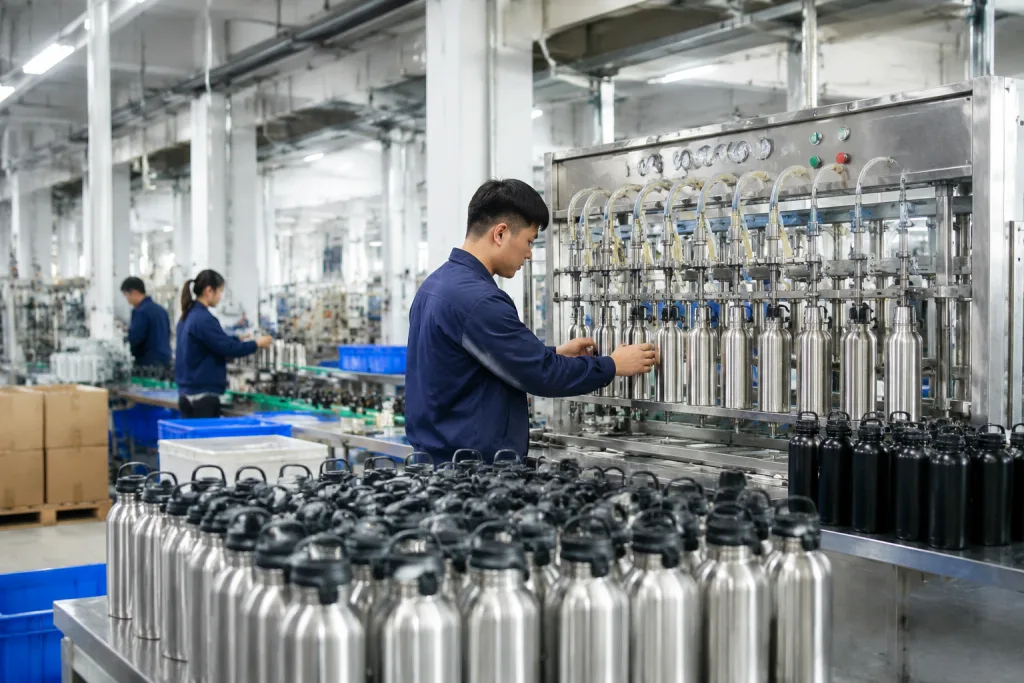
For Europe and North America buyers, “Can a Zhejiang or China factory make this sports bottle?” is the wrong question to ask. Of course they can. The better question is whether your canteen supplier knows where the order usually goes sideways before the PO hits mass production. Last month QC pulled 32 pcs from a 1,200 pc pre-shipment lot because the logo sat 2 mm off the center line; the buyer flagged it before we shipped, not after retail complaints. BottleForge Industrial in Zhejiang runs 300,000 units/month, and we run by the same rule on every order: lock the failure points first, then talk FOB. That is how you buy custom drinkware without paying twice for rework.
Where bottles fail first
I’ll keep the HTML intact and rewrite only the prose, pushing it to sound like a factory-side sales engineer. Then I’ll do a quick pass for the banned filler words and preserve all the numbers/specs.The fastest way to burn margin is to treat a sport bottle like a simple item. On the line, the first failures show up in sealing, surface finish, packing, and material consistency. We’ve seen a cap thread go out by 0.2 mm on a 750 ml bottle and start leaking only after torque cycling. QC pulled that sample, and the buyer flagged it before the carton run. Good catch.
Most buyers fixate on logo placement and skip the mechanical stack. Wrong question. For a canteen custom program, we ask for the neck finish drawing, gasket material, and torque spec first. If the bottle is stainless steel, confirm the inner wall thickness, usually 0.4-0.6 mm for insulated builds, plus the outer shell gauge. If it is a plastic sports bottle, confirm resin grade, BPA-free declaration, and injection lot traceability. You are not buying a picture. You are buying a build that repeats for 20,000 pieces.
What fails in production is usually not the concept. It is the interface between parts.
Good canteen suppliers in Zhejiang can point to the tolerance stack-up with a caliper on the bench. Weak ones talk only about color and finish. We run into this every month. For distributor drinkware programs, that gap decides whether your claim rate sits near 1% or climbs to 4-5% by the third shipment.
Seal and lid problems
I’ll rewrite the section in-place, keeping the exact HTML tags and list structure intact while stripping the AI-ish phrasing and adding a few concrete factory-floor details.Leakage is the most expensive failure. It turns into refunds, returns, and a bad review chain fast. It also makes the bottle body look guilty when the lid is the real culprit. On custom canteen and customized growler jobs, we usually trace it back to an under-compressed gasket or a cap thread that opens up after cooling shrinkage. A lid can pass a hand check and still fail when the buyer shakes it, drops it, or leaves it in a 40°C car for 2 hours.
Spec the closure like a machine part. Ask for silicone or TPE gasket hardness, usually 50-70 Shore A depending on design, and put torque testing in the QC plan. On a 24 oz sport bottle, we run 50 open-close cycles and a 1-meter drop test with a full water fill; QC pulled one sample last month that passed dry but dripped after cycle 38. If you are sourcing a canteen promotional item for events, add a shake test with 80% fill, because event users beat up lids harder than retail customers do.
- Require a leak test at 0.2 bar for 30 seconds.
- Ask for cap thread pitch and neck finish drawing.
- Confirm gasket material against REACH and your market’s food-contact requirements.
- Set an acceptable torque window, not a subjective hand-fit check.
When you work with a canteen supplier that understands closure engineering, the quote may be $0.08 to $0.20 higher per unit. That math works. One failed retail launch costs more. We had a PO once with “cap” typed as “cup,” and the buyer flagged it before the line started; small typo, big headache. For canteen distributors, the closure is where private-label economics either hold or collapse.
Print, engraving, and artwork drift
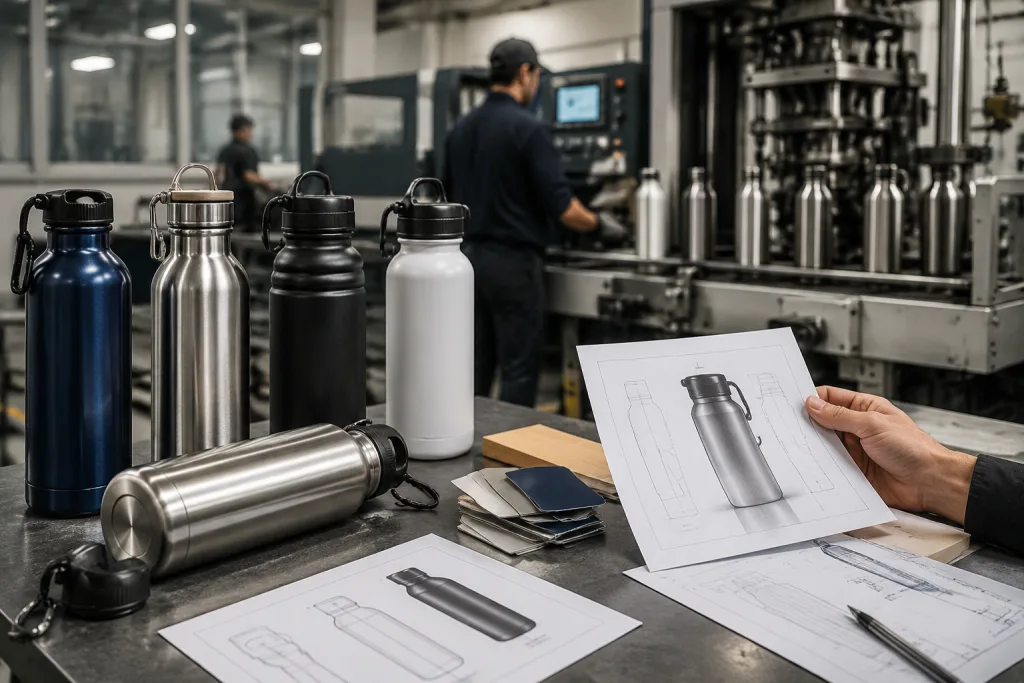
I’ll rewrite the section with tighter B2B-sales language, keep the HTML exactly as-is, and make sure the wording sounds like a factory-side buyer discussion.Artwork failures are sneaky. QC can pass a sample on day one, then the mass run comes out with soft edges, color drift, or scuff marks after packing. We see this on canteen customizable orders when the buyer signs off a PDF mockup but never asks how the logo moves onto a curved metal or plastic body. If the factory runs silkscreen, ask for line thickness, curing temperature, and ink adhesion data. If it runs laser, check whether the substrate is bare stainless, coated steel, or anodized aluminum.
For custom drinkware, the wrong decoration method eats margin fast. A one-color silkscreen on a simple custom canteen can work at 5,000 pcs, but once the art has gradients or a full wrap, registration errors show up. Laser engraving usually holds up better against abrasion, while pad print works on smaller placement areas. On a customized canteen used in gyms or outdoor retail, the weak point is usually repeated hand washing and bottle-cage contact. That is where the line starts losing print.
Set art controls in writing:
- Use Pantone references, not vague color names.
- Define the logo tolerance in mm, especially on curved bodies.
- Request a production proof from the real factory line, not a studio render.
- Confirm whether the print is tested under ASTM-style rub or tape adhesion checks.
If you buy from canteen vendors in China, ask for a pre-production sample with the final process. We’ve seen this go sideways when a buyer says “same logo,” then the logo lands differently on matte powder coat and gloss paint. That is the wrong question to ask. Ask for the actual process sheet, because a distributor canteen order is where the gap usually shows up.
Material and finish traps
I’ll rewrite just the prose, keep the HTML structure intact, and make it read like a factory-side sales engineer wrote it.Material mistakes usually stay hidden until the bottles hit the market. We run 18/8 stainless, 304 stainless, aluminum, Tritan, and PP on the line, but the first question is still fit for use. On a custom growler, 0.5 mm wall control and weld seams decide whether it holds up. On a sports bottle, drop resistance and odor pickup matter more than a cheap promo number.
In Zhejiang and across China, plenty of factories can source the same nominal material. What separates a steady canteen manufacturer from a weak one is finish control. We had a buyer flag a powder coat that measured 92 microns at the rim; it chipped on the first carton pull. A glossy layer that is too thin shows substrate lines, while a matte coat hides scratches but also holds oil marks and slows QC. For customizable drinkware, ask for a target thickness and a visual limit, not just a Pantone code. That is the right question.
Ask for these numbers before you approve:
- Stainless inner wall thickness: 0.4-0.6 mm for most insulated bottles.
- Coating thickness: 40-80 microns depending on finish.
- Food-contact declaration and migration test status.
- Odor and dishwasher resistance expectations for the target market.
If your line includes a canteen custom launch and a distributor drinkware replenishment order, do not reuse the same spec blindly. A promo bottle and a retail bottle fail for different reasons. One gets judged on cost and lead time; the other gets judged on returns and repeat buys. We’ve seen this go sideways when a PO typo swapped matte black for glossy black on a 5,000-piece order. Different game.
Packing and transit damage
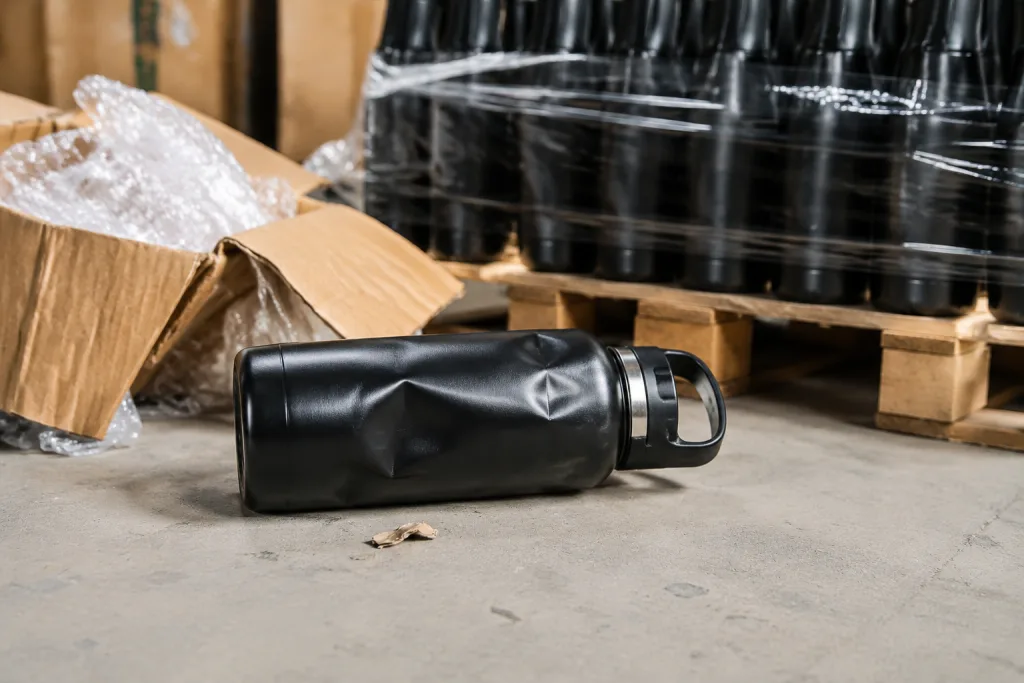
I’ll rewrite the section in-place, keep the HTML structure unchanged, and tighten the language so it sounds like a factory-side buyer note rather than generic copy.We see buyers blame the factory for dents that happened in transit. Fair enough, but if the packing spec is weak, that bill still lands on us. A bottle can leave the line clean and arrive crushed because the inner tray, polybag, carton insert, or pallet layout was never set up right. For a North America shipment, carton strength matters as much as the bottle wall. For Europe, pallet stability and barcode legibility matter because warehouse handling is rougher than the sample room.
A packing spec needs the carton grade, drop-test target, and unit orientation on paper. For a 500 ml sports bottle, a 5-layer master carton with proper partitions cuts damage far better than loose packing. We ran one 12,000-piece canteen promo with 3-layer cartons, and QC pulled a 2.8% dent rate after the first truckload. If the buyer wants cheaper bulk packing, fine, but don’t save $0.03 and lose $0.40 in freight damage. The math doesn’t work.
Useful checks include:
- Carton compression target and burst strength.
- Drop test from 70-100 cm, based on the route.
- Master carton pallet pattern and corner protection.
- FNSKU or barcode placement if you sell through retail distribution or Amazon.
We see this go sideways with canteen vendors who chase unit price only. A good supplier will show where packing cost sits in the landed cost, not pretend every carton is the same. We once caught a PO typo on the outer carton mark, and the buyer flagged it before booking; that saved a warehouse rejection later. If the factory refuses to send a packed sample before mass production, that is not a small issue. It is a warning.
How to write a safer spec
I’ll rewrite the prose in place, keep the HTML structure intact, and tighten the copy so it sounds like a buyer-facing factory note.The spec sheet is where arguments stop once production starts. A good one cuts out guesswork. For suppliers sport bottle jobs, write the spec around failure modes, not sales talk. Put in dimensional tolerances, material grade, closure torque, decoration method, packing requirement, and inspection criteria. If your canteen supplier cannot quote from that document, you are not buying cleanly yet.
Use standard trade terms. If you want FOB pricing, say FOB Ningbo or FOB Shanghai, not “best price.” If you expect compliance, name the standard: REACH for Europe, FDA food-contact expectations for the United States where applicable, and an AQL plan like AQL 0/2.5/4.0 for critical, major, and minor defects. For a canteen customized program, spell out the defects that stop the order: leakage, odor, sharp edge, or logo misplacement. We’ve seen this go sideways when the buyer leaves those vague.
A usable spec should also define commercial terms:
- MOQ, often 3,000 pcs for custom color or logo runs.
- Lead time, usually 25-35 days after sample approval.
- Sampling method, such as pre-production sample plus first-article inspection.
- Inspection scope, including label, carton, and random drop testing.
If you work with canteen manufacturers in Zhejiang, ask them to mark the drawing with measured risk points. On our side, QC pulled the sample and flagged a 1.2 mm cap gap before the line ran full speed. The factories that do this well save more money than the ones chasing the lowest quote. That applies whether you are ordering custom canteen retail stock, a customized growler program, or a small distributor canteen trial run.
Send your spec and get a real quote
Share your target price, MOQ, artwork, and compliance needs. We’ll quote the risky parts plainly, not hide them in a cheap unit price.
Frequently asked questions
What MOQ should I expect from suppliers sport bottle projects?
For a custom color or logo sports bottle, MOQ is often 3,000 pcs. Some canteen suppliers will go lower at 1,000-2,000 pcs, but the unit cost usually rises by 12-25% because they cannot spread mold setup, printing, and packing over enough volume. If you want a canteen customized with multiple decoration positions, expect a higher MOQ or an added plate/setup fee. For private-label distributor drinkware, ask for separate MOQs by body color, lid color, and artwork method before you compare quotes.
How do I reduce leak complaints on a custom canteen order?
Treat the lid like a critical component. Specify gasket material, neck finish, and torque range, then require a 0.2 bar leak test and a 1-meter drop test. For insulated bottles, ask for 50 open-close cycles and a hot-water shake test. Many leakage claims come from cap tolerance drift of 0.2-0.4 mm, not from the bottle body. A good canteen factory will show you closure drawings and sample test results before production starts.
What documents should a canteen manufacturer provide?
Ask for commercial and compliance documents together. A serious canteen manufacturer should provide quotation with FOB terms, pre-production sample approval, material declaration, REACH or food-contact support where needed, carton spec, and the inspection plan. If you are buying into the EU, ask for traceability by lot and the migration-test status relevant to your material. For North America, ask how the product supports your market compliance requirements. Do not accept a vague “safe material” statement.
Is silkscreen or laser better for customized drinkware?
It depends on the use case. Silkscreen is efficient for simple one- to two-color logos and is often cheaper by $0.05-$0.15 per unit at scale. Laser engraving is more durable on stainless and resists abrasion better, which helps on sports bottles and customized growler programs. If the bottle gets washed often or rubs in a bag, laser usually lasts longer. If you need bright color or complex branding, silkscreen may still be the better choice, but insist on adhesion testing.
How do I compare canteen suppliers in China fairly?
Compare them on the same sheet, not by sample photos. Line up MOQ, lead time, sample approval process, defect standard, packaging spec, and compliance support. A factory in Zhejiang that quotes 25-35 days and shows AQL terms is often more reliable than one offering a lower unit price with no inspection plan. For canteen distributors, the real comparison is landed cost plus claim rate, not just FOB. Ask each canteen supplier to quote the exact same drawing and carton spec.