Key Takeaways
- Expect protein shaker MOQ to start at 1,000-3,000 pcs for custom orders and 300-500 pcs for stock decoration.
- Typical factory pricing ranges from USD 1.15-3.80 per unit depending on material, capacity, and print method.
- A realistic production lead time is 15-35 days, with 7-18 days extra for ocean freight and 3-7 days for air freight.
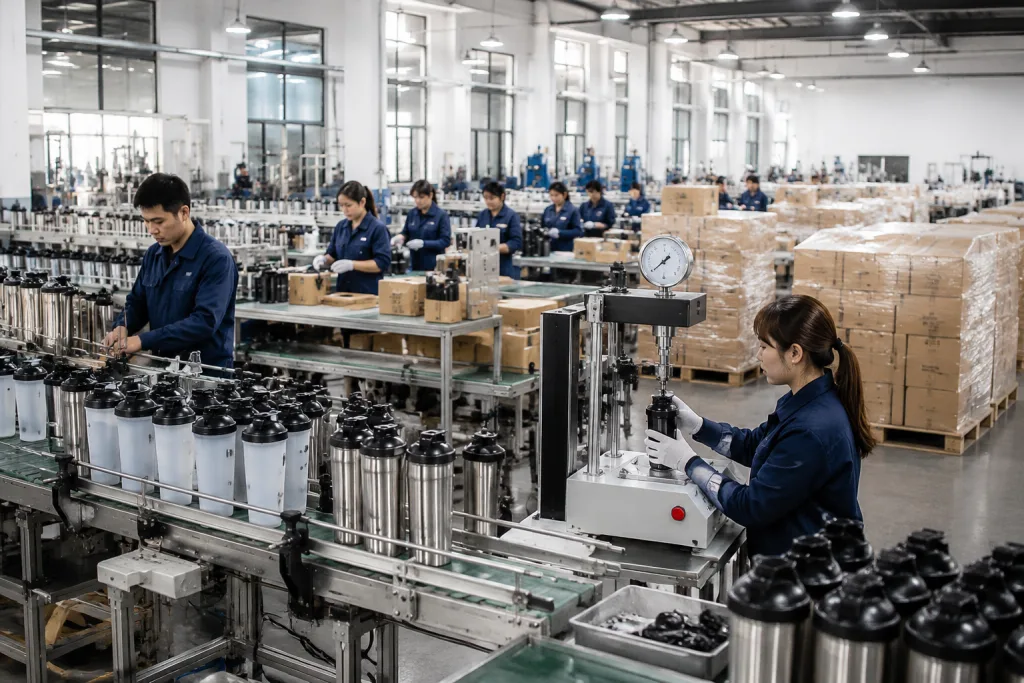
- A Zhejiang canteen factory with 300,000 units/month can usually support mixed custom drinkware programs better than a small trading setup.
When you compare suppliers protein shaker options, the first quote looks clean: unit price, logo, carton, shipping. It is not the real number. Add mold work, color match, lid tooling, test reports, and a launch slipping by 3 weeks, and the “cheap” quote gets expensive fast.
If you buy in Europe or North America, you need a supplier that can break down landed cost, not just FOB Ningbo or FOB Shanghai. A serious canteen manufacturer in Zhejiang should tell you the MOQ for each decoration method, the lead time by order type, and what changes when you move from stock colors to a canteen custom or customized drinkware program. We run this math on the line every week. The buyer flagged it, and the math still had to close.
What drives shaker pricing
I’ll rewrite the section in-place, keeping the HTML tags and the pricing numbers intact while making the prose sound like a real factory-side sales engineer.The price you get from suppliers protein shaker vendors depends on more than plastic weight. Material grade, wall thickness, lid structure, mixing insert type, and decoration drive the quote. A 600 ml PP shaker with a basic screw lid and one-color silk print can land around USD 1.15-1.65 FOB China at 3,000 pcs. Switch to Tritan, stainless steel base parts, or a double-wall body and you move to USD 2.60-3.80 fast.
Material choice matters because buyers often stare at the outside and miss the build. A 2.0 mm wall in PP is not the same as 1.5 mm in Tritan, and a leak-resistant flip cap adds tooling plus assembly time on the line. We once had a buyer flag a PO that called for a “strainer” but sent no mesh spec; QC pulled the sample and the math didn’t work until we split out the insert. If you want canteen customizable features such as extra strainer inserts, measurement marks, or a carry loop, expect another USD 0.08-0.35 per unit. In Zhejiang, factories usually quote lower on standard shapes because the molds are already running; a custom shape is a different calculation.
Here is the part buyers miss: packaging can add 8% to 18% to the unit cost if you require retail boxes, FNSKU labels, barcode verification, or insert cards. We ship a lot of orders where the pack-out takes longer than the print itself, and that cost shows up fast. For distributor drinkware programs, packaging often costs more than the bottle itself. If your program also needs a custom canteen or custom growler line, ask the supplier to separate product, print, and packaging into three lines. That gives you a clean compare and stops the buyer from arguing over one blended number.
MOQ tiers that actually matter
I’ll rewrite the section in place, keep the HTML exactly as-is, and tighten the sales tone with concrete MOQ details and factory-floor language.Most shaker suppliers quote a neat MOQ, then pile on limits by color, print, and carton spec. We always ask for MOQ by process, not by headline number. A stock-color shaker with one-color pad print usually lands at 300-500 pcs. Custom body color moves to 1,000-2,000 pcs. Once you change the lid or mixing insert, the line usually starts at 3,000-5,000 pcs.
That is normal in a China factory. Every extra setup eats labor and machine time. If you need a shaker run for an event, low MOQ only works when you keep the standard mold and accept plain branding. For a distributor covering three retailers, the math usually favors 2,000 pcs of one SKU over 500 pcs of four versions. QC pulled the sample on a 1.5 mm lid gap before packing, and the buyer flagged the cost; they still saved 10%-15% on unit price.
- 300-500 pcs: stock body, one-color logo, simple carton
- 1,000-2,000 pcs: custom color, mixed print options, better packaging
- 3,000+ pcs: new lid parts, unique shape, custom shaker program
If you are buying for a distributor or vendor model, ask whether the factory can combine multiple order lines in one production slot. We run that for custom drinkware jobs in Zhejiang, but we still need one stable artwork file and one confirmed Pantone code. One PO typo on the Pantone number can burn half a day on the line, so this is the wrong question to ask after sample approval.
Lead time from sample to shipment
I’ll rewrite the prose in-place, keep the HTML structure intact, and make the timeline sound like a real factory handoff from sample to ship.Lead time is where a lot of suppliers protein shaker projects go off the rails. For a standard shaker, we usually quote 7-12 days for sampling, 15-25 days for production after sample approval, and 5-10 days for packing and export booking. Need new molds? Add 15-30 days. If the buyer wants a soft-touch coating or metallic paint on a canteen, the line needs another 5-7 days for curing and inspection. We’ve seen PO notes miss that step, and then the schedule slips on day one.
For a normal Zhejiang export factory, the calendar should look like this: artwork confirmation in 1-2 days, digital proof in 1 day, pre-production sample in 5-8 days, mass production in 18-28 days, and loading in 2-4 days. That is the kind of path a factory running about 300,000 units a month can actually hold. If a supplier says 10-day total delivery on a fully customized growler or shaker with new tooling, the math does not work. QC pulled a sample last month where the buyer had approved the logo but missed the lid color code, and that cost two extra days.
Good lead-time control is not speed at any cost. It is predictable handoff: sample approval, color lock, packaging lock, then production.
For Europe and North America, add shipping reality. Ocean freight from China usually needs 18-35 days port to port, depending on route and season. Air freight is 4-8 days, and we only run it for urgent replenishment or small distributor drinkware orders. If you sell on Amazon or to chain accounts, build the launch date around the slowest step, not the best-case one. A buyer once pushed for a Friday ship date after approving a carton typo on Tuesday; we caught it at packing, and that saved a claim.
How decoration changes cost
I’ll rewrite the prose in place, keep the HTML intact, and tune the wording to sound like a factory-side sales engineer with concrete cost/process details.Decoration is not just branding; it changes the line setup. Silk screen stays the cheapest for flat, simple logos. We run it on a manual jig in minutes. Laser engraving fits stainless steel or coated parts, but it slows the cycle and often adds a higher per-unit charge. Heat transfer and wrap printing hold up better on full-body graphics, yet they need tighter QC and a cleaner finish check at the 3rd station. If you need canteen promotional items, one-color print usually does the job. If you need retail-ready customized drinkware, decoration is part of the product value, not an afterthought.
Print cost usually lands around USD 0.05-0.20 per unit for simple one-color work, USD 0.18-0.45 for multi-color or wrap decoration, and USD 0.30-0.80 for more complex surface effects. Last month, a buyer flagged a PO typo on the print size—40 mm became 4.0 mm—and that one line changed the whole quote. A canteen vendor should also tell you the defect rate by process. On a decent line, AQL 2.5 is common for general inspections, while leak tests need a tighter standard. If a supplier cannot talk about AQL, REACH, or food-contact testing, they are not set up for export work.
Some buyers ask for a canteen distributor bundle with different SKUs under one art direction. That can work, but one decoration method across all materials is the wrong question to ask. A custom canteen in PP, a custom growler in stainless steel, and a canteen customized with powder coat do not price the same way, and we have seen that go sideways when someone tries to force one print spec across all three. QC pulled the sample, checked the logo edge under a 5x loupe, and the mismatch showed up fast.
Supplier checks before you pay
I’ll rewrite the section in-place, keep the HTML structure unchanged, and make the copy sound like a factory-side sales engineer.For B2B buyers, the supplier check is where margin gets protected. Ask for factory registration, audit history, sample photos, and export references. A real canteen factory in Zhejiang should show you the production flow, raw material storage, injection machines, assembly lines, and packing zones. We run those checks on the line every week, because a middleman can talk fast and still miss the mold room.
Ask straight about compliance. For Europe, we usually prepare REACH documents and food-contact statements. For North America, ask for the right ASTM or FDA-related declarations based on the material and use case. If the order goes into retail, ask whether the supplier handles barcode labels, carton marks, and FNSKU placement. A good canteen supplier will also tell you if the unit price covers leak testing, drop testing, and the spare gasket rate. We had one buyer flag a PO typo on the gasket quantity, and that small miss changed the whole cost sheet.
- Request 2-3 recent export cases to Europe or North America
- Confirm inspection standard before deposit: AQL 2.5 or tighter
- Verify lead time in writing, not by chat only
- Check whether they handle custom drinkware packaging in-house
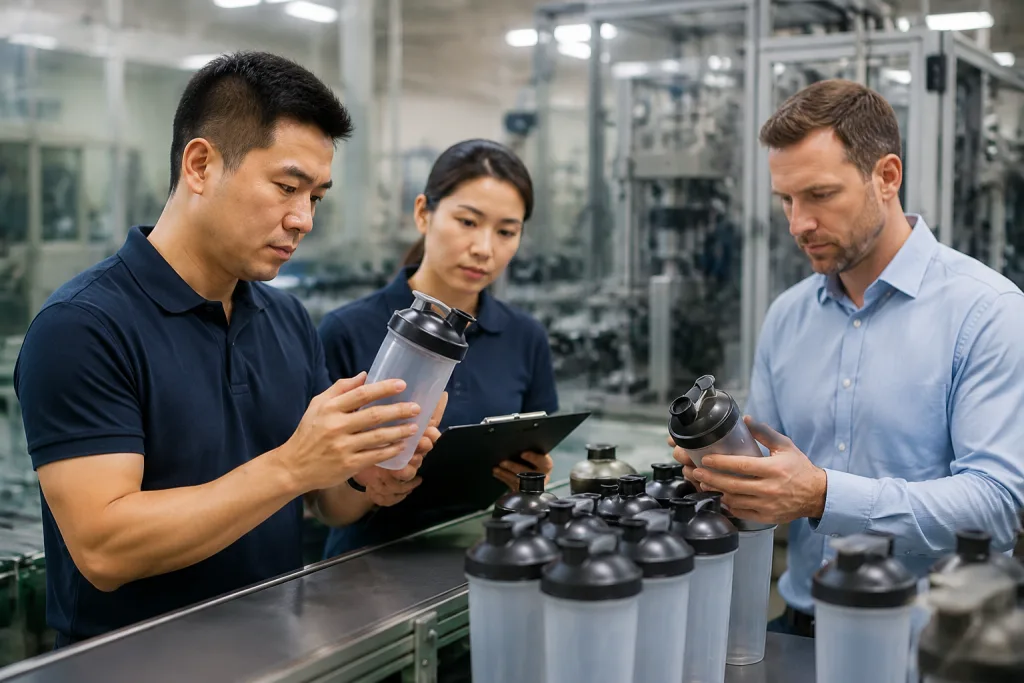
If you are comparing canteen manufacturers, canteen manufacturers, and canteen distributors, ask the blunt question: who owns the production line? The party with real molding and assembly capacity answers faster and with numbers, not guesses. We have seen this go sideways when a buyer paid a trading company first and only learned later that QC pulled the sample from another factory.
Buying strategy by order size
I’ll rewrite the section in-place, keeping the HTML tags and structure intact while making the prose read like a factory-side sales engineer wrote it.Your buying strategy has to change with volume. At 500 pcs, you are buying speed and clean logo placement. At 2,000 pcs, you are buying margin control. At 10,000 pcs, you are buying supply stability and repeatability. Treating those orders the same is the wrong move. We have seen buyers ask for full custom mold terms on a 500 pcs order, then wonder why the math does not work.
For small retailers and distributors, the usual play is a stock mold with custom logo, then a second-stage custom run after sell-through data proves the SKU. That keeps dead stock down. For brand owners, locking one body design and running it across a custom canteen, a customizable canteen, and a custom growler family gives better tooling use. On one line last month, QC pulled a lid sample at 1.2 mm seal thickness, and the buyer flagged the 8% packaging waste before we shipped.
In Zhejiang, a lot of factories are set up for this kind of program logic. A capable canteen supplier will not sell you the same setup for every order. They will tell you when a canteen promotional launch should stay simple, and when a premium customized growler or distributor growler line justifies higher tooling spend. That honesty is worth more than a low quote that misses the ship date by 12 days.
What to ask in your RFQ
I’ll rewrite the section in place, keep the HTML exactly as-is, and tighten the sales-engineer tone with specific factory-floor detail and cleaner RFQ language.Your RFQ should force straight answers. Ask for material, capacity, wall thickness, logo method, packaging spec, carton count, MOQ by variant, sample charge, mold charge, production lead time, and shipment terms. If you skip carton size or print area, the supplier fills the gap with guesses, and your landed cost drifts. For a serious canteen custom job, ask for a price ladder at 1,000, 3,000, and 5,000 pcs so you can see where the break comes. On one line, a 0.8 mm wall and a 1.2 mm wall look close on paper; the quote does not.
Ask whether the supplier can support retail, e-commerce, and distributor drinkware in separate packs. A distributor may need shelf-ready cartons, while an Amazon seller needs FNSKU labels and polybags. We had a buyer flag a PO typo on carton count once, and QC pulled the sample because the outer carton spec was missing. A factory that only ships bulk cartons will miss that split. The better factories in China quote each channel separately, which is what you want.
When you compare suppliers protein shaker offers, do not chase the lowest number first. Chase the clearest quote, the most stable lead time, and the cleanest compliance file. That is how you avoid surprise costs after deposit. We run into this every month: one Zhejiang factory gives direct answers on MOQ, lead time, and test standards, another hides behind “to be confirmed.” The math does not work if the quote is thin and the line is already booked.
Get a clear shaker quote before you order
Send your spec, target MOQ, and launch date. We will break down cost, lead time, and compliance so you can buy with fewer surprises.
Frequently asked questions
What is a realistic MOQ for custom protein shakers?
For standard stock molds, 300-500 pcs is realistic if you accept one-color print and existing colors. For custom color or packaging, plan on 1,000-2,000 pcs. If you change the lid, insert, or shape, many canteen manufacturers in China will quote 3,000 pcs or more. The key is to ask MOQ by process, not just by product. That is the only way to compare canteen suppliers fairly.
How much should I budget per unit FOB China?
For a basic PP shaker with simple branding, budget about USD 1.15-1.65 FOB China at 3,000 pcs. Mid-range Tritan or upgraded lid designs often sit around USD 1.80-2.60. Premium stainless or multi-part customized drinkware can reach USD 2.60-3.80. Packaging, testing, and extra accessories can add 8%-18% depending on the program.
How long does production usually take?
If the mold exists, expect 15-25 days from sample approval to finished goods. Add 7-12 days for sampling and another 2-4 days for final packing and export booking. New tooling can add 15-30 days. If you are buying from a Zhejiang canteen factory with a 300,000 units/month output, they should be able to give you a reliable schedule, not a vague promise.
What quality checks should I request?
Ask for leak testing, drop testing, material declaration, and an inspection standard such as AQL 2.5 for general defects. For Europe, ask about REACH compliance; for North America, ask for food-contact declarations and any ASTM-related testing your channel requires. If the supplier cannot explain how they control gasket fit, lid torque, and print adhesion, treat that as a warning sign.
Can one factory handle both shaker bottles and canteens?
Yes, a capable canteen factory often handles shakers, canteens, and custom growler programs on shared molding and packing lines. That can improve pricing because some components and packaging formats overlap. Just confirm whether the factory is truly manufacturing or only trading. A genuine canteen manufacturer in Zhejiang should be able to show machines, material stock, and assembly workers, not just sample shelves.