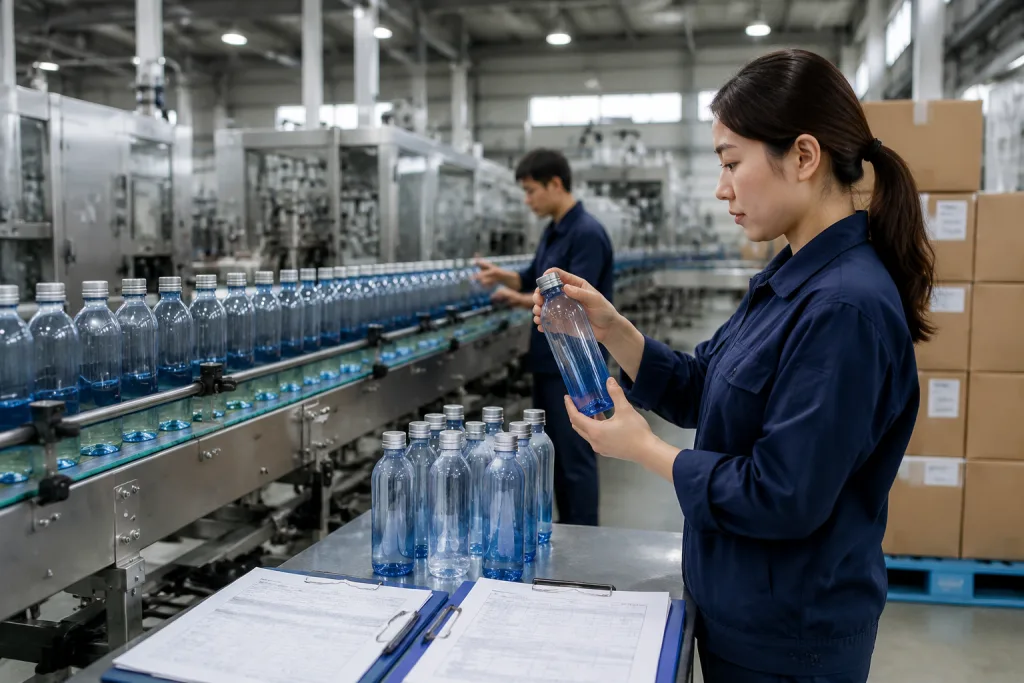
Key Takeaways
- For custom plastic bottles, practical MOQ is usually 3,000-5,000 pcs per color and style
- Ask for resin grade, food-contact reports, cap leak testing, and AQL level before price negotiation
- A new mold can take 25-45 days before mass production starts
- Logo method, packaging, and carton size can move FOB cost by 8-18%
If you search for suppliers plastic water bottle, you will get thousands of listings that look almost the same. Finding a canteen supplier is easy. The real job is checking which canteen factory keeps color, cap fit, printing, packaging, and compliance stable after the sample passes. We’ve seen a 2 mm cap mismatch blow up a PO on the line.
We manufacture custom drinkware in Hangzhou, Zhejiang, and we see the same buyer mistakes every month: RFQs with no resin grade, artwork sent after tooling starts, and retail cartons approved before drop testing. China can make solid plastic bottles, but the checklist needs more than “BPA free, logo printed, best price.” QC pulled a sample last week with a 0.3 mm wall shift, and the buyer flagged it fast.
Start With The Bottle Job
I’ll keep the HTML intact and rewrite the prose with a more field-side sales tone, concrete buying details, and no AI filler.The first buying question is not “which suppliers plastic water bottle price is lowest?” It is “what job must this bottle do for your customer?” A 500 ml gym giveaway, a school canteen with student names, and an outdoor promo bottle do not want the same resin, cap, wall thickness, or carton pack. We run that split on the line before we talk money.
If you are a distributor drinkware buyer, break the order into use cases before asking for quotes. For sports retail, Tritan or PP with a one-hand flip lid usually fits. For a low-cost event bottle, LDPE or squeezable PE does the job. For kids, ask about ASTM F963, small parts risk, bite valves, and strap pull strength. For Europe, ask early about LFGB, EU 10/2011, REACH, and whether the color masterbatch has food-contact papers. QC pulled a sample with a loose strap last month; the buyer flagged it fast.
Here is the practical RFQ checklist we prefer to receive from buyers:
- Capacity: 500 ml, 650 ml, 750 ml, 1 L, or another exact size.
- Material: PP, PE, PETG, Tritan, PC-free requirement, or recycled-content target.
- Cap style: screw cap, flip cap, straw lid, push-pull cap, chug lid, or carabiner cap.
- Branding: silkscreen, heat transfer, in-mold label, pad print, sticker, or laser on a metal accessory.
- Market: EU, UK, USA, Canada, Amazon FBA, retail shelf, school program, or corporate promotion.
- Packaging: bulk pack, white box, color box, FSC paper sleeve, hang tag, barcode, or FNSKU.
A good canteen manufacturer will ask these questions before quoting. If a canteen vendor sends one price in five minutes and asks nothing about market, resin, artwork size, or testing, that quote is a placeholder. We’ve seen that go sideways. The math does not work when the PO says “500ml” in one place and “550 ml” in another.
What Material Should You Specify?
I’ll rewrite the section in a more field-tested sales-engineer voice, keep the HTML structure intact, and preserve the technical numbers already in place.Plastic water bottle sourcing gets messy because “BPA free” is not a material spec. Almost every canteen supplier can say BPA free. That tells you nothing about clarity, impact strength, heat resistance, odor control, dishwasher behavior, or whether the resin lot is traceable to one batch.
For budget orders, PP is the usual pick because it is stable, food safe, and cost-effective. It is not as glass-clear as Tritan or PETG, but it works on opaque or translucent colors. On the line, we usually see PP sports bottles at 1.0-1.5 mm wall thickness, depending on shape and mold design. PE is softer and suits squeeze bottles, often with 0.8-1.2 mm wall sections. PETG and Tritan look cleaner for retail, but they cost more and need tighter handling, or QC will pull the sample for scratches.
If you want a canteen customizable for color and logo, ask how the color is made. Masterbatch at 2-4% loading is normal, but some bright shades need more tuning. Pantone matching on plastic is not the same as paper printing. A fair tolerance is usually Delta E 2.0-3.0 for controlled resin and lighting, but we’ve seen the buyer flag a job that looked fine under factory lights and went off under store LEDs.
For recycled plastic, be careful. Recycled PP or PET can support sustainability claims, but food-contact approval depends on source control and local regulation. Do not let your sales catalog promise “100% recycled food-grade” unless the canteen manufacturers can show documents for the exact resin stream. Zhejiang has solid material suppliers, but the paperwork has to match the production batch, not a PDF from last year. This is the wrong question to ask if someone says “we have a certificate.”
Our rule: approve the resin family before you approve the logo. A clean print on the wrong plastic still turns into a claim later.
MOQ, Tooling, And Real Pricing
I’ll keep the HTML structure intact and rewrite the copy to sound like a sales engineer, with tighter pricing language and a few shop-floor details.Procurement teams want one clean price table. Fair enough. For custom drinkware, the number moves with mold ownership, order quantity, color count, lid build, packaging, and inspection level. If those items are still open, the quotes are not on the same bottle.
For an existing mold plastic bottle, we usually run 3,000 pcs per color for simple logo work, or 5,000 pcs when the buyer flags a custom Pantone match. A new canteen shape needs 25-45 days for mold development and sample approval before the normal 30-40 day mass production lead time. On the Hangzhou line, one standard plastic bottle setup ships about 300,000-500,000 units/month, depending on how much cap assembly and pad printing the job eats up.
FOB China pricing for a basic 650 ml PP sports bottle often lands at USD 0.85-1.40 at 5,000-10,000 pcs. A clearer Tritan-style retail bottle with a flip lid, wrist strap, and one-color logo may land at USD 2.10-3.80. Add a color box and insert card, and you can add USD 0.18-0.45 per unit. QC pulled the sample at 1.2 mm wall variation on one job, and that alone changed the quote. These are working ranges, not promises.
Ask each canteen vendor to break out the cost drivers:
- Unit price: bottle, cap, seal ring, straw, strap, and accessory parts.
- Tooling: bottle mold, cap mold, insert mold, logo plate, or fixture cost.
- Decoration: setup fee, film fee, screen fee, transfer fee, and reject allowance.
- Packaging: carton strength, inner bag, box, label, barcode, pallet requirement.
- Trade term: FOB Ningbo, FOB Shanghai, EXW, CIF, DDP, or FBA-ready service.
Canteen distributors lose margin when they squeeze only the bottle price and forget the carton, barcode, and FBA label. The math does not work.

Logo And Customization Questions
I’ll rewrite this section in a sharper supplier voice, keep the HTML exactly intact, and make the examples feel like factory-floor guidance.Customization is where a lot of plastic bottle jobs go sideways. The artwork looks clean on a PDF, then the line hits a curved wall, ribbing, textured PP, cap seams, or a color break and the logo shifts 1-2 mm. A custom canteen with a 90 mm-wide mark may sit fine on a straight cylinder and look off on a tapered gym bottle.
For most plastic bottles, silkscreen is the workhorse. We run it for one to three solid colors, and it holds up for handwash use if the ink cure is right. Pad printing fits small cap tops and tight curved zones. Heat transfer gives more detail, but the surface has to be clean and the buyer should expect adhesion testing. In-mold labeling makes sense on runs of 20,000 pcs and above; setup loss and scrap control decide the price, not the print itself.
If you need a canteen customizable for several corporate clients, keep the bottle body standard and change the logo, sleeve, hang tag, or box sticker. That beats changing bottle color and cap color every 1,000 pcs; the math does not work. For a customized drinkware retail line, controlled color families are fine, but we group production by resin color so the line does not waste time on changeover.
Before mass production, ask for a pre-production sample with final resin color, final cap, final logo method, and final packaging. A blank sample only shows hand feel and mold shape. It does not prove ink adhesion, logo registration, barcode scan, carton compression, or shelf look. QC pulled one sample last month and the buyer flagged a 3 mm print shift on the shoulder, so we reworked the screen before bulk.
Artwork checklist:
- Vector file in AI, EPS, or PDF format.
- Pantone Solid Coated reference for print color.
- Maximum logo size confirmed on the bottle curve.
- Dishwasher, handwash, or rub-test expectation stated clearly.
- Legal marks, recycling code, country of origin, and warning text approved before printing.
A canteen promotional order can live with some visual compromise. A national retail program cannot. Tell your canteen supplier which one you are buying. We’ve seen buyers mix those two, and that is where the trouble starts.
Compliance And Factory Checks
I’ll rewrite the section in-place, keep the HTML tags intact, and tune the prose to sound like a factory-side sales engineer.Compliance should be locked before the order is packed. For North America, buyers usually ask for FDA food-contact support, California Proposition 65 screening, CPSIA if the bottle is sold for children, and ASTM-related testing where it applies. For Europe, LFGB, EU 10/2011 migration, REACH SVHC screening, and packaging waste rules may come up. The test plan follows the material, the claim, the market, and the user age.
Do not ask a canteen manufacturer for “all certificates” and think the folder covers the risk. Ask for reports that match the exact material and color family you are buying. A clear Tritan report does not cover a black PP lid with a silicone seal. A body report does not cover a printed ink layer if the ink sits near the mouth area.
Factory audits matter too. BSCI, Sedex, ISO 9001, and ISO 14001 are useful signals, but they do not run the line. A solid canteen factory should explain incoming resin inspection, color-mix records, first-piece approval, cap torque checks, leak testing, print adhesion testing, and packing-line separation for mixed SKUs. We have seen buyers skip torque control and then the cap backs off in transit.
For inspection, we use AQL, not a loose “check before shipment.” A common setup is AQL 2.5 for major defects and 4.0 for minor defects, with critical defects at 0. For bottle orders, define the defects up front: leaking cap, wrong logo position, cracked body, odor, dirty inside wall, short shot, flashing, color mismatch, barcode failure, crushed box, and missing accessory. QC pulled one sample last week and found a 1.2 mm flash on the lid edge; that is the kind of miss that turns into a claim.
If you are comparing canteen suppliers in China, ask who owns the molding, who owns decoration, and who owns final assembly. Some vendors outsource all three. That can work, but only if one quality team controls the full chain and signs the same approved sample you signed. We once saw a PO typo on lid color code, and the buyer flagged it only after 8,000 pcs were in cartons.
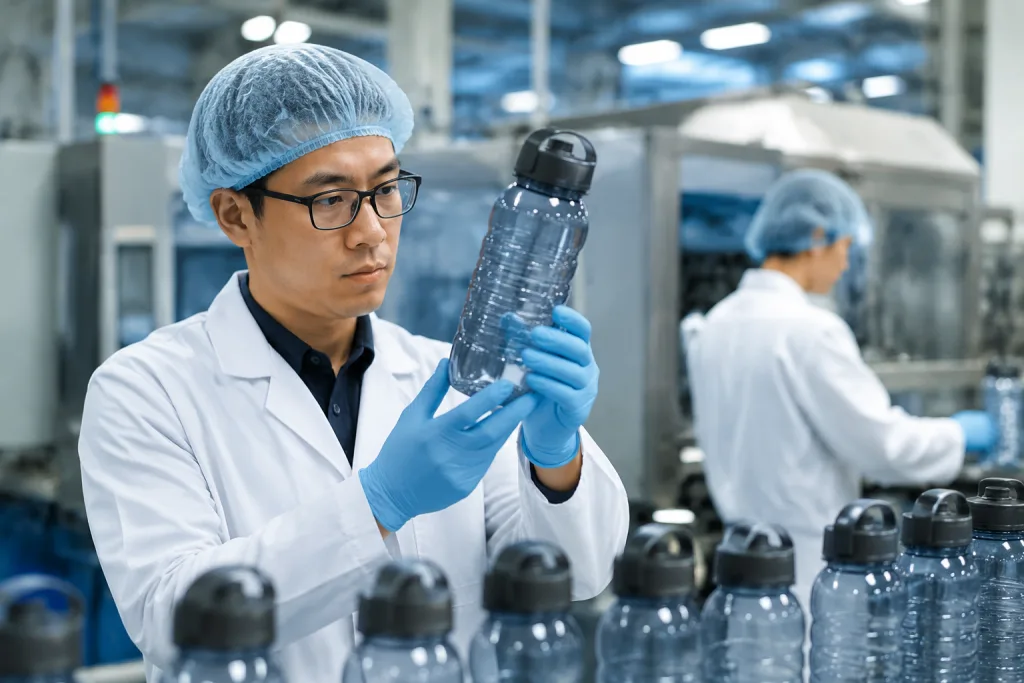
Questions Buyers Should Ask
I’ll rewrite the section in-place, keep the HTML structure intact, and make the prose sound like a field-tested sales engineer wrote it.Good sourcing starts with tight questions. You do not need to be a plastics engineer, but every supplier should give measurable answers before you cut a PO.
Can you produce from an existing mold?
Existing molds save time and cut risk. Ask for mold photos, sample records, cavity count, and whether another buyer already holds that tool. We’ve seen a “stock mold” vanish after the deposit cleared, and then the line sits idle.
What is the real lead time after artwork approval?
Break it into sampling, deposit, resin buying, molding, printing, packing, inspection, and booking the vessel. A 30-day promise usually means 30 days after deposit and final sample sign-off, not 30 days after the first email. On the factory floor, the UV printer alone can take 2 days if the file is off by 1 mm.
Can you handle mixed SKU cartons?
Distributor programs often need 4 colors, 3 logos, and retailer labels that change by market. Mixed packing raises the mistake rate. Ask for the packing matrix, the barcode scan step, and a carton-marking proof before we run the order.
How are leaks tested?
A simple upside-down water check is not enough for some lid builds. For straw lids and flip caps, ask for vacuum, pressure, or rotation testing, plus how many samples QC pulls per shift. A 1% leak rate on 50,000 pcs means 500 complaints, and that math does not work.
Who approves changes?
Put it in writing. Resin substitution, cap gasket change, carton size change, ink change, or logo shift should need buyer approval. We’ve seen a PO typo on the logo position turn into a full reprint because nobody locked the revision.
This is why good canteen buyers keep a supplier scorecard. Track on-time shipment, defect rate, response time, sample match, carton damage, and document quality. The cheap supplier often looks fine on the first order and then gets expensive on reorder two, when QC starts finding pinholes and scuffed lids.
Purchase Order Checklist
I’ll rewrite this section in-place, keep the HTML structure intact, and tighten the sales-engineer tone with concrete factory details.Before you release the deposit, make the purchase order tight enough that a new merchandiser in China can run it without asking for basic clarifications. That is the standard. If your PO only says “customizable drinkware, blue, logo, 10,000 pcs,” it is not a sourcing document. It is a claim ticket. We’ve seen that go sideways after QC pulled the sample and found the lid spec missing.
Use this checklist for suppliers plastic water bottle orders:
- Product name, mold number, capacity, dimensions, and target weight.
- Material grade for body, lid, gasket, straw, handle, and strap.
- Approved color reference for each plastic part.
- Logo file name, print method, print size, position, and Pantone color.
- Sample approval date and signed sample photo set.
- Testing standard, required reports, and who pays laboratory fees.
- AQL inspection level and defect classification.
- Packaging artwork, barcode, FNSKU, carton marks, carton dimensions, and gross weight limit.
- Trade term, port, payment schedule, ship date, and late shipment remedy.
If you are moving beyond bottles into a custom growler, customizable growler, or customized growler program, do not recycle the same PO template. That is the wrong question to ask. Growlers often bring stainless steel, vacuum insulation, powder coating, a 1.2 kg carton target, and a different drop-test spec. Distributor growler jobs also need tougher retail packaging and a lid seal check on the line.
For a first order with a new canteen manufacturer, keep the first run moderate. A 5,000-10,000 pcs trial tells you more than a polished sample. We ship a lot of these, and the math works: at 8,000 pcs, one typo on the carton mark is cheaper than a 30,000 pcs rework. Once the canteen supplier proves defect control, paperwork, and ship-date discipline, scaling up is a safer move.
Send Your Plastic Bottle RFQ For Review
Share capacity, material, logo, quantity, and market. We will flag cost risks, MOQ issues, and compliance gaps before sampling.
Frequently asked questions
What MOQ should I expect from suppliers plastic water bottle factories?
For existing molds, expect 3,000 pcs per color for simple logo orders and 5,000 pcs per color when you need custom plastic color. Some canteen suppliers accept 1,000-2,000 pcs, but the unit price, setup fee, and color control usually get worse. For a new custom canteen mold, practical MOQ often starts around 10,000-20,000 pcs because tooling, sampling, and machine setup must be amortized. If you are a canteen distributor testing a new customer, ask for a standard mold, stock cap, and custom logo first. That protects your budget while still delivering customized drinkware.
How long does a customized canteen order take from China?
A repeat order from an existing mold usually takes 30-40 days after deposit and final artwork approval. Add 7-10 days for pre-production sample approval if color matching or packaging is new. A canteen customized with a new mold normally needs 25-45 days for mold design, CNC work, trial shots, and sample correction before mass production begins. Ocean freight to Europe or North America often adds 25-40 days depending on port and season. Around Chinese New Year, add at least 2-3 weeks of buffer because China factory capacity and trucking both tighten.
Which logo method is best for canteen promotional projects?
For most canteen promotional orders, one-color silkscreen is the safest balance of cost, speed, and durability. At 5,000 pcs, setup costs are manageable and the print works well on PP, PE, and many Tritan-style surfaces. Pad printing is better for small cap logos or uneven surfaces. Heat transfer is useful for multi-color artwork, but you should request an adhesion test and a rub test before approval. If the order is under USD 1.50 FOB per unit, do not overcomplicate decoration. A clean one-color logo often looks more professional than a cheap full-color transfer.
How do I compare a canteen manufacturer and a trading vendor?
Ask who owns molding, decoration, assembly, inspection, and export documents. A direct canteen manufacturer may offer better process control and faster technical answers. A trading canteen vendor may be useful if you need multiple product categories, such as plastic bottles, stainless tumblers, and a custom growler, under one shipment. The key is not the label. The key is accountability. Require one approved sample, one QC standard, one shipment schedule, and one person responsible for defects. If answers about resin grade, AQL, or leak testing are vague, the commercial relationship is not mature enough.
What quality checks should I require before shipment?
Use a written AQL inspection plan. For most plastic bottle orders, AQL 2.5 major and 4.0 minor is a practical starting point, with critical defects at 0. Define critical defects as leakage, unsafe sharp edges, wrong material, heavy odor, missing warning marks, or contamination inside the bottle. Major defects include wrong logo, cracked cap, poor closure fit, unreadable barcode, or carton shortage. Ask inspectors to check capacity, weight, logo position, color, torque, leak performance, carton drop condition, and packing accuracy. For Amazon FBA, also verify FNSKU placement and scan rate.