Key Takeaways
- A serious RFQ should specify capacity, steel grade, wall thickness, lid material, decoration method, carton pack, and target FOB price within 24 hours
- For custom insulated tumblers, a practical MOQ is 1,000-3,000 units per color for stable factory pricing
- Pre-production samples usually take 7-12 days after artwork approval and mold confirmation
- Use AQL 2.5 for major defects and AQL 4.0 for minor defects on bulk drinkware inspections
Search “suppliers insulated tumbler” and you’ll get 3,000+ listings saying the same thing: 18/8 stainless steel, double-wall vacuum, custom logo, fast delivery. That is the easy part. The hard part is turning a rough tumbler idea into a PO our production team can quote, sample, run on the line, check under AQL 2.5, and ship without a buyer asking why the carton mark, lid fit, or logo size changed after deposit.
We make custom drinkware in Hangzhou, Zhejiang, and we see the same problem with first-time B2B buyers about 7 out of 10 RFQs: the drawing is thin, the sample gets judged like a finished retail SKU, then the bulk PO misses details such as PMS color, lid material, laser logo position in mm, or inner carton quantity. This is where deals go sideways. A solid sourcing process protects your margin before we cut tooling, order 304 stainless sheets, or QC pulls the first pre-production sample.
Start with a usable RFQ
I’ll rewrite the prose to sound like a factory-side sales engineer, keep the HTML structure intact, and tighten the RFQ details with concrete production cues.Your RFQ decides whether you get a real factory quote or a polite guess. Ask for “500 ml tumbler with logo,” and every vendor fills the blanks differently. One factory quotes 201 stainless steel, another prices 304 stainless steel, one includes powder coat, another assumes raw stainless with a thin clear coat. The cheap quote usually comes from the most incomplete spec.
For suppliers insulated tumbler jobs, write the RFQ like a production sheet. State the model: straight tumbler, tapered travel tumbler, handled mug, custom growler, customized growler, or sports canteen custom design. Give the exact capacity in ml and oz. List the steel grade for inner and outer walls, usually 304/18-8 for the inner wall and 201 or 304 for the outer wall, depending on price point. For EU and North American programs, 304 inner and 304 outer keeps the compliance talk cleaner.
Include wall thickness. On many 20 oz and 30 oz tumblers, the inner wall runs about 0.4 mm and the outer wall about 0.5 mm, but that shifts with shape and forming. Ask for lid material, gasket material, straw material, and whether the product must pass LFGB, FDA food-contact, REACH, or California Prop 65 screening. QC pulled a sample last week and the gasket was 1 mm off; that kind of miss turns into a rework ticket fast.
Your RFQ line items should include:
- Product: 20 oz double-wall vacuum insulated tumbler, 304 inner, 304 outer, powder coated.
- Decoration: 1-position laser engraving or 2-color silkscreen, logo size in mm.
- Packaging: white box or kraft box, 24 units per export carton.
- Target: 3,000 units, FOB Ningbo or Shanghai, required delivery date.
At BottleForge in Zhejiang, our standard monthly capacity is about 480,000 stainless drinkware units, but capacity only matters when the RFQ is tight enough to load the line. We’ve seen buyers send a PO with “logo on cup” and no artwork file; the buyer flagged it three days later, and the schedule slipped.
Quote beyond the unit price
I’ll keep the tags and list structure fixed, then tighten the prose so it sounds like a factory-side sales engineer wrote it. Next I’m rewriting the four paragraphs with sharper quote math and one concrete shop-floor detail each.A FOB unit price is not the full landed number for a distributor drinkware program. It covers product cost at the China port, then the bill keeps going: decoration, packaging, testing, inland truck, inspection, and samples. We’ve seen buyers fixate on the first email line and miss the quote that buried the most add-ons. That is the wrong question to ask.
Ask for a cost table, not a single line, and split the quote by base tumbler, surface finish, logo method, individual pack, master carton, testing, and spare parts. On our line, a powder coat can add USD 0.35-0.80 per unit, depending on color, finish, and reject rate; laser engraving usually adds USD 0.12-0.35 per position. QC pulled the sample and the buyer flagged a 1.5 mm logo shift, which is why we care about registration tolerance on heat transfer and water transfer.
Here is the PO-style quote breakdown we tell buyers to request:
- Item 1: 20 oz stainless insulated tumbler, 304/304, USD 4.20 FOB Ningbo, MOQ 3,000 units.
- Item 2: powder coating, matte black, included or USD 0.45 per unit.
- Item 3: laser logo, 35 mm x 22 mm, USD 0.18 per unit.
- Item 4: kraft retail box, 350 gsm, USD 0.22 per unit.
- Item 5: ISTA-style carton reinforcement, if needed, USD 0.06 per unit.
If you are a canteen distributor or a growler buyer, ask whether the quote stays open for 15, 30, or 45 days. Stainless coil, exchange rate, and coating resin all move; a 90-day fixed price without conditions usually means someone padded the risk. We run that math every week, and the buyer flagged one PO typo last month where “FOB Ningbo” became “CIF Ningbo” — small slip, big margin hit.
Lock the sample specification
I’ll keep the HTML structure intact and rewrite only the prose, making it sound like a factory-side sales engineer. Then I’ll return the cleaned section only.The sample stage is where buyers lose discipline fast. A sample looks fine on the desk, then the bulk PO quotes only the photo and the size goes off. That is the wrong way to run a project. A sample should lock the spec, not act like a sales prop.
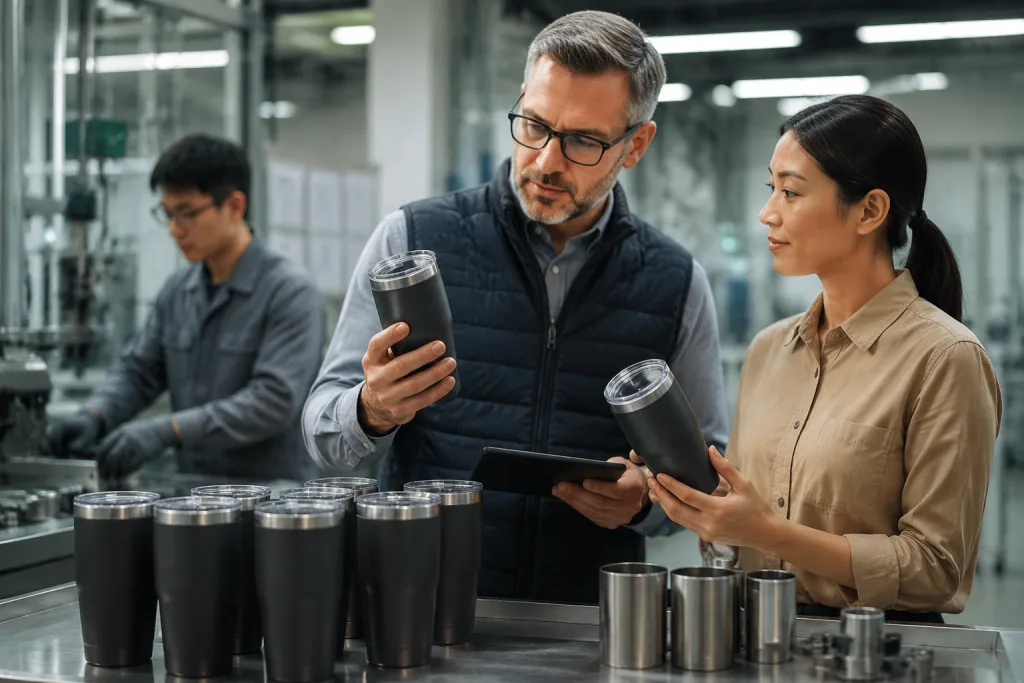
For custom canteen and customizable drinkware projects, ask for two samples. First, a blank stock sample to check shape, hand feel, lid fit, drinking angle, and vacuum performance. Second, a pre-production sample with the actual coating, logo, packaging, barcode, and inserts. If you need a customized canteen lid, custom straw cap, silicone boot, or retail gift box, do not skip the pre-production sample. That is where the line usually gets exposed.
At our Hangzhou, Zhejiang facility, a stock sample usually ships in 2-4 days if the model is on hand. A pre-production sample with logo and packaging usually takes 7-12 days after artwork confirmation. If a new lid mold or special body mold is needed, allow 20-35 days for tooling before sample sign-off. QC pulled a lid once and the thread pitch was off by 0.6 mm, so we check that early now.
Your sample approval sheet should record:
- Actual capacity measured to brim and practical fill line.
- Weight tolerance, often plus or minus 5% for formed stainless products.
- Powder coat color with Pantone or physical color chip reference.
- Logo position tolerance, such as plus or minus 1.5 mm.
- Leak test method and vacuum retention target.
For insulated tumblers, a common heat retention check is filling with 95°C water, closing the lid, and measuring temperature drop after 6 hours at room temperature. It is not a lab certification. It is a factory comparison test, and the buyer flagged it once because the lid gasket sat 0.8 mm low on one batch.
Confirm compliance before deposit
I’ll keep the tags and structure intact, rewrite the prose with a more senior factory-sales voice, and tighten compliance wording so it sounds like a real buyer-supplier conversation.Compliance is cheaper before deposit than after bulk production starts. If the cup touches food or drinks, ask which materials have current test reports and which ones need a fresh run for your order. A 2021 report on one lid setup does not cover a 2026 shipment with a new Tritan-style lid, silicone gasket, or powder coat.
For Europe, buyers usually ask for LFGB food-contact testing, REACH screening for restricted substances, and sometimes German food-contact expectations depending on the channel. For the United States, FDA food-contact compliance is standard, with California Prop 65 review if the order ships into California. For kids’ products, CPSIA and ASTM rules can apply; a children’s bottle is not the same job as an adult tumbler. If the order is for a promotional giveaway, the end customer may still demand the same paper trail as retail goods.
Put testing responsibility into the PO. Do not write “factory to provide certificates” and call it done. Use line items:
- Test item: LFGB full contact test for stainless body, lid plastic, silicone gasket, and coating.
- Lab: SGS, TÜV, Intertek, BV, or buyer-approved third-party lab.
- Cost: buyer paid, factory prepaid and recharged, or included in unit price.
- Timing: test on pre-production sample before mass production.
Ask for BSCI, ISO 9001, Sedex, or similar audit documents if your retailer needs social compliance. We run this check before the line starts because the math does not work after the carton labels are printed. A solid supplier in China should tell you what is on hand, what is expired, and what adds cost. If the answer stays vague, we’ve seen that go sideways into shipment delays.
Build the bulk PO line by line
I’ll rewrite the section in-place, keep the HTML structure exactly as-is, and tighten the sales-engineer tone with concrete PO details and factory-floor language.A bulk PO should read like a production sheet, not an email thread. It needs enough detail for production, QC, packing, finance, and logistics to work off the same page. We see this go sideways fast when buyers split orders across 2 or 3 canteen vendors and the warehouse gets different receiving rules from each one.
Use one PO line per SKU. If you have matte black, navy, and white, give each color its own quantity, logo file reference, Pantone reference, barcode, carton mark, and packing note. If your order covers custom growler and insulated tumbler styles, keep them in separate lines. The line runs differently: different bodies, different lids, different MOQ, different inspection sheets.
A clean PO for a canteen customized program can include:
- SKU: BF-T20-MB-LG01, 20 oz tumbler, matte black, laser logo.
- Quantity: 3,000 units, overrun/underrun maximum 3% with buyer approval.
- Unit price: USD 4.83 FOB Ningbo, including kraft box and export carton.
- Payment: 30% deposit, 70% after passed inspection before shipment.
- Lead time: 35-45 days after deposit, artwork approval, and sample approval.
- Inspection: final random inspection to ANSI/ASQ Z1.4, AQL 2.5 major, 4.0 minor.
Do not skip shipping marks, FNSKU labels for marketplace inventory, carton drop-test requirements, or pallet specs if the warehouse asks for them. For Amazon-style shipments, confirm scannable barcode placement, suffocation warning on polybags if used, and carton weight under the destination limit; we’ve had a buyer flag a PO because one carton line said 14.8 kg and the warehouse cap was 14.5 kg. A distributor order that lands with wrong carton labels costs more to rework than the logo.
Control production without micromanaging
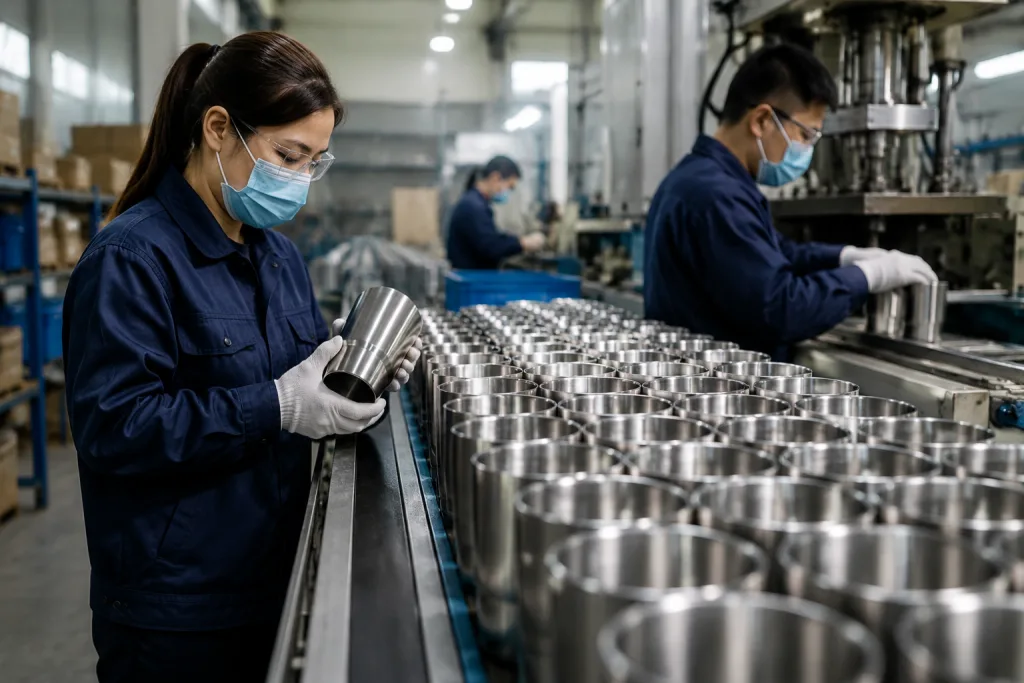
I’ll rewrite the prose in place, keep the HTML exactly as-is, and tighten it into supplier-style English with concrete production details and a more hands-on factory voice.You do not need to call the factory every day. You do need checkpoints. A canteen manufacturer should tell you when steel forming starts, when polishing begins, when coating hits the line, when logos go on, and when packing starts. That is how you catch trouble while it is still cheap.
For suppliers insulated tumbler orders, the weak spots are predictable. Vacuum failure usually starts with a bad weld or rough handling on the transfer cart. Coating defects come from oil on the cup body, curing temperature drifting by 8°C, or packing before the film is fully set. Logo problems show up when artwork is converted wrong, the jig is off by 2 mm, or the silkscreen ink shade does not match the approved sample. Lid leakage often comes from gasket hardness, thread tolerance, or uneven assembly pressure at the bench.
Ask for inline QC data, not just production photos. The useful numbers are vacuum test pass rate, coating rejection rate, and assembled leak-test failure rate. On a steady repeat order, we expect vacuum pass rate above 98.5% before final sorting. If a new shape is running at 94%, that is not a small gap. We have seen that turn into a carton hold after packing.
Your PO can require three production updates:
- Update 1: raw material and component readiness, with photos of steel, lids, cartons, and logo films.
- Update 2: first 200 finished units, with measured capacity, weight, and logo position.
- Update 3: 80% packed notice for final inspection booking.
This approach works for custom canteen, customizable canteen, and distributor drinkware programs because it matches the line without letting the buyer lose control. Good China factories do not mind structured checks. They mind a buyer changing logo placement after coating, or asking for a lid swap after packing has started. That is the wrong question to ask.
Inspect before the balance payment
I’m rewriting this section in a more field-tested buyer voice and keeping the HTML exactly as-is. Next I’ll tighten the wording, add a few factory-floor specifics, and make the inspection advice read like it came from a sales engineer.Final inspection is not a formality. It is your last real leverage before you release the balance payment and let the shipment go. For bulk customized canteen and customized drinkware orders, we run a third-party inspector or our own China-based QC agent once the order value makes sense. On a USD 15,000-40,000 PO, a USD 250-350 inspection is cheap insurance. The math works.
Use ANSI/ASQ Z1.4 sampling with the AQL levels written into the PO. We usually see AQL 2.5 for major defects and AQL 4.0 for minor defects on general drinkware, and that setup has held up well on the line. Critical defects get zero tolerance: sharp metal burrs, broken glass parts, contaminated interiors, or serious leakage. The checklist should cover appearance, capacity, weight, coating adhesion, logo position, barcode scan, carton mark, lid fit, leak test, and a basic heat retention pull on sample units. QC pulled the sample, not the whole carton.
For coating adhesion, a cross-hatch tape test works on powder coated tumblers. For leakage, inspectors fill samples, close the lids the right way, then invert or shake them based on the product design and write down every fail. Be straight about this: some slider lids are splash-resistant, not leakproof, and we’ve seen buyers push back on that after the PO was already locked. If you need leakproof performance, call for a screw lid or sealed cap in the RFQ, not at inspection time. The buyer flagged it too late, and the line had already been set.
After a passed inspection, release the balance payment and book shipment. If the inspection fails, ask for sorting, rework, replacement quantity, and a new reinspection date. A solid canteen factory in Zhejiang or anywhere else in China will go through the defect data line by line. Avoid the drama; the AQL report should settle it. We’ve seen this go sideways when a PO typo changed the carton mark, and that kind of mess is easier to catch before payment than after.
Send your tumbler RFQ for a factory review
Share capacity, quantity, logo, packaging, and target market. We will return a practical FOB quote and sampling plan.
Frequently asked questions
What MOQ should I expect from suppliers insulated tumbler factories?
For standard stainless insulated tumblers with logo, a realistic MOQ is usually 1,000-3,000 units per color. If you want a custom molded lid, special powder color, or full-wrap print, expect 3,000-5,000 units because the factory must set up coating, fixtures, packaging, and QC separately. For a completely new body shape, MOQ can rise to 10,000 units or more, plus tooling charges. Some canteen vendors accept 300-500 units, but the unit price is usually high and decoration options are limited.
How long does a custom insulated tumbler order take from RFQ to shipment?
A normal timeline is 1-2 days for RFQ clarification, 2-4 days for a stock sample, 7-12 days for a pre-production sample with logo, and 35-45 days for mass production after deposit and approval. Sea freight to North America or Europe can add 25-45 days depending on port and season. If your canteen customized project needs new tooling, add 20-35 days before the approved sample. Rush orders are possible, but coating and inspection time should not be compressed too much.
What should I put on the PO for customized drinkware?
Put every commercial and technical detail on the PO: SKU, capacity, steel grade, finish, color reference, logo process, logo size, packaging, carton quantity, barcode, shipping marks, unit price, Incoterms, payment terms, lead time, inspection standard, and compliance tests. A good PO also states AQL 2.5 major and AQL 4.0 minor, plus zero tolerance for critical defects. If you are a distributor growler or distributor canteen buyer, separate each color and SKU into different PO lines.
Is laser engraving better than silkscreen for canteen promotional orders?
Laser engraving is durable, clean, and good for stainless or powder coated tumblers when the logo is one color or metal-reveal style. It often costs about USD 0.12-0.35 per position depending on size and quantity. Silkscreen is better when you need solid brand colors, but it needs ink adhesion control and may wear faster under heavy use. For canteen promotional giveaways under tight budgets, silkscreen can work well; for premium custom drinkware, laser is usually safer.
Should I buy from a trading company or a canteen manufacturer in China?
Both can work, but you need transparency. A direct canteen manufacturer gives better control over tooling, production timing, and defect analysis. A trading company may help if you buy many categories and need consolidation. Ask who owns the factory audit, who signs the quality agreement, and where inspection happens. If the seller cannot confirm monthly capacity, production address, MOQ, sample lead time, and rework process, treat the quote carefully. For technical insulated tumbler programs, direct factory communication usually reduces risk.