Key Takeaways
- A serious RFQ should include capacity, steel grade, wall thickness, logo process, packing, Incoterm, and target MOQ of 1,000-3,000 units
- Double wall vacuum samples usually need 7-12 days after artwork and color confirmation
- Bulk lead time is normally 30-45 days after deposit and approved golden sample
- Use AQL 2.5 for major defects and require 100% vacuum testing on insulated bottles
When you search for suppliers double walled bottle, you are not buying a catalog. You are trying to avoid a lot of bottles that look fine in photos but fail vacuum retention, logo wear, carton crush, or retail barcode checks. We have seen first-time B2B buyers lose 30 to 45 days on that mistake.
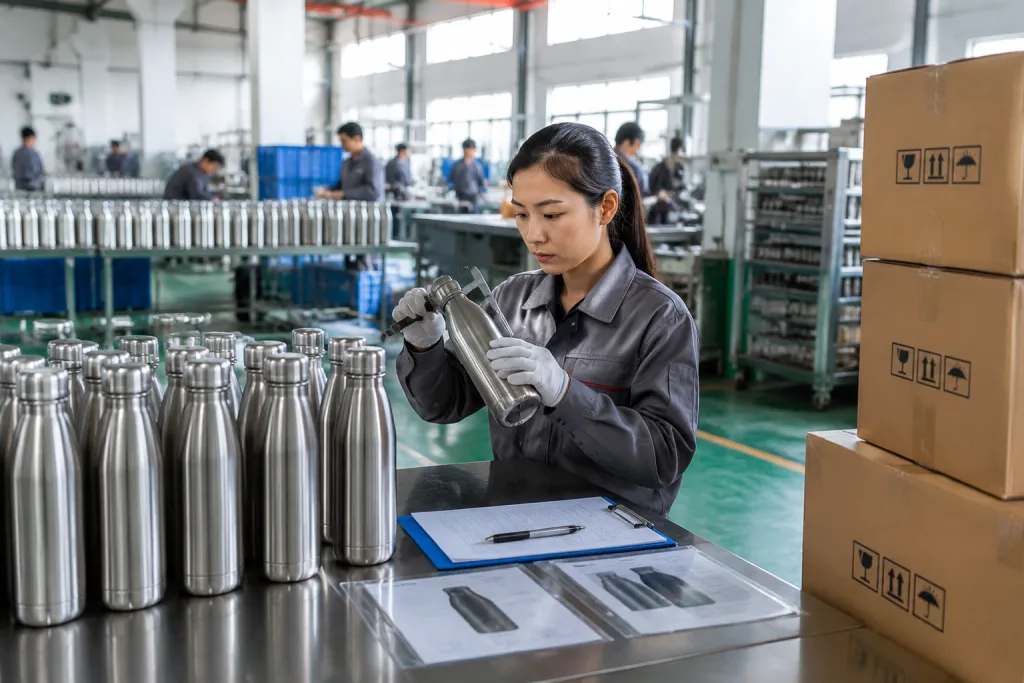
We manufacture stainless drinkware in Hangzhou, Zhejiang, and the same issue shows up again and again on the line. It is usually a small PO miss: wrong lid material, logo size left open, no AQL level, no spare parts line, no carton drop spec. A good canteen supplier in China should nail those points before tooling, sampling, and bulk production start — the buyer flagged it too late, and then the math does not work.
Start with a buyer-grade RFQ
I’ll rewrite the section in-place, keep the HTML structure intact, and make the prose sound like a real sales engineer wrote it. Then I’ll do a quick pass for the banned filler and any over-symmetric phrasing.A weak RFQ says, “Please quote 500 ml insulated bottle with logo.” A buyer-grade RFQ tells the factory what risk to price. For suppliers double walled bottle projects, the first RFQ should cover the bottle body, lid, decoration, packaging, compliance, and trade terms. Leave one out, and the first quote looks cheap but you cannot compare it cleanly.
For a 500 ml double wall stainless bottle, specify 18/8 stainless steel for the inner wall, 201 or 304 stainless for the outer wall based on market position, 0.4-0.5 mm body gauge, copper coating if you need better heat retention, and a leakproof PP lid with silicone seal. If you want powder coating, give the Pantone or RAL reference. If you want a custom shape, send a drawing or a reference photo with dimensions. QC pulled a sample at 18/8 and 0.42 mm last week; the buyer flagged a vague cap sketch, and we had to stop the line.
Your RFQ line items should read like a purchase document, not a casual message:
- Item: 500 ml double wall vacuum bottle, 304 inner, powder coated outer.
- Logo: 1-color silkscreen, 45 x 60 mm, front center.
- Packing: white box, 24 pcs/export carton, carton under 15 kg.
- Compliance: LFGB or FDA food contact, REACH for coating if selling in Europe.
- Commercial: FOB Ningbo or Shanghai, target MOQ 1,000 units per color.
As a Zhejiang factory, we run about 450,000 stainless bottles a month across standard and customized drinkware lines, but capacity does not fix vague specifications. This is the wrong question to ask: a buyer chasing the lowest price before nailing the spec usually pays for it later. We ship faster when the RFQ is tight, and the math does not work any other way.
Compare quotes beyond unit price
I’ll rewrite the section in-place, keep the HTML exactly as-is, and tighten the sales-engineer voice with concrete sourcing details.When quotations come back, do not rank them by FOB price alone. A USD 0.18 gap often comes from steel grade, powder coat thickness, carton specs, vacuum test loss rate, or whether artwork setup was included. We’ve seen buyers chase the lowest number, then pay for logo files, extra samples, and rework on the next round.
Ask each canteen supplier to split the quote into clear cost drivers. You want the unit price, mold or tooling cost if there is one, sample fee, logo setup charge, color MOQ, carton dimensions, gross weight, and estimated CBM. If you ship to Amazon FBA, club retail, or regional canteen distributors, carton data is not a side note. On the line, a carton that is 20 mm too wide can move freight up 6-12% across a full order.
For a standard 500 ml stainless double wall bottle from China, FOB usually lands around USD 3.20-5.80 at 1,000-3,000 pcs, depending on lid type, coating, logo method, and packing. A custom growler or customized growler with 1.0-1.9 L capacity sits higher because the body uses more steel and each carton carries fewer units. The math does not work any other way.
Your quote comparison sheet should include these PO line checks:
- Steel declaration: inner 304, outer 201/304, silicone food-grade.
- Vacuum performance: heat retention test at 95°C water, measured after 6 and 12 hours.
- Surface process: powder coating, spray paint, electro-polish, or raw brushed finish.
- Defect standard: AQL 2.5 major, 4.0 minor, critical defects zero.
- Payment: 30% deposit, 70% before shipment after inspection is common.
This is where experienced canteen manufacturers separate themselves from trading-only canteen vendors. The right supplier explains the trade-offs before you pay for a sample. QC pulled the sample, checked the seam at 0.3 mm, and the buyer flagged it before mass production—that saves everyone a headache.
Lock artwork and sample PO
I’ll rewrite this section in a more field-tested sales voice, keep the HTML exactly as-is, and preserve the technical specifics and structure.After quote approval, issue a sample PO. Do not trust chat approval for artwork, color, or lid choice. The sample PO is the reference for the golden sample and the bulk order. Skip it, and the project starts drifting between sales, design, and the line.
A proper sample PO should list the sample quantity, body color, logo file name, logo process, lid type, packaging mockup, sample lead time, and courier account. For laser engraving, send vector artwork in AI, EPS, or PDF. For silkscreen, state the Pantone color and print position. For heat-transfer or full-wrap artwork, ask for a flat dieline and confirm seam location; artwork wrap on a cylinder will bite you if QC does not catch it early.
Typical sample timing for a standard customizable canteen is 7-12 days after artwork confirmation. If you need a new lid mold, custom canteen body, or a customized growler with a new handle, sampling can run 18-30 days. A fair sample fee is usually USD 50-150 for standard decoration samples, while new tooling is quoted separately. We saw one buyer flag a PO with a missing logo version, and that typo cost two extra days on the bench.
Use these sample PO line items:
- Sample quantity: 3 pcs in approved color, 1 pc unprinted retention control.
- Artwork: file name, version date, logo size, print tolerance ±1.5 mm.
- Color: Pantone or RAL, acceptable visual tolerance under D65 light.
- Function: leak test with inverted bottle for 30 minutes.
- Courier: DHL, FedEx, or UPS account, ship from Zhejiang, China.
For canteen promotional programs, take the sample seriously even when the item is low cost. Your buyer, marketing team, and warehouse should all sign off before bulk PO release. We run this check every week, and the projects that move cleanly are the ones with one signed sample PO on file.
Test the sample like inventory
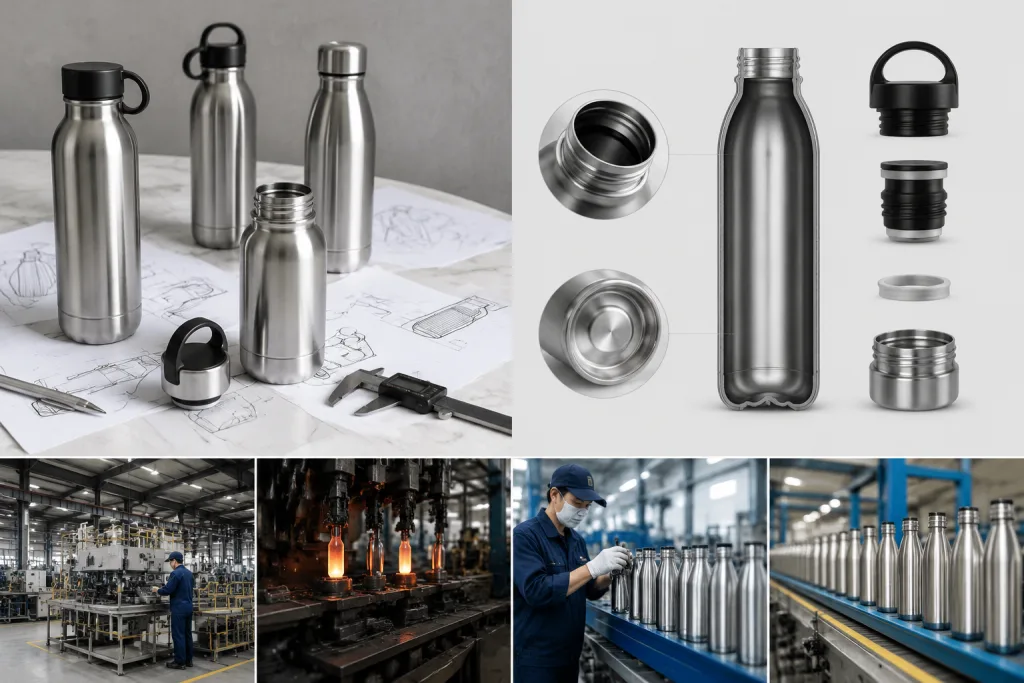
I’ll rewrite the prose in place, keep the HTML exactly as-is, and tighten it to sound like a buyer-facing factory note with concrete shop-floor details.A sample is not a souvenir. We treat it as the first unit of inventory. For suppliers double walled bottle orders, sample approval needs to cover appearance, assembly, drinking comfort, heat retention, leakage, odor, logo adhesion, and packaging fit. If your team only checks whether the logo looks nice, you leave the real problems for container inspection. QC pulled the sample on the bench, and that is where the miss shows up.
Start with dimensions. Measure height, diameter, mouth opening, and weight. A 500 ml bottle that is 7 mm taller than expected may not fit retail shelves or gift box inserts. Check the lid thread engagement with a torque wrench. If it feels gritty or needs too much force, ask for an adjustment before bulk. Fill with 95°C water, close the lid, and check outside wall temperature after 5 minutes. A properly vacuumed double wall bottle should stay cool on the body, not warm up like a cheap single wall cup.
For coating, run a basic cross-hatch tape test if the supplier claims strong adhesion. For printed logos, rub with a damp cloth and then with 75% alcohol for 20 cycles if your market expects frequent cleaning. For customized drinkware sold in Europe, ask the canteen manufacturer for LFGB documentation or food-contact test reports from a recognized lab. For North America, FDA food-contact suitability and, for kids items, CPSIA or ASTM considerations may apply depending on design. The buyer flagged it once on our line: no test, no approval.
Your internal approval record should say one of three things: approved for bulk, approved with listed changes, or rejected with reason. Do not approve by silence. That is the wrong question to ask. A good canteen factory in China will use your signed sample approval as the production reference, often called the golden sample. We ship against that copy, and the math only works when the sample matches the PO and the carton spec.
Convert approval into bulk PO
I’ll rewrite the section in-place, keeping the HTML structure and tightening the sales-engineer tone with concrete factory details and cleaner PO language.The bulk PO is where a lot of B2B buyers stay too vague. For customizable drinkware, “same as sample” is not enough. Samples are only the reference. The factory still needs line items for purchasing, production, printing, packing, and QC. Clear PO terms protect both sides, and the buyer flagged this on our last 2,000 pcs run when the carton mark was missing.
At BottleForge Industrial in Hangzhou, Zhejiang, our normal MOQ for standard stainless insulated bottles is 1,000 pcs per SKU and 500 pcs per color on selected stocked bodies, with bulk production usually 30-45 days after deposit and golden sample approval. A caliper check on the line still matters here; for more complex custom canteen projects, custom growler orders, or retail gift box packaging, we add 7-15 days. The math does not work any other way.
Your bulk PO should include these fixed fields:
- SKU and description: 500 ml double wall vacuum bottle, powder coated, 304 inner wall.
- Quantity: 3,000 pcs total, 1,000 pcs each in black, white, and green.
- Decoration: laser engraving or silkscreen, position, size, artwork version.
- Packaging: retail box, master carton, barcode, FNSKU if required.
- Inspection: pre-shipment inspection under AQL 2.5/4.0, critical defects zero.
- Shipping term: FOB Ningbo, FOB Shanghai, EXW, or DDP only if clearly quoted.
For distributor canteen and distributor growler programs, add spare lids or silicone rings as a separate PO line. A 1-2% spare parts allocation is cheap insurance; QC pulled the sample, and a missing gasket on one lid batch already told us what happens when people skip this. If you sell through multiple canteen distributors, define carton marks by customer or region at PO stage, not after packing.
Control production before inspection
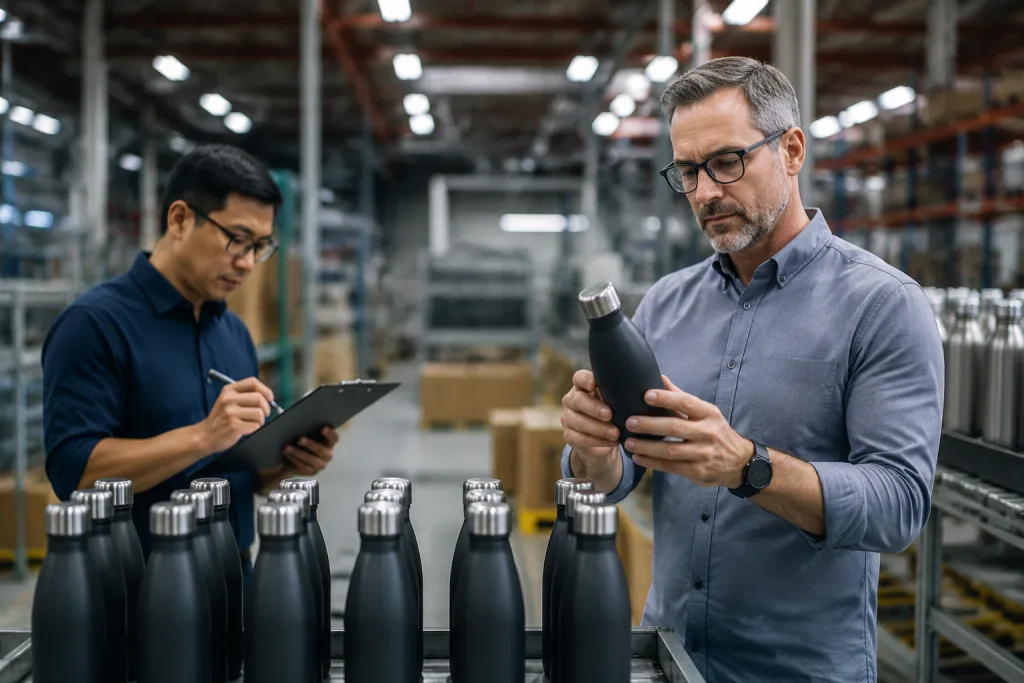
I’ll rewrite the section in-place, keeping the HTML tags and tightening the prose so it reads like a factory-side buyer note.Waiting until final inspection to find a problem burns money. Once bulk production starts, we ask for three checkpoints: material confirmation, a pre-production sample, and mid-production photos or video. Good canteen suppliers do not push back on that. They know a 3,000 pc order with the logo 5 mm off is a headache for both sides.
Material confirmation is straightforward: steel grade declaration, lid resin type, silicone seal material, and coating powder brand or spec. For vacuum bottles, ask whether each unit gets vacuum testing. On our Zhejiang line, we run 100% vacuum screening on insulated bodies before packing, then QC pulls finished goods again for leakage, assembly, and surface checks. One batch passed sealing but failed cap torque after 200 pcs, and that was caught on the line.
The pre-production sample is the first unit made with bulk materials and bulk print settings. Compare it with the golden sample. If the logo shifts 3 mm, decide now whether that is acceptable before 3,000 units go through the printer. If the color looks off, ask for photos under the same light, but phone cameras lie. For high-value customized canteen orders, a physical sign-off is the safer call. We have seen this go sideways more than once.
Mid-production review should confirm output count, defect trend, and packing status. Ask for photos of open cartons, inner boxes, barcode labels, carton marks, and pallet style if it is palletized. If you are a canteen distributor serving chain stores, carton mark accuracy can matter as much as bottle quality. One wrong customer code on a PO can trigger warehouse chargebacks even when the bottles are fine.
Do not let “production is finished” be the first real update after deposit. By then, the only tools left are inspection and delay, and the math does not work.
Inspect, ship, and reorder smarter
I’ll rewrite the section in place, keeping the HTML tags and structure intact, while tightening the prose into a more natural factory-side voice.Final inspection should be done only after goods are 100% produced and at least 80% packed. We run AQL sampling, not a quick look at three clean cartons. For drinkware, sharp metal burrs, serious leakage, wrong material, and contamination go in the critical or major bucket. Cosmetic specks, slight print shift, and minor carton scuffs can sit in minor, depending on where you sell.
For suppliers double walled bottle orders, the inspection sheet needs real function checks: leakage, lid fit, odor, coating scratch, print adhesion, capacity, weight, and a thermal performance sample test. QC pulled the sample on the line with a caliper and a 500 ml gauge cup. The inspector also checks quantity, carton count, barcode scan, shipping marks, and any FNSKU labels. If you import into Europe, keep REACH and food-contact documents in the shipment file. If you import into North America, keep product specs, test reports, and supplier declarations ready for your compliance team.
Before balance payment, ask for the packing list, commercial invoice, carton dimensions, gross weight, HS code suggestion, and booking status. We ship FOB from China, and the forwarder wants the cargo-ready date nailed down, not guessed. For canteen promotional programs with fixed event dates, build in a 10-14 day buffer. Vessel rollovers and customs exams do not wait for your launch.
After delivery, log claims by defect type and percentage. If 0.8% of lids arrive scratched, that points to packing or handling, not the molding machine. If 3% of units leak, the production control is off. We’ve seen this go sideways when buyers skip the receiving sheet and blame the wrong process. Good canteen manufacturers tighten reorder specs from real claims data, and that is how a first custom canteen PO turns into a stable private-label line instead of a one-off firefight.
Send your bottle RFQ for a practical review
Share capacity, artwork, target quantity, and market. We will check specs, MOQ, sample timing, and realistic FOB pricing before production.
Frequently asked questions
What MOQ should I expect from suppliers double walled bottle projects?
For standard stainless double wall bottles, a realistic MOQ is 1,000 pcs per SKU, sometimes 500 pcs per color if the body and lid are already in regular production. For custom molds, unusual colors, or a customized growler, expect 3,000-5,000 pcs because tooling, coating setup, and material purchasing need volume. A canteen promotional order under 500 pcs is possible only when using stock goods and simple laser engraving or one-color print. If a canteen vendor promises 100 pcs with full custom color, retail box, and low price, check whether they are using existing inventory rather than producing to your specification.
How do I know if a canteen manufacturer is a real factory?
Ask for a production video showing welding, vacuum testing, polishing or coating, printing, and packing lines with current-date order boards. Then request a business license, audit status such as BSCI if relevant, monthly capacity, and sample photos of similar custom drinkware. A real canteen factory should discuss wall thickness, steel grade, AQL, and lead time without guessing. You can also ask for a live video call from the workshop. Trading companies are not automatically bad, but a direct canteen supplier should be able to answer engineering questions and show process control in Zhejiang or another China production base.
Which logo method is best for customized drinkware?
Laser engraving is durable and clean, especially on powder coated stainless bottles, but it normally shows the metal or underlayer color and is not ideal for multi-color artwork. Silkscreen is cost-effective for one or two colors, usually adding about USD 0.08-0.25 per unit depending on size and quantity. Heat transfer or UV print can handle complex graphics, but you must test adhesion and scratch resistance. For canteen customizable programs sold through retail, define logo size, tolerance, Pantone color, and test method in the PO. Do not approve artwork only from a flat PDF; ask for a bottle mockup.
What quality checks matter most before shipment?
For double wall bottles, require 100% vacuum testing during production and AQL inspection before shipment. The inspection should check leakage, lid fit, odor, sharp edges, coating defects, logo position, capacity, weight, carton drop resistance, barcode scan, and carton count. Use AQL 2.5 for major defects and 4.0 for minor defects, with zero tolerance for critical defects such as contamination, wrong material, or unsafe burrs. If you are a distributor drinkware buyer, also inspect inner box quality and carton marks because warehouse errors can cost more than small cosmetic defects.
What should be included in a bulk PO for a custom canteen order?
Your bulk PO should include SKU, capacity, material grade, body color, lid type, logo process, artwork version, packaging, barcode, quantity by color, inspection standard, Incoterm, payment terms, and required ship date. Add spare lids or silicone rings as a separate line if you support canteen distributors or sell replacements. For example: 3,000 pcs, 500 ml, 304 inner wall, powder coated, laser logo 45 x 60 mm, retail box, FOB Ningbo, AQL 2.5/4.0, 30% deposit and 70% before shipment. Written PO details reduce disputes with canteen vendors.