Key Takeaways
- Start with 4 decisions: material, capacity, decoration, and lid style; they drive 80% of cost.
- A realistic MOQ for a custom stainless travel tumbler is often 1,000-3,000 pcs, with FOB pricing from about USD 2.10-5.80 depending on spec.
- For export orders, ask for AQL 2.5/4.0 inspection, REACH documentation, and leak-test data before you approve samples.
- A factory direct order from Zhejiang usually beats a trading layer on communication, tooling control, and 25-35 day repeat lead times.
When you search for suppliers coffee mug, you are not buying a simple mug. You are choosing unit price, print method, lead time, and the scrap rate the buyer will notice after the first delivery. For a travel tumbler, the bar is even higher: 12 hours of insulation is one thing, but lid fit, coating hold, and leak control decide whether the order stays on track or gets flagged on the first sample.
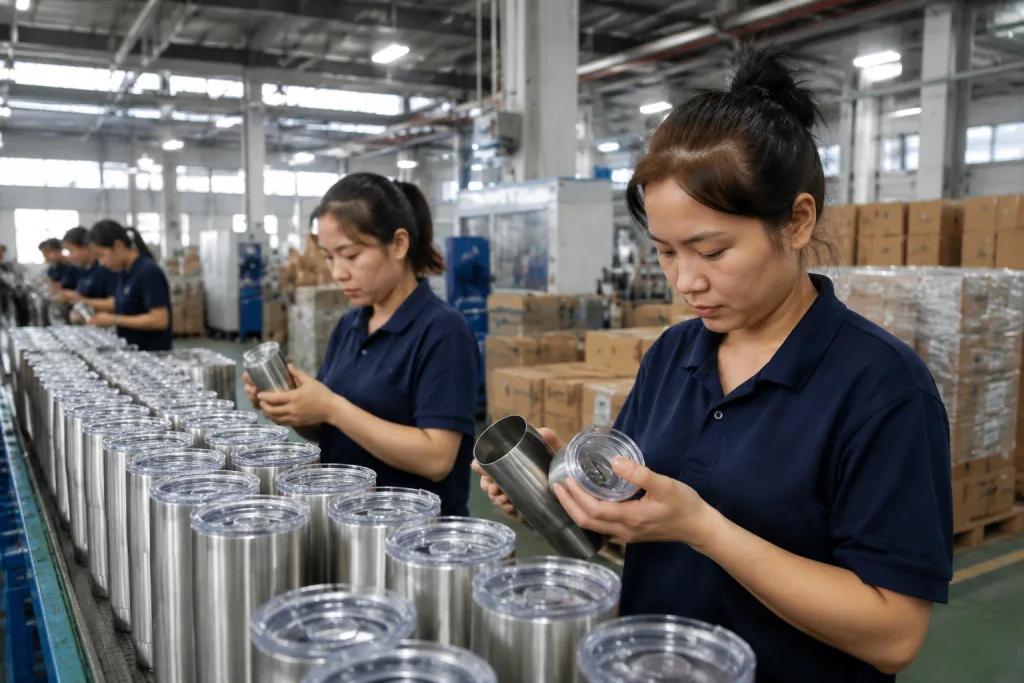
For coffee brands and corporate-gift buyers, the right question is not “who can make the mug?” It is “which coffee mug supplier can keep margin, pass REACH or FDA-style checks, and ship the same result run after run?” We see this on the line all the time. In Zhejiang, the better factories are usually the ones that quote straight, hold AQL 2.5, and keep 50,000 units a month within tolerance on finish and logo position. The math does not work any other way.
Start With the Four Decisions
I’ll rewrite this section in-place, keep the HTML intact, and tighten the sales-engineer tone while preserving the original structure and key specs.If you want a clean sourcing process, do not start with color or logo. Start with four decisions that decide whether the bulk order makes money: material, capacity, decoration, and lid. A 12 oz stainless mug with a slide lid is a different item from a 20 oz vacuum tumbler with a screw-on leakproof lid. We’ve seen buyers mix those up and pay for print work they can’t recover in the quote.
Material choice should follow the use case. Stainless steel fits premium coffee mug bulk programs, retail shelves, and outdoor use. Ceramic works for countertop gifting, but it ships heavier and cracks easier in transit; last month QC pulled three broken units from a drop test after a 1.2 m fall. Plastic or PP is cheaper, but the shelf appeal drops fast. For coffee brands, 304 stainless is the safe default. If you care about food-contact risk, ask for material declarations and traceability from the coffee mug factory. If you need a coffee mug customizable finish, ask whether the powder coat survives 1,000+ abrasion cycles or whether the print is only skin-deep.
Capacity changes freight and retail price. A 12 oz or 16 oz unit usually moves better for office gifting. A 20 oz bulk coffee tumbler shows up more in commuting sets and Amazon-style retail. Decoration changes the unit math fast: one-color silkscreen is cheap, laser engraving is durable but looks more restrained, and full-wrap heat transfer adds setup cost. The lid is where suppliers coffee mug quote sheets get slippery, so ask for the leak test standard, gasket material, and PP grade before you compare price alone. One PO we saw had “lidd” typed as “liad”; the line still ran it wrong until the buyer flagged it.
Choose the Right Supplier Type
I’ll rewrite the section in-place, keep the HTML structure unchanged, and strip the AI-style phrasing while adding a few factory-floor specifics.Not every coffee mug supplier runs the same shop. Some are real factories. Some are distributors or sourcing offices. Some can handle sales well but stumble on tooling, which is fine until you need a Pantone match or a lid mold fix. If you are buying coffee mug in bulk, supplier type matters more than a glossy catalog.
A coffee mug factory direct relationship gives you tighter control over molding, sampling, and defect correction. A coffee mug manufacturer or coffee mug oem manufacturer fits private-label work and repeat orders; we see that on 304 stainless travel tumbler programs all the time. If you only need 500 branded units for a trade show, a distributor can move fast, but the price is higher and the control is thinner. I’ve seen buyers get burned by a PO typo on lid color, then the stock arrives in the wrong shade. Check whether the company owns the injection machines, vacuum lines, and printing area, or just flips finished inventory.
Decision rule: if your project needs custom tooling, color matching, or recurring restocks, work with a coffee mug factory or coffee mug manufacturers in Zhejiang or elsewhere in China. If you need a spot buy, a coffee mug distributor can work. For corporate gifts, coffee mug promotional products are often resold on tight deadlines, so ask who holds the stock, who runs QC, and who pays when a batch fails AQL 2.5.
Good sourcing is not about the lowest quote. It is about finding the supplier who can ship the same mug six months later without drama.
Read the Quote Like a Buyer
I’ll rewrite just the prose, keep the HTML structure intact, and make it sound like a factory-side sales engineer wrote it.Most buyers make the same mistake: they compare the headline price and miss what sits under it. A proper quote from a coffee mug manufacturer should spell out material grade, wall build, finish, logo method, packaging, carton spec, and shipping term. If the supplier sends one line only, you are not buying—you are guessing. QC pulled a sample on the line last week and found a missing lid spec on the PO; that kind of slip turns into a dispute fast.
For a standard stainless bulk coffee mug, FOB China pricing usually lands around USD 2.10-3.40 at 1,000-3,000 pcs for a simple insulated tumbler, and USD 3.80-5.80 for higher-finish models with better lids, color coating, or gift packaging. A ceramic coffee mug custom made item can look cheaper at unit level, but breakage, heavier freight, and carton loss change the landed cost. The math does not work if you stop at ex-factory price. A 0.35 mm shell versus 0.45 mm changes dent resistance, and buyers feel that difference the moment the carton gets rough handling.
Ask for the following before you accept a quote:
- FOB or EXW stated clearly, not both mixed together
- MOQ in writing, not “flexible”
- Sample fee and refund rule
- Lead time for first order and repeat order
- Packaging detail, including master carton count
- Test data: leak, thermal retention, and dishwasher or coating resistance if claimed
If a supplier will not split tooling, decoration, and packaging costs, the quote is padded. We run this every day: fixed cost stays fixed, variable cost moves with order size, and re-order pricing should get better if the spec is clean. The buyer flagged it on one job where the carton count was wrong by 12 pcs; that was enough to break the margin. A solid factory tells you what is fixed, what changes, and where there is room to trim cost on the second run.
Private Label Without Brand Drift
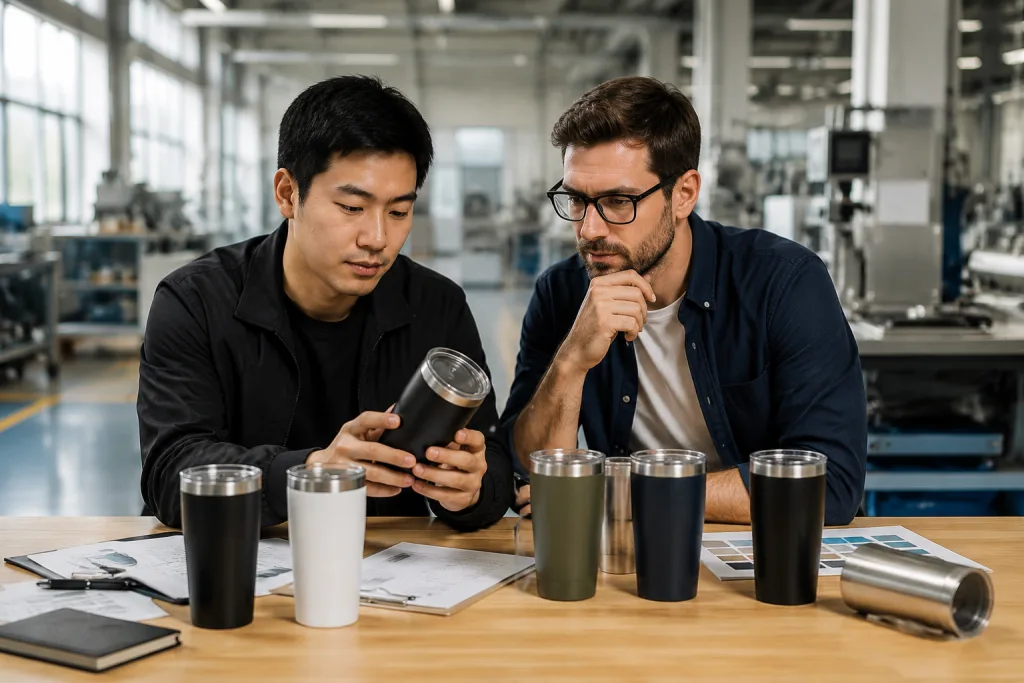
I’ll rewrite the section in place, keep the HTML structure unchanged, and tighten the copy so it reads like a real sales engineer wrote it.Private label only works when the mug stays visually and technically locked down. If you are building a coffee mug private label or coffee mug private labeling program, the first carton is rarely the problem. Order two is where we see trouble: Pantone shift, logo creep by 1-2 mm, and a lid swap that the buyer did not approve.
Decide early whether you need coffee mug custom, coffee mug customized, or truly coffee mug customizable stock. These are not the same job. Custom means we build to your spec from the start. Customizable means we run a fixed body with a controlled set of lids, finishes, and print methods. Customized usually means a stock cup with changed decoration or packaging. For a coffee brand putting mugs into retail, custom is the safer call. For a corporate gift run with a 500 pcs MOQ, a stock body and logo print usually does the job. The math does not work any other way.
Logo method has to match both budget and wear. Silkscreen is the usual pick for bulk coffee mug and bulk travel mug orders. Laser engraving holds up better on premium gifts. UV print can carry gradients, but on a curved wall it needs tighter setup and QC pulled the sample twice before we signed off. If the mug will go through office dishwashers, keep the artwork simple and choose a decoration that survives heat and detergent. We ask for a pre-production sample, a golden sample, and a signed color chip under daylight plus D65 light; one PO typo on the shade code once cost us 12 days, and we have seen that go sideways fast.
Practical rule: if the item moves through retailers or distributors, keep repeatability ahead of novelty. A good coffee mug promotional item should be easy to run on the line and solid on margin.
Check Compliance Before Production
I’ll keep the HTML intact and rewrite the prose to sound like a hands-on export sales engineer, with concrete factory details and tighter, less generic language.Compliance is where sharp buyers save real money. Rejecting one bad sample costs less than clearing 20,000 failed units at customs. For China-made product, ask for material declarations, migration test reports where required, and proof of food-contact compliance for your market. If you ship to Europe, REACH paperwork has to be in the file. For North America, we usually see FDA-style food-contact confirmation plus a third-party lab report when the account is sensitive.
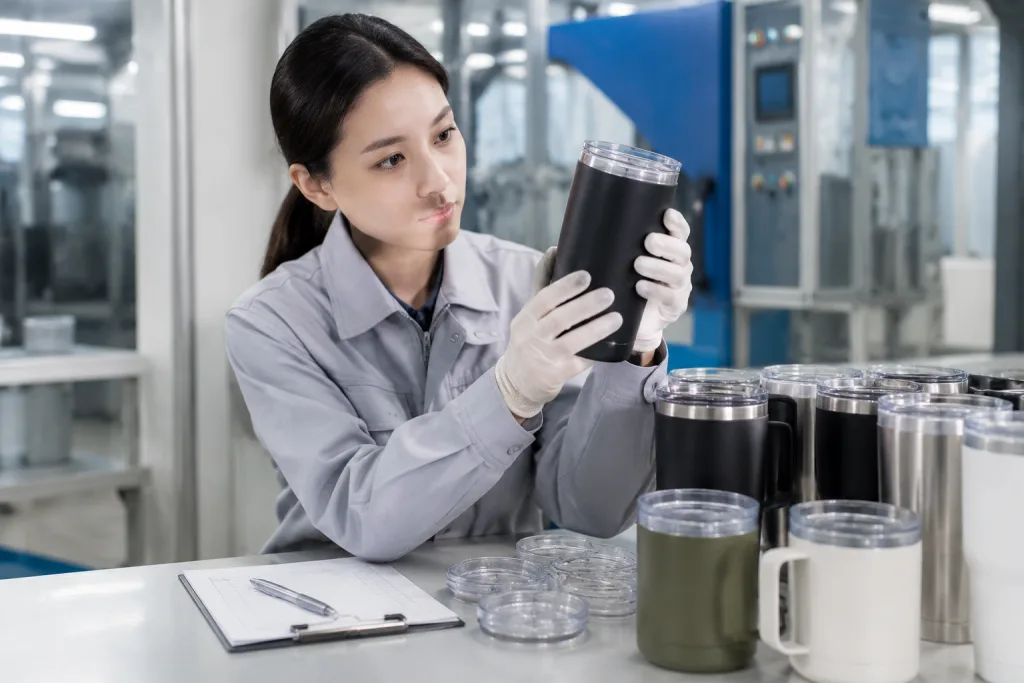
Ask about the factory system too. A proper coffee mug factory should walk you through incoming inspection, in-process checks, and final AQL sampling without reading from a script. A common export target is AQL 2.5 for major defects and 4.0 for minor defects, though corporate-gift jobs often tighten the logo and appearance callout. We run leak tests, drop tests, and vacuum-retention checks by lot when the order is serious. The lid seal and threading tolerance matter more than a glossy catalog photo.
China has plenty of capable factories, but discipline varies. In Zhejiang, the better plants usually keep stable SOPs, batch traceability, and export files that QC can pull in 5 minutes. Ask who signs the first article, who owns the production record, and whether the line can hold 50,000 to 100,000 units per month without a setup change for your order. We’ve seen buyers ignore that and get burned. That answer tells you more than the sales deck ever will.
Lead Times, MOQ, and Factory Reality
I’ll rewrite the section in place, keep the HTML exactly as-is, and tighten the language so it reads like a factory-side sales engineer.This is the part buyers skip until the PO is signed: the factory calendar. A serious coffee mug supplier should put MOQ, sample lead time, and mass production lead time on the table before quote day ends. For a custom stainless bulk coffee travel mug, MOQ usually sits at 1,000-3,000 pcs. For multi-color prints or gift-box sets, we see it jump to 5,000 pcs. Sample lead time is usually 5-10 days if no new mold is needed. Mass production usually needs 25-35 days after sample approval and deposit, and that is normal for export work in China.
Packaging lead time gets people. A custom printed carton, molded pulp tray, or window box can add 7-15 days when artwork lands late or the barcode is wrong. We had a buyer flag a PO typo on the outer carton code, and the whole packing plan slipped by 4 days. If you sell on Amazon or retail, packaging matters as much as the mug itself, because the outer pack carries your barcode, compliance mark, and brand story. Ask straight whether the factory can handle FNSKU labeling, carton labels, and master carton compliance. If the answer sounds fuzzy, your ops team will own the cleanup.
Factory reality also shows up in QC. A plant running 50,000 units per month with stable line balancing is usually safer than a small workshop promising 5,000 “premium” pieces at a low price. We run the line with a simple rule: if the 0.8 mm wall thickness is drifting, QC pulls the sample before the batch grows legs. Scale is not everything, but it matters when your repeat order lands before Q4 and you need the next shipment on time. In Zhejiang, the best suppliers coffee mug teams are the ones that quote plain numbers, push back on bad specs early, and keep the process boring.
Shortlist Suppliers With a Scorecard
I’ll rewrite the section in place, keep the HTML tags unchanged, and tighten the sales-engineer tone with more concrete buyer-floor detail.When you compare a coffee mug supplier list or vet a coffee mug supplier directory, use a scorecard, not gut feel. We run it on five points: factory ownership, OEM depth, sample speed, export documents, and how fast they answer when the buyer flags a typo. Then we test them with the same brief: 16 oz stainless steel, 304 inner, powder-coated exterior, laser logo, one-color print box, 1,000 pcs, FOB Ningbo or Shanghai. You find out fast who owns a line and who is just forwarding guesses.
The better suppliers send back dimension drawings, capacity tolerance, logo area limits, and the trade-offs in plain language. The weaker ones send only photos. If you need a coffee mug manufacturer for repeat orders, ask for the change-control sheet and who signs off on a tooling tweak. If you need bulk travel tumbler or bulk travel mug gifts for a seasonal campaign, ask how they handle rush orders and whether they keep semi-finished stock in Zhejiang. We’ve seen that stock cut lead time by 10-15 days, and we’ve also seen a PO typo turn a 500 ml mug into a 550 ml quote because nobody checked the spec sheet.
Your goal is not the most polished vendor. You want a supplier who can keep private-label repeatability, hold defect control at a workable level, and leave margin after freight, duty, and rework. That is the real filter for suppliers coffee mug projects. The math does not lie.
Send your tumbler spec for a factory quote
We’ll review your artwork, MOQ, and target price, then quote a realistic factory-direct option from Zhejiang or wider China.
Frequently asked questions
What MOQ should I expect for custom travel tumblers?
For a standard stainless bulk travel mug, expect MOQ around 1,000-3,000 pcs if you want logo printing and normal packaging. If you need a new mold, special lid, or multi-step decoration, 5,000 pcs is common. A small stock-item order may go lower, but the unit price rises fast. Ask the coffee mug factory to quote MOQ by color, because some colors need 500 pcs per shade.
How much do coffee mug bulk orders cost from China?
For export-grade stainless units from China, a simple 16 oz bulk coffee tumbler often lands around USD 2.10-3.40 FOB at 1,000-3,000 pcs. Better lids, powder coating, and gift boxes can push it to USD 3.80-5.80. Ceramic coffee mug bulk orders may look cheaper on paper, but breakage and freight usually narrow the gap. Always compare landed cost, not just FOB.
What should I ask a coffee mug supplier before ordering?
Ask for material grade, wall thickness, lid seal detail, decoration method, AQL plan, sample timing, and export documents. For Europe, request REACH-related support; for North America, ask for food-contact compliance evidence. Also confirm whether the supplier is a coffee mug factory direct source or a distributor. That one detail often explains the price difference.
Is private label better than customized stock mugs?
If you plan repeat orders, coffee mug private label is usually better because you control the body, finish, and packaging. If you only need a one-time promotion, coffee mug customized stock items are faster and cheaper. The trade-off is consistency: private label takes more setup, but it gives you better margin protection and a stronger brand look on reorder.
How do I avoid quality problems on first shipment?
Approve a golden sample, then lock the spec in writing. Require AQL 2.5/4.0 inspection, leak tests, and a carton drop test if the order is shipping by sea. For a bulk coffee mug or bulk coffee travel mug, ask for batch photos before final packing. If the factory is in Zhejiang or elsewhere in China, a clear first-article signoff prevents most of the common mistakes.