Key Takeaways
- A 0.8 mm lid seal or poor thread finish can fail before 50 open-close cycles
- For printed shakers, budget USD 0.18 to 0.45 per color for logo work, depending on area and method
- Typical reliable MOQ is 3,000 pieces, with 25-35 day lead time after sample sign-off
- Ask for AQL 2.5 or tighter on cosmetics, and 0 critical defects on leak tests
Buyers searching suppliers blender bottle want three things: on-time delivery, a clean print, and a shaker that still seals after the first wash. The quote stage hides the real failures. A bottle can look fine in product photos and still crack at the hinge, lose the logo in a dishwasher, or come in with a lid tolerance that slows the line.
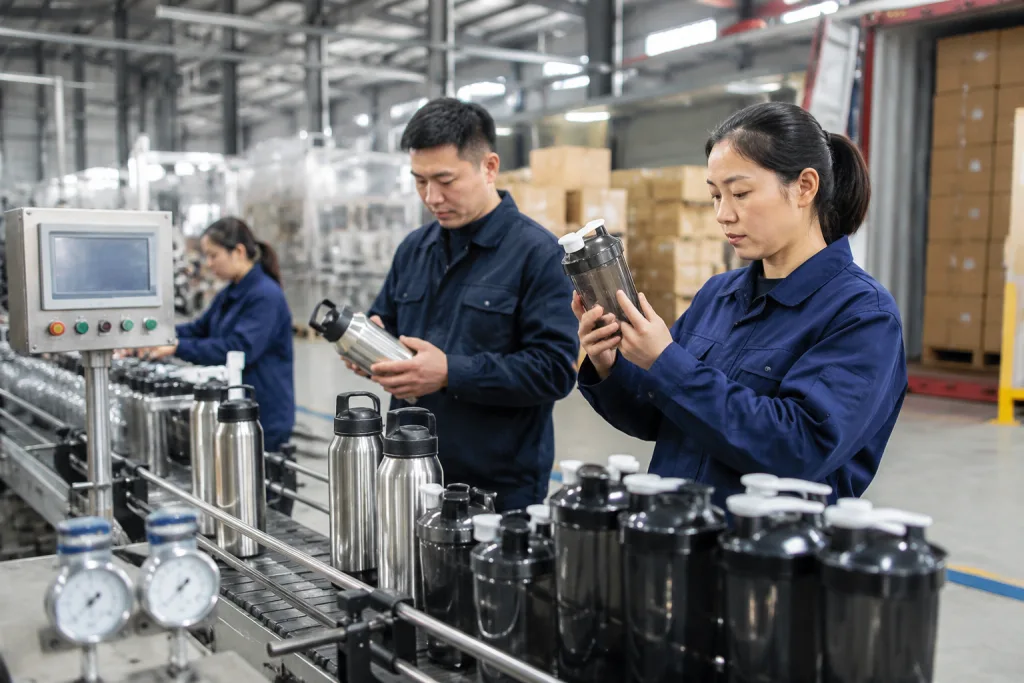
If you buy from a canteen factory in Zhejiang or another China plant, spec for failure modes first. Check resin grade, closure torque, thread fit, drop performance, and carton packing before you confirm FOB. This is the wrong question to ask: “Can you make it?” The math does not work if the lid leaks in QC. At BottleForge Industrial, our shaker and custom drinkware lines run 450,000 units per month, MOQ starts at 3,000 pieces, and normal lead time is 25 to 35 days after sample approval.
Where shaker bottles fail first
The first failure is usually not the body. It is the closure. A cheap shaker bottle can look fine on a desk, then start weeping at the cap hinge, vent tab, or threaded mouth once we run it at volume. On the line, QC pulled the sample and found the same three issues again: flash on the thread, gasket compression that shifts part to part, and a cap that sits 0.3 to 0.5 mm off center. That is enough for returns.
For a real buyer spec, ask the canteen supplier to document:
- Thread pitch control: mold tolerance within ±0.15 mm on critical mating surfaces
- Seal geometry: gasket thickness 1.0 to 1.5 mm, depending on lid design
- Leak testing: 360-degree inversion for 30 minutes, then shake test with 500 ml water
- Cycle testing: 50 to 100 open-close cycles before sample approval
If you are sourcing custom drinkware for retail or gym channels, “passes inspection” is the wrong answer to accept. Ask for the method statement, and ask whether the lot follows AQL 2.5 for general defects and AQL 0 for leakage and contamination. We ship to Europe and North America on this basis, and the buyer flagged one PO because the carton mark had a typo, not because the bottles were fine. If the supplier cannot show that level of control, you are buying trouble, not volume.
Material choices that break margin
I’ll rewrite the section in-place, keep the HTML structure exactly, and tighten the prose so it sounds like a factory-side sales engineer.Material loss is where a lot of canteen distributors get squeezed. A USD 0.08 to 0.20 per unit gap looks small on paper, then the lids crack in cold chain shipping, the body turns white at the stress point, or the buyer flags an odor complaint after one wash. For a custom canteen or customizable canteen, the base resin decides the margin more than the print. PP works for lids, Tritan-style copolyester suits clear bodies, and HDPE can work on some promotional canteen runs when the target is low cost, not premium feel.
We spec material the same way we do a custom growler or customizable growler. Ask for:
- Resin declaration: food-contact compliant material with batch traceability
- Heat resistance: ask for the real test temperature, not brochure language
- Wall thickness: target 2.0 to 2.6 mm on bodies, based on size and drop risk
- Odor control: incoming resin odor check after 24-hour storage
For North American compliance, confirm FDA food-contact expectations. For Europe, you still need REACH screening and a supplier who understands migration risk. We had a 500 ml sample haze after detergent exposure because the resin was wrong; QC pulled the sample from the line and the buyer killed the PO. China has plenty of factories that can mold a body. Fewer can tell you why a transparent canteen customized in the wrong resin goes cloudy after wash cycles — that is the gap between a canteen vendor and a real canteen supplier.
Decoration failures cost more than tooling
I’ll rewrite the section in-place, keeping the HTML tags and structure unchanged while making the prose sound like a factory-side sales engineer wrote it.Most buyers fixate on mold cost and miss the decoration risk. That is the wrong place to save. A logo problem shows up in front of the customer faster than a cracked lid. On a shaker, the print takes sweat, dishwasher heat, carton rub, and daily hand contact. We ran a screen print test on the line, and one ink system lost about 20% edge sharpness after 5 wash cycles. Laser engraving lasts longer on coated metal, but it is not the right answer for every custom drinkware shape.
For canteen promotional work, keep the rule tight: match the method to the surface and the use case. A canteen customizable with one-color screen print usually lands around USD 0.18 to 0.30 per position. Pad print or multi-color work can reach USD 0.25 to 0.45. Laser marking on stainless parts holds up better, but it needs cleaner artwork and a flatter print zone. We’ve seen buyers push for the cheapest print, then the sample comes back looking thin and the whole order gets flagged.
Ask for 3 things before approving artwork: print area in mm, color tolerance, and abrasion standard. If a factory cannot state those without hesitation, it is not ready for production.
We also ask for a dishwasher resistance check on customized drinkware when the channel expects repeat home use. QC pulled the sample, ran 50 cycles, and the buyer wanted a straight answer on what fades and what stays. That is the right question. A serious canteen manufacturer spells out the pass limit, the fail point, and the exclusions before shipment, so nobody argues over a PO typo or a print claim later.
MOQ, lead time, and hidden delays
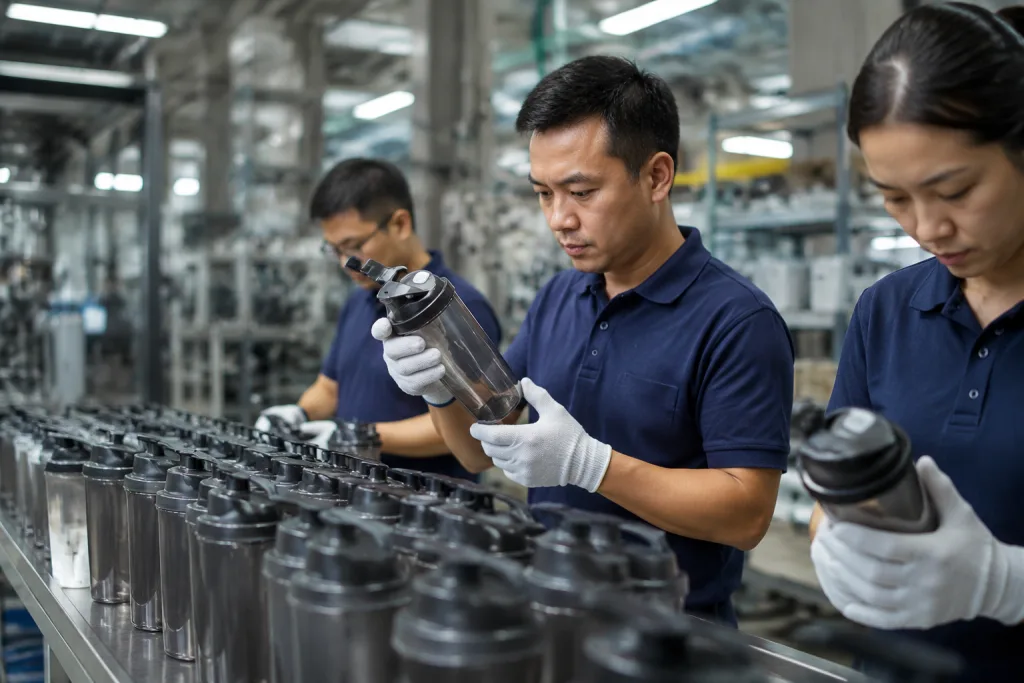
I’ll rewrite just the prose, keep the HTML structure and existing numbers intact, and make it sound like a factory-side sales engineer.Production slips usually start before the line runs. Weak pre-production control is the real culprit. We’ve seen a canteen order quoted at 25 days turn into 38 because artwork sat idle for 4 days, the color chips arrived late, and the carton spec changed after PO release. That is why we split the first sample, the pre-production sample, and the packing sample into separate checkpoints.
If you buy from canteen manufacturers in Zhejiang or other export hubs in China, lock these numbers before you issue the order:
- MOQ: 3,000 pieces for standard shaker formats; 5,000+ for custom molds or special colors
- Lead time: 25 to 35 days after final sample approval for standard orders
- Color matching: Pantone references confirmed against physical chips, not screenshots
- Packing test: drop test on master cartons from 60 to 80 cm depending on route risk
Procurement teams often treat packaging like a checkbox. That is the wrong question to ask. We’ve seen a retail canteen arrive with scuffed lids because the carton partition was 1 mm too thin, and another batch warp in a 45 kg export carton when the press-fit lid was too tight. For distributor drinkware and distributor growler programs, packing has to be built into the drawing from day one. On our line in Hangzhou, QC pulled the sample, checked the carton edge crush, and the failure showed up before shipment. That saves money.
Compliance you can actually verify
I’ll rewrite the section in-place, keep the HTML structure unchanged, and tighten the language so it sounds like a factory-side sales engineer wrote it.Compliance failures get expensive because they show up late. The batch leaves China, hits a U.S. warehouse or a European DC, and then someone asks for the file set. We’ve seen a 12-day delay turn into 18 days just because the buyer flagged a missing declaration after the PO was already confirmed. The clean move is to collect the right documents before you release the order.
For custom canteen and customized canteen programs, ask for:
- Material declaration: resin and additive statement for each component, plus the lid seal if it is a separate part
- Test reports: REACH screening for Europe, FDA-oriented food-contact support for the U.S.; request the latest report number, not a screenshot
- Factory audit: BSCI or an equivalent audit if your brand requires it
- QC procedure: leak test, appearance checklist, and lot-code traceability; QC pulled the sample on the line before packing
If you are sourcing from a canteen supplier in China, ask whether the factory can print carton labels, inner polybag markings, and batch IDs that match your warehouse system. For Amazon or marketplace orders, FNSKU planning, master carton size, and barcode scan rate need to be cleared early. A distributor canteen program breaks fast when the labels are fine but the carton size is off by 20 mm.
Do not confuse a compliance file with compliance itself. A polished PDF will not stop a brittle lid from cracking. We’ve seen this go sideways when the sample passed paper review but failed the drop test at 1.2 meters. Good factories in Zhejiang give you documents and process control; if they only sell paperwork, that is the wrong supplier.
How to spec the order cleanly
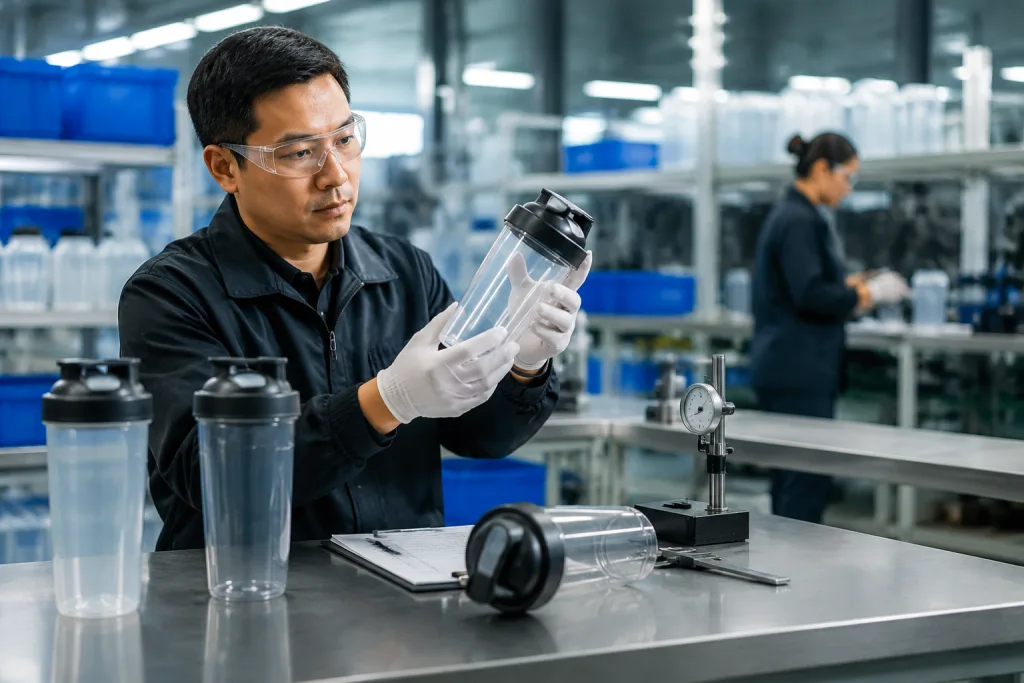
I’ll keep the tags intact and rewrite the prose to sound like a shop-floor buyer note, with concrete spec details and less generic wording.The best purchase order is boring. Good. That means QC can run it without guessing. You want size, material, tolerance, decoration, packaging, test method, and acceptance criteria written before mass production starts. We’ve seen a 0.5 mm lid gap turn into a 3,000-piece headache on the line. This applies to a shaker, a custom growler, or any other customizable drinkware line.
Use this structure on your next RFQ:
- Product: shakers, canteen custom, canteen promotional, or custom growler format, with the target capacity and lid style spelled out
- Component specs: body resin, lid resin, gasket material, wall thickness, and any critical dimension in mm
- Performance: leak test, drop test, dishwasher requirement, odor limit, and the exact pass/fail method
- Commercial terms: FOB China, MOQ, sample cost, mass production lead time, and carton pack count
When you compare canteen suppliers, the cheapest quote is the wrong question. Ask who can repeat the same batch with less than 1% defect drift across three orders. That is the real test for a canteen distributor partner or canteen vendor. We had a PO last month with the logo size typed as 28 mm on one page and 38 mm on another; the buyer flagged it, and that kind of typo costs time. In China, plenty of factories can win one order. Far fewer can hold a specification across repeat production. The better Zhejiang shops know why buyers care about traceability, carton compression, and logo durability instead of just unit price.
For buyers building a portfolio of custom drinkware or customized drinkware, supplier segmentation matters. One factory may run plastic shakers well, another may be built for stainless custom growler programs, and another may be set up for premium promotional canteen sets. Match the factory to the failure mode you want to avoid, and the margin math starts to work.
Send your spec sheet and get a real quote
We’ll check your material, print, and packing risks before production so your shaker or canteen order lands cleanly in market.
Frequently asked questions
What MOQ should I expect from suppliers blender bottle?
For a standard shaker bottle, a practical MOQ is 3,000 pieces per color or print setup. If you need a new mold, specialty lid, or unusual finish, plan for 5,000 to 10,000 pieces. A serious canteen manufacturer in Zhejiang should state MOQ by SKU, not give one blanket number. If they quote 500 pieces on a fully custom project, check whether they are hiding tooling recovery in the unit price. On repeat orders, MOQ can sometimes be reduced by 20% to 30% if the mold is already live and the decoration setup stays unchanged.
How do I compare factory prices fairly?
Compare on landed spec, not just ex-works price. A basic shaker may quote at USD 1.10 to 1.80 FOB China depending on size, material, and decoration. Then add print, individual packing, carton cost, and inland handling. A canteen supplier that looks cheaper by USD 0.12 can become more expensive once you include failed leak tests or rework. Ask for separate pricing on body, lid, gasket, print, and packaging so you can see where the margin sits. This is especially important when you source from canteen factories in China where decoration and packing costs move quickly.
What QC checks matter most for shaker bottles?
Focus on leak performance, thread fit, cosmetic consistency, and closure durability. I would ask for 100% leak test on critical promotional orders, or at minimum a tight AQL plan with zero tolerance for leakage. Then add a cycle test of 50 to 100 open-close operations and a drop test from 80 cm for packed cartons. Cosmetic inspection should use AQL 2.5 for general defects, with clear limits on scratches, sink marks, and print blur. If the canteen vendor cannot define the test method, the result will be inconsistent batch to batch.
Can I customize packaging for distributor drinkware orders?
Yes, and you should if your channel needs retail-ready cartons or warehouse labeling. Most canteen distributors request printed cartons, barcode labels, inner inserts, and polybags with warning text. For Amazon-style fulfillment, confirm FNSKU placement, carton quantity, and master carton dimensions before production. Packaging usually adds a small cost, often USD 0.08 to 0.25 per unit depending on materials and print coverage. A canteen customized well at the product level still fails if the pack-out is weak or the barcode scans poorly at the warehouse.
Is China still the right place to source custom drinkware?
For most B2B buyers, yes, if you choose the right factory. China still offers strong mold capability, stable resin sourcing, and faster decoration options. Zhejiang in particular has mature canteen factory clusters and export experience. The key is not country, but discipline: you need a canteen manufacturer that can prove traceability, compliance support, and repeatable QC. If you want custom canteen or customized growler lines with reliable lead times, China remains the most practical option for volume, especially when your target MOQ is 3,000 pieces or higher.