Key Takeaways
- Most beer tumbler orders price between USD 1.35 and 4.80 per piece at 1,000-3,000 MOQ depending on steel grade and decoration
- For 18/8 stainless, 0.5 mm wall thickness is the practical floor for commercial feel; 0.7 mm improves dent resistance
- Laser engraving usually adds 0.12-0.30 USD per piece, while full-color print can add 0.25-0.60 USD
- A serious supplier should quote REACH, food-contact compliance, AQL 2.5/4.0 inspection, and 25-35 day production lead time
If you are sourcing suppliers beer tumbler products, the real decision is not “which tumbler looks good.” It is which spec holds carbonation, survives packing, hits your target margin, and ships on time without piling up claims. We’ve seen buyers spend weeks on decoration, then find the mug body, lid fit, and coating hardness are the parts that break the deal.
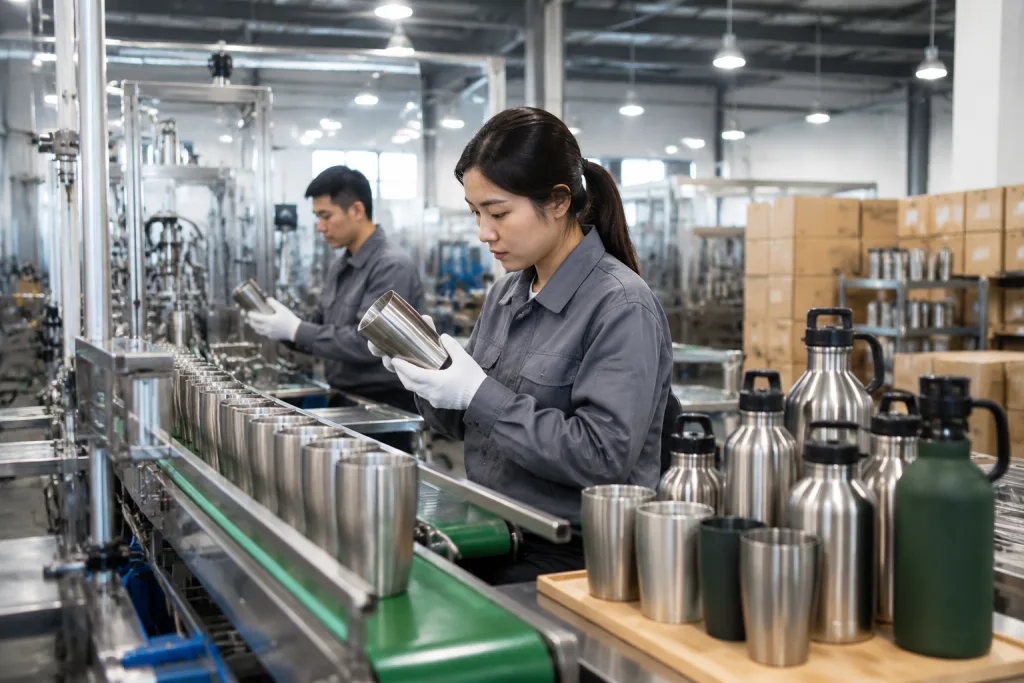
At BottleForge in Zhejiang, China, we see this every week: brand owners want a beer tumbler that can sit beside a custom canteen or custom drinkware program, while distributors want stable pricing and a clean reorder path. Our Hangzhou factory runs 280,000 units per month, with a standard MOQ of 1,000 pieces and a 25–35 day lead time. QC pulled the sample on the line last Friday and flagged a 0.4 mm lid gap; that is the kind of detail that matters more than a pretty render.
Spec table beats marketing talk
I’ll rewrite the prose to sound like a factory-side sales engineer, keep the HTML and table structure intact, and strip out the AI-ish phrasing while adding concrete buyer-floor details.If you are comparing suppliers beer tumbler offers, start with a spec table and skip the glossy pitch. This is the wrong question to ask if you only chase the lowest quote. A beer tumbler looks simple until the buyer flags the PO, finance checks margin, or a retail customer sends back a dented cup. We run these comparisons on the line with a caliper, a scale, and the spec sheet on the bench: body material, volume, wall gauge, lid type, finish, decoration method, compliance papers.
| Spec | Entry-level beer tumbler | Retail-grade beer tumbler | Promo-grade canteen custom crossover |
|---|---|---|---|
| Material | 201 stainless / single-wall | 304/18-8 stainless / double-wall | 304 stainless or Tritan lid combo |
| Wall thickness | 0.4-0.45 mm | 0.5-0.7 mm | 0.5 mm body, molded lid |
| Capacity | 16 oz / 473 ml | 20 oz / 590 ml | 16-24 oz / 473-710 ml |
| Decoration | 1-color screen print | laser, UV print, powder coat | wrap print, laser, mixed logo set |
| FOB price | USD 1.35-2.10 | USD 2.35-4.80 | USD 2.10-4.20 |
The real comparison is bar service, giveaway, or distributor resale. We’ve seen buyers try to force one SKU across all three, and the math doesn’t work. A canteen distributor who also buys customizable drinkware usually wants one factory that can keep Pantone 186C stable across beer tumblers, a custom growler run, and a custom canteen order. QC pulled the sample with a 0.3 mm color shift on the second pass, and that is the sort of miss that sinks a repeat order faster than a shiny photo sample.
Stainless, aluminum, or glass
I’ll rewrite the section in-place, keep the HTML exactly as-is, and make the prose sound like a factory-side sales engineer wrote it.Material choice decides half the buyer experience before decoration starts. We see it on the line: once a carton gets dropped or stacked twice in transit, the material decides whether the order arrives clean or comes back with a claim. Stainless steel is the default for most customized drinkware programs because it takes travel, impact, and dishwasher cycles better than glass. Aluminum comes in lighter and at a lower unit price, but it dents faster and feels thin if the gauge is off. Glass fits premium bar sets, but for export cartons and distributor drinkware, breakage is the cost you pay every time the shipment changes hands.
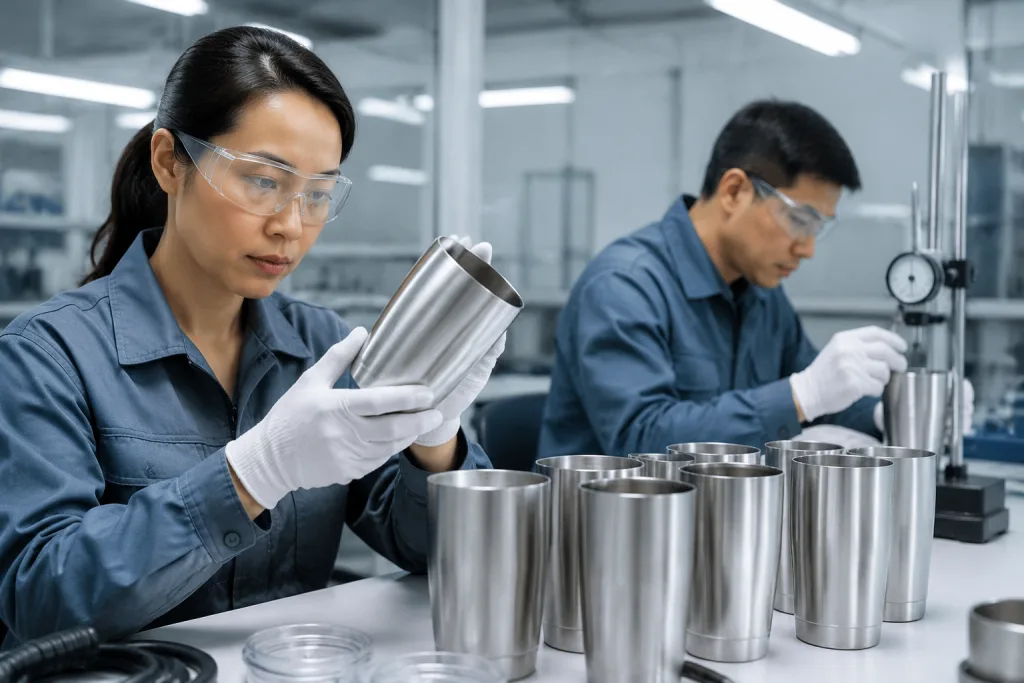
For beer tumblers, 304/18-8 stainless is the safest commercial spec. QC pulled the sample and checked wall thickness with a micrometer; for vacuum cups, 0.5 mm inner and outer shells gave a better hand feel than a flimsy single-wall cup. If the buyer wants temperature retention, double-wall vacuum construction is the right call. If the program is promotional, single-wall works, but price it for lower perceived value. That is why a canteen manufacturer often quotes a stainless tumbler and a customized canteen together: the same metal forming line and print setup can run both jobs without a reset. The math works.
- Stainless: best for retail, gifting, and reorder programs that run 6-12 months
- Aluminum: best for low-cost volume, though it dents easier and carries less shelf appeal
- Glass: best for premium shelf display, not rough logistics
If you are building a broader range, pair beer tumblers with a custom growler or customizable growler program only when the volume pays for separate tooling. We’ve seen this go sideways when a buyer wanted three SKUs on one PO and the carton spec changed twice. Keep the line focused, and let the decoration carry the branding.
Decoration changes unit economics
I’ll rewrite the section in place, keep the HTML structure intact, and tune the copy to sound like a factory-side sales engineer.Decoration is where buyers blow the budget or miss the spec. A plain tumbler looks like a commodity; the right mark turns it into a branded tool. For suppliers beer tumbler sourcing, we usually quote silkscreen, laser engraving, UV print, and powder-coat logo knockouts. Each one changes unit price, lead time, and dishwasher life. We run this every week on the line, and the buyer usually flags the logo after the first sample.
Practical cost bands
At 1,000 pieces, a one-color silkscreen logo usually adds USD 0.12-0.20 per piece. Laser engraving sits around USD 0.12-0.30, depending on logo size and the brushed or matte finish. Full-color UV print can add USD 0.25-0.60, and that is the better call when the art has gradients or small type. For a canteen promotional run, screen print gets the job done. For retail shelves, laser holds up better. QC pulled the sample with a 45° rub test, and the cheap print failed fast.
“Cheap decoration gets expensive when the first dishwasher cycle strips it off.”
Buyers mix up promo and retail specs all the time. A canteen supplier can ship a quick logo job, but a canteen distributor selling into stores needs tougher finish control and carton labels that stay clean. If your program also includes a custom canteen or customizable canteen, keep the imprint method the same across SKUs so the brand reads the same on every carton. One PO we saw had the logo size written as 35 mm on page one and 53 mm on page two; the math does not work.
MOQ and lead time that work
I’ll rewrite the section in place, keep the HTML structure untouched, and tighten the sales-ops language so it reads like a factory-side buyer note.MOQ is where supplier promises get checked on the floor. A serious Zhejiang factory should explain whether the number comes from raw tube purchase, lid tooling, or the print setup on the pad machine. For beer tumblers, 1,000 pieces is a fair start for standard sizes and standard colors. If you ask for a special coating, dual-color body, or a new lid mold, the MOQ often moves to 3,000-5,000 pieces because that setup cost has to land somewhere.
Lead time matters just as much. A stable China schedule usually looks like this: 7-10 days for sample confirmation, 18-25 days for mass production, and 5-10 days for export packing and booking. If a supplier quotes 12 days total on a custom job, ask what got cut out. We’ve seen that go sideways. On the line, late artwork changes ruin carton marks and ship dates, so good Zhejiang factories keep the same planning discipline for custom drinkware, customized canteen, and distributor canteen orders.
- Standard beer tumbler: MOQ 1,000 pcs, 25-35 days
- Custom finish or lid: MOQ 3,000 pcs, 30-45 days
- Mixed SKU distributor order: one extra week for packing control
Do not pay for speed unless your sales channel truly needs it. A buyer once pushed for a 12-day turnaround, then the PO typo moved the ship mark by 1 letter and QC had to pull the sample again. Fast factory promises are common; steady production is the better bet.
Compliance is not optional
I’ll rewrite the section in-place, keep the HTML exactly as-is, and tune the prose to sound like a factory-side sales engineer.If you are shipping to Europe or North America, the paperwork counts as much as the cup. A supplier worth your time should know REACH, food-contact rules, and the gap between product testing and a factory audit. For beer tumblers and related custom drinkware, we ask for migration test reports, material declarations, and an AQL inspection plan before we sign off. QC pulled one sample at 65 mm wall height last week; the buyer flagged the missing batch code, and that saved a headache.
For most commercial programs, an AQL 2.5 major and 4.0 minor sampling plan is a solid default. If you sell through retail, ask for carton drop testing and lid leak checks. If the item sits inside a broader canteen customized or customizable drinkware range, keep one compliance file for the full line so your distributor is not chasing PDFs one by one. The math does not work any other way.
Do not accept “food grade” with no test date, no lab name, and no batch reference. A good canteen manufacturer in China shows traceable records; a weak one sends a one-page claim and hopes you stop there. We have seen this go sideways on a 20,000-piece PO because the carton mark had a typo. In Zhejiang, the better factories know export buyers pay for evidence, not adjectives.
Who each buyer type should use
I’ll rewrite the section in place, keep the HTML tags and structure intact, and make the wording sound like a real sales engineer from the floor.The right supplier depends on your channel, not just your product. A brand owner selling DTC wants carton control, decoration flexibility, and fewer dents in transit. A distributor drinkware buyer wants repeat runs, clean carton counts, and a supplier who holds pricing across 3 PO cycles. A canteen distributor or distributor growler buyer usually cares most about mixed-container loading and whether the line can switch artwork in 1 day without missing the ship date.
Use this head-to-head logic:
- Brand owner: choose 304 stainless, laser or UV print, retail carton, 0.5-0.7 mm wall
- Distributor: choose standard mold, one or two colors, carton master pack, stable MOQ
- Promotional buyer: choose single-wall or light double-wall, screen print, lowest landed cost
- Retail chain: choose full compliance pack, barcode-ready labels, and carton test records
If your catalog already has a canteen vendor line, keep the beer tumblers in the same metal family. QC pulled the sample, checked the wall at 0.6 mm, and the carton drop test stayed simple. One factory can then supply canteen suppliers, canteen manufacturers, and customized growler SKUs without rebuilding the process every time.
That is the practical edge of a Zhejiang export factory: one engineering team, one QA system, and one shipping routine across several product lines. The buyer flagged a typo on the PO last week, and we still kept the carton labels and ship marks aligned. That is the part that saves time.
Send your beer tumbler spec for a quote
Get FOB pricing, MOQ, lead time, and decoration options from our Zhejiang team. We quote standard and custom drinkware fast, with export-ready documentation.
Frequently asked questions
What should I pay for suppliers beer tumbler orders?
At 1,000 pieces, a basic single-wall tumbler often lands at USD 1.35-2.10 FOB, while a 304 double-wall retail model usually sits at USD 2.35-4.80. Decoration changes the math fast: screen print may add USD 0.12-0.20, laser engraving USD 0.12-0.30, and UV print USD 0.25-0.60. If the supplier quotes far below that, check wall thickness, packaging, and whether compliance testing is included. In Zhejiang, good factories rarely price absurdly low unless they are stripping out something you will later miss.
Which is better for beer tumbler: single-wall or double-wall?
Use single-wall if the buyer is price-sensitive, the product is promotional, and temperature retention is not a selling point. Use double-wall if you want a better grip, less sweating, and a higher perceived value. For commercial export, 0.5 mm wall thickness in 304 stainless is a sensible baseline; 0.7 mm feels more solid and resists dents better. If you are bundling with a custom canteen or customizable growler program, double-wall keeps the brand story more consistent across the range.
Can one factory handle canteen custom and beer tumblers?
Yes, if the factory has metal forming, welding, polishing, printing, and packing under one roof or tightly managed partner lines. That is common in Zhejiang and other industrial zones in China. The key is whether the factory can maintain consistent color, lid fit, and carton spec across categories. A real canteen factory should be able to manage a custom canteen, beer tumbler, and even a custom growler with separate QC records, not just one mixed inspection report.
What documents should I ask a canteen supplier for?
Ask for material declarations, food-contact test reports, REACH-related declarations for Europe, and AQL inspection records. If the product is for North America retail, also ask for carton and labeling readiness, including barcode placement and if needed FNSKU application. For custom drinkware, request sample approval photos and batch traceability. A reliable supplier in China should provide these without hesitation, because documentation is part of the export job, not a special favor.
How do I choose between canteen distributor and manufacturer?
Choose a manufacturer when you need price control, tooling input, and stable reorders. Choose a distributor when you need small mixed quantities or faster market access. For beer tumblers, manufacturer direct usually gives better control over wall thickness, finish, and pricing, especially at 1,000-5,000 pieces. If you are buying multiple items like customized canteen, distributor drinkware, and customizable drinkware together, a distributor can simplify sourcing, but you may pay more per unit and lose some spec control.