Key Takeaways
- A typical supplier water bottle MOQ starts at 1,000 units per color, with 35-45 days lead time after sample approval.
- For custom drinkware, budget USD 1.15-3.80 per unit FOB China depending on material, decoration, and packaging.
- A serious QC plan should include AQL 2.5 for major defects, drop testing, leak testing, and carton inspection.
- A Zhejiang canteen factory with 300,000 units/month output can usually support distributor drinkware replenishment without long gaps.
You are not buying a bottle. You are buying a repeat order: the right material, the right finish, the right carton count, and a factory that can ship the same result twice. That is why a supplier water bottle order usually goes wrong before production starts. Skip the spec sheet and jump straight to artwork, and you end up paying for the wrong cap, a coating that flakes, or a quote that looks cheap until freight and defects land on the invoice.
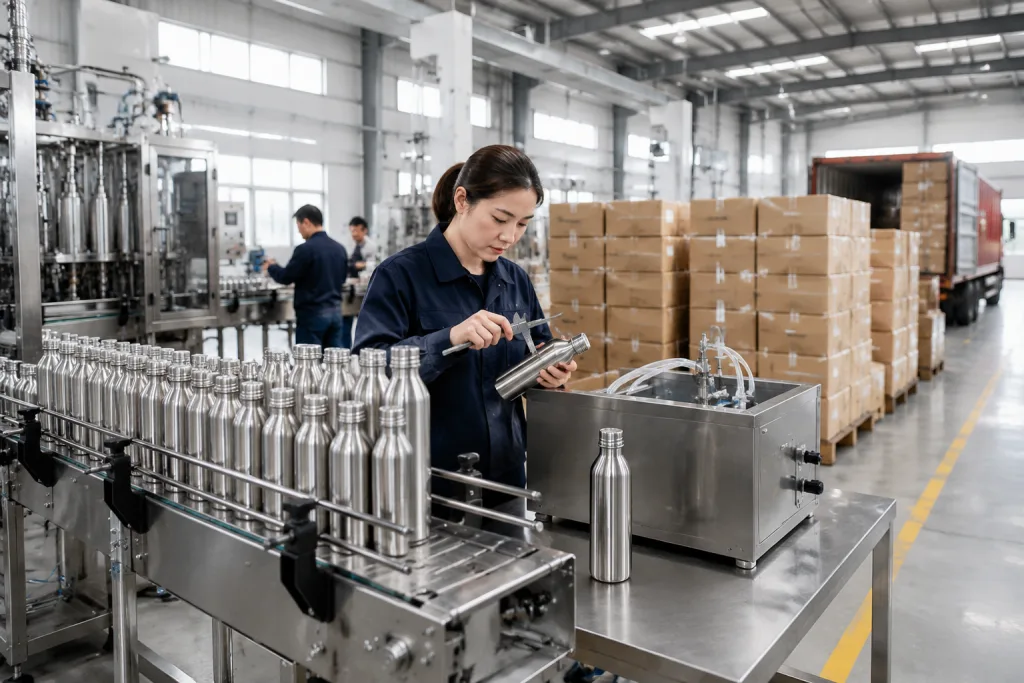
At our Zhejiang factory, we see this every week from distributors, brand owners, and procurement teams in Europe and North America. A serious buyer treats custom drinkware like a controlled job: confirm capacity, wall thickness, test standards, packaging, and the exact QC gates. We run 24-hour leak tests on the line, and QC pulled one sample last week because the lid torque was off by 0.3 mm. That is the difference between a canteen custom order, a custom growler run, and a broader customized drinkware program that ships clean. The steps below follow one real buyer from inquiry to shipment.
Start with the order, not the artwork
I’ll rewrite the prose only, keep the HTML intact, and tighten it so it sounds like a factory-side sales engineer wrote it.The buyer case is straightforward: a North American distributor wants 12,000 pcs of a 750 ml supplier water bottle for a summer promo, and the order should be fixed before anyone talks logo size. We see this go sideways fast when the buyer sends artwork first. Lock the product family first. Is it a stainless steel single-wall bottle, a vacuum insulated tumbler, a canteen customizable model with carabiner lid, or a custom growler for brewery retail? Each choice changes unit price, MOQ, and test risk.
Write the PO like a spec sheet. Put in target capacity, material grade, wall thickness, lid type, coating, and packing. For stainless bottles, we usually quote 304 body with 0.40-0.50 mm wall thickness for single-wall or 0.35 mm inner/outer shells for vacuum construction. For one canteen custom job, QC pulled the sample and the cap seal failed at 55°C, not the logo print. If you are buying from a canteen manufacturer or canteen supplier in China, ask for the gasket material, usually silicone or TPE, and the rated temperature range. The math does not work if that part is vague.
Here is the sequence we run:
- Confirm the use case: retail, promo, sports, or distributor drinkware.
- Fix the base model before any decoration discussion.
- Define target landed cost, not just FOB price.
- Ask the canteen factory for a production-capable sample, not a hand-finished showpiece.
That order saves rounds of quoting because it tells the canteen vendor what to leave out. It also cuts the usual China sourcing mess: 20 emails on logo placement while the bottle body is still not set.
Quote the unit economics early
I’ll rewrite the section in place, keeping the HTML tags and the heading structure intact, and I’ll tighten the sales-engineer tone with concrete factory details and numbers.Procurement gets easier when you put the numbers on one page. A proper supplier water bottle quote should break out the bottle, lid, decoration, packaging, test fee, and carton configuration. For a basic 500-750 ml custom drinkware order from China, FOB prices usually land around USD 1.15-1.60 for a powder-coated single-wall bottle, USD 2.20-3.20 for vacuum insulated stainless steel, and USD 2.80-3.80 for more complex canteen customized or custom growler builds. If the supplier sends one neat price with no split, the math does not work and the risk is hiding in the gaps.
Ask if the quote covers one logo color or full-wrap print, and whether laser engraving, silkscreen, heat transfer, or UV print adds a setup charge. We had a buyer flag a PO because the artwork said “1C logo” but the sample board showed a 2-color mark; QC pulled the sample, and the print change added USD 0.18 per piece. A canteen promotional order can look cheap until you add two imprint positions and retail-grade packaging. A canteen distributor buying for shelves should ask about master carton counts and barcode labels too, because a 24-piece carton with a 2 kg case weight ships better than a loose pack, and freight follows the carton plan.
Keep your cost sheet tied to the factory metric. A Zhejiang canteen manufacturer running 300,000 units/month can absorb a 12,000-unit order without drama, but a small canteen vendor may have to split the line and push lead time from 18 days to 26 days. We run into this all the time on the floor. It is not a problem if you know it before you issue the PO. The best buyers compare price, defect allowance, and refill capacity for the next run, because a 2.5% scrap assumption on paper is one thing and a short shot on the press is another.
Samples should fail before mass production
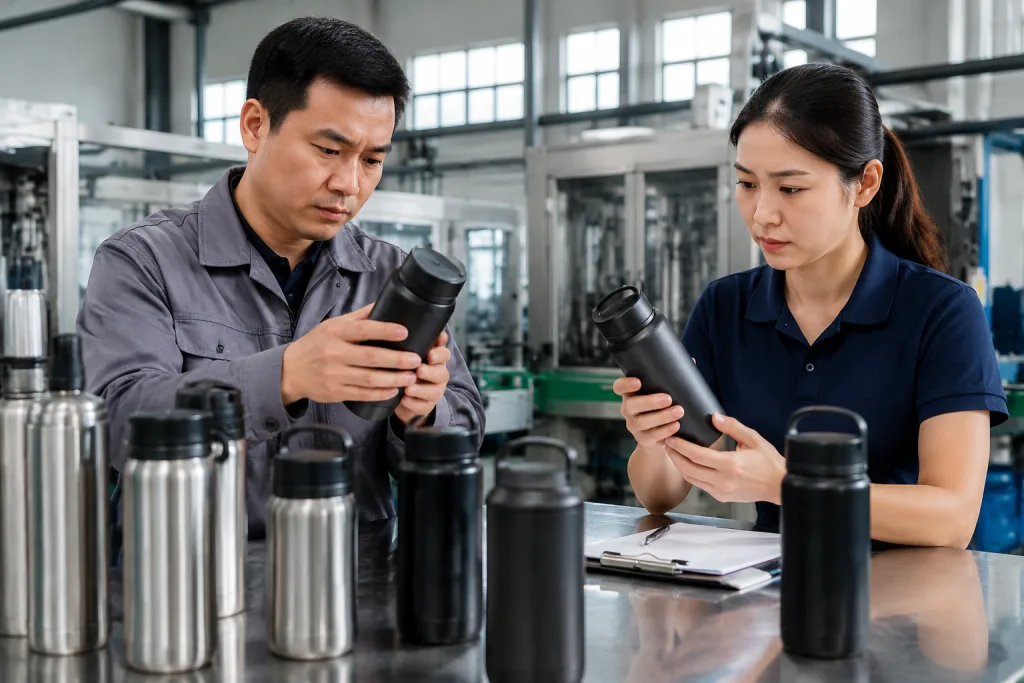
I’ll keep the tags and list structure intact, rewrite the prose to sound like a shop-floor sales engineer, and keep the sample checks concrete.Do not approve a sample just because the logo prints clean. Approve it only when the sample shows the order can be repeated on the line. For a supplier water bottle order, the first sample needs to answer three questions: does it seal, does it survive handling, and does it match the agreed color and dimensions. If you are buying a customizable canteen or customizable growler, ask for two rounds at minimum: one pre-production sample and one sealed production sample from the actual tooling.
A practical sample checklist looks like this:
- Leak test at room temperature and after hot-fill if the spec calls for it.
- Drop test from 1.0 meter on base, side, and cap.
- Coating adhesion check with tape crosshatch where applicable.
- Thread fit check for lid torque and opening cycle count.
- Dimension check against drawing, especially mouth diameter and height.
For customized drinkware going into retail, ask for the packaging sample too. We’ve seen the bottle pass and the carton fail. One buyer flagged a 2 mm insert gap, and the lid dented in transit after 18 days on the road. If the insert rattles, the label peels, or the cap marks the finish, your reject rate goes up fast. A solid canteen factory in Zhejiang will send a pre-production sample plus a QC report, and can point to ASTM or ISO methods when your buyer asks for REACH-related compliance or retail due diligence.
Treat QC as a gate, not a promise
I’ll rewrite the section in-place, keep the HTML exactly as-is, and tighten the language to sound like a factory-side sales engineer.Once the PO lands, the real work starts. A solid supplier water bottle run uses stage-by-stage QC, not one final check at the end. For a 12,000-unit order, we run incoming material checks, in-process checks, and final inspection under AQL 2.5 for major defects and AQL 4.0 for minor defects unless your program calls for tighter limits. If the factory cannot explain the AQL standard in plain terms, that is a red flag.
On a stainless project, the usual failure points are weld quality, coating consistency, leak performance, lid fit, and carton damage. On a canteen custom order with a promotional handle or accessory, the risk moves to assembly and missing parts. In a canteen distributors’ replenishment order, count control matters as much as looks. One carton short can blow the retail math.
Ask the canteen manufacturer to send photo evidence from the first 200 units off the line, then again at mid-run and before packing. That is cheap insurance.
One QC method we trust: seal a golden sample with both sides, then compare production every 500-1,000 units. If the line shifts ink density, cap color, or weld polish, stop the run. We had a buyer flag a PO typo on carton count once, and QC pulled the sample before loading; that saved a messy claim. A factory in China that ships both distributor canteen and custom drinkware programs should already run this way. If it does not, the savings disappear in chargebacks and returns.
Packaging decides your landed cost
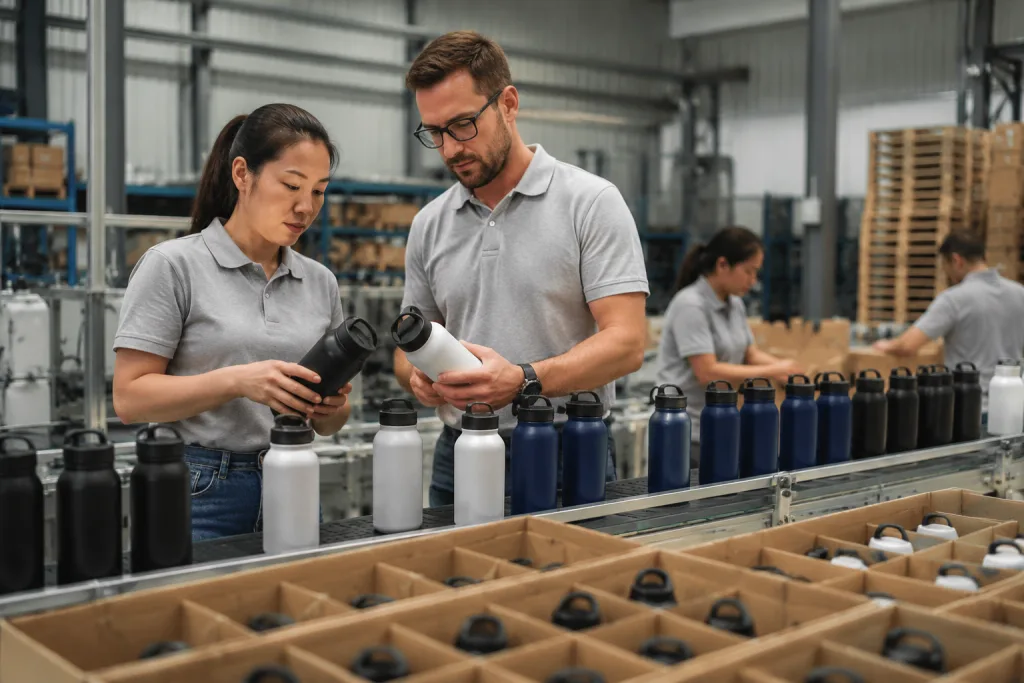
I’ll rewrite the section in-place, keep the HTML structure unchanged, and tighten the wording so it sounds like a real export sales engineer wrote it.Packaging is where a lot of buyers cut too deep and pay for it later. A supplier water bottle can pass the shop check and still get crushed in transit if the insert is soft or the master carton runs 20 mm too wide. For Europe or North America, we run packaging to protect the coating and keep the pallet cube tight. If you are shipping a canteen promo job, retail-ready packing can matter more than the bottle itself. Shelf face sells.
There are three usual setups. Bulk packing works for distributor drinkware and keeps unit cost down, but the line takes more handling risk. Color box packing for retail usually adds USD 0.15-0.45 per unit, depending on print and insert. Mailer packing for Amazon or direct-to-consumer needs barcode placement, polybag warnings, and carton drop results that QC pulled from the test rig. If you plan FNSKU labels, ask early who applies them. We’ve seen buyers assume the factory will do it, then the PO lands with the wrong label count.
For canteen suppliers in Zhejiang and elsewhere in China, the spec should stay sharp: carton test level, pack count, gross weight, and whether the bottle ships assembled or partly disassembled. A canteen distributor buying by the pallet should ask for 1,000 x 1,000 mm palletization data and a 20-foot or 40-foot loading plan. If the supplier cannot tell you how many units fit in one carton and one pallet, the quote is not complete. The math does not work.
Ship it like a repeat order
I’ll rewrite the prose only, keep the HTML exactly as-is, and tighten it to sound like a real sales engineer.Freight can wipe out a clean unit price if you ignore it. Your supplier water bottle order needs one clear Incoterms call before the first carton leaves the line: FOB China is usually the cleanest for experienced importers, while DDP only works if you give up freight control and accept the extra markup. On a 12,000-unit stainless order, sea freight usually beats air unless the launch date is on fire. From Zhejiang to a West Coast U.S. port, production plus ocean transit can still land in 50-65 days if QC signs off fast and the documents are clean.
Have the canteen factory confirm carton dimensions, pallet count, HS code guidance, and the commercial invoice description before booking. We’ve had a buyer flag a one-word typo on the PO and the forwarder held the file for two days. Ask for BSCI audit status, REACH declarations, and the test reports your customs broker or retailer wants. That sounds boring. It is. It also saves a last-minute scramble when the forwarder asks for a corrected packing list.
When the shipment lands, match the received quantity against the PO and the carton count. A distributor drinkware program does not end at loading. Run a short receiving QC on first shipment. If you ordered canteen customizable models or customized growler units, check closure torque, print placement, and random leak testing on arrival with a torque meter and 10 samples per SKU. The best factories in China expect that, because repeat orders are decided after the container leaves Zhejiang.
Send your spec, get a real quote
If you want a supplier water bottle order that ships cleanly, send your capacity, finish, and carton target. We’ll quote the build, not guess at it.
Frequently asked questions
What MOQ should I expect for a supplier water bottle order?
For a standard supplier water bottle, a common MOQ is 1,000 units per color or per SKU. Some canteen manufacturers in China can go lower, but expect a higher unit price and fewer decoration options. For vacuum insulated models, 3,000 units is more typical if you want custom coating or custom packaging. If you are mixing canteen customized colors, the MOQ may apply to each Pantone shade. Always confirm whether the MOQ is for one mold, one print setup, or one carton configuration.
How much should I budget for custom drinkware from China?
For custom drinkware sourced FOB China, a basic stainless single-wall bottle may run USD 1.15-1.60, while vacuum insulated units are often USD 2.20-3.20. A custom growler or more complex canteen custom build can reach USD 3.80 or more depending on steel grade, lid type, and decoration. Add packaging, testing, and inland freight from Zhejiang to port. If the supplier quotes only a unit price with no breakdown, ask for a line-item sheet before you compare suppliers.
What QC standards should I require?
Use AQL 2.5 for major defects and AQL 4.0 for minor defects unless your retailer requires tighter limits. Require leak testing, drop testing, lid torque checks, coating adhesion checks, and carton inspection. For canteen factory orders, ask for a golden sample and production sample comparison. If you need documentation for Europe or North America, request REACH declarations, material specs, and any relevant ASTM or ISO references. A proper QC plan should also include photo reports at start, mid-run, and packing.
Can one factory handle both canteen promotional and retail orders?
Yes, if the canteen factory has enough line capacity and different packaging workflows. A Zhejiang plant with 300,000 units/month output can usually support both canteen promotional runs and retail canteen distributors’ orders without much trouble. The difference is discipline: retail needs cleaner labeling, more consistent carton counts, and better barcode control, while promotional orders often prioritize speed and cost. Make sure the supplier can separate the two production modes so your low-cost campaign does not inherit retail packaging costs.
What lead time should I plan for?
For a standard supplier water bottle order, plan 35-45 days after sample approval for production, plus shipping time. Simple canteen supplier orders can move faster if the body and lid are already tooled and the decoration is straightforward. Custom logos, special colors, or a customized growler shape can add 7-15 days, especially if you need a second sample round. If you are launching into a fixed retail window, give the canteen vendor the target ship date first and work backward from there.