Key Takeaways
- A real supplier vacuum insulated bottle quote should show MOQ, lead time, and FOB price; for common 500 ml models, MOQ is often 3,000–5,000 units.
- 304 stainless is standard; 316 is usually a 10%–18% cost uplift and makes sense for higher-acid or premium positioning.
- Ask for vacuum retention data at 95°C fill: a solid 12-hour hot hold and 24-hour cold hold is the minimum conversation.
- A Zhejiang canteen factory with 80,000–150,000 units/month capacity can usually support repeat distributor drinkware orders better than a trading-only vendor.
If you are sourcing a supplier vacuum insulated bottle for Europe or North America, the hard part is not finding a factory. It is telling a real canteen factory from a polished sales desk. A bottle can look the same in photos and still fail on vacuum retention, coating adhesion, or lid fit after one shipping cycle. We see that on the line. In Zhejiang, where canteen makers cluster, the gap shows up in data: wall thickness, 304 versus 316 steel, AQL level, and how many units a line can ship each month.
You usually need more than one SKU. A canteen customizable run for retail, a canteen promotional order for an event, or a custom growler for distributor drinkware all pull different specs. The right canteen supplier should quote MOQ, FOB price, lead time, and test reports straight away. If they dodge those four items, the math does not work. Below is the procurement checklist I would use for a brand, distributor, or private-label program in China or overseas.
What are you really buying?
I’ll rewrite the section in place, keeping the HTML structure intact and tightening the sales-engineer tone. Next I’m preserving the numbers and product terms while making the prose sound like it came off a factory floor.When buyers say supplier vacuum insulated bottle, they usually mean more than the bottle body. They are buying a thermal system: 304 or 316 steel, 0.4–0.5 mm shell thickness, double-wall spacing, weld seam quality, lid torque, and vacuum seal stability. On paper, two 500 ml bottles can both claim 24-hour cold retention. On the line, one still passes after a drop test and the other starts sweating after 3 months in storage.
Start with the use case. A retail custom drinkware bottle for hiking needs a different cap torque and surface finish than a canteen promotional item for corporate gifting. For a custom canteen program, we ask for fill temperature, lid style, decoration method, and carton packout before we quote. The buyer flagged a 0.5 mm vs 0.4 mm wall spec as “close enough” once; the math doesn’t work, and QC pulled the sample straight back.
- Typical 500 ml wall thickness: 0.4–0.5 mm inner and outer shell
- Typical steel grade: 304 for standard, 316 for premium
- Common retention target: 12 hours hot, 24 hours cold
- Standard commercial MOQ: 3,000 units per SKU
If a canteen vendor cannot explain those numbers, you are not buying from a technical supplier. You are buying a brochure, and we’ve seen that go sideways after the first shipment.
How do you screen suppliers fast?
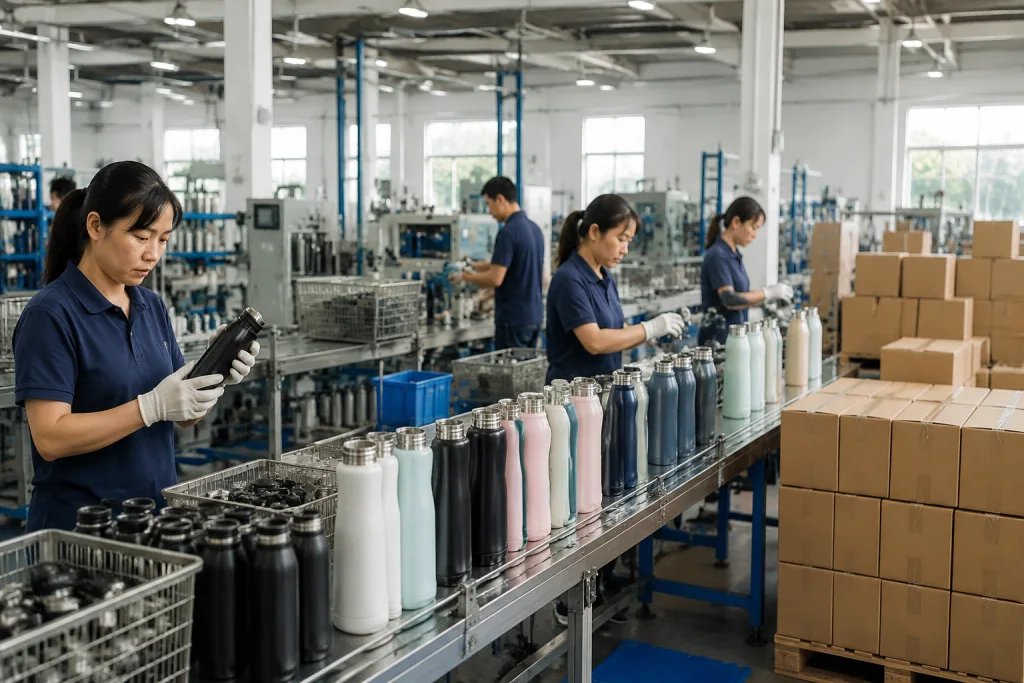
Your first filter is factory reality. A real canteen manufacturer in Zhejiang or any other China base should open the line to you: tube cutting, polishing, vacuum welding, leak testing, then packing. Ask for the monthly output on the exact bottle family you need, not a generic catalog number. For a mainstream insulated bottle line, 80,000 to 150,000 units/month is a workable range. Below that is not a deal breaker, but we’ve seen it turn into schedule slips when the buyer wants a rush order.
Next, ask for certificates and test scope, not logo screenshots. For North America and Europe, I want REACH, food-contact paperwork, and a plain statement on BPA-free parts. If the supplier also has BSCI or ISO 9001, fine. That does not prove the line is clean, but it tells you they have dealt with procurement teams before. For distributor canteen orders, I also check carton labels, UPC placement, and FNSKU handling if you sell through Amazon. QC pulled the sample and found a missing inner carton mark last month; that kind of mistake costs time.
Good suppliers answer in numbers. Weak suppliers answer in adjectives.
A practical screen is simple: ask for FOB pricing on 3,000 and 5,000 units, test report dates, a 7–15 day sample lead time, and 30–45 days for mass production. If the quote leaves out lid cost, logo cost, or color-change fees, the landed cost will blow up later. This is the wrong question to ask if you focus only on unit price. The math does not work. We run into this every week when the buyer flags a PO typo and the factory has already cut the tooling.
Which materials and specs matter?
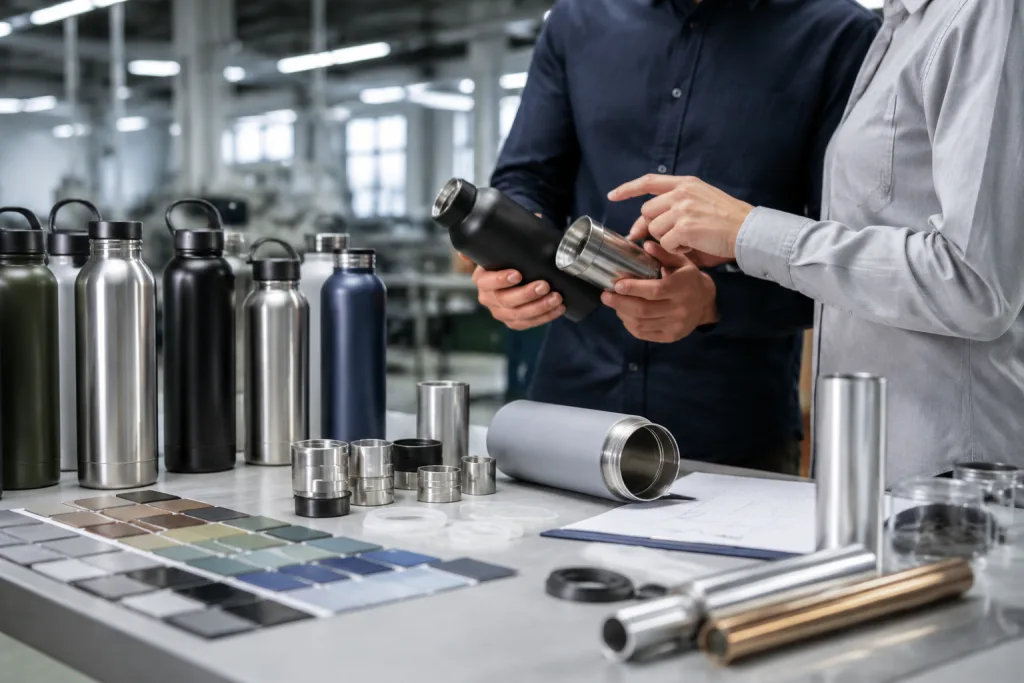
I’m rewriting the prose in place and keeping the HTML structure unchanged. Next I’ll tighten the sales-engineer tone, add a few factory-floor specifics, and strip the AI-ish phrasing.Most buyers start with steel grade, but the full spec sheet decides whether the bottle ships clean or comes back with complaints. A standard customized drinkware bottle usually runs 18/8 stainless steel, the shop-floor name for 304. If the bottle is for acidic drinks or long storage, 316 makes sense; on our line the cost jump is usually 10%–18% by order size, and that math only works if the target shelf price can carry it. For a customized canteen aimed at outdoor use, I lean toward a powder-coated body with a matte finish because it hides scuffs better than glossy lacquer after a 2 m drop test.
Do not treat the lid as an afterthought. We’ve seen a good bottle get killed by a weak cap. Thread pitch, silicone ring hardness, and PP grade all hit leak resistance and how the buyer reads the product in hand. For a customizable growler or custom growler program, the closure matters even more because the buyer expects a tight seal in transit. If the handle flexes or the cap feels loose, QC pulled the sample and the buyer flagged it as “cheap” on the first pass.
Common spec checks
- Inner and outer steel: 304 or 316
- Wall thickness: 0.4–0.5 mm for mainstream bottles
- Vacuum gap consistency: no cold spots after thermal testing
- Lid material: PP, Tritan, or stainless composite depending on use
- Coating: powder coat, UV print, or spray finish
For canteen customizable projects, I also check bottle mouth diameter with a caliper, not guesswork. A wider mouth helps with ice cubes and cleaning, but if the cap design is weak, hot retention drops fast. We’ve seen this go sideways on a 58 mm mouth spec: the buyer wanted easy filling, then complained when the heat test came in 12 days instead of 18 days on the thinner lid build. Balance beats marketing copy.
What customization is worth paying for?
I’ll rewrite the three paragraphs in-place, keep the HTML exactly as-is, and tune the tone to sound like a factory-side sales engineer.Not every logo method belongs on every bottle. A canteen customized for a premium brand can take laser engraving, one-color silkscreen, or full-wrap UV print. A canteen promotional order for a trade show usually needs a simple one-color logo and a gift box, nothing fancy. The choice comes down to margin, wash resistance, and the channel you sell through. If the buyer wants a finish that survives 200 washes, laser engraving is the safer call. If shelf pop matters more, UV print wins. We ran that comparison on a 500 pcs sample lot last month, and the buyer flagged the UV mockup as the stronger retail option.
Here is the rule I use: spend money where the customer touches the product. That means the lid, the grip, and the surface texture. A custom drinkware line can feel premium or cheap from those three points alone. A canteen supplier in Zhejiang that handles export work should talk about ink adhesion, curvature limits, and logo placement zones without guessing. If they cannot, they are a canteen vendor, not a partner. QC pulled the sample on a 28 mm cap once because the matte ring slipped after rubbing; that kind of miss is the wrong question to ignore.
For customizable canteen or customizable drinkware orders, ask what changes hit tooling and what changes are only setup. Color changes, silicone ring colors, box artwork, and laser marking are usually fine. New lid molds, special handles, or a unique shoulder shape are not. Those can add 20-45 days and change the math fast. We saw a PO typo turn a 12-day rework into an 18-day delay because the buyer wrote the lid code wrong. A factory that explains this plainly is worth keeping. A factory that says yes to everything is planning to disappoint you later.
How do you control quality before shipment?
I’ll rewrite the prose in place, keep the HTML structure intact, and tighten the language so it sounds like a buyer-side factory check rather than generic copy.This is where procurement gets real. You need a control plan on paper, not a loose promise that “our QC is strict.” For insulated bottles, we run incoming material checks, in-line vacuum checks, and a final inspection under AQL. A practical finish is AQL 2.5 for major defects and 4.0 for minor defects, though some premium programs go tighter. If your brand cannot accept leaks or finish flaws, ask for 100% leak testing on every unit at final pack. We’ve seen that shortcut save a buyer from a 2,000-unit return.
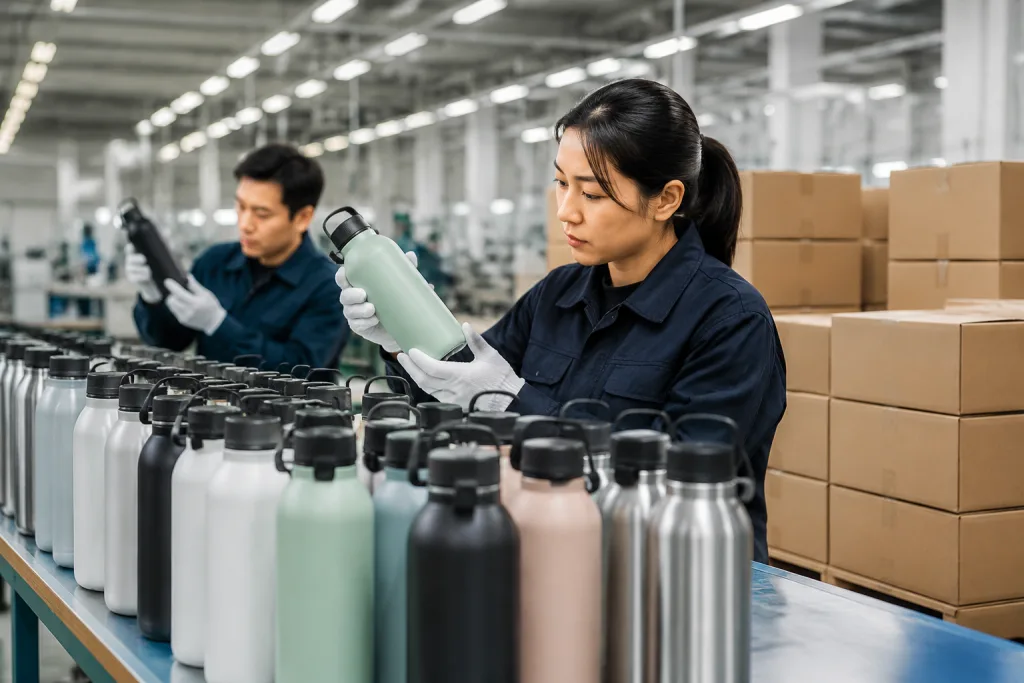
The test list is straightforward. Fill temperature retention, lid leak test, coating crosshatch adhesion, drop test, and carton compression test cover most export issues. For North American retail, barcode readability and carton count control matter too. I want photo records of sample cartons, not just a signed report. QC pulled the sample on one line last month and caught a 3 mm print shift before shipment; that kind of catch protects your margin. If the supplier is a real canteen manufacturer, this process is already built in. If not, the math does not work.
- Leak test: 1 meter tilt or inverted hold, depending on lid type
- Drop test: 1.0–1.2 meters, 3 sides minimum
- Retention test: start with 95°C water for hot testing
- Finish check: color consistency under standard light
- Packing audit: count, barcode, inner box, master carton
One more practical point: if your order moves through a canteen distributor or distributor drinkware channel, ask for spare gasket allowance. A few thousand extra silicone rings cost little and save service calls later. On a PO typo last quarter, the buyer flagged a lid code mismatch and we had to rework labels; 5% spare gasket allowance would have softened that hit.
What pricing should you expect?
I’ll rewrite the section in-place, keeping the HTML tags and the pricing numbers intact while stripping the AI-ish phrasing and adding a few concrete factory details.Procurement teams ask for price first because it is the fastest number to compare. Fine. Price only means something with the spec in hand. For a basic 500 ml supplier vacuum insulated bottle in 304 steel, FOB China often sits in the USD 2.40–4.20 range at 3,000 units, depending on the lid, coating, and print. Move to 316 steel, a better lid, or laser engraving, and the same bottle can reach USD 4.80–7.50. We run this on the line every week. If a quote lands way below that, the buyer flagged it for a reason—someone trimmed material, packaging, or testing.
For a canteen supplier comparison, I look at landed cost, not just FOB. Ocean freight, duty, inland delivery, and label fees can add 15%–30% depending on route and volume. On a customized growler or distributor growler program, carton size matters more than many buyers think. A 62 g gift box can cost more in freight than the logo print. QC pulled the sample and checked carton weight at 18 kg per case. That told us more than the quote did.
When you negotiate, line up the same steel grade, the same lid, the same carton count, the same test standard, and the same sample approval. If one canteen factory includes silk-screen print and the other adds it later, the math does not work until you normalize both offers. We’ve seen this go sideways over a PO typo: one buyer wrote 5,000 pcs, the supplier priced 50,000, and nobody caught it until pre-production. Compare like for like, then call the real winner.
Request a factory quote with exact specs
Send your target capacity, logo method, and carton needs. We’ll price your bottle like a procurement project, not a guess.
Frequently asked questions
What MOQ should I expect from a supplier vacuum insulated bottle factory?
For common 500 ml and 750 ml models, a real factory in Zhejiang or elsewhere in China usually starts at 3,000–5,000 units per color. If you need multiple colors, each color may carry its own MOQ unless the canteen manufacturer supports mixed production. For a first private-label run, 3,000 units is a realistic floor for a custom drinkware program. Below that, price per unit rises fast because setup, packing, and QC do not shrink proportionally. If a canteen vendor offers 500 units with full customization, ask what they are excluding from the quote.
How long does production usually take?
For samples, 7–15 days is normal if the bottle shape already exists. For mass production, expect 30–45 days after sample approval and deposit. If you need a new lid mold or a special box for a canteen customized program, add 20–45 days. A capable canteen factory in Zhejiang should tell you whether your schedule fits its line capacity. For repeat orders, a stable canteen supplier may compress lead time to 25–35 days, but only if raw material and decoration slots are open.
Is 304 stainless enough, or should I pay for 316?
304 is enough for most retail and promotional bottles. It is the standard for custom drinkware and the material most buyers use for distributor drinkware. Move to 316 if you are targeting a premium market, acidic beverages, or a higher-end price point where the extra cost is justified. The typical uplift is 10%–18% depending on volume and coating. Do not buy 316 just because it sounds better; buy it because the margin and use case support it. Your canteen manufacturer should explain the trade-off plainly.
What tests should I ask for before shipment?
Ask for leak testing, thermal retention testing, coating adhesion, and drop testing. For export orders, I also want REACH-related material confirmation, food-contact documentation, and an AQL-based final inspection report. AQL 2.5 major and 4.0 minor is a common commercial standard, though premium programs may tighten it. If you are ordering a canteen promotional run, insist on carton count checks and barcode verification too. Those small mistakes are the ones that create chargebacks later.
Can I mix logos, colors, and packaging on one order?
Usually yes, but not without cost impact. Mixed colors are possible if the canteen factory has enough base inventory, yet each decoration variation may create separate setup charges. Logos are straightforward if the print area and method stay the same. Packaging changes are often the easiest part, but custom inserts and printed cartons can add 7–14 days. For a canteen customizable project, ask for a matrix of what is free, what is setup, and what triggers a new MOQ. That keeps your distributor canteen plan from turning into a margin leak.