Key Takeaways
- A basic 500 ml supplier vacuum bottle often lands around USD 2.85-4.20 FOB in China at 3,000 pcs
- MOQ for a custom thermos usually starts at 1,000-3,000 pcs, while full logo customization can push 5,000 pcs for special lids
- Typical lead time is 25-35 days for stock-style orders and 35-50 days for a customized thermos with new printing or packaging
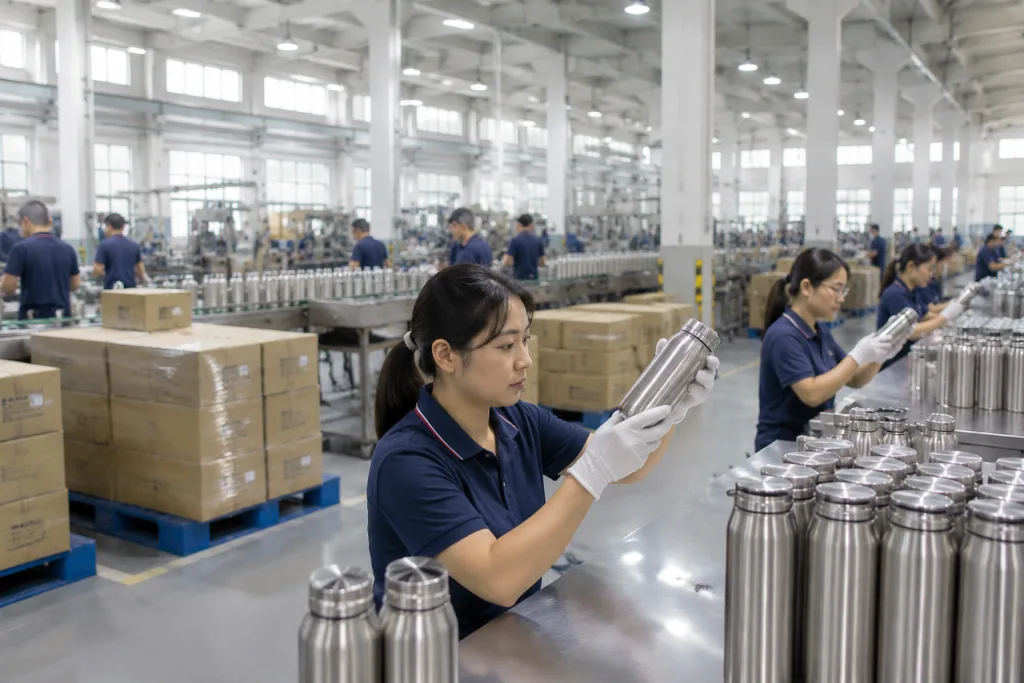
- A Zhejiang factory thermos program can produce 200,000-300,000 units/month, but decoration and packaging often become the bottleneck
If you are buying a supplier vacuum bottle for outdoor retail or a promo run, the hard part is not picking a nice-looking sample. It is pricing the job at 500, 3,000, or 10,000 pieces, then checking whether the cartons leave our dock in 12 days or sit there for 18 while the line waits on a lid mold or print file. In Zhejiang, the number usually comes down to steel grade, lid parts, decoration method, and how much custom work you want on the first run.
A stainless thermos order should be handled like a small production project, not a shelf purchase. The gap between a $2.85 thermos bulk item and a $6.40 custom thermos is not some vague “better quality” story. It is wall thickness, 18/8 stainless, powder coat passes, tooling, drop tests, and packing spec. We have seen the buyer flag a quote because the PO said “with logo” but missed the 1-color screen print fee; the math does not work if you leave those items out. If you know where the cost sits, you can push back with real numbers, keep margin intact, and avoid a supplier thermos quote that looks cheap until the add-ons show up.
What drives thermos cost
I’ll rewrite the three paragraphs in a more grounded factory-sales voice, keep the HTML intact, and make the cost drivers feel specific and field-tested.When buyers ask for a supplier vacuum bottle quote, they often fixate on capacity and lid style. That is the wrong question to ask. We run the line around six cost buckets: raw stainless steel, vacuum drawing and welding, surface finish, lid tooling, decoration, and packaging. On a 500 ml bottle, the steel itself is only a small slice of the FOB price, but shifting from 0.4 mm wall thickness to 0.5 mm or swapping a simple PP lid for a stainless cap can lift unit cost by 10-25%.
On a bulk thermos program, decoration is where the math often breaks. One-color silkscreen on a straight body may add only USD 0.08-0.15 per piece at 3,000 pcs, and laser engraving sits in the same lane. A 4-color wrap print, soft-touch coating, or textured powder coat changes the labor load and pushes rejects up. QC pulled the sample on one run because the logo bled after the third wipe test. If you want a promotional thermos that still looks retail-ready, budget for drop tests, lid torque checks, and leak testing from day one.
Here is the rule we give buyers: ask for the quote split. A manufacturer thermos quote should show bottle body, lid, logo, insert card, carton, and freight terms as separate lines. If your supplier thermos price shows up as one number, you do not know where the margin is hiding. We saw a PO once with a 500ml/304 typo and the buyer flagged it before production; that saved a messy rework. For outdoor retailers, a $0.30 gap at 20,000 units is $6,000. For distributors, it matters even more because your distributor thermos pricing has to leave room for claims, replacement stock, and seasonal discounting.
MOQ tiers that actually matter
I’ll rewrite the section in-place, keep the HTML structure unchanged, and tune the prose for a real factory-sales voice with concrete MOQ numbers and a few shop-floor details.MOQ is where a lot of buyers burn days. A thermos supplier may quote 1,000 pcs, but that price usually only fits an existing body shape with plain kraft packaging. Once you ask for a new lid color, printed retail box, and an individual barcode label, the real MOQ often jumps to 3,000 pcs or more. In Zhejiang, we usually split it into three workable tiers. QC pulled the sample twice before we signed off.
- 500-1,000 pcs: sample-style production, stock body, one logo position, and a narrow color choice. Unit price sits at the top end, usually USD 4.80-7.20 FOB.
- 1,500-3,000 pcs: this is the sweet spot for promotional brands. You can usually get a better lid option, one or two print methods, and standard retail packaging. Common range: USD 3.20-5.40 FOB.
- 5,000 pcs and up: best for distributors and repeat orders. At this level, the line can tune coating, packing, and carton loading. Price can drop to USD 2.55-4.30 FOB depending on spec.
The wrong question is, “What is your lowest MOQ?” What matters is what is already standardized. A thermos customizable order is not the same as a fully thermos customized one. If the body mold already exists, you are buying process capacity. If the lid needs tooling, you are buying development. The math does not work any other way. We had one buyer flag a PO typo on the lid code, and that small mistake pushed the schedule back 6 days. A supplier vacuum bottle order from a manufacturer thermos plant in China runs smoother when you keep the bottle geometry and customize the logo, finish, and package first, then talk about a new closure on the next order.
Lead time from sample to ship
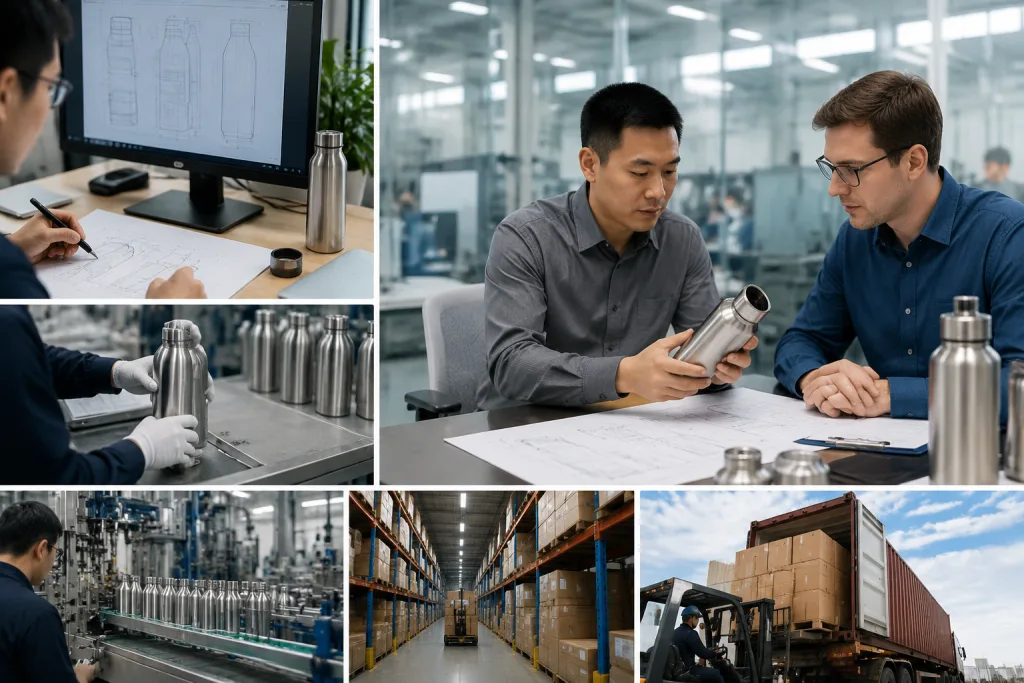
I’ll rewrite the section in-place, keep the HTML exactly as-is, and tighten the sales-engineer tone with concrete factory details and cleaner timing language.Lead time needs to be split into stages, not sold as one number. For a standard stainless thermos from a thermos factory in Zhejiang, sample prep usually takes 5-10 days if the body and lid already exist. If you need new artwork or a custom carton, add 3-5 days. Mass production for a stock-style supplier vacuum bottle usually runs 25-35 days after deposit and artwork approval. A more customized thermos with new coating or new packaging often needs 35-50 days.
What slows the order is rarely the bottle body. The bottleneck is usually printed packaging, color matching, or lid assembly on the line. We’ve seen a 2 mm print shift on a paper insert stop a whole batch because the buyer flagged it at QC. In a busy month, a China manufacturer thermos line can run 200,000-300,000 units, but if you ask for three SKUs with different cartons and barcodes, your slot can slip by a week. Lock the graphics early. Approve the Pantone code, not a screenshot.
Practical schedule: sample approval 7-12 days, production 25-40 days, inspection 2-4 days, ocean booking 7-14 days depending on route. If you ship to North America or Europe, transit is separate from factory time. A thermos distributor should budget at least 60-75 days from order confirmation to warehouse arrival. If you need a rush job, say it upfront. A supplier thermos quote can move faster, but only if the order uses existing molds and standard cartons.
Material and spec choices
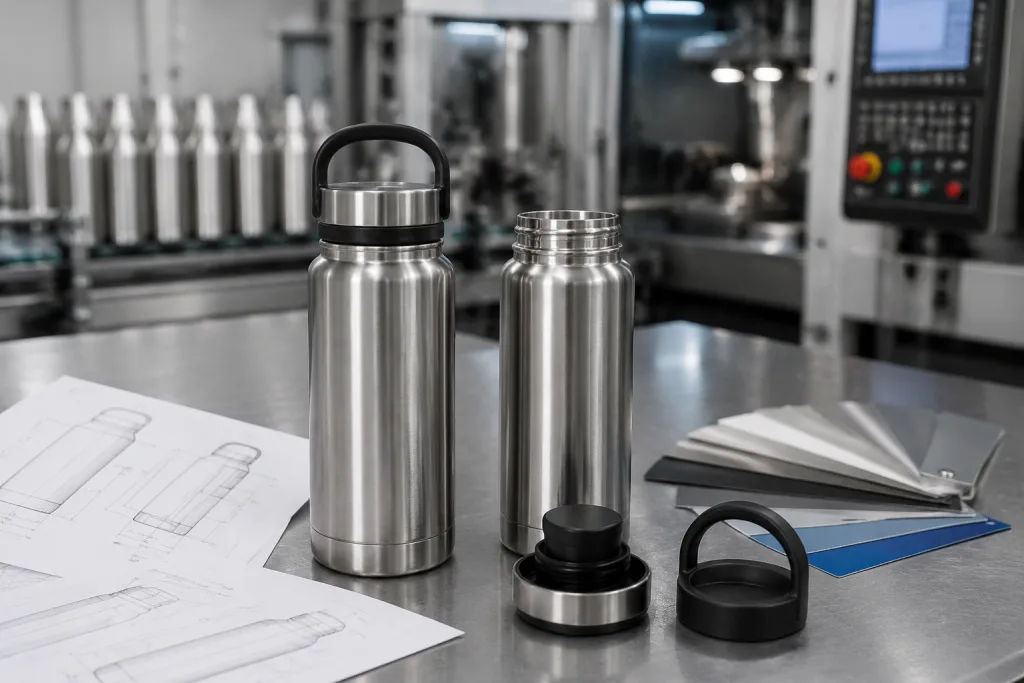
I’ll rewrite the prose in-place, keep the HTML structure unchanged, and make the language sound like a factory sales engineer wrote it.For a buyer who knows the line, material choice is where quality and margin meet. The normal spec for a custom thermos is 304 or 18/8 stainless steel on the inner and outer shells. We do use 316 on the inner wall for a few export jobs, usually for salty drinks or harsher service, but most promo orders do not need it. Wall thickness sits at 0.4-0.5 mm; that range keeps the bottle light enough to ship well and thick enough to survive a drop test without killing cost.
If you buy for outdoor retail, check the insulation claim against the real build. A double-wall vacuum bottle should hold heat or cold for 6-12 hours, depending on size, lid style, and whether the buyer picked a straw cap or a plain screw lid. QC pulled the sample on a 12-hour hot-water test last week, and the straw lid dropped the result fast; that is the trade-off, not a sales trick. Matte powder coating, rubber paint, and a stainless base can lift the shelf look, but we only run those finishes when the market will pay for them.
Best practice: ask for the steel grade, wall thickness, vacuum method, and leak test standard in writing before you talk decoration.
For Europe and North America, ask for REACH, LFGB, FDA, and any pack-insert wording your distributor thermos channel needs. A proper supplier vacuum bottle program from China should have those papers ready, and if the buyer flagged a typo on the PO, that same vendor should still be able to ship clean documents. If a supplier dodges spec questions, the math does not work; they are hiding a cost cut or a quality issue.
Decoration changes your margin
I’ll rewrite the section in-place, keeping the HTML intact and tightening the sales-engineering tone. Next I’m checking the repo instructions, then I’ll patch the prose directly.Decoration is where a plain bottle turns into a product people pay for. For a promotional custom thermos, one-color logo printing is often enough, and that keeps the quote tight and the lead time short. Once the buyer asks for laser engraving, gradient coating, or a debossed sleeve, the unit cost can move up 8-20%. We see that on the line all the time. The market decides if that margin still works.
There are three decoration routes we quote most often. Silkscreen stays cheapest for simple logos and flat panels. Laser engraving gives a clean mark on brushed steel, but it stays one-color. Heat transfer or wrap printing brings stronger shelf impact for distributors thermos programs, yet the reject rate can creep up if the artwork is busy. QC pulled a sample last week because a 2 mm logo stroke blurred after curing, so ask for a pre-production sample before you sign off a 10,000-piece run. That is the right question to ask.
Do not skip packaging. A plain white box may save USD 0.10-0.25 per unit, but a retail printed carton, barcode sticker, and polybag can add another USD 0.18-0.45. If you sell through Amazon or a chain retailer, packaging matters more than the bottle shape. For bulk thermos purchasing, packaging is part of the product, not a free extra. We had a buyer flag a PO typo once because the carton count was 24 instead of 20, and the math did not work on the shipping pallet. A factory thermos team in Zhejiang will quote that clearly if you ask, but a lot of buyers forget, then blame the supplier thermos price later.
How to compare quotes properly
I’ll rewrite the section in-place, keeping the HTML tags and list structure unchanged, and tighten the sales-engineer tone with specific sourcing details.Compare supplier quotes against one spec sheet, not a rough email thread. Keep capacity, steel grade, lid type, coating, logo method, carton, and incoterm identical. If one thermos supplier quotes FOB Ningbo and another quotes EXW Hangzhou, the math does not work. Same with test rules. AQL 2.5 is standard on a lot of drinkware orders, but spell it out if you want the rejection bar to stay fair.
Ask each manufacturer thermos or thermos manufacturer to send a cost table at 1,000, 3,000, and 5,000 pcs. That is where you see if the pricing curve makes sense. We ran a 500 ml vacuum bottle line last month, and the buyer flagged a quote that stayed flat after 1,000 pcs. A good supplier vacuum bottle factory in China should drop at 3,000 and again at 5,000; if it barely moves, the line is either busy or not set up to scale with you.
Use this checklist when you compare thermos suppliers:
- FOB port and payment terms
- MOQ by decoration method
- Sample fee and refund policy
- Production lead time and rush options
- Testing documents and carton spec
- Spare lids or replacement rate for claims
That is the gap between a random supplier thermos quote and a sourcing decision you can defend. We’ve seen this go sideways when a trading layer slips in a lower price but can’t show who runs the mold shop or the QC table.
When China sourcing pays off
I’ll rewrite the three paragraphs in a more dealer-floor voice, keep the HTML tags intact, and preserve the specific numbers and sourcing angle.China still makes sense for this category because the supply chain is tight. In Zhejiang, we can line up bottle forming, coating, printing, packing, and export cartons within a short drive. That cuts handoff risk and lets a thermos supplier move fast when the artwork file changes or the lid insert is off by 1 mm. For outdoor retailers with seasonal launches, that speed is the difference between clean sell-through and dead shelf space.
For promotional brands, the math works even better. A bulk thermos order from China can start at 1,500 pcs for a campaign without trapping you in excess stock, then step up to 10,000 pcs after the first run proves out. We’ve seen buyers push for a “cheaper” setup on day one, then the line gets stuck when they need a second drop in six weeks. A thermos distributor or thermos vendor should build a repeat program, not chase a one-off buy. Start with a spec we can repeat, then tighten the packaging, finish, or cost on the re-order.
If you want a clean path, work with a factory thermos partner that shows real MOQ, lead time, and monthly capacity on paper. A plant in Hangzhou, Zhejiang that can run 200,000+ units per month only matters if QC pulled the sample, the export carton passed drop test, and the shipment date held. That is the difference between a working supplier vacuum bottle program and a pretty catalog quote.
Get a real thermos quote, not a guess
Send your target capacity, logo method, and order volume. We will map cost, MOQ, and lead time before you commit to production.
Frequently asked questions
What is a realistic FOB price for a supplier vacuum bottle?
For a 500 ml stainless thermos with 304 interior, standard PP lid, and one-color logo at 3,000 pcs, expect roughly USD 2.85-4.20 FOB China. If you add a powder coat, laser engraving, or a premium lid, the price often moves to USD 4.30-6.80. Very simple stock-style orders can be a bit lower, but anything under USD 2.50 usually means the spec is thinner, the lid is basic, or the quote excludes packaging. Always confirm port, carton count, and testing before comparing.
How many pieces do I need for a custom thermos order?
A practical MOQ for a custom thermos is 1,000-3,000 pcs if you are using an existing body and standard lid. If you want new tooling, special packaging, or a unique color match, plan for 5,000 pcs or more. Many thermos suppliers will accept lower quantities for a first sample run, but the unit price will be higher and the lead time may not improve. For a promotional thermos campaign, 1,500-2,500 pcs is often the sweet spot.
How long does production take in Zhejiang?
A standard supplier vacuum bottle usually takes 25-35 days after deposit and artwork approval. A more customized thermos with special coating, printed box, or non-standard lid can take 35-50 days. Sample lead time is commonly 5-10 days if the core mold already exists. Add 7-14 days for ocean booking and export handling, depending on your destination. If you need a rush order, ask early and keep the spec simple.
What inspection standard should I request?
For consumer drinkware, AQL 2.5 is a common starting point for general defects, with tighter checks on leakage, logo placement, and carton damage. Ask for leak testing on 100% of finished units or at least a documented sampling method. Also request material confirmation for 304 or 18/8 stainless, plus any REACH, FDA, or LFGB-related declarations your market needs. A serious thermos factory should provide these without hesitation.
Can one supplier handle both retail and promotional thermos programs?
Yes, but only if the factory has flexible lines and clear packing control. A retail program may need printed cartons, barcode labels, and stricter finish checks, while a promotional thermos order may focus on low cost and quick turnaround. A good thermos manufacturer can handle both by keeping the body spec stable and changing only decoration and packaging. Ask for monthly capacity, usually 200,000-300,000 units for a strong Zhejiang plant, so you know they can support repeat orders.