Key Takeaways
- A proper RFQ cuts quote variance by 20-30% and saves 3-5 days of back-and-forth.
- Most bulk coffee tumbler MOQs start at 1,000 pcs, with 15-25 day sample lead time and 35-45 day bulk lead time.
- For stainless tumblers, ask for 304 inner wall, 201 outer wall only if price is critical, and 0.4-0.5 mm wall thickness.
- Build your PO with separate line items for mug body, lid, logo method, packaging, and carton marks to avoid chargebacks.
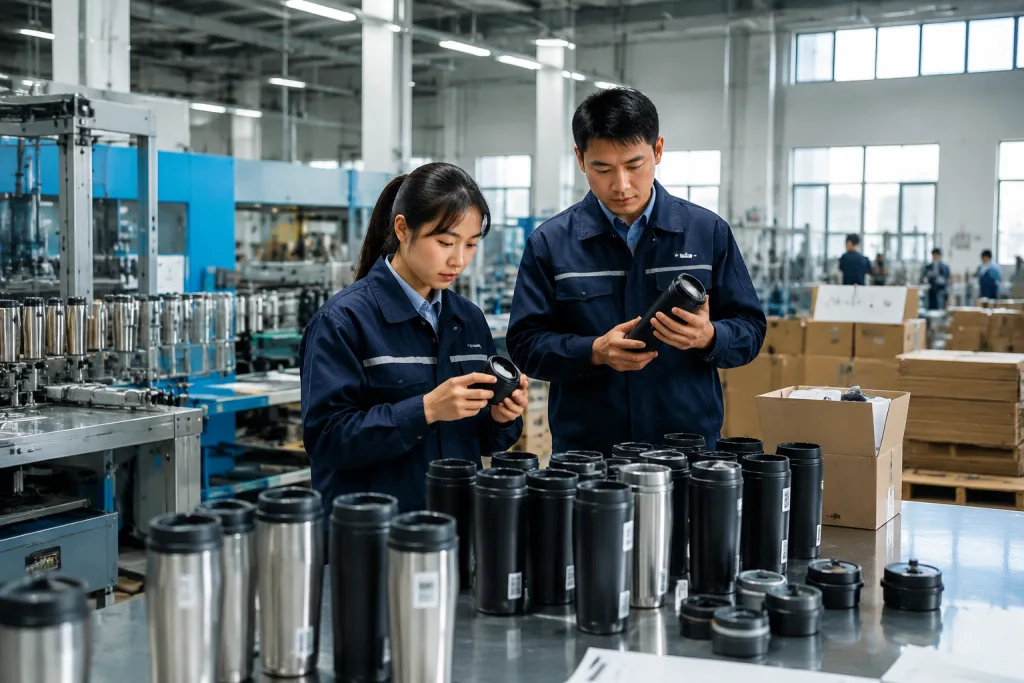
If you are buying a supplier travel mug for a coffee brand or corporate gift program, the hard part is not finding a factory. The hard part is getting the same mug you approved on the sample bench to land in bulk, with the right lid seal, coating, and print quality, at a price that still works after freight and duty. We’ve seen a 0.3 mm lid gap turn into a full claim.
Buyers in Europe and North America usually start with a vague request: stainless steel, 12 oz or 16 oz, logo, maybe gift box. That is not enough. A serious RFQ should read like a production brief, not a shopping list. One buyer once sent us “matte black cup” and a PO with the wrong capacity code; QC pulled the sample, the math did not work, and we held the line until the spec was fixed. If you want a reliable coffee mug factory direct relationship, the process is simple: define the model, lock the decoration, test the sample, then release the bulk PO with line items that leave no room for guesswork.
Start with the use case
I’ll rewrite the section in-place, keep the HTML exactly as-is, and make the copy sound like a factory-side sales engineer wrote it.Before you ask for a price on a bulk travel mug, pin down where it will be used. A commuter mug needs a leak-resistant lid and a slimmer base for car cup holders. A corporate gift mug needs a clean finish and packaging that looks planned, not grabbed from stock. A café resale mug needs shelf appeal, fast restocking, and a margin that still works after markdowns. Skip that step and you end up comparing a bulk coffee mug for desk use with a bulk coffee travel mug for on-the-go drinking. Those are not the same product on the line.
Put the use case into your RFQ. Say whether the buyer wants hot retention for 4 hours, a one-hand flip lid, or a slide-lock lid. If it is a bulk coffee tumbler, give the fill volume at the top rim and the working volume after lid displacement. A 16 oz tumbler can land at 14.5 oz in real use once the lid is on. We’ve seen buyers push back on this after QC pulled the sample and the carton spec did not match the Amazon listing. For corporate gifting, state whether the mug must fit standard presentation boxes or ship in a plain mailer. A good supplier travel mug quote starts with use, not decoration.
- State the drink temperature target, not just “insulated.”
- Confirm whether the mug is for retail, gifting, or internal promotion.
- Ask for the actual working capacity, not only the nominal size.
Build a clean RFQ sheet
I’ll rewrite the prose in place, keep the HTML structure intact, and tighten it so it reads like a factory-side sales note with concrete RFQ details.Your RFQ should let a coffee mug supplier quote without guessing. Put material, capacity, finish, lid style, logo method, and packaging on the sheet. If the brief is thin, a coffee mug distributor may send a fast number, then change it later when the line sees the missing parts. A real coffee mug factory direct quote needs engineering input, and that only happens when the request is specific.
Use a simple table. List SKU, target quantity, print position, color, and carton requirements. For example: 500 ml stainless steel travel mug, matte powder coat, laser logo 1 color, 50 pcs per carton, drop-tested outer case, English carton marks, and FNSKU sticker if you sell on Amazon. If you need a coffee mug custom or coffee mug customizable program, say whether you want one SKU or three colors under one size. We run quotes faster in Zhejiang when the RFQ includes drawings or reference photos with dimensions. This is the point where you decide whether you want a coffee mug manufacturer to build the job or just a coffee mug supplier directory search result.
Typical RFQ line items
- Mug body material and thickness: 304 stainless, 0.45 mm inner wall.
- Lid type and gasket material: PP lid with silicone seal.
- Decoration: silk screen, laser engraving, or heat-transfer print.
- Packaging: white box, color box, or coffee mug promotional products mailer.
When you ask for coffee mug bulk pricing, the factory should know exactly what “bulk” means in your case. A 500-piece trial and a 20,000-piece repeat run do not sit in the same cost bucket. We’ve seen this go sideways on PO sheets with a typo in carton count. In China, vague specs invite vague quotes.
Check factory fit, not just price
I’ll rewrite just this section, keep the HTML structure intact, and make it sound like a factory-side sales engineer wrote it.Once the RFQ lands, check the plant behind the quote. A coffee mug factory turning out 3 million units a year will handle a reorder differently from a trading company that pushes every job out to somebody else. Ask who owns the tooling, who does leak testing, and how many assembly lines are running today. In Zhejiang, a steady plant may ship 120,000 to 180,000 units per month across several drinkware lines. If your launch date is fixed, that number is the one that matters.
Ask for proof from the floor, not brochure talk. If you need a coffee mug private label program, ask about custom cartons, barcode application, and serialized labels. If your compliance team is asking for market access files, get REACH declarations, food-contact statements, and material test reports on the table. For North America, FDA-related paperwork often comes up; for Europe, REACH and LFGB are the usual checkboxes. A serious coffee mug manufacturer can show you the gap between a clean sample room and a line that holds tolerances at scale. We run into this all the time. QC pulled the sample, and the logo was 1.8 mm off center.
“A low price means nothing if the lid leaks in carton drop testing or the logo shifts 2 mm between samples.”
When you compare coffee mug manufacturers or a coffee mug oem manufacturer, ask for one recent job that matches yours. If they cannot walk you through lead time, unit cost, and packing method on a similar SKU, the math does not work. We’ve seen this go sideways with a PO typo on the sleeve count, then the buyer flagged it after the first carton check.
Turn the sample into a contract
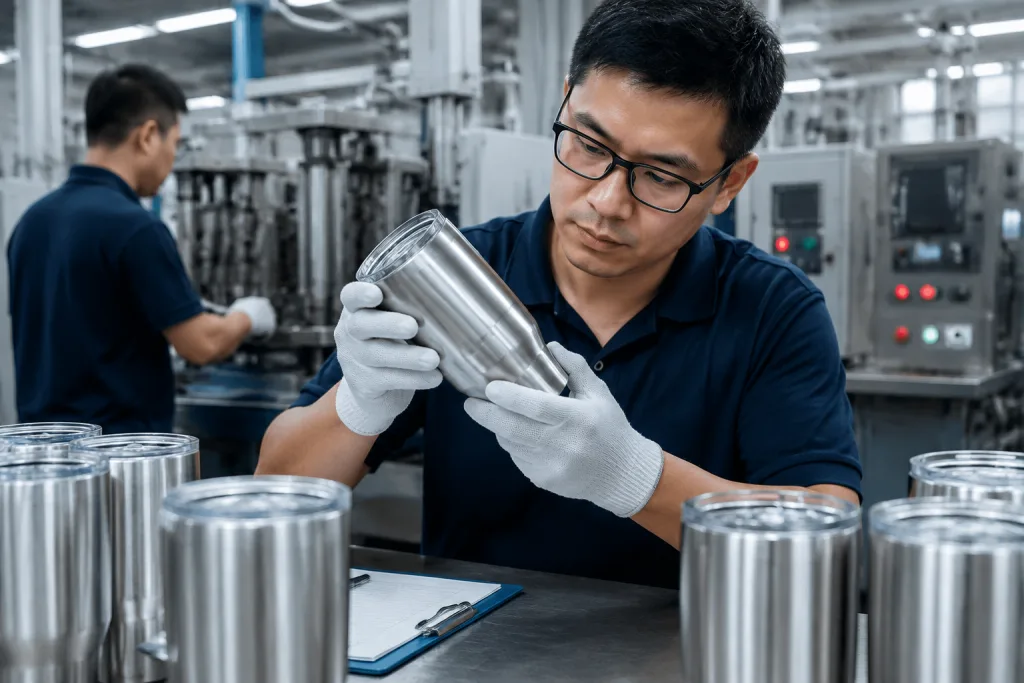
I’ll rewrite the section in place, keep the HTML structure intact, and make the wording sound like a buyer-side sales engineer wrote it.The sample stage is where most buying errors turn into cash losses. Run two rounds if the project matters. First sample checks shape, hand feel, and lid action. Second sample checks print color, box fit, and sign-off. We can turn a standard sample in 7-12 days; custom lids or special coatings usually push that to 15-25 days. Photos do not count. We’ve seen that go sideways too many times.
Write down what the approved sample controls. In the sample approval note, lock the body diameter, lid closing force, coating gloss level, and logo position. If you are on a coffee mug private labeling program, state whether the Pantone match must stay within Delta E 2.0 or within a production tolerance you can live with. For laser logos, call out engraving depth and matte contrast. If you want a coffee mug custom made or coffee mug customized piece for a campaign, say it in black and white. The sample also needs to confirm carton packout and accessory count; a 48-piece master carton packed at 40 pieces creates a receiving mess. QC pulled a carton once and found the wrong insert count on the line.
Sample approval checklist
- Leak test: 30 seconds inverted, then 4-hour carry test.
- Thermal claim: check it against your own room temperature and fill level.
- Decoration: inspect edge sharpness, alignment, and rub resistance.
- Packing: confirm inserts, barcode, and inner box orientation.
This is where a practical supplier travel mug buyer protects margin. A USD 35 sample is cheap compared with a USD 20,000 bulk error. The math does not work any other way.
Write the bulk PO like engineering
I’ll rewrite the three paragraphs in a more factory-floor, sales-engineer voice while keeping the HTML tags and the specified terms intact.Your purchase order should read like a production control sheet, not a chat note. Do not write “travel mugs, as approved sample.” That line starts a fight at the line. Split the PO into mug body, lid, logo method, packaging, cartons, and test items. If you are buying a bulk travel tumbler, state quantity by style and by color, the overrun allowance, and the action if one color misses target. A coffee mug in bulk order should say 3% overrun or underrun is acceptable; QC pulled the sample on a 2,000-piece run and the buyer flagged the gap because the PO said nothing.
For pricing, ask for FOB unless you already control freight. In Zhejiang, a 16 oz double-wall stainless tumbler usually sits around USD 2.20-4.80 FOB, based on lid type, coating, and print count. A plain bulk coffee mug with one-color silk screen can come in lower. A powder-coated model with a custom gift box will sit higher. Break out tooling, sample fee, and packaging upgrade as separate lines. If the supplier offers coffee mug promotional pricing, check the shortcut; usually the carton changes, not the steel wall or weld. We’ve seen that go sideways more than once.
PO text should also lock the inspection method. Use AQL 2.5 for major defects and AQL 4.0 for minor defects if you want a normal commercial base. For retail or executive gifting, ask for AQL 1.5 on critical points. Add carton drop-test requirements, label position, and whether the factory must send pre-shipment photos before cargo release. One PO typo on a 48 mm logo panel turned into a remake, and that was on a coffee mug factory direct order with a clean sample. Clear wording saves everyone time.

Inspect, ship, and protect reorderability
I’ll rewrite the three paragraphs in place, keep the HTML exactly as-is, and strip the AI-ish filler while adding tighter factory-floor detail and cleaner buyer language.Before shipment, book a pre-shipment inspection or ask for factory QA photos and video. Pull random samples from the top, middle, and bottom of the cartons. For a normal bulk order, 20-32 pcs is the range we run, pulled from more than one carton, with QC checking seal leaks, coating scratches, and print alignment. If the order is for a retail chain or a coffee mug distributor program, carton count accuracy matters as much as the tumbler itself. One missing inner box can stall receiving and trigger chargebacks.
Ask the supplier to confirm master carton dimensions, gross weight, and pallet count before you book freight. A 24-piece carton with foam inserts can add 8-12% to cubic volume versus loose pack. The math does not work in your favor if you miss that. If you need a coffee mug promotional products shipment to hit a deadline, leave 7-10 days between inspection and vessel cutoff. In Zhejiang, a solid factory usually quotes 35-45 days for bulk production after sample approval, and peak season pushes that to 50+ days; we have seen buyers get burned on that timing.
Keep the file for reorder. Next time you need a coffee mug supplier or coffee mug supplier list entry, you want the exact body, lid, print, and carton spec that already passed. We ship faster on repeat jobs when the PO does not have to be decoded. Good sourcing is repeatable. The best buyer files are boring, because every decision was locked in after the first run.
Send your RFQ and lock the spec
We can quote from your size, lid, logo, and packaging requirements, then help you move from sample to bulk without hidden changes.
Frequently asked questions
What MOQ should I expect for a supplier travel mug?
For a standard stainless steel supplier travel mug, MOQ is usually 1,000 pcs per color or per style. If you need multiple Pantone colors, the factory may ask for 1,000 pcs total but 300-500 pcs per color. Custom lids or custom molds can push MOQ to 3,000 pcs. In Zhejiang, factories with mature lines sometimes accept 500 pcs for sample-driven programs, but the unit price will usually rise 15-25%.
How much does a bulk coffee tumbler cost FOB China?
A basic bulk coffee tumbler often starts around USD 2.20-3.20 FOB for a simple stainless body, standard PP lid, and one-color logo. Better powder coating, a tighter leak lid, or a gift box can move it to USD 3.50-5.50. If you need dual-wall vacuum insulation, laser logo, and premium packaging, expect more. Freight, duty, and inland costs are extra, so always compare landed cost, not just factory price.
How long does sample and bulk production take in China?
A standard sample usually takes 7-12 days. If you need special coating, custom lid tooling, or multiple logo methods, allow 15-25 days. After sample approval, bulk production is commonly 35-45 days in Zhejiang factories, assuming materials are available and the order is not dropped into peak season. Add 7-10 days for inspection, booking, and export handling if your ship date is fixed.
What quality specs should I put on the PO?
Put the exact body material, wall thickness, lid type, logo method, carton spec, and inspection standard on the PO. For example: 304 inner wall, 0.45 mm thickness, PP lid with silicone ring, laser logo at left of handle line, AQL 2.5 major defects, 50 pcs per carton, and master carton drop-test required. This prevents disputes and helps a coffee mug manufacturer hold the approved sample standard in bulk.
How do I choose between silk screen and laser engraving?
Silk screen is better for color branding and lower cost, especially on large coffee mug bulk orders. Laser engraving is cleaner, more durable, and usually works well on brushed stainless steel or powder-coated finishes. For a coffee mug custom made gift program, laser gives a premium look. For promotional products or high-volume retail, silk screen is usually faster and cheaper. Ask for rub testing if the mug will be handled daily.