Key Takeaways
- Most bulk tea infuser bottle quotes land between USD 1.10 and USD 3.20 per unit at 3,000 to 10,000 pcs, depending on material and decoration
- Typical MOQ starts at 1,000 pcs for a factory tea infuser bottle and 3,000 pcs for full custom colorways
- Standard lead time is 18 to 25 days for stock parts, 30 to 45 days for custom molded or printed orders
- A Zhejiang factory with 300,000 units/month can usually keep repeat orders more stable than a trading-only source
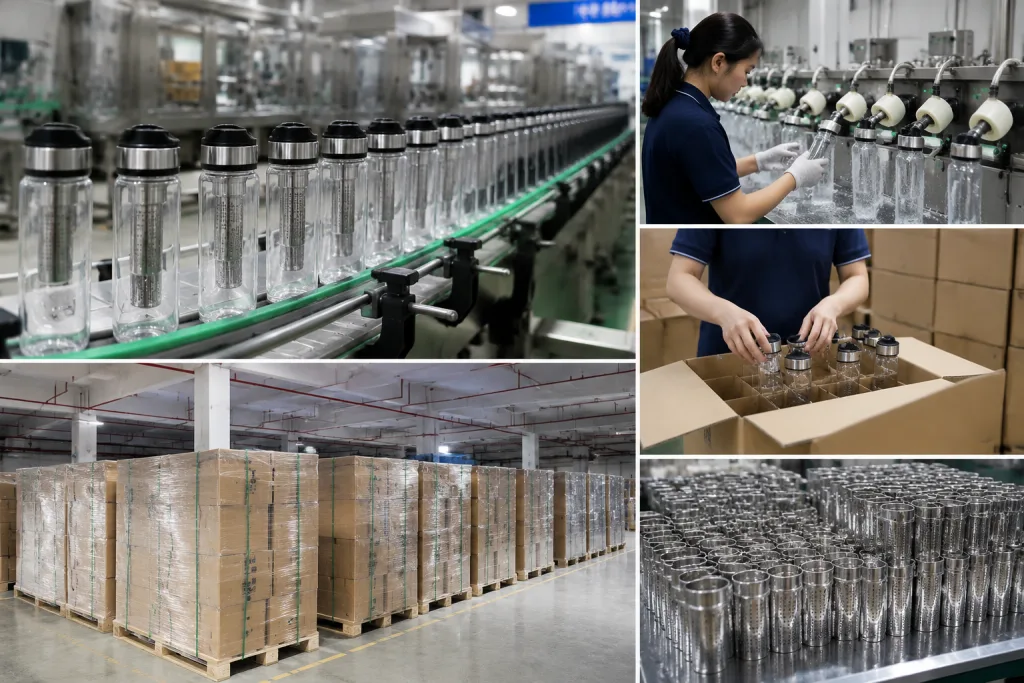
If you are sourcing a supplier tea infuser bottle, the first mistake is asking only for a unit price. We quote a 500 ml bottle at USD 1.20 and another at USD 2.10 on the same line, then the landed cost splits fast once you add lid tooling, silk-screen setup, carton packing, and drop-test fees. One buyer sent a PO with “500ML” typed as “50ML”; QC pulled the sample, and we caught it before mold prep. The factories in Zhejiang that quote cleanly usually already know your channel: wellness retail, DTC, gym programs, or distributor replenishment.
You also need to think about lead time like a buyer, not like a shopper. In our Hangzhou plant, a simple custom infuser bottle runs 18 to 25 days after sample approval, while a decorated custom logo infuser bottle with color-matched parts, leak testing, and custom packaging stretches to 35 to 45 days. We check every lid with a torque gauge, and the math does not work if you ignore that step. If you want stable pricing and fewer freight surprises, the real job is to separate cost drivers from noise.
What drives the quote
I’ll keep the HTML structure intact and rewrite the prose with a more grounded buyer-side tone, concrete pricing detail, and fewer AI-style transitions.A clean quote for a supplier tea infuser bottle usually comes down to five things: body material, infuser basket material, lid style, decoration, and packaging. A PETG body with a 304 stainless basket does not price the same as Tritan with a 316 basket. On our line, that gap often lands at 20% to 35% before freight, and the buyer usually spots it only after the first sample sheet. That is where margin gets squeezed.
The lid drives more cost than most buyers expect. A plain PP screw lid may add USD 0.08 to USD 0.15, while a leak-resistant flip lid with a silicone gasket runs USD 0.22 to USD 0.40. For a custom tea infuser bottle, one-color logo print is straightforward, but a wraparound silk screen or laser mark on metal parts changes the math fast. We had a PO last month with a typo on the lid color code, and QC pulled the sample before packing; that kind of miss burns time. The better factories in Zhejiang split mold cost, decoration, and packing into separate lines. Ask for that split. The single number is the wrong question to ask.
- Stock body + stock lid + standard basket: lowest cost
- Custom color body or lid: add 8% to 18%
- Logo print or engraving: add USD 0.05 to USD 0.30
- Custom box or insert card: add USD 0.12 to USD 0.55
MOQ tiers that actually matter
I’ll rewrite this section in the same HTML structure, keep the heading and list intact, and strip the AI-ish phrasing while adding factory-floor detail and tighter buyer language.MOQ is where buyers burn days. A factory may quote 500 pcs, but that number usually covers stock colors, stock cartons, and one logo position. Once you ask for a customizable tea infuser bottle with a Pantone-matched lid, printed carton, and individual polybag with barcode, the real MOQ moves to 1,500 to 3,000 pcs. That is standard. On our line, we once had a buyer flag the PO because they wrote 500 sets on the bottle and 1,500 sets on the carton—QC pulled the sample and caught the mismatch before production.
For a bulk infuser bottle order, I see three tiers that matter in China. At 1,000 pcs, you are testing a market or running a short campaign. At 3,000 pcs, unit cost starts to move and the risk is still manageable. At 10,000 pcs, you are in factory-direct territory and can plan packaging and freight with some breathing room. A factory direct infuser bottle order from Zhejiang usually beats a distributor quote because you skip warehouse margin and a second layer of handling. The math does not work any other way.
Typical MOQ bands
- 1,000 pcs: stock body, simple logo, quick sampling
- 3,000 pcs: custom color, custom box, stable mass production
- 5,000 to 10,000 pcs: full program for distributors or retail chains
If you are a startup, a customizable infuser bottle program at 1,000 pcs makes sense. If you are a distributor, a distributor tea infuser bottle order should start at 3,000 pcs or more, or the freight and setup fees eat the savings. We ship a lot of these, and the wrong MOQ usually shows up as dead stock in month 4.
Price ranges by build
I’ll rewrite the section in-place, keep the HTML exactly as-is, and tune the copy to sound like a factory-side sales engineer.Let’s keep it practical. A 450 ml to 600 ml bulk tea infuser bottle from China usually sits in a few price bands at normal MOQs. At 3,000 pcs, a basic PETG body with PP cap and stainless basket runs about USD 1.10 to USD 1.60 FOB China. A Tritan body with tighter gasket fit and a cleaner polish is usually USD 1.70 to USD 2.60. If you want matte coating or double-wall build, expect USD 2.40 to USD 3.20. On our line, QC checks the lid torque with a simple torque wrench, and that one step can move the quote if the buyer wants fewer leaks.
For fruit programs, a bulk fruit infuser bottle or fruit infuser bottle bulk order usually costs a bit more because the infusion tube, basket holes, and lid seal need to hold back pulp. Add 5% to 12% if you want a finer mesh pattern or a removable infuser core. A custom fruit infuser bottle with printed fill marks and retail packaging can land USD 0.20 to USD 0.50 above a plain hydration bottle, depending on the carton spec. We’ve seen the buyer flag a 2 mm typo on the PO, and that kind of slip slows the whole run.
Distribution buyers should watch the label. A distributor infuser bottle program with retail packs plus pallet packing often saves carton labor versus a full DTC pack, but the math only works when the forecast is real. We ship better when the volume is locked, not guessed. In Zhejiang, factories would rather hear 12,000 pcs than a hopeful 30,000. That is the right question to ask.
Lead times and production flow
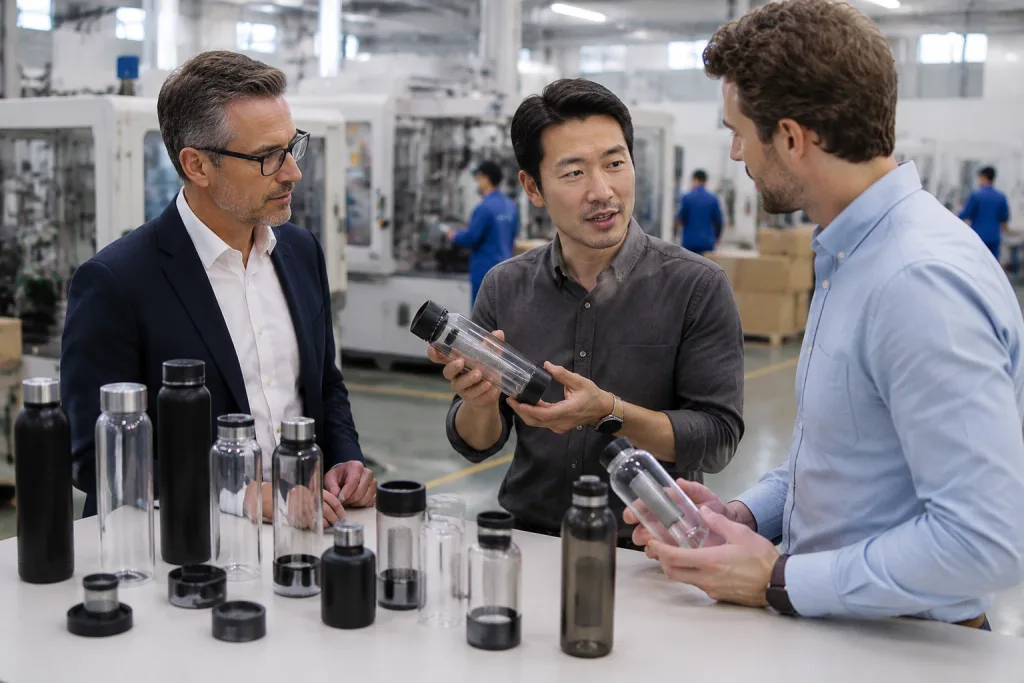
I’ll rewrite the HTML prose in place, keep every tag and the existing structure, and tighten the language so it sounds like a factory-side sales engineer.Lead time changes with the build. A factory tea infuser bottle from stock parts usually samples in 5 to 7 days, then runs 18 to 25 days after deposit and final sample sign-off. For a custom made infuser bottle with new color matching, printed cartons, and export carton labels, plan on 30 to 45 days. If the project needs new tooling, add 15 to 25 days before the line starts. We once had a buyer flag a PO typo on the carton language, and that alone pushed the pack-out by 2 days.
The flow is simple, and it is the part buyers should pin down first: confirm spec, make the pre-production sample, approve color and print, lock carton artwork, then start production. A serious factory infuser bottle supplier ties each step to a date and a person, not a vague ship promise. If someone says “25 days” without asking about material, logo method, and test standard, the math does not work. QC pulled the sample on a 65 mm cap and a 0.3 mm print shift; that is the sort of detail that saves you later.
In Hangzhou and wider Zhejiang, the better factories do not sell speed first; they sell control. That beats saving two days on a quote.
Repeat orders move faster. If the mold, packaging, and color chips are already approved, lead time can drop by 20% to 30%. That is where a long-term factory fruit infuser bottle or factory direct infuser bottle account pays off. We ship faster when the line already knows the spec, and a 500 pcs reorder is a different job from a first run.
Testing that protects your margin
I’ll rewrite the section in place, keep the HTML tags intact, and tune the prose to sound like a real export sales engineer.Testing is not a compliance checkbox; it protects your resale margin. If you are placing a custom logo infuser bottle in Europe or North America, ask for material papers that line up with REACH, food-contact declarations, and migration testing where the market calls for it. For U.S. retail or marketplace programs, buyers usually ask for ASTM-style durability checks or a drop test. On export cartons, ask the factory to show AQL sampling for appearance and function. We often run AQL 2.5 for major defects and 4.0 for minor ones, but the channel sets the real limit.
The weak spots are lid leak, thread fit, and print rub-off. A solid customized tea infuser bottle program should include 3 to 5 leak cycles, hot-fill compatibility if you need it, and one drop test from 1 meter. QC pulled one sample last week with a cap that sat 0.8 mm high, and that is the sort of miss that turns into a return. If you sell through distributors, a distributor fruit infuser bottle order should also include carton compression testing, because warehouse handling is rougher than most brands think.
Do not pay for tests you will never use, but do not skip the ones that cut returns. A 2% return rate on a USD 2.20 bottle costs more than a proper pre-shipment check. The math does not work any other way.
Choosing the right sourcing model
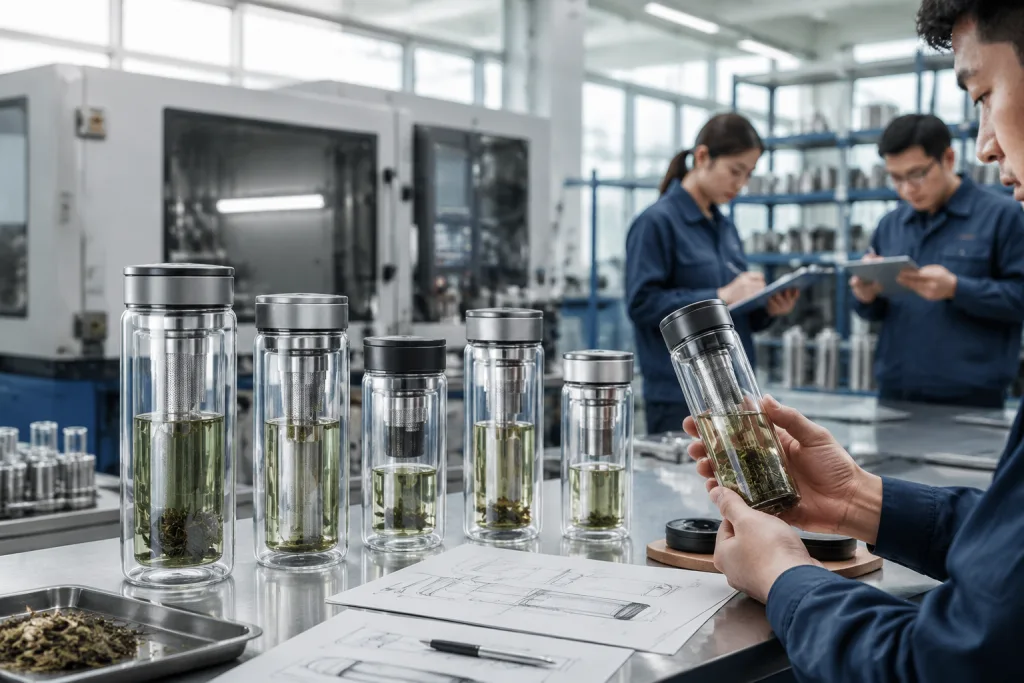
I’ll rewrite the section in place, keep the HTML exactly as-is, and tune the prose so it sounds like a factory-side sales engineer.The sourcing model moves your cost stack more than most buyers want to admit. A supplier tea infuser bottle deal with a real factory gives tighter control on MOQ, basket-body fit, and carton layout. We run the line for this every week, and the numbers show it: a trading route is faster for mixed SKUs, but once the middle margin lands, you are usually 8% to 15% higher. That spread hurts a wellness brand fast.
A customized infuser bottle program fits when your retail pitch lives on color, logo position, and gift box detail. A customizable fruit infuser bottle or customizable infuser bottle works better when you need three SKUs on one body, with two lid colors and one print file. We had a buyer flag a PO typo on lid color once, and QC pulled the sample before we cut mold slots; that is the kind of mess this model avoids. For distributors, a distributors tea infuser bottle order should stay plain: one bottle body, one basket size, two decoration options, one export carton spec. This is the wrong question to ask if you want the lowest sticker price; the landed cost is what counts.
In Zhejiang, the factories that keep overseas accounts happy usually show stable monthly output, clean document control, and a straight answer on what changes cost money. That is the supplier you want. If they can ship 300,000 units per month and still hold a sane MOQ, they understand scale. We have seen this go sideways with a 12-day sample lead time turning into 18 days because the artwork file was wrong, so ask for the process, not the sales talk.
Request a factory quote with real lead times
Send your target volume, logo method, and carton spec. We’ll quote a supplier tea infuser bottle plan with FOB pricing, MOQ, and schedule.
Frequently asked questions
What is a realistic MOQ for a supplier tea infuser bottle?
For stock colors and standard packing, 1,000 pcs is realistic. For a custom tea infuser bottle with printed logo and custom carton, 3,000 pcs is more normal. If you want Pantone-matched parts, special lid sealing, or retail-ready inserts, plan on 5,000 pcs. A factory in Zhejiang that offers 1,000 pcs on a custom-made infuser bottle is usually doing partial customization, not full tooling.
How much should I budget per unit?
At common export MOQs, a bulk tea infuser bottle usually costs USD 1.10 to USD 3.20 FOB China, depending on material, lid, and print method. PETG and PP are on the lower end, Tritan and better gasket systems sit higher. If you add custom packaging, budget another USD 0.12 to USD 0.55 per unit. Freight, duty, and destination handling are separate.
How long does production usually take?
For stock parts, sample lead time is often 5 to 7 days and mass production 18 to 25 days after approval. For a custom logo infuser bottle with new color matching or packaging, allow 30 to 45 days. If new tooling is needed, add 15 to 25 days before production starts. Zhejiang factories with steady output usually keep repeat orders closer to the short end of that range.
What tests should I request before shipment?
Ask for leak tests, thread-fit checks, appearance inspection, and packaging drop tests. For Europe, request REACH-related material declarations and food-contact documentation; for North America, ask for material compliance paperwork and functional durability checks. AQL 2.5 for major defects is a common starting point. For distributor orders, carton compression and barcode verification matter more than many buyers expect.
Is factory direct better than using a distributor?
If you need volume, yes. A factory direct infuser bottle order usually gives you better control on cost, MOQ, and lead time. A distributor tea infuser bottle source can be useful for small mixed orders, but you often pay 8% to 15% more. If your program is a bulk fruit infuser bottle launch or a repeat wellness SKU, factory direct is usually the cleaner route.