Key Takeaways
- Most supplier stainless steel tumbler projects fail on construction details, not on price; 18/8 steel and 0.35-0.50 mm walls are a safer baseline
- A real factory quote should show MOQ, lead time, decoration method, and test standards; for custom drinkware, expect MOQ from 1,000-3,000 pcs
- FOB China pricing for a 500 ml insulated tumbler usually lands around USD 3.20-6.80 depending on lid, coating, and logo method
- If you sell into the US or EU, ask for REACH, LFGB, FDA, and drop-test paperwork before you approve samples
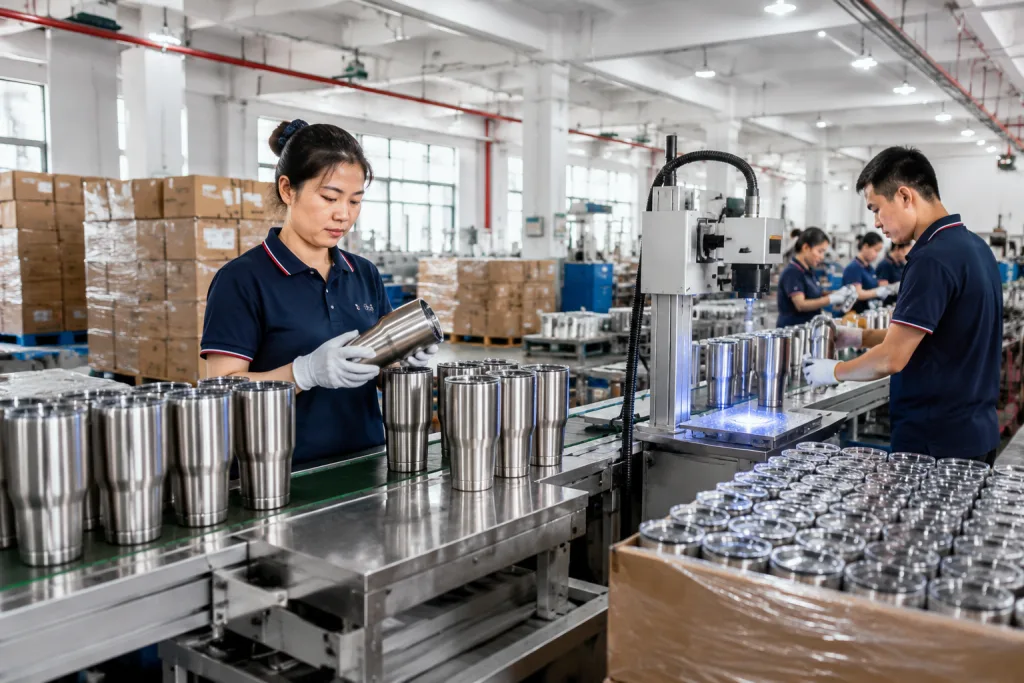
If you are sourcing a supplier stainless steel tumbler for retail, corporate gifts, or marketplace sales, the real question is not “who has the lowest quote.” It is whether the factory holds tolerances, passes the right tests, and ships the same cup twice. We’ve seen a 1.5 mm lid gap turn into a customer complaint in week one. In China, and especially in Zhejiang, there are plenty of tumbler makers. The hard part is telling a real canteen factory from a trading desk with polished photos.
The faster way to make a clean decision is to split the job into four checks: material and construction, decoration method, commercial terms, and compliance. Get those four right and you avoid most of the pain later. That is the wrong question to ask if you start with price alone. At BottleForge in Hangzhou, Zhejiang, we run about 600,000 units per month with a 30-day standard lead time for most stainless-steel tumbler orders, and QC pulled the sample on the line more than once when the buyer’s PO typo changed the coating spec.
Start With the End Use
I’ll keep the HTML structure intact and rewrite only the prose, with tighter, more buyer-facing language and one concrete factory detail per paragraph.Before you compare suppliers, lock down how the tumbler will be used. A sports-channel canteen order needs a different build from a bank gift set, and both are different again from a custom growler program for outdoor retail. Skip this step and you end up with the wrong lid, the wrong finish, or an insulation spec that misses the buyer’s brief.
For cold drinks at events, a single-wall stainless cup or a light double-wall cup is often enough. For retail, buyers expect vacuum insulation, a lid that stays sealed in a backpack, and walls that do not sweat on the shelf. For a canteen custom program, the line usually gets pushed on durability and unit cost; we have seen a 0.45 mm body pass while a prettier 0.35 mm sample got rejected after a shake test on the line.
Use the use case to set your target spec:
- Promotional: 300-500 ml, 304 stainless steel, 0.35 mm body wall, printed logo
- Retail: 500-750 ml, vacuum insulated, 0.4-0.5 mm inner wall, laser or powder coat
- Gift: gift box, molded lid, extra polish control, tighter AQL inspection
This is where a lot of canteen suppliers waste your time. They throw one model at every market. That is the wrong question to ask. A proper canteen manufacturer should ask which channel you sell into, what price you need to hit, and whether the order is for distributor drinkware, distributor growler, or direct retail. We had a PO last month with the wrong lid code typed as “LID-02” instead of “LID-20”; QC pulled the sample, and the correction saved a 2,000-piece mismatch before packing.
Pick the Right Steel Build
I’ll rewrite just this section, keep the HTML intact, and make the copy sound like a factory-side sales engineer.For a supplier stainless steel tumbler, the steel spec sets the whole job. We usually start with 304 stainless steel for both shells; that is the standard call for most export tumbler programs. If a buyer is pushing for salt-air use or a dishwasher-heavy market, we check whether 316 is needed on a specific part. Most of the time, it is not. The math does not work.
Wall thickness changes the quote fast. On the line, a 0.35-0.40 mm body wall keeps entry-level canteen customized orders in line on cost, and a 0.45-0.50 mm inner wall is where we see better rigidity and better heat hold. We had one buyer flag a PO that asked for “thicker steel” without a number; QC pulled the sample, and the difference between 0.38 mm and 0.48 mm was enough to move the freight weight. Heavier is not a free upgrade.
Check the weld seam, base fit, and vacuum integrity. If the leak rate is weak, the tumbler will fail in transit or within a few months of use. We run leakage checks, weld spot inspection, and thermal retention tests with numbers on the sheet. A practical target is 6-12 hours hot and 12-24 hours cold, depending on size and lid structure. Anything past that needs a named test method, not a sales line.
Ask for the material certificate, the thickness callout, and the test method. If the factory cannot show those three items, the quote is not ready.
For custom canteen or customizable canteen projects, repeatability beats bragging rights. You want the same cup shape, the same coating, and the same thermal curve across the order; a 2 mm drift in body height is enough to cause packing trouble. That is where a canteen manufacturer earns the order, not a canteen supplier who just forwards sketches.
Decoration Changes the Economics
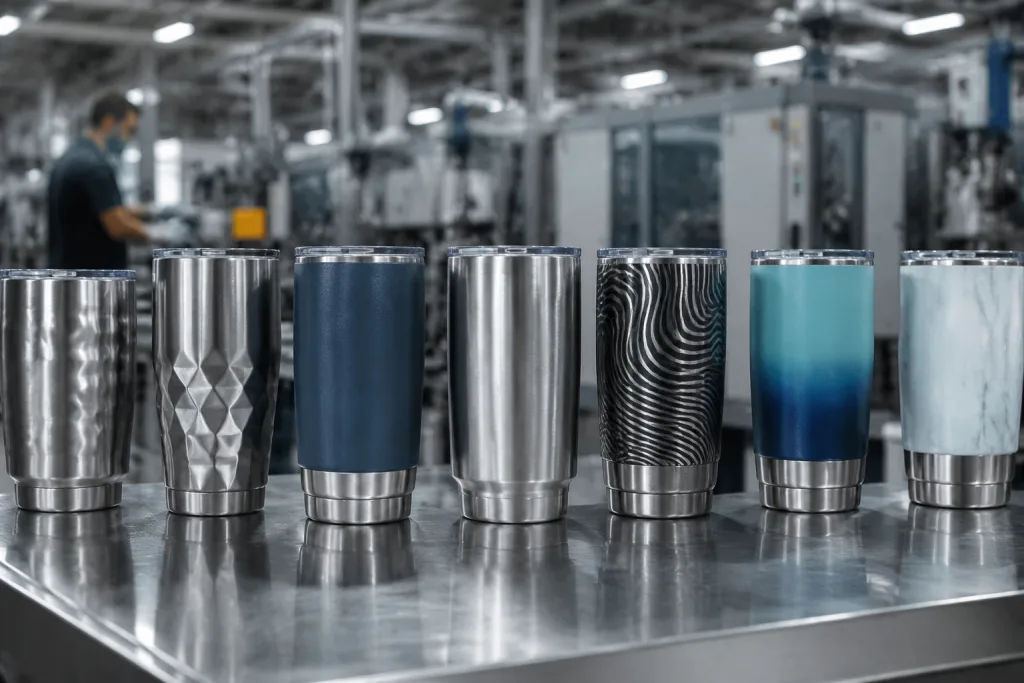
I’ll rewrite just the prose inside the existing HTML, keep the tag structure intact, and make it sound like a factory-side sales engineer. Next I’m tightening the wording, adding a few concrete shop-floor details, and removing the AI-ish filler.Your logo method can move unit cost by 10% to 25%, and it can shift the reject rate too. On the line, we’ve seen one 2-color screen print go out clean at 3,000 pcs, then start chipping after daily handwashing. Laser engraving costs more, but it runs cleaner on 304 stainless if the finish gives enough contrast. Powder coating, UV print, and embossed branding each have their own limits, and the wrong pick shows up fast in QC.
If you source customizable drinkware for retail, the decoration has to survive cartons, shelf handling, and customer washing. A printed logo that looks sharp on a matte tumbler can go flat under store lighting. Laser on brushed steel looks premium, but that same mark can disappear from 2 meters away, which is a bad fit for a distributor canteen program. For customized growler products, we usually push a wider wrap logo or a band print instead of tiny art near the neck; the math works better.
Ask the factory where the logo lands against seams, handles, and lid vents. Small layout mistakes turn into scrap. We had a buyer flag a PO typo on a 5,000-unit canteen run because the artwork sat 4 mm off center, and they cared more about that than saving 30 cents. They were right.
- Silkscreen: low cost, works for 1-3 color logos, best when the art stays simple
- Laser engraving: durable, premium, good on stainless finish, but needs clear contrast
- Heat transfer / UV: better for complex graphics, but the line needs tighter control and more inspection
For customized canteen orders that need quick turnaround, keep the artwork simple. Every extra color means another setup, another inspection, and another chance for the registration to drift. We ship fast on a lot of jobs, but on 10,000 pcs not every factory can hold the print clean from first sample to final carton. That is the part your buyer should pay for.
Check MOQ and Real Lead Time
I’ll rewrite this section in-place, keep the HTML untouched, and tighten the language so it sounds like a buyer-side sales engineer.MOQ is not a number on a quote sheet. It shows how we run the line. A real canteen factory usually supports 1,000-3,000 pcs for a standard tumbler model with a simple logo. For a fully customized canteen or customized drinkware project with new tooling, the MOQ moves to 5,000 pcs or more. If a supplier says 100 pcs for a custom build, the math does not work.
Split lead time into sample time, production time, and shipping time. A sample can take 7-15 days if the mold already exists. Production for a standard order often takes 25-35 days. Ocean freight from Zhejiang to the US West Coast can add about 18-28 days, and Europe often runs 25-40 days depending on routing and port conditions. We had a buyer flag a PO typo once because “ship by” was written where “sample ready” should have been. If a canteen supplier promises “everything in 10 days,” ask whether they mean stock, blank goods, or shipped goods.
Ask how the factory handles peak season. A canteen vendor that looks cheap in February may slip in August when back-to-school and holiday programs hit together. QC pulled the sample on a 600,000 units per month line and the decoration section was already booked out for 4 days; that is the real constraint. Capacity without a slot is just noise.
For distributor drinkware and distributor growler orders, the smart buyers ask for a production slot before they approve artwork. We have seen this go sideways when the art sign-off came first and the launch date moved by 12 days. That protects your schedule better than a lower unit price ever will.
Demand the Right Compliance
I’ll rewrite the section in-place, keep the HTML structure untouched, and tune the copy to sound like a factory-side sales engineer.Compliance is where serious buyers avoid chargebacks and customs holds. For the EU, ask for REACH and LFGB material confirmation. For the US, ask for FDA food-contact declarations and, when needed, ASTM-style test references for impact or coating performance. If the factory cannot produce paperwork, plan to pay for testing yourself.
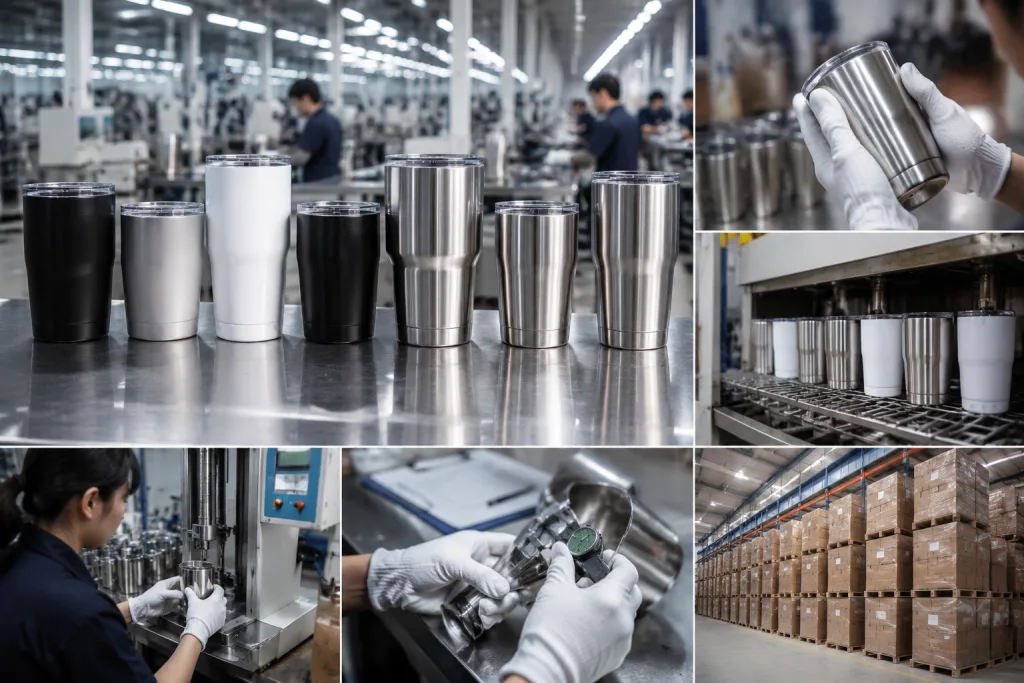
Do not mix up a factory’s internal QC sheet with third-party compliance. You need both. A solid canteen manufacturers file should show raw material traceability, coating data, carton drop tests, and an inspection record matched to the purchase order. We had one buyer flag a PO typo on the carton count, and the docs stopped the line until we fixed it. For Amazon or retail programs, you may also need barcode and carton labeling support, including FNSKU placement if you are sending goods into fulfillment.
AQL is a commercial tool, not a slogan. For basic shipments, AQL 2.5 on major defects and 4.0 on minor defects is common. For higher-end custom canteen and customizable growler launches, some buyers tighten appearance checks to 1.5 or lower. That makes sense when the product sits on a shelf with the logo front and center. On one run, QC pulled the sample with a 0.3 mm lid gap, and the buyer said no; the math did not work for retail.
China has factories that know export paperwork, but plenty of them still only know how to talk about it. Zhejiang has a deep supply chain for stainless steel tumbler programs, which helps, but you still need the factory to issue documents, not just send screenshots. Ask for these items before PO:
- Material certificate and food-contact declaration
- Third-party test report for the target market
- Carton and drop-test confirmation
- Artwork approval and final sample sign-off
Price the Whole Program
I’ll rewrite this section in a tighter buyer-supplier voice and keep the HTML exactly as-is. Next I’m checking the wording for the sales-engineer tone and the requested concrete cost detail.The unit price is only one line in the real cost. Price the cup, lid, decoration, packaging, inland trucking, export handling, and testing across the whole order. A 500 ml insulated tumbler may quote at USD 3.20 FOB for a blank, but once we add powder coating, logo printing, colored lid parts, and gift box packaging, the landed commercial price can land at USD 5.50 to USD 6.80. That is standard.
For canteen customized and canteen customizable projects, packaging is where the cost hides. A plain bulk carton is cheap, but a retail box with insert, barcode, and barcode verification can add 0.25-0.80 USD per unit. We ship these programs for chain buyers, and they do not accept a loose pack spec. On the line, a 2 mm carton upgrade can swing the math fast.
Ask for tooling cost when you change a lid, add a handle, or push a special shape. A custom canteen or custom growler with new mold parts can take a few hundred to a few thousand dollars in tooling, depending on the part count. Make sure you know whether that fee is one-time, refundable, or tied to volume. We saw a PO last month miss the mold charge by one line, and QC pulled the sample before release. A cheap quote with an unclear tool charge is not cheap.
When comparing canteen suppliers, compare on the same basis:
- FOB or EXW, not mixed terms
- Same decoration method
- Same packaging spec
- Same testing and inspection standard
That sounds basic, but this is where buyers get burned. The lowest quote is often missing the priciest line item, and the math does not work.
Send your tumbler spec for a fast quote
Share capacity, lid style, decoration, and target market. We’ll quote the right build, not a random catalog model.
Frequently asked questions
What is a normal MOQ for a supplier stainless steel tumbler?
For a standard stainless steel tumbler with existing tooling, a realistic MOQ is 1,000 to 3,000 pcs. If you want a new lid, new shape, or a fully customized drinkware program, expect 5,000 pcs or more. A canteen factory in Zhejiang with good process control may support lower trial runs, but you should treat anything under 500 pcs as stock goods, not a true custom order.
How much should I expect to pay FOB China?
For a 500 ml insulated tumbler, FOB China pricing often starts around USD 3.20 to 4.20 for a simple blank or one-color logo. With powder coating, laser engraving, gift packaging, and better lid hardware, the price usually lands between USD 4.80 and 6.80. A custom canteen or custom growler with special parts can go higher. Always compare FOB to FOB, not FOB to EXW.
What tests should I ask for before ordering?
At minimum, ask for material confirmation, food-contact compliance, vacuum leak testing, and a carton drop test. For EU-bound orders, request REACH and LFGB-related support. For US-bound orders, ask for FDA food-contact declarations and, if needed, third-party lab reports. AQL inspection records matter too, especially if you are buying from a canteen supplier for retail or distributor drinkware channels.
Is 304 stainless steel enough for most tumbler programs?
Yes, in most cases 304 is the correct choice for a supplier stainless steel tumbler. It gives good corrosion resistance, broad compliance coverage, and solid cost control. If you are selling a premium line or a product exposed to harsher conditions, you can discuss 316 components, but that is usually unnecessary for standard canteen promotional, customized canteen, or retail tumbler orders.
How do I know if I’m dealing with a real factory?
Ask for factory photos, production line details, monthly capacity, and sample lead time. A real canteen manufacturer should be able to explain welding, coating, packing, and inspection steps in detail. If they say they produce 600,000 units per month in Zhejiang, they should also be able to back that up with a clear process and export documents. Trading companies often stay vague on tooling, AQL, and test reports.