Key Takeaways
- MOQ for a standard supplier reusable water bottle usually starts at 3,000 pcs, while one-off custom colors often need 5,000 pcs
- Typical FOB China pricing runs from USD 1.25 for simple plastic to USD 4.80 for 18/8 stainless with powder coat
- A normal production lead time is 25-35 days after sample approval; decorated or gift-boxed runs can add 7-12 days
- For Europe and North America, ask for REACH, LFGB where relevant, FDA food contact, and AQL 2.5 inspection plans
If you are sourcing a supplier reusable water bottle, finding a factory in China is the easy part. The hard part is matching the build to your channel, target cost, and the amount of risk you can carry. A 500 ml stainless bottle for a corporate gift run is not the same job as a 1 L canteen for retail in Europe or North America.
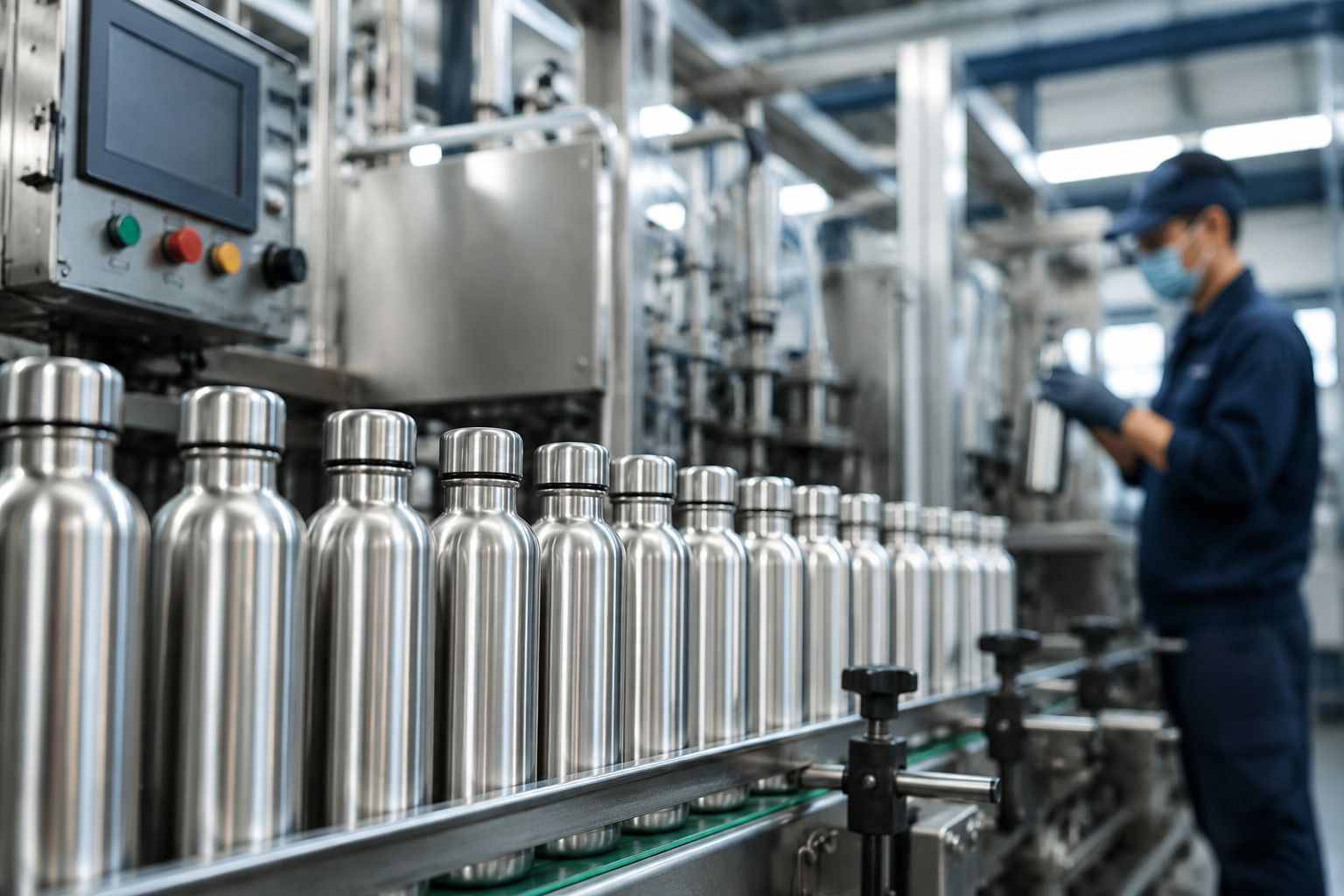
The error we see most often is buyers starting with print before specs. Lock the use case first, then the material, then the compliance route, then the artwork. At our Zhejiang factory, we run 600,000 units a month across bottles, tumblers, and canteens, and QC pulled a 12-piece sample last week because a lid torque spec missed 0.3 N·m. That is where orders slip, not in the logo file.
Start With the Use Case
I’ll rewrite just the prose inside the existing HTML, keep the tags intact, and tune the tone to sound like a buyer-facing sales engineer.Before you compare a supplier reusable water bottle on price, lock down how it will be used on the floor. A commuter bottle, a trade-show handout, a gym bottle, and a retail SKU all get treated differently in packing and QC. For a cheap giveaway, a 500 ml PP or AS bottle is enough. For a custom drinkware program that needs a stronger retail feel, stainless steel is the safer call because it feels heavier, prints cleaner, and ships with fewer dents.
We start with four checks: capacity, closure, temperature performance, and sales channel. A 650 ml bottle for a distributor drinkware program cartons easier than a 1.2 L growler-style shape, and the math does not lie. A screw cap is safer for mass promotion than a sports lid with extra parts. For an outdoor retail canteen distributor order, wall thickness matters; 0.5 mm stainless is thin, 0.7 mm gives us more margin, and 0.8 mm starts to feel premium. Don’t let decoration drive the shape. We’ve seen a canteen custom project look great in proof, then fail the carton test because the neck sat too tall and the lid caught the insert.
Pick the use case first, because the right bottle for promotion is rarely the right bottle for retail.
Choose the Material Honestly
I’ll keep the tags and structure intact, then rewrite the prose to sound like a buyer-side sales engineer with specific factory detail and cleaner pricing logic.Material is where a lot of buyers overspend or end up under-spec’d. If you want low cost and high volume, PET or PP works for canteen promo runs, but that is not what most North American brand owners mean by “premium.” For a supplier reusable water bottle, 18/8 stainless steel is the safe default. It holds up on odor, takes laser engraving cleanly, and gives you a better margin story. Single-wall stainless is lighter and cheaper. Double-wall vacuum insulation costs more, and the retail price has to carry that.
Glass looks clean on the shelf, but it breaks easier in transit, so we use it for controlled channels, not mass distributor growler orders. Tritan fits clear canteen customizable projects when the buyer wants a premium plastic look without glass breakage, but QC still checks impact resistance and dishwasher requirements on the line. Material choice changes the unit cost and the freight bill. On a 24 oz double-wall bottle, we usually see 80-120 g more per unit than a single-wall version, and that is where the pallet math starts to bite when you are near the weight limit. We’ve seen buyers push back on that after the booking is already in, and the math does not work.
- Stainless steel: strongest commercial all-rounder, usually USD 2.20-4.80 FOB depending on finish and lid
- PP/PET: cheapest, fast turnaround, good for large canteen suppliers promotions
- Tritan: clear, durable, better for customizable drinkware with a modern look
- Glass: premium feel, but higher breakage and packaging cost
Decide the Decoration Method
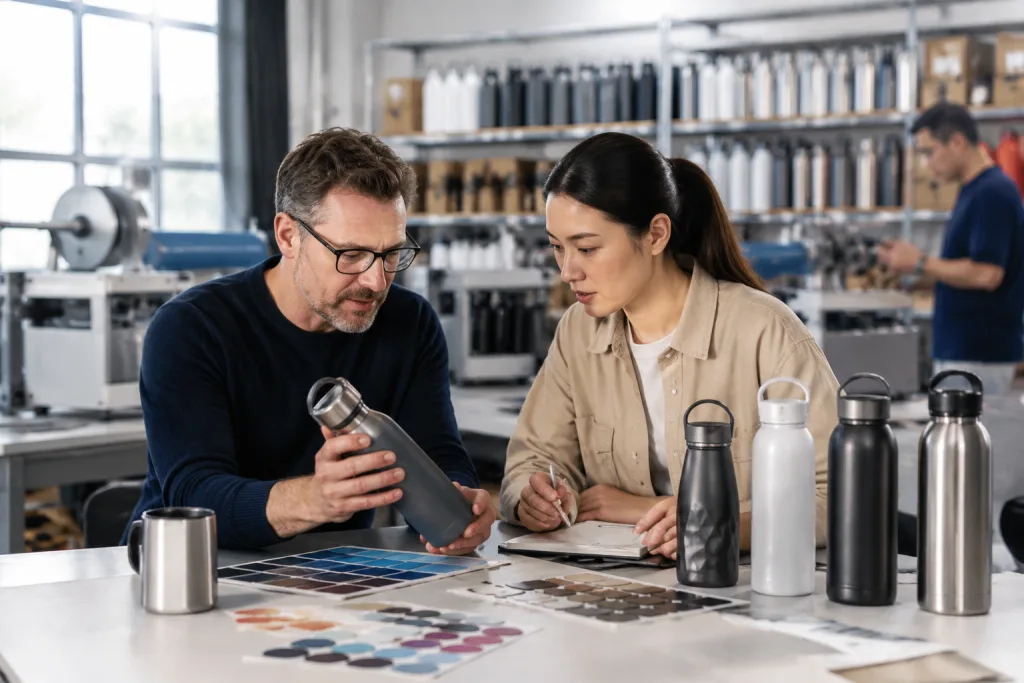
I’ll rewrite the section in-place, keeping the HTML tags and list structure intact, and tighten the sales-engineer tone with more concrete production detail.Decoration decides the economics of a custom canteen order. Screen print is still the lowest-cost option for a one-color logo on a flat panel, especially on canteen customized promotional runs. Laser engraving looks cleaner on stainless and does not rub off, so it is the better call when the buyer wants the bottle to stay in service for years. Heat transfer and full-wrap printing give wider color coverage, but they add setup time and raise the unit cost.
For a canteen manufacturer shipping into Europe and North America, we match the logo method to the sales channel. If the order is for a corporate buyer, one-color silk screen at USD 0.08-0.18 per position usually works. If you are a canteen vendor selling retail, laser engraving or a wrapped print can support a higher shelf price. Ask the factory to run an abrasion check, a dishwasher cycle test, and a condensation wipe test. We’ve seen a logo pass on day one and fail after 30 washes; that is not customized drinkware, it is a complaint. If the art has fine lines, confirm the minimum stroke width with the factory, because 0.2 mm on screen print is often too thin for stable mass production.
What to specify
- Decoration area in mm, not “large logo”
- One PMS color or CMYK file, not a screenshot
- Durability target: 20, 50, or 100 wash cycles
- Position tolerance, especially near seams and handles
Check Compliance Early
I’ll rewrite the prose in place, keep the HTML exactly as-is, and tune it to sound like a real factory sales engineer.Compliance looks boring right up until customs holds the carton for 21 days. If you are importing a supplier reusable water bottle into the US or EU, ask for the test scope before sample approval. For food-contact parts, we usually see FDA food-contact declarations, REACH screening for SVHC, and LFGB when the buyer or retailer asks for it. For coated stainless steel or powder coat finishes, check heavy metals and coating adhesion. If the bottle has a straw, lid gasket, or spout, those parts need the same check as the body.
Do not assume every canteen factory in China tests the same way. We have seen one plant hand over only raw-material reports, then the buyer flagged the missing finished-product test at booking; the math does not work when that shows up late. Other factories can ship third-party lab reports for the finished item. Get carton markings, country of origin, and barcode placement lined up with the destination market. If you sell through Amazon, put FNSKU placement and master-carton labeling in the spec sheet. A good Zhejiang supplier will give you an inspection plan with AQL 2.5 for critical defects, 4.0 for minor defects, and photo evidence before shipment. QC pulled the sample; that is the level you want for a serious distributor drinkware account.
Compliance is cheaper when you write it into the PO than when you fix it at customs.
Price the Order Correctly
I’ll rewrite the prose in place, keep the HTML structure unchanged, and make the pricing copy sound like a factory-side sales engineer wrote it.Buyers who look at unit price only end up with the wrong number. A supplier reusable water bottle at USD 2.10 FOB can beat a USD 1.85 bottle once you add breakage, decoration, carton upgrade, and freight weight. On our Zhejiang line, a clean stainless order with basic printing usually lands around USD 2.20-3.60 FOB for 3,000-10,000 pcs. Vacuum insulated bottles sit closer to USD 3.80-4.80 FOB, depending on finish, lid, and pack-out.
Ask for a full cost split: body, lid, print, packaging, and carton. We ship for canteen distributors all the time, and one price point never fits every channel. If you want a custom growler, handle geometry, cap torque, and bottle neck diameter all move tooling cost. New molds run USD 1,500-6,000, and tooling usually takes 18-25 days before sample approval. The buyer flagged a color shift once; QC pulled the sample, and the math stopped working at 20,000 units because the factory could not hold the same tone.
- Low-cost plastic program: USD 0.65-1.25 FOB
- Standard stainless non-insulated: USD 1.90-3.20 FOB
- Vacuum insulated retail bottle: USD 3.80-4.80 FOB
- New tooling: USD 1,500-6,000 one time
Choose the Right Factory Setup
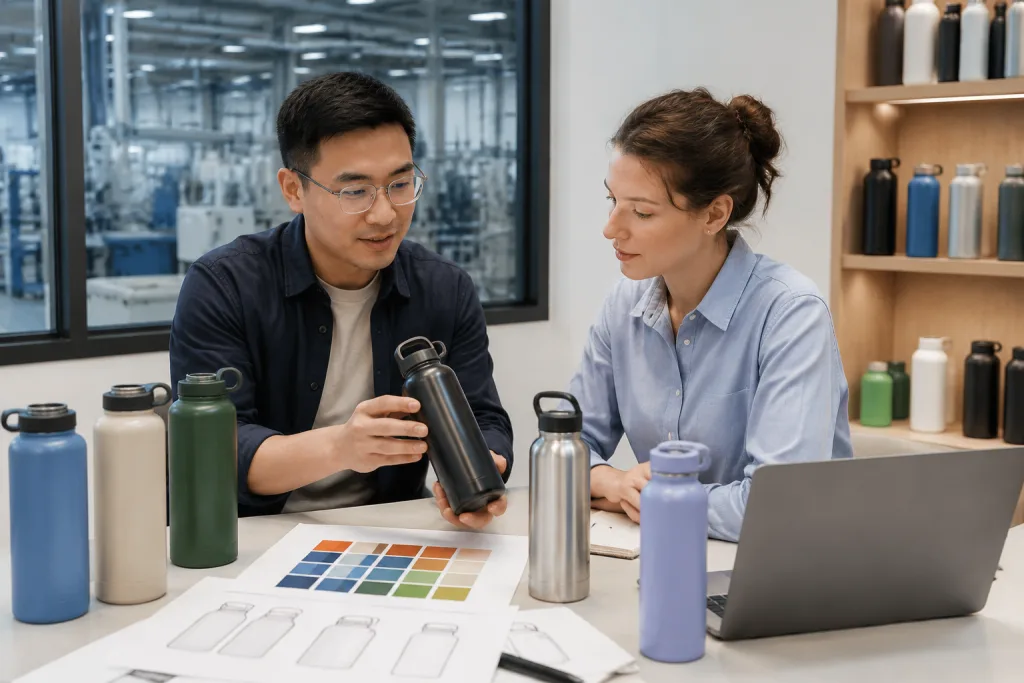
I’ll rewrite the section in place, keep the HTML untouched, and tune the prose to sound like a factory-side sales engineer. Then I’ll do a quick pass to make sure I’ve stripped the AI-ish phrasing and kept the numbers and structure intact.Not every canteen factory is built for the same job. A 20-line plant can be great at repeat promo runs and still stumble when the buyer asks for custom cartons, swing tags, and mixed SKUs. A smaller canteen supplier may care more about artwork, then miss the ship date when the order hits 50,000 pcs. You want the line that fits your order pattern, not the one with the loudest homepage.
At BottleForge in Zhejiang, we run OEM and ODM programs with a 3,000 pcs MOQ for standard models, 25-35 day lead time after sample approval, and monthly output around 600,000 units. That matters when you are a canteen distributor covering six SKUs at once. Ask if the factory has in-house forming, welding, polishing, coating, and packing. If half the steps go out to subcontractors, delays show up fast. QC pulled a sample on one export run and found a 1.5 mm lid gap; the buyer flagged it before packing, which saved a claim. Ask for the sampling timeline in writing too. A plant that promises “7 days” but needs 3 rounds of revisions is not fast; the math does not work.
For North America and Europe, the better suppliers are the ones that can show stable processes, clear QC, and export discipline. That beats a glossy catalog every time. In China, especially Zhejiang, the factories that ship well watch carton counts, pallet heights, and PO typos because one wrong digit on a carton mark can turn into a customs headache at destination.
Build a Better RFQ
I’ll rewrite the prose in place, keep the HTML exactly as-is, and make it sound like a factory-side sales engineer wrote it. Next I’m drafting tighter RFQ language with a few concrete shop-floor details and fewer generic phrases.A solid RFQ saves hours on both sides. If you want a real quotation for custom drinkware, send a spec sheet with capacity, material, wall thickness, lid type, print method, packing format, destination market, target MOQ, and compliance needs. Last week we quoted a 500 ml bottle where the buyer forgot the lid spec; QC had to stop the sample run and ask for a second PO. If your plan covers canteen promotional gifts and retail carryover, say it plainly. The factory needs to know whether it is pricing a one-off campaign or a repeat SKU.
For canteen customizable and customized growler programs, include reference photos, Pantone colors, and the finish you want: matte, glossy, or soft-touch. If you want a canteen vendor to quote three options, ask for economy, standard, and premium. That beats a messy sheet with ten random line items. A good RFQ also spells out what gets rejected: weak lid seal, visible weld seam, logo off-center, or color deviation over Delta E 2.0. We’ve seen buyers argue over price, then reject samples for the seam at the base; the math doesn’t work. Clear limits get cleaner pricing and fewer surprises.
If you want a custom canteen or customizable growler range, the factory answers faster when your RFQ reads like a production brief, not a casual inquiry. That is how you get samples we can actually run on the line, not just pretty emails.
Send your bottle spec, get a real quote
We’ll price your custom drinkware with MOQ, lead time, compliance, and packaging spelled out, so you can compare China offers without guessing.
Frequently asked questions
What MOQ should I expect for a supplier reusable water bottle?
For standard OEM bottles, a realistic MOQ is 3,000 pcs per design and color. If you need custom colors, special lids, or a new mold, 5,000 pcs is more common. Some China factories can do 1,000 pcs for stock items, but the unit price jumps quickly. For canteen custom or canteen customized orders, ask whether the MOQ applies per logo or per carton pack. If you are a distributor canteen buyer, confirm if mixed-model container loading is allowed or if each SKU needs a full run.
How much does a custom stainless bottle cost FOB China?
A basic single-wall stainless supplier reusable water bottle usually lands around USD 1.90-3.20 FOB China at 3,000 pcs. Vacuum insulated bottles are more often USD 3.80-4.80 FOB, depending on finish, lid, and print method. Add USD 0.08-0.18 for one-color silk screen, or more for wrap graphics. If you need gift boxes, add USD 0.12-0.40 per unit. Zhejiang factories often quote faster when you send full specs, because they can price body, lid, and packaging separately.
What compliance documents should I ask for?
For Europe and North America, ask for food-contact declarations, REACH screening, and FDA-related material declarations where applicable. If the bottle uses stainless steel, request material grade proof for 18/8 or 304, plus coating and gasket reports if relevant. For retail or Amazon supply, confirm carton labels, country of origin, and barcode readiness. A serious canteen manufacturer should also give you an AQL inspection plan, usually AQL 2.5 for critical defects and 4.0 for minor defects, before mass production starts.
Should I choose screen print or laser engraving?
If you want the lowest decoration cost, screen print is usually the answer, especially for canteen promotional runs and simple one-color logos. If you need a premium finish or stronger wear resistance, laser engraving is better on stainless. Screen print can cost USD 0.08-0.18 per position, while laser is often higher but more durable. For canteen promotional, custom growler, or custom canteen programs, choose the method that matches the customer’s expected use, not just the cheapest quote.
How long does production take in China?
For a standard supplier reusable water bottle, plan on 25-35 days after sample approval. New tooling can add 18-25 days before samples, and complex packaging may add another 7-12 days. If your order needs special colors, mixed packaging, or multi-step decoration, the schedule can stretch. A Zhejiang canteen supplier with in-house coating, printing, and packing will usually move faster than a factory that outsources those steps. Always confirm the calendar in writing before you approve the PO.