Key Takeaways
- MOQ for a typical supplier refillable water bottle order starts at 3,000 units, with 35-45 days lead time after sample approval
- AQL 2.5 for critical defects and 4.0 for major defects is a practical QC baseline for mass production
- FOB pricing for a basic stainless custom drinkware order often sits around USD 2.10-4.80 per unit depending on capacity and finish
- Ask for REACH, food-contact compliance, torque testing, and carton drop test data before you release production
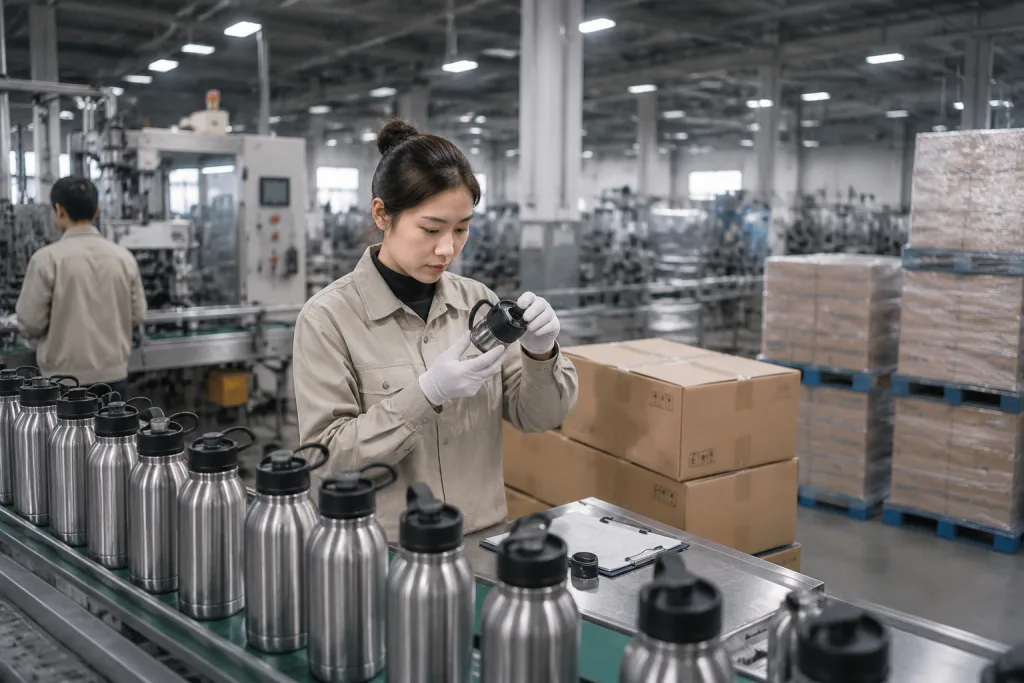
You are not buying a bottle. You are buying a repeatable supply line with artwork, lids, cartons, compliance, and a ship date that has to stick. That is why a supplier refillable water bottle order goes sideways fast when the first sample looks fine but the mass run misses the print, leaks at the cap, or lands with crushed outer cartons. In Zhejiang and across China, the factories that do this well run it like a process: tooling, traceability, AQL 2.5, and packing efficiency, not just unit price. We’ve seen a 0.3 mm logo shift turn into a buyer complaint on the line.
If you are a procurement manager, brand owner, or distributor, the job is to write the spec so the canteen custom design survives production. A good canteen manufacturer should lock the material, cap torque, logo method, and test standard before you send PO. Skip those points and the math does not work; you end up with customizable drinkware on paper and a headache in the warehouse. A clean order starts at MOQ 3,000 units and a 35- to 45-day lead time, with QC pulling the sample before the line runs full speed.
Start with the order, not the bottle
I’ll rewrite the prose in-place, keep the HTML structure intact, and tighten the sales-engineer tone with concrete factory details.The cleanest way to buy a supplier refillable water bottle is to think like a distributor canteen buyer, not a shopper. Start with the reorder you want to repeat: 3,000 pieces, 60-day refill cycle, ship-to market, and the failure cost if a cap leaks on shelf. If you are launching custom canteen programs for gyms, universities, or outdoor retail, write down the real use case. Cold promo bottle? Hot-and-cold reusable bottle? Outdoor carry piece for hikes and campus stores? Those calls decide whether we run 304 stainless, Tritan, or aluminum, and whether the lid is flip-top, screw cap, or straw.
In our Hangzhou workflow, we ask for a one-page spec before quoting. Put capacity, target retail price, decoration method, and packing requirement on that sheet; otherwise the math does not work. QC pulled a sample with a 2 mm lid gap last week, and the buyer flagged it before we shipped. A canteen supplier should not guess your margin model. A bottle sold into Europe may need different label copy and compliance documents than a canteen promotional order bound for a North American chain. If you are sourcing from Zhejiang or elsewhere in China, you get cleaner numbers when you define the order like a project, not a mood board.
- Capacity: 500 ml, 750 ml, 1000 ml, or 1.2 L
- Material: 304 stainless, 316 stainless, Tritan, or aluminum
- Finish: powder coat, matte spray, polished steel, or silicone sleeve
- Logo: silkscreen, laser engraving, heat transfer, or wrap print
Choose the right bottle format
I’ll rewrite the section in place, keep the HTML tags and heading structure unchanged, and tune the prose to sound like a real factory-side sales note with concrete details.Most buyers say “bottle,” but we read it as SKU, wall thickness, and cap stack. A custom canteen for sports retail is a different job from a customizable growler for hospitality or a customized drinkware program for employee gifting. If the order is for a canteen distributor, we look first at drop resistance and carton loading. If it is for a brand launch, shelf hit matters more. A canteen factory will usually point you to stainless steel when the product needs insulation, odor resistance, and a premium hand feel. Tritan fits when you need clear body walls and low weight. Aluminum works for a cheap promo run, but it dents fast and thread fit is less forgiving; we have seen a 0.3 mm cap mismatch turn into a leak claim.
For refillable water bottle programs, the closure is where the math goes sideways. Save USD 0.12 on the lid and you can eat 3% of the order in complaints. QC pulled a sample last month and the hinge failed at 2,400 cycles, well under the 5,000 open-close target we ask for mainstream reusable bottles. Check the gasket spec too; silicone must be food-contact grade, not the soft unknown compound some buyers accept on paper. If you are building a canteen customized line for the European market, ask for migration and compliance paperwork before the PO is confirmed. We ship faster when that file is ready, and the buyer flagged one typo on a carton mark that would have held the booking for 12 days.
Simple decision rule
If the bottle sits on desks and in gyms, choose stainless. If it must stay light and clear, choose Tritan. If it is a low-cost canteen promo item, keep the body simple and spend the money on a better cap and tighter print control; a good 58 mm lid beats a fancy shape with a sloppy seal.
Lock specs before the sample
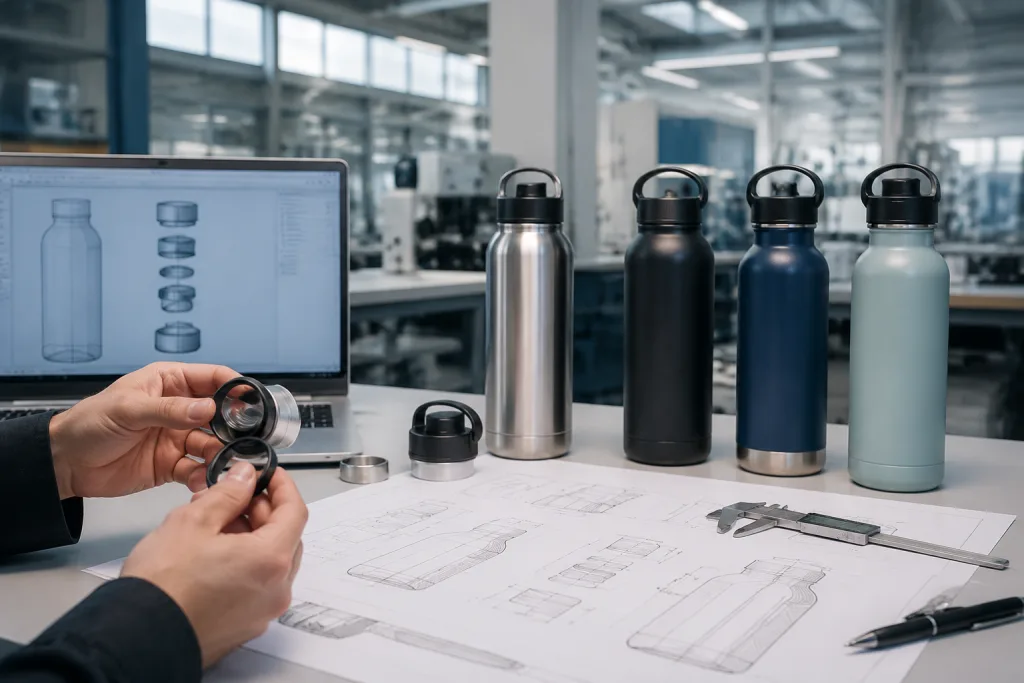
I’ll rewrite the section in place, keeping the HTML exactly as-is and tightening the prose for a more field-tested supplier voice.Sampling is where buyers burn 2 weeks because the brief is loose. A decent canteen manufacturer can turn a prototype in 7 to 10 days, but only when the spec sheet is clean. For a supplier refillable water bottle, lock wall thickness, steel gauge, coating thickness, and logo placement before the line starts. On stainless jobs, we usually see 0.4 mm to 0.6 mm body thickness, depending on the target price. For a premium insulated body, 0.5 mm 304 stainless with a vacuum layer around 0.25 mm is a normal starting point. On Tritan, ask for resin grade and impact target; “BPA free” by itself is not enough, and the buyer will flag it later.
Do not sign off on touch alone. Check fill line accuracy, cap threading, gasket compression, and print registration. QC pulled a sample last month where the lid sat 1.5 mm off-center; that sort of miss turns into a claim if you ship it. We run a simple leak test with 90-degree inversion for 30 minutes at room temperature, then a warm-water check if the bottle is meant for hot drinks. If your program includes canteen custom artwork, approve the flat proof and the wrapped 3D mockup. That keeps logo stretch off curved shoulders. A canteen supplier that ships export work will mark critical dimensions on the sample drawing and carry them into the master file for production.
Practical rule: no PO until the sample matches the approved drawing, not just the photo.
Quote by structure, not by guess
I’ll rewrite the section to sound like a factory-side sales engineer, keep the HTML exactly as-is, and preserve the structure plus all existing numbers/codes.We quote custom drinkware by parts, not by gut feel: body, lid, print, packing, and the freight-ready carton all sit on the sheet. A plain 500 ml stainless supplier refillable water bottle usually lands around USD 2.10-2.90 FOB at 3,000 units with one-color print. Add double-wall insulation, matte powder coating, and laser engraving, and the number moves to USD 3.60-4.80 FOB. If a quote comes in too low, the first thing we check is the box spec—plain white box or full-color retail carton—because that line item changes landed cost fast.
For canteen distributors and distributor drinkware buyers, “What is your price?” is the wrong question to ask. Ask for 3,000, 5,000, and 10,000 units with the same decoration and packing, then compare the breaks. We run this on the line all the time, and the buyer usually flags the missing details after the first revision. A real canteen supplier should give tiered pricing, any tool charge, and a sample fee policy that does not hide the refund trigger behind a PO typo. For custom growler or custom canteen programs, check whether the lid mold is existing or new; new tooling can add USD 800-3,500 and 15-25 days, and the math does not work if someone pretends that cost disappears.
- Ask for FOB port price and carton count per master carton
- Confirm if sample fee is refundable at PO
- Check whether printing includes setup charge
- Request a landed-cost estimate for your market
QC the mass run like a skeptic
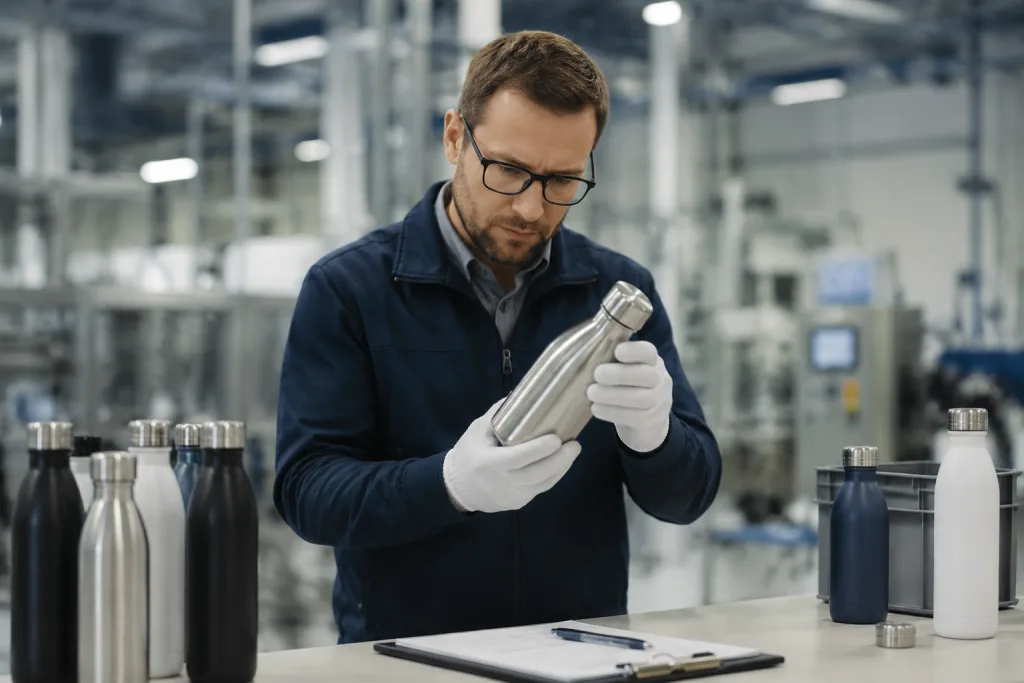
I’ll rewrite the section in-place, keeping the HTML tags and structure unchanged while tightening the sales-engineer voice and adding concrete factory-floor details.The sample is not the shipment. On a real order, the first mass-run risk is consistency. One canteen vendor can hand-finish a perfect sample, then the line falls apart on 8,000 units. We run a QC checklist before first production, not after the buyer flags a mess. For a supplier refillable water bottle, use AQL 2.5 for critical defects such as leaks, sharp edges, and wrong capacity, and AQL 4.0 for major defects like print shift or visible coating blemish. Minor defects can be negotiated by channel, but do not touch criticals. A leaking lid kills sell-through fast.
We insist on three checks: incoming material inspection, in-line inspection, and pre-shipment inspection. On stainless models, QC checks weld seams with a seam gauge, verifies vacuum hold, and tests coat adhesion on a 600-grit rub. For printed canteen customizable orders, we match color against Pantone, because the buyer will say, “this blue is not our blue,” and they will be right. For North America, make sure retail cartons match FNSKU or barcoding rules if your fulfillment team uses them. For Europe, confirm packaging language, recycling marks, and any warning text. A canteen manufacturers network in China can usually do this, but only if you spell it out on the PO. Miss that, and you get default packaging. That is the wrong question to ask.
We also run a drop test on finished master cartons from 76 cm, three faces, before approval. The math does not work the other way. In one shipment, QC pulled the sample after a carton corner split at 74 cm, and we caught it before 5% of units landed damaged in a distributor warehouse.
Plan packing and shipping early
I’ll rewrite the prose to sound like a factory-side sales engineer, keep every tag and number intact, and strip the AI-ish phrasing.Packaging is part of the cost stack, not a side note. We run the line this way every week. If your custom drinkware ships in a plain OPP bag, unit cost stays down, but shelf appeal takes a hit. If you need retail readiness, a printed box and barcode label can add USD 0.18-0.45 per unit; that spend often beats warehouse repacking later. On one canteen promo job, the buyer pushed for fancy display packaging, then the end customer binned it on arrival. That was the wrong question. Put that money into print durability or a stronger cap, and QC will thank you.
For export, lock in FOB Ningbo, FOB Shanghai, or EXW before you start chasing quotes. If you are consolidating other goods in China, EXW can fit better, but most canteen supplier programs compare cleaner on FOB across Zhejiang and nearby factories. Before you book space, confirm container readiness, pallet pattern, and carton dimensions. A 20GP can usually take around 20,000 to 25,000 medium-size bottles, but only the final carton size tells the truth. We had one PO with a carton typo by 10 mm, and the stack count changed on the floor. Check mixed-SKU carton labels too, because distributor canteen programs often need variants packed together, not split by one SKU per pallet.
If you are building a longer-term custom canteen line, ask for monthly capacity up front. At BottleForge, a normal run can reach 300,000 units per month across standard drinkware lines, and that matters when a retailer pulls a reorder forward by 2 weeks. A factory that knows its numbers will tell you straight whether your 15,000-unit reorder fits this cycle or needs the next slot. We ship based on that reality, not wishful thinking.
What a clean reorder looks like
I’ll rewrite the section in place, keep the HTML exactly as-is, and tune the prose to sound like a buyer-side factory note with concrete reorder details.The best buyer result is not a flawless first PO. It is a second order that moves with fewer emails. After the first shipment clears, we keep the approved sample, artwork file, carton spec, and inspection report as the master record. Then the next supplier refillable water bottle order runs as a controlled repeat, not a fresh negotiation. That is how a canteen distributor protects margin: fewer surprises, less rework, better forecast accuracy. Keep the same supplier unless the factory misses critical targets three times in a row. Switching canteen suppliers every season looks cheaper on paper and usually adds hidden risk. We’ve seen that go sideways after one typo on a carton mark.
For custom growler, customized canteen, or customizable drinkware programs, the reorder file should carry the exact mold number, cap code, print screen count, and packing method. Ask the canteen manufacturer to confirm no spec drift before production starts. QC pulled the sample on the line once and found a 2 mm logo shift that would have triggered a warehouse complaint; the buyer flagged it before we shipped. A 0.1 mm cap-fit change sounds small, but the math doesn’t work when pallets land at three DCs. Buyers who keep the file live usually get cleaner service from China suppliers, especially in Zhejiang, where export factories run repeat business off clean paperwork.
That is the win: one approved system you can buy again at the same quality, instead of starting a new project every quarter.
Send your specs for a clean factory quote
We can quote your canteen custom program with MOQ, FOB price, lead time, and QC plan in one reply from Zhejiang.
Frequently asked questions
What MOQ should I expect for a supplier refillable water bottle order?
For a standard export run, MOQ is usually 3,000 units per color or per design. Some canteen suppliers will accept 1,000-2,000 units, but pricing rises by 10% to 25% and decoration choices narrow. If you need multiple colors, ask whether the MOQ is per colorway or total order. For stainless insulated bottles, factories in Zhejiang often prefer 3,000-5,000 units because setup and packing changes are easier to absorb at that level.
How long does production take after sample approval?
A normal lead time is 35-45 days after sample approval and deposit, assuming no new mold or special carton delay. If you need a new lid mold, add 15-25 days. If your order includes canteen customized printing with multiple colors or retail packaging, expect the schedule to stretch by 5-7 days. Good China factories will give you a line-by-line timeline, not just one vague delivery date.
What documents should I ask a canteen manufacturer for?
Ask for food-contact compliance, REACH if you ship to Europe, and any market-specific test reports relevant to your material. For stainless, request material certificate and, if needed, migration test data. For supplier refillable water bottle shipments, also confirm packing list, commercial invoice, and carton marks. If you sell on Amazon, ask for FNSKU labeling support and carton dimensions early, because those details affect both inbound receiving and fulfillment fees.
How do I avoid leaks and lid complaints?
Specify gasket material, thread tolerance, and torque testing before production. Then require 100% leak check for critical orders or at minimum a defined sampling plan under AQL. A good baseline is inversion testing for 30 minutes at room temperature, plus a hot-water test if the bottle is designed for heat. Most leak problems come from lid fit, not the bottle body, so do not save money on the closure.
Can I mix canteen custom styles in one order?
Yes, but only if you control the file properly. Factories usually allow mixed colors or mixed lid types once the main body mold is the same, but each variant may need its own MOQ or a higher total order. For example, 3,000 units total with three colors may be possible, but a canteen supplier may ask for 1,000 units per color. If you add different prints, pack styles, or box art, build that into the schedule and price from day one.