Key Takeaways
- A real supplier protein shaker quote should show MOQ, FOB China price, lead time, and sample cost in writing.
- For most projects, MOQ starts at 3,000 to 5,000 pcs and mass lead time is 25 to 35 days after sample approval.
- Specify material, wall thickness, closure type, logo method, and packaging before sample sign-off, not after.
- Use AQL 2.5 for critical defects and 4.0 for minor defects if you want a realistic production QC standard.
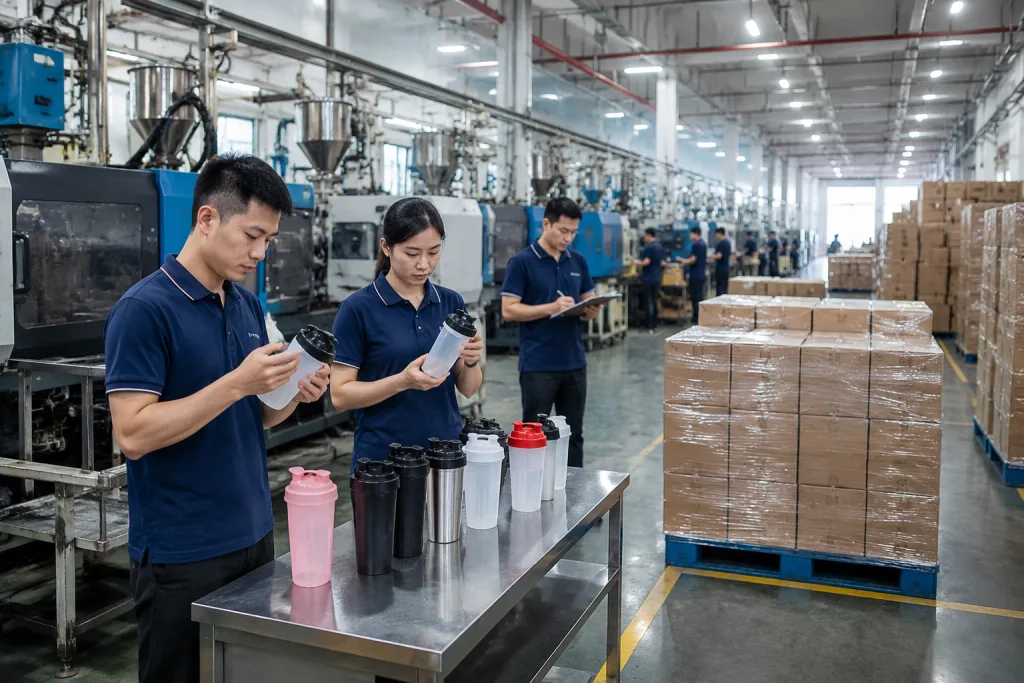
If you are sourcing a supplier protein shaker for retail, gyms, or a promo run, the factory is not the hard part. Getting the spec right before you pay for tooling, samples, and freight is where deals go wrong. In Zhejiang and across China, we run into buyers who get a fast quote, then find the cap leaks, the logo rubs off after 50 cycles, or the MOQ does not fit a 5,000-piece launch.
The smarter way to buy custom drinkware is to treat it like a sourcing job, not a product hunt. Start with the RFQ, push for a sample that matches the final BOM, then lock the bulk PO with clear line items, AQL 2.5, and packaging rules. We saw one buyer miss a cap color code by one digit on the PO and the line ran 8,000 wrong lids before QC pulled the sample. That is the kind of mistake that burns time, especially when you are also mixing in a custom canteen, customized drinkware, or a canteen distributor program in the same container.
Start with the RFQ, not the product
I’ll rewrite the section in place, keep the HTML structure intact, and make the copy sound like a factory-side sales engineer wrote it.Your first mistake is asking for a price before you define the job. A supplier protein shaker RFQ should be a one-page sheet with capacity, material, logo method, target market, and shipping term. If you leave it vague, we quote the base model that is easy to price, not the shaker you actually need. That is how a canteen maker turns your order into a generic bottle quote.
Write the RFQ like this: 600 ml protein shaker, PP cup body, PE or Tritan lid option, screw-on flip cap, mesh mixer, one-color silkscreen logo, 5,000 pcs MOQ, FOB Ningbo or FOB Shanghai, target delivery in 35 days. Add whether you need custom drinkware for retail, canteen promotional use, or distributor drinkware for multi-channel resale. If you also want a custom canteen or customizable growler later, say it now; the same Zhejiang factory can often bundle tooling and packaging across product lines, and the math changes fast.
A proper RFQ should also ask for these line items:
- Unit price at 3,000 / 5,000 / 10,000 pcs
- Sample fee and refund policy
- Tooling charge, if any
- Carton spec, 24 pcs or 48 pcs per master carton
- Production lead time and sample lead time
If the supplier cannot answer these without “we will check later,” keep moving. We’ve seen that go sideways on the line more than once, usually after QC pulled the sample and found the lid tolerance was off by 0.8 mm. Good canteen suppliers and canteen vendors in China know their numbers on day one.
Check the factory before sample work
I’ll rewrite the section in-place, keeping the HTML tags and the existing technical numbers/certifications intact while tightening the sales-engineer tone.Do not pay for a sample until you know whether the plant is a real canteen factory or just a trading desk. Ask for the factory address, machine list, monthly output, and export record. A proper Zhejiang plant should quote units per month, not “large capacity.” On our line, a protein shaker run of 120,000 to 200,000 pcs per month is normal, and the number shifts with decoration and packaging.
For B2B buyers, this is where the deal gets real. A canteen manufacturer that runs injection molding, printing, and assembly under one roof keeps a tighter hand on quality than a middleman. Ask for BSCI, ISO 9001, and REACH paperwork if you sell into Europe. For North America, ask for FDA food-contact declarations and ASTM-related test reports where they apply. If the factory cannot show a recent inspection report, the price is just a placeholder.
Use the same logic if you are buying other formats: customized canteen, canteen customizable, custom growler, or distributor canteen programs. The best canteen distributor relationships come from factories that can trace resin, lids, gaskets, and inks lot by lot. We also give buyers the wall-thickness range up front; on PP bodies, it is often around 1.8 mm to 2.5 mm depending on the mold and wall design. This is the right question to ask, not “can you do a lower quote?”
Cheap quotes usually hide weak QC. We have seen one lost carton wipe out the savings from a weak supplier, and QC pulled the sample for a reason.
Request samples that match the final BOM
I’ll rewrite the section in-place, keep the HTML structure intact, and tighten the wording so it sounds like a factory-side sales engineer wrote it.A sample is not a souvenir. It is your reference standard. When you order a supplier protein shaker sample, ask for the exact cup material, exact lid, exact gasket, and exact logo method you plan to buy in bulk. If the sample is hand-finished but the line runs machine-finished, you are testing the wrong thing. We’ve seen that go sideways on a 500 pcs order, especially when print registration is tight and the cap sits 0.8 mm off.
Ask for two sample types: a plain engineering sample and a decorated pre-production sample. The plain sample checks fit, seal, and daily use. The decorated sample checks logo position, color match, and rub resistance. For silkscreen, we usually set one or two colors and a cure that holds through 50 to 100 dishwasher cycles, depending on the ink system. For laser engraving on stainless items, QC pulled the sample and checked depth, then looked for burn halo under 3x magnification. If you are cross-selling canteen promotional items, keep the same standard across every SKU. The buyer flagged it once when one lid was matte and the other was gloss.
Include these PO line items even at sample stage:
- Sample quantity, usually 2 to 5 pcs
- Sample freight, paid by buyer or deducted from first order
- Revision fee if mold or artwork changes
- Approval deadline and sign-off owner
For a canteen supplier or canteen vendors network, sample discipline is what keeps repeat orders clean. Without it, the math does not work.
Lock the specs before bulk PO
I’ll rewrite the section in a sharper factory-sales voice, keep the HTML tags intact, and preserve the topic-specific numbers and structure.Once the sample passes, lock the spec sheet. A bulk PO should never stop at “same as sample.” That line starts fights later, usually over carton size, print position, or lid color. Put every item that changes function, cost, or compliance into the PO. This is where we protect the job and the margin.
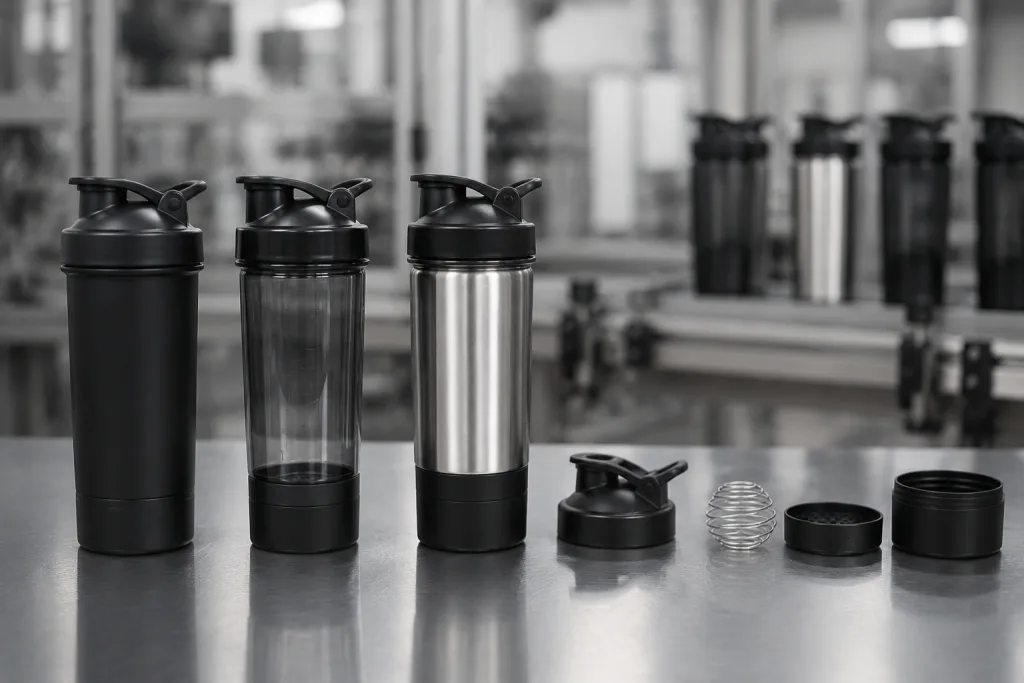
For a protein shaker, the PO should state capacity, body material, lid material, gasket material, color code, logo method, print area, packing method, and carton master count. If the cup is PP, say whether it is food-grade PP and whether wall thickness is fixed at 2.0 mm ± 0.2 mm. If you want a clearer cup, ask for Tritan or AS. The buyer often likes the look, but the math does not work the same—cost moves up fast. FOB China pricing for a simple custom drinkware shaker often starts around USD 0.85 to USD 1.40 at 5,000 pcs, while a more complex custom canteen or customized growler job can sit much higher depending on material and finish.
Do not skip packaging. If you sell through a canteen distributor or distributor drinkware channel, pack-out changes damage rates and how the warehouse runs the line. State whether you want:
- Individual polybag or paper sleeve
- Printed insert card with barcode or FNSKU
- Master carton drop test requirement
- Palletization rules for sea freight
This is also where a canteen factory should confirm accessories, such as a blender ball, measuring scale, or extra lid insert, so the BOM is complete before production starts. QC pulled the sample last time and found one missing insert bag at 48 pcs, which is a small miss that turns into a PO dispute if the paperwork is loose.
Use QC rules that can survive export
I’ll rewrite the section in-place, keeping the HTML structure and tightening the prose so it sounds like a factory-side sales engineer wrote it.If you buy from China or Zhejiang, QC has to be written down, not guessed. For a supplier protein shaker order, we run AQL 2.5 for major defects and AQL 4.0 for minor defects, with zero tolerance for leaks, broken lids, contamination, or wrong artwork. That is standard export drinkware practice.
Ask the factory for three checks: incoming material, in-process assembly, and pre-shipment inspection. Incoming material should verify resin grade, color masterbatch, and gasket hardness; we check gasket hardness at 65 Shore A, not by feel. In-process inspection should cover lid-to-body fit, thread smoothness, and whether the mixing ball rattles the right way. Final inspection should include leak test, odor test, logo rub test, and carton drop test. If you are buying canteen customized items alongside shakers, use the same QC form so one supplier does not play games with two standards.
For Europe, ask for REACH compliance on inks and plastics. For North America, ask for food-contact declarations and any state-specific requirements your buyer or platform needs. If the factory is also your canteen manufacturer for a custom canteen program, push for one shared defect report format; the line can handle it if it is already running 200,000 units per month. This is the wrong question to ask only after shipment.
Do not release final payment until you have photos of packed cartons, carton labels, and a signed inspection report. We have seen a buyer lose a week because the PO typo said 5000 pcs and the cartons were marked 5,000 sets. That is basic export hygiene, not a bargaining chip.
Plan freight, labels, and first sale
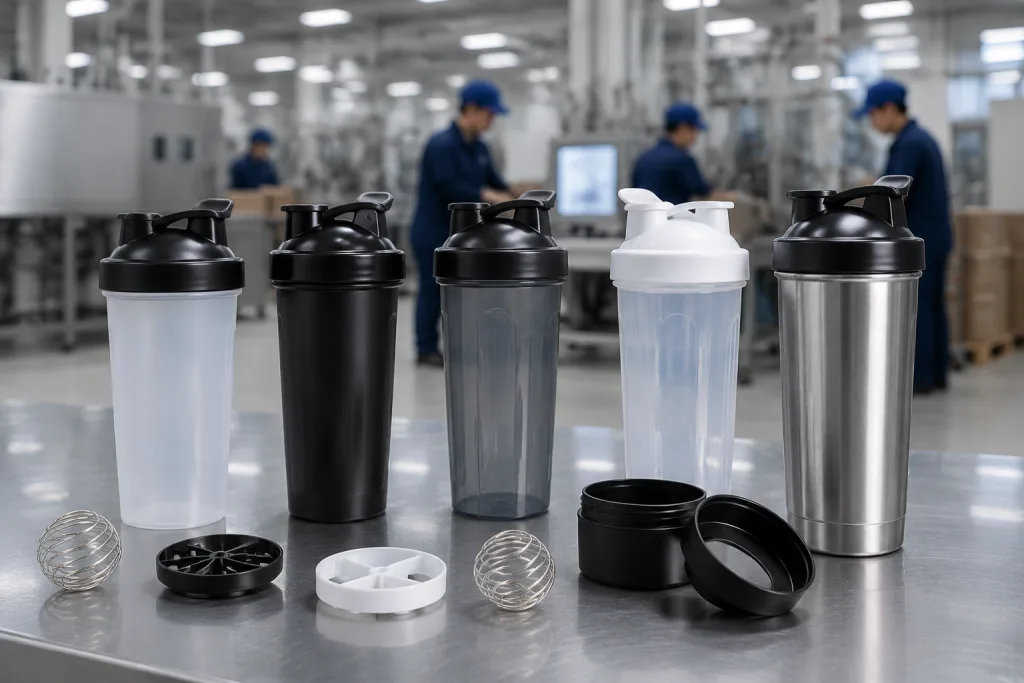
I’ll rewrite the three paragraphs in a more hands-on buyer-supplier voice, keep the HTML exactly as-is, and make sure the prose sounds like someone who ships cartons every week.Plenty of buyers think the job ends once the cartons leave the factory gate. That is where margin starts slipping. Pick FOB, CIF, or DDP before the line starts. FOB China gives you control if your freight forwarder is already in place. If this is your first run, CIF is simpler, but check who pays the destination fee, the THC, and the last-mile drop. For Amazon or retail, tell us up front if you need carton barcodes, FNSKU labels, or master cartons. We once caught a PO typo on a label spec, and QC pulled the sample before packing started.
This matters even more on a multi-SKU order with canteen suppliers, canteen distributors, or a canteen vendor network. A standard 600 ml shaker can ship 80 to 100 pcs per carton, but a custom growler or customizable canteen often needs fewer units because the carton goes over 12 kg and the breakage risk climbs. Ask the factory for carton size in cm and the full CBM. That math decides freight before you sign the PO, and the buyer flagged it only after booking once on a 1.2 CBM carton that should have been split.
If you are building a wider custom drinkware assortment, keep one ordering logic across the board: custom canteen, canteen promotional pieces, customized drinkware, and distributor canteen stock. Same carton rule. Same label rule. That cuts rework on the line and makes replenishment cleaner. We’ve seen this go sideways when one SKU ships in retail cartons and another in bulk; the warehouse team loses half a day on receiving. A buyer who locks carton spec and freight class before production usually clears customs faster and gets the first sale out on time.
Send your RFQ and lock the spec
Get a clean quote, sample, and bulk plan from a Zhejiang supplier that understands export drinkware and real production timelines.
Frequently asked questions
What MOQ should I expect from a supplier protein shaker factory?
For a standard supplier protein shaker, MOQ is usually 3,000 to 5,000 pcs per color or per SKU. If you need special packaging, mixed colors, or a decorated sample matched to bulk, expect the factory to push closer to 5,000 pcs. In Zhejiang, some canteen suppliers can do lower trial runs, but the unit price often rises by 15% to 30%. If you are bundling a custom canteen or customizable drinkware program, the factory may combine tooling across SKUs, which can help. Always ask whether the MOQ applies per artwork, per lid color, or per carton configuration so you do not get surprised later.
How long does a bulk order usually take?
A typical bulk order for a supplier protein shaker takes 25 to 35 days after sample approval and deposit. If the order needs new printing plates, special packaging, or a new mold, add 7 to 15 days. Shipping time is separate: sea freight from China to Europe can take 25 to 40 days, and to North America often 18 to 30 days depending on port and routing. A good Zhejiang factory will tell you the production slot before you pay, not after. For a canteen manufacturer handling multiple lines, you should also confirm whether the same line is running custom growler or canteen customized items at the same time, because that can affect scheduling.
What price range is realistic for custom drinkware shakers?
For a simple custom drinkware shaker made in China, FOB pricing often sits around USD 0.85 to USD 1.40 at 5,000 pcs, depending on material, closure, and logo method. A more premium build with Tritan, extra gasket work, or retail-ready packaging can move to USD 1.50 to USD 2.80. If you add a custom canteen, customized growler, or canteen promotional set into the same order, the factory may offer a better combined rate on decoration and packing, but the product mix still drives the final price. Always ask for tiered pricing at 3,000, 5,000, and 10,000 pcs so you can calculate your landed cost properly.
What compliance documents should I ask for?
For Europe, ask for REACH-related declarations on plastics, inks, and coatings, plus a food-contact compliance statement. For North America, ask for FDA food-contact declarations and any test reports your retailer or marketplace requires. If your canteen distributor channel needs third-party verification, request BSCI or ISO 9001 certificates from the canteen factory, plus recent audit or inspection records. If you buy customized drinkware or a custom canteen line from the same plant, make sure every SKU has its own compliance file. Do not accept a generic PDF with no product name, because that is not useful in customs or buyer review.
How do I reduce risk when buying from a China factory?
Use a two-step approval process: first approve the engineering sample, then approve the decorated pre-production sample. Put the key terms into the PO, including material, wall thickness, logo position, carton count, and AQL. Ask for in-process photos, pre-shipment inspection, and packing photos before balance payment. If you are working with a Zhejiang canteen supplier for multiple products, keep one defect list across all items so standards do not drift between a protein shaker, customized canteen, and custom growler. That is how experienced buyers keep disputes small and repeat orders stable.