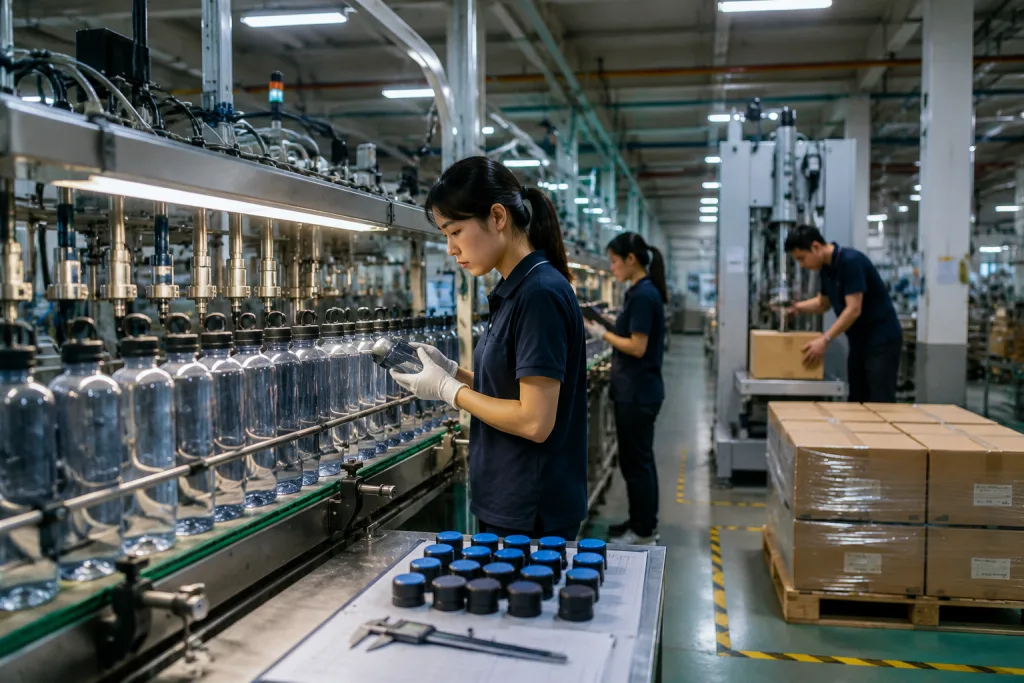
Key Takeaways
- A 0.8-1.2 mm wall spec is safer than a loose “thick bottle” note
- A sample that passes visual QC can still fail leak or drop tests at 1.2 m
- For private label orders, MOQ often starts at 3,000-5,000 pcs and lead time at 25-35 days
- AQL 2.5/4.0 is common, but you should define critical defects separately
Most buyers do not lose money on a supplier plastic water bottle order because the unit price is off by a few cents. The losses show up in the middle: warped bodies, leaking caps, logos that drift 2 mm off center, smell complaints, and cartons that fail after one wet week in transit. If you are buying custom drinkware for retail, promotions, or distribution, the job is not chasing the cheapest quote. It is locking down the failure points before the line starts.
That matters even more when you source from Zhejiang or wider China, where a solid canteen factory can run 300,000 units a month and still miss your program if the spec sheet is loose. We see this go sideways when a buyer leaves out resin grade, wall thickness, tolerance stack-up, decoration limits, or carton test requirements. QC pulled the sample, the logo was 1.5 mm high, and the PO typo made it worse. You need to think like an exporter and a quality engineer at the same time if you want to buy custom canteen, canteen promotional, or distributor drinkware without two extra rounds of rework.
Where bottles usually fail
I’ll keep the HTML intact and rewrite only the prose to sound like an export sales engineer, with tighter numbers and a few shop-floor details.The first mistake is treating the bottle as the whole product. On the line, it is the assembly that matters: preform or molded body, cap, seal, decoration, packaging, and pallet pattern. The failures are plain and costly. Bottles show up with oval mouths, caps cross-thread by the 50th turn, logos scuff in transit, and odor claims land only after the first hot fill or 14 days in warehouse storage.
If you are sourcing a supplier plastic water bottle, ask where the process loses control. For PET or Tritan-style drinkware, cavity shrinkage can drift, and a 0.3 mm neck shift turns into a leak fast. For HDPE or PP canteen custom programs, wall thickness under 0.7 mm may pass a hand sample but buckle in a carton drop test. Put the critical numbers on the spec sheet: mouth finish, cap torque, gasket fit, body ovality, and print register. “Industry standard” is not a spec. We’ve seen that line go sideways more than once.
At BottleForge in Zhejiang, QC pulled the sample, the buyer flagged it, and the issue was still the second run, not the first. That happens. The fix is tighter acceptance rules, not hope. If you want customized drinkware that lands like a retail product, spell out which defects are cosmetic, which break function, and which fail at AQL 2.5 or stricter.
Material choice changes risk
I’ll rewrite the three paragraphs in a more seller-engineer voice, keep every tag intact, and preserve the technical specifics and pricing ranges.Plastic is not one bucket. It carries a different risk each time. PET looks clear and keeps the price low, but it can deform with heat and does not like repeated hot washing. PP runs lighter and cheaper, and we ship a lot of it for canteen promo orders, yet the mold shrinkage needs tight control on the line. Tritan and similar copolyesters take impact and odor better, but unit cost jumps fast, and FOB can move from about USD 0.42 for a simple PP bottle to USD 1.10-1.90 for premium custom drinkware, depending on size and decoration.
When a buyer asks for a customizable canteen or customizable growler, the real question is where the bottle will fail in your channel. Retail buyers care about shelf display and scratch marks. Distributor canteen programs worry about mixed pallets, rough handling, and cracked caps. Amazon FBA buyers flag odor, leakage, and whether the FNSKU label survives intake. Match the material to the use case. The cheapest quote is often the wrong question to ask. A custom growler for cold brew or gym use is a different job than a canteen customized for school promotions, and we have seen that split go sideways.
Ask the canteen manufacturer for resin declaration, food-contact documentation, and heat resistance data. For Europe, REACH compliance is standard; for North America, you still want clear food-contact statements and test reports. QC pulled the sample and checked the resin code on the base before packing. If the supplier cannot name the resin grade and the additive package, the risk is already in the box.
Tooling and dimension drift
I’ll rewrite the section in-place, keep the HTML untouched, and tighten the sales-engineer tone with concrete factory details.Bad tooling does not always show up in the first sample. We have seen cavity 4 drift after 8,000 cycles, then the neck finish still reads within tolerance while the cap liner starts leaking. That is why canteen factories say “sample OK” and still ask for a second approval. The mold may look fine on the bench, but the process window is not stable yet.
For a canteen customizable program, ask for the nominal and tolerance on these items: body height, OD, neck thread pitch, cap sealing face, and gasket groove depth. If your print wraps around a taper, ask for artwork distortion limits in percentages, not a vague “we will adjust.” On silk screen, 0.2-0.3 mm misregistration shows up fast on a narrow logo. For laser engraving on metal lids or hybrid drinkware, ask for depth and contrast, because shallow marking can fade after dishwasher cycles.
A good canteen vendor will tell you how many cavities are in the mold, which wear parts are on the shelf, and the replacement schedule for ejector pins and hot-runner tips. If the answer is “don’t worry,” that is the wrong question to ask. We run maintenance logs in Zhejiang because repeat orders depend on them, and QC pulled the sample if the gate flash went past 0.15 mm. China can make almost anything, but stable dimension control is what separates a vendor from a real canteen manufacturer.
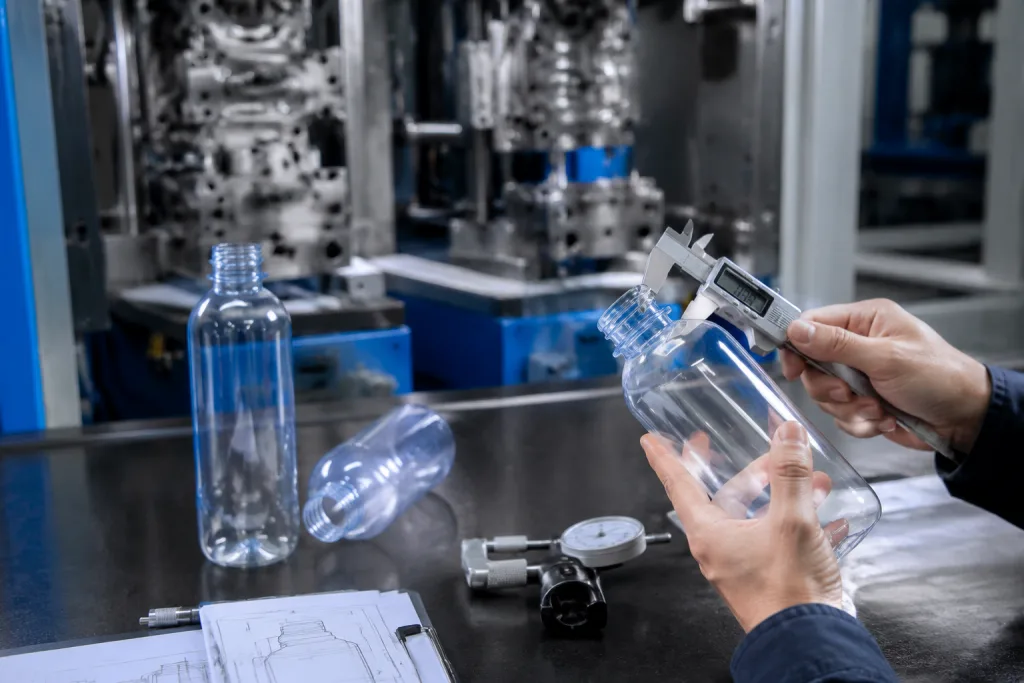
Decoration is a failure point
I’ll rewrite just the prose inside the existing tags, keep the HTML structure intact, and make it sound like a factory-side sales engineer wrote it.Decoration fails before the plastic body does. Ink, heat, surface energy, and rough handling all go after the print. We’ve seen a 500 ml promotional bottle leave packing looking clean, then come back with a scuffed logo after one carton shift in transit. If you are buying custom canteen or customized canteen products, tell the supplier where it will live: retail shelf, gym bag, school program, or bulk giveaway.
For screen printing, state the ink type, curing temperature, and abrasion standard. For UV print, ask for a cross-hatch adhesion test and a plain rub test. For pad print on curved lids, set the logo area limit and the minimum line weight. Fine text under 1.5 mm usually breaks up. That is not a factory excuse; it is physics. We ran a sample last month with 0.8 mm lettering, and QC pulled it on first check. A canteen distributors program that ignores print limits usually ships rejects, not premium branding.
Packaging matters here too. A decorated bottle should not touch another decorated bottle inside a carton without separators. If the order is for distributor drinkware or custom drinkware kits, use a polybag or tray only when the surface can take abrasion. The cheapest fix is often a 1-2 gram insert, not a refund claim. We had a buyer flag a PO typo once and ask for “loose pack” on a print-heavy order; the math did not work, and the line had to re-pack 8,000 pcs.
Seal, cap, and leak control
I’ll rewrite the section in-place, keep the HTML tags untouched, and tighten the prose so it sounds like a factory-side sales engineer wrote it.Most leak claims are seal claims. The bottle body can be fine and still fail because the gasket is 0.8 mm too thin, the thread is rough, or the torque window is off. For a supplier plastic water bottle, leak control is a hard requirement, not a nice extra.
Put the test in the PO. We usually specify a 24-hour inverted leak test on filled bottles, plus a torque spec for the closure. Sports bottles get squeezed on the line, and that shows weak seal geometry fast. For a custom growler or customized growler with a larger mouth, ask for carry-handle load testing and closure cycle testing if the cap gets reused every day. If the bottle is for school or promotion, even a 0.5% failure rate turns into service tickets fast. That math does not work.
At our Zhejiang factory, QC pulls the first 100 pieces from a shift, then checks again after any process tweak. Cap fit drifts when the line warms up; we see it on the torque wrench. If you want canteen suppliers to hold a standard, ask for incoming cap inspection, first-article approval, and in-process torque sampling. AQL alone misses leak-sensitive products. You need a functional test.
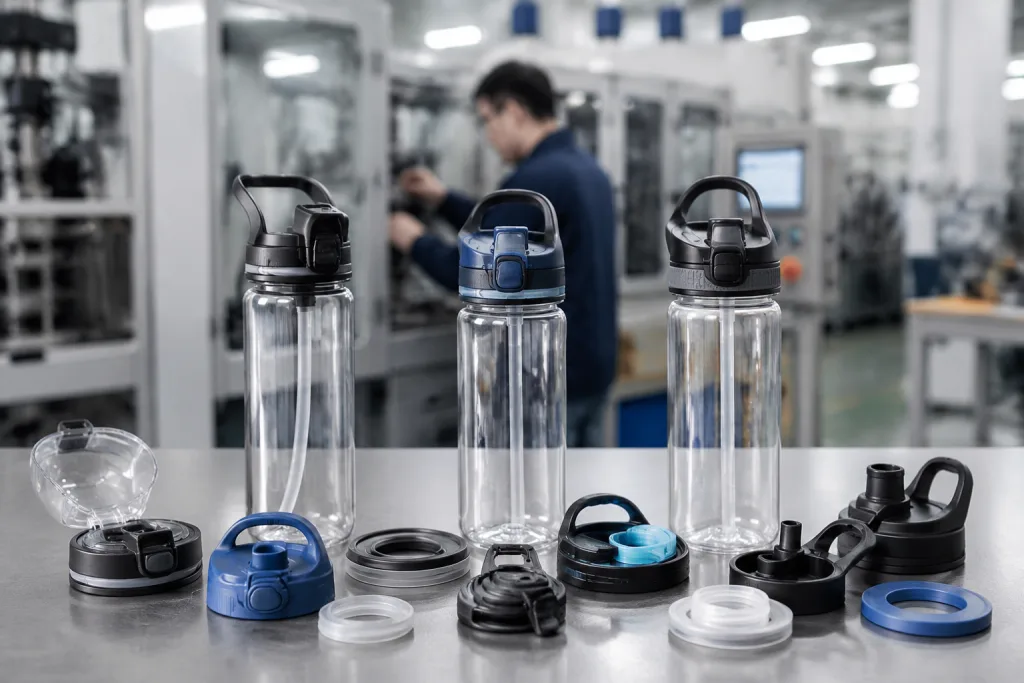
QC, cartons, and transit damage
I’ll rewrite the section in-place, keep the HTML exactly as-is, and tighten the language so it sounds like a factory-side export sales note.You can make a clean bottle and still lose the shipment. Most distributor canteen complaints start after the parts leave the molding floor. Cartons get crushed, inner trays walk inside the box, and the pallet wrap comes off loose. We’ve seen that turn a good run into a claim.
For export orders, ask the canteen vendor to spell out carton compression strength, drop test height, and pallet pattern. A practical spec is a 5-layer export carton with edge protectors and 8 drops from 70-76 cm on the master carton, based on the route. One buyer once flagged a PO typo on carton size, and the line shipped 2,000 pcs in the wrong outer box. If your order goes to North America, warehouse handling and FBA prep matter too. For Amazon-bound shipments, label placement, FNSKU readability, and carton barcode scan rate matter as much as the bottle.
Use AQL as the inspection language, but do not stop there. Critical defects such as leakage, broken caps, or missing parts should be zero-tolerance or locked down hard. Major defects like print misalignment or color shift can sit at AQL 2.5. Minor scratches can sit at AQL 4.0 if the customer sells through retail and the mark stays hidden on shelf. QC pulled the sample, measured a cap gap at 0.6 mm, and that is the kind of check that saves a claim. A serious canteen factory in China knows how to separate those buckets. If they do not, the math does not work for your order.
How to spec the order correctly
I’ll keep the HTML structure intact and rewrite the prose to sound like a factory-side sales engineer, with tighter specs, concrete numbers, and a few floor details.Buyers who get clean results send a spec sheet that reads like a production brief, not a sales note. Put in capacity in ml or oz, resin grade, wall thickness target, cap style, seal material, decoration method, carton pack count, test method, and approval photos. If you are ordering a canteen custom program or a customizable drinkware line, build the spec around failure points.
Use numbers from the start. For example: 750 ml PP bottle, 1.0 mm nominal wall, ±0.15 mm on critical neck dimensions, 24-hour inverted leak test, 1.2 m drop test, screen print with 3-color limit, MOQ 3,000 pcs, lead time 30 days, sample lead time 7-10 days. QC pulled the sample on the line with a caliper, and that is the level of detail the buyer should send back. If you need a promotional launch, ask for FOB Ningbo or FOB Shanghai pricing in USD and make the packaging requirement part of the quote. A canteen manufacturer in Zhejiang can move fast, but only when the request is specific.
When the buyer is a distributor, the spec has to cover reorder logic too. State whether mixed SKUs are allowed, whether one lid fits every size, and whether cartons ship master-packed by flavor, color, or customer channel. We have seen this go sideways when a PO says “assorted” and the cartons arrive with no split rule. That is how canteen distributors keep inventory clean. If you are sourcing a custom canteen for multiple channels, consistency beats chasing the lowest first-order price.
Send your bottle spec for a fast review
We’ll check material, closure, decoration, and packaging before production, so your next canteen or custom drinkware order lands cleanly.
Frequently asked questions
What MOQ should I expect for a supplier plastic water bottle?
For a standard private-label bottle, MOQ often starts at 3,000-5,000 pcs per color or per mold, depending on decoration and tooling readiness. Simple PP or PET bottles may sit at the lower end; a custom growler or customized drinkware with multi-color print usually needs more. If you need a new mold, budget 25-35 days for production after sample approval, plus 7-10 days for artwork and packing confirmation. In Zhejiang and other China export hubs, factories can quote faster than they can stabilize production, so ask for sample photos, cavity count, and first-run QC data before you place the PO.
How do I reduce leak claims on canteen custom orders?
Treat leakage as a design and QC issue, not a packing issue. Specify cap torque, gasket material, and a 24-hour inverted leak test on filled units. For squeeze bottles, add a pressure test or repeated hand-squeeze check. Ask for first-article approval on the neck finish and cap fit, then sample from multiple cavities during production. A real canteen factory should show you the torque range and the gasket dimension, not just say the lid fits. If you buy for retail or distributor channels, keep critical defects at zero tolerance; even a 0.5% leak rate becomes expensive quickly.
What tests should I request from canteen suppliers?
At minimum, ask for dimensional inspection, leak testing, decoration adhesion, and carton drop testing. For food-contact custom drinkware, also request material declarations and compliance documents such as REACH for Europe and relevant food-contact statements for North America. A practical QC package often includes AQL 2.5 for majors, AQL 4.0 for minors, plus a 1.2 m drop test for finished packs. If the bottle has a printed logo, ask for rub testing and cross-hatch adhesion. If you are buying a customized canteen for schools or gyms, odor check and washing durability matter too.
Is a custom growler harder to make than a regular bottle?
Yes, usually because the closure, handle, wall thickness, and aesthetics all matter at once. A custom growler often uses a larger body, which increases shrink and cooling challenges, and the lid must seal reliably under repeated use. If you want a customizable growler for retail, ask for thick-wall control, carry-handle load testing, and tighter carton protection. Expect a higher unit cost than a simple water bottle, often USD 1.10-2.50 depending on size, material, and decoration. A good canteen manufacturer will also tell you whether the mold needs extra cooling or venting to keep the finish clean.
How do I choose between a canteen manufacturer and a canteen vendor?
Choose a canteen manufacturer if you need control over tooling, material, and QC. Choose a vendor only if they already own the product and can prove the factory line behind it. For private label, the manufacturer gives you better control over MOQ, decoration, and packaging, and usually better pricing. A vendor can be useful for quick sourcing, but you still need the same documents: material data, inspection reports, sample approval, and production photos. In China, especially Zhejiang, the difference matters because many sellers look similar online but only the factory can actually control the process.