Key Takeaways
- A leak rate above 1% on first inspection usually means the closure system was under-spec'd, not just poorly assembled
- For stainless outdoor canteens, 0.4-0.6 mm wall thickness is a practical floor for mass retail and transport abuse
- A serious Zhejiang canteen factory should quote MOQ, lead time, and AQL limits before samples, not after PO
- Logo method changes the failure mode: laser engraving resists wear, while print needs ink adhesion and dishwasher testing
You can buy a supplier outdoor canteen on price alone and still lose money. We see it all the time on the line: caps that start leaking after 200 open-close cycles, coatings that chip in transit, welds that pass a quick visual check but crack on a 1-meter drop, and logos that wash off after dishwashing. That is the real cost in custom drinkware. If you are buying for retail, promotions, or distribution, the problem is not finding a canteen factory. The problem is calling out the failure points before mass production starts.
In China, especially in Zhejiang, the best canteen manufacturer is not the one with the nicest sample room. It is the one that can hold a 3% AQL defect target, repeat a 12,000-unit monthly run, and keep wall thickness, gasket durometer, and coating thickness steady from the first carton to the last. QC pulled the sample with a caliper at 0.8 mm, and that is the level buyers should ask for. That is the right standard for a canteen supplier, whether you need a custom canteen, customizable canteen, or a canteen promotional line for Europe and North America.
Where canteens usually fail
I’ll rewrite the section in-place, keep the HTML structure unchanged, and tighten the sales-engineer tone with more concrete factory detail.The first mistake is thinking a canteen fails in one clean spot. On the line, the same four trouble points keep showing up: sealing, finish, geometry, and assembly tolerance. If you are buying custom drinkware from a canteen supplier, ask where each one breaks under real use, not just on a lab bench.
Sealing failures are the easiest to miss. A cap can feel tight and still leak when the gasket compresses unevenly; we’ve seen that on a batch where the buyer flagged a tiny wobble at the torque tester. For a customized canteen, specify the closure torque range and require a 24-hour inverted leak test at room temperature. If the canteen custom design uses a sports cap or flip lid, ask for cycle testing at 2,000 to 5,000 opens. Cheap lids crack at the hinge or loosen at the thread root long before the body fails.
Finish failures are the second trap. Powder coating can hide orange peel, thin spots, or edge burn-through, and a 0.2 mm edge flaw shows up fast after a carton drop. For a canteen promotional order, define coating thickness in microns and include a cross-hatch adhesion test. A small scratch on a sample is not cosmetic; it tells you the line prep was weak. In Zhejiang, a solid canteen manufacturer will show you the pre-treatment tank, the curing curve, and the oven log. A weak one will only talk color matching. That is the wrong question to ask.
What to specify:
- Leak test: 24 hours inverted, 100% inspection on first run
- Drop test: 1.0 m on concrete or equivalent hard surface
- Coating adhesion: cross-hatch or tape pull standard
- Thread engagement: minimum turns before seal seat
Body specs that prevent rejects
I’ll rewrite the prose tightly, keep the HTML intact, and make the section sound like a factory-side sales engineer wrote it.Buyers fixate on the logo and skip the body. That is the wrong place to cut corners. Rejects hide in the shell, especially on a custom growler or customizable growler run where the body is larger and the weld zone takes more load. If your canteen distributor says “same as sample,” ask for cavity dimensions and shift records, not promises.
For stainless steel canteens, 304 is still the base spec for most outdoor and retail programs. If the job needs stronger corrosion resistance, 316 makes sense, but paying for it on a normal commuter order is wasted money. Wall thickness matters more than first-time buyers expect. We run 0.4 mm on light travel pieces, but for outdoor canteen stock that gets stacked, shipped across regions, and handled by distributors, 0.5 mm to 0.6 mm is the safer call. You are buying dent resistance and vacuum stability, not just material cost.
Check the finish where defects start: shoulder radius, base seam, and neck transition. The line can hide time there when production gets tight. That is where we see returns. Ask for dimensional tolerance, not just capacity. A 750 ml body that lands at 720 ml usable capacity blows up carton fit and shelf labeling. We’ve seen buyers flag this only after packing, and then the math does not work.
Do not treat “sample approved” as proof of repeatability. Ask for cavity-by-cavity measurements, because 0.3 mm drift is enough to hurt distributor drinkware margin.
Decoration is a QC step
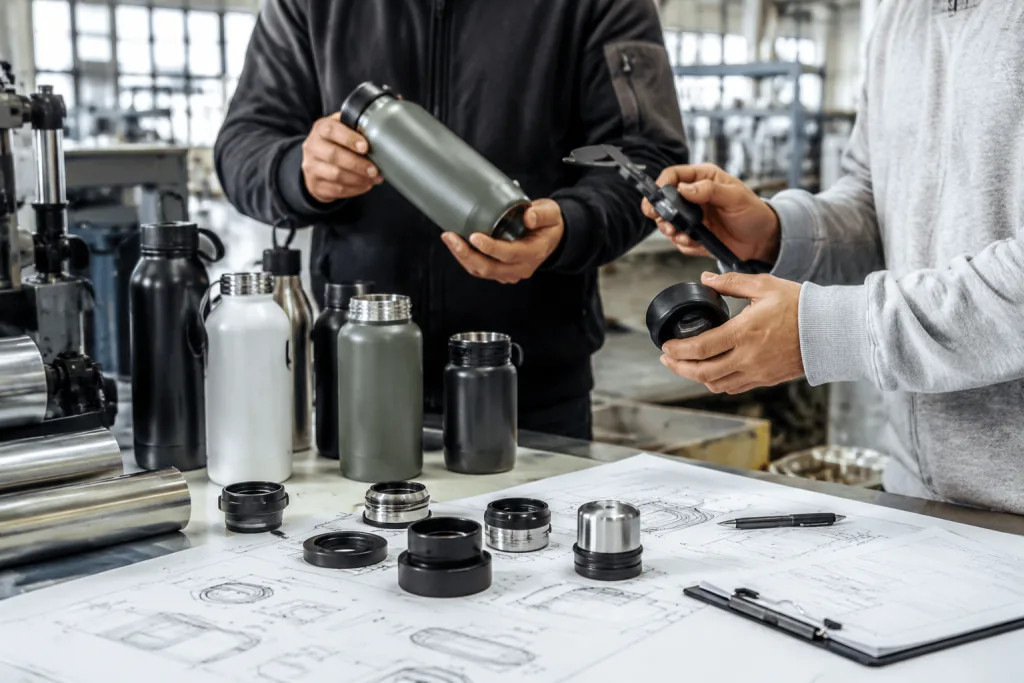
I’ll rewrite the section in-place, keeping the HTML tags and the heading structure intact, and I’ll make the copy sound like a factory-side sales engineer wrote it.If you treat decoration as a marketing add-on, you get burnt. Printing, engraving, and color coating each fail in a different way. We’ve seen a PO for 5,000 canteens come back because the buyer never said the cups would run through a 65°C wash line. That matters whether you are ordering canteen customized pieces for retail or canteen promotional stock for events. A good canteen vendor asks about wash cycle, abrasion, and handling before they pick the decoration method.
Silkscreen works when the artwork is simple and the unit cost has to stay down. It still needs ink adhesion control and a clean cure on the line. Laser engraving is cleaner on stainless and usually takes abrasion better, which is why outdoor buyers keep asking for it. QC pulled a sample after a 500-rub test and the silkscreen edge lifted; that is the wrong question to ask if you want field use. If you need full-color branding, you have to test edge lift, fade, and solvent resistance. Decoration is not a decorative decision.
For a canteen customizable order, specify logo placement tolerance, maximum distortion on curved surfaces, and whether the logo must pass dishwasher testing. We tell buyers to keep print 8-10 mm away from the seam and shoulder, because shrinkage there can pull the artwork out of shape. A common miss is a typo on the PO: the buyer flags “centered” but never gives a millimeter reference. If your canteen suppliers cannot state their registration tolerance in millimeters, they are guessing. Guessing turns into scrap.
Practical rule: choose the decoration method for the roughest use case, not the prettiest sample.
Factory checks worth paying for
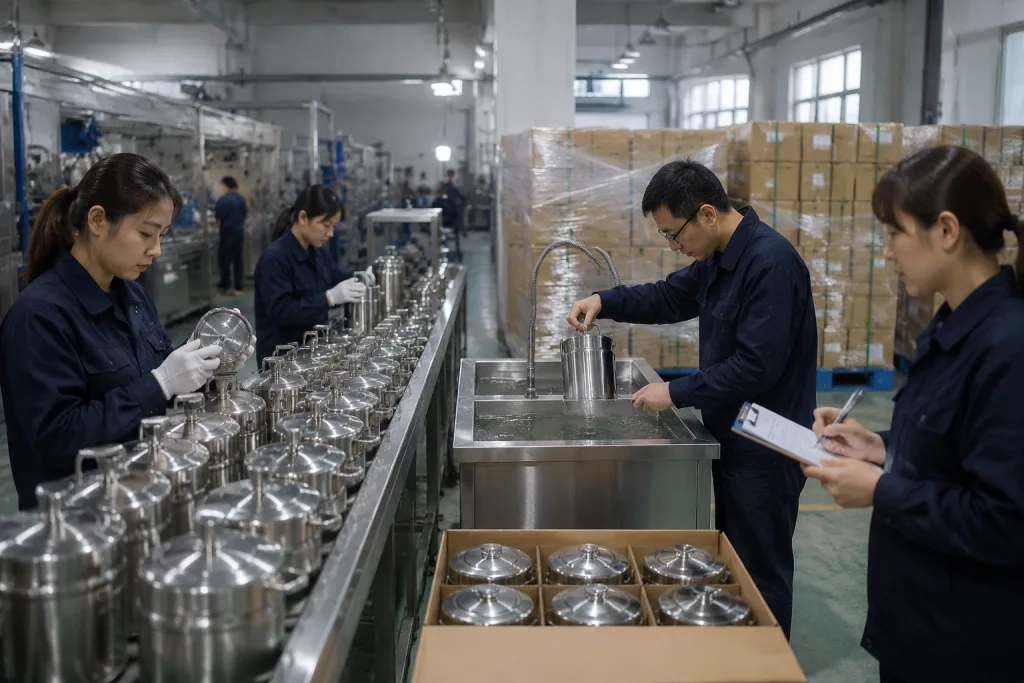
I’ll rewrite the HTML prose in place, keep the tags intact, and sharpen the factory-floor detail while stripping the AI-ish phrasing.Most buyers ask for samples. Fewer ask for process control. That order is backwards. A solid canteen factory in Zhejiang should show incoming material checks, in-process leak testing, final random inspection, and carton drop protection. If they only send final photos, you are seeing the last 5% of the work. We run a vacuum leak rig on the line; if the seller cannot name the test method, the math does not work.
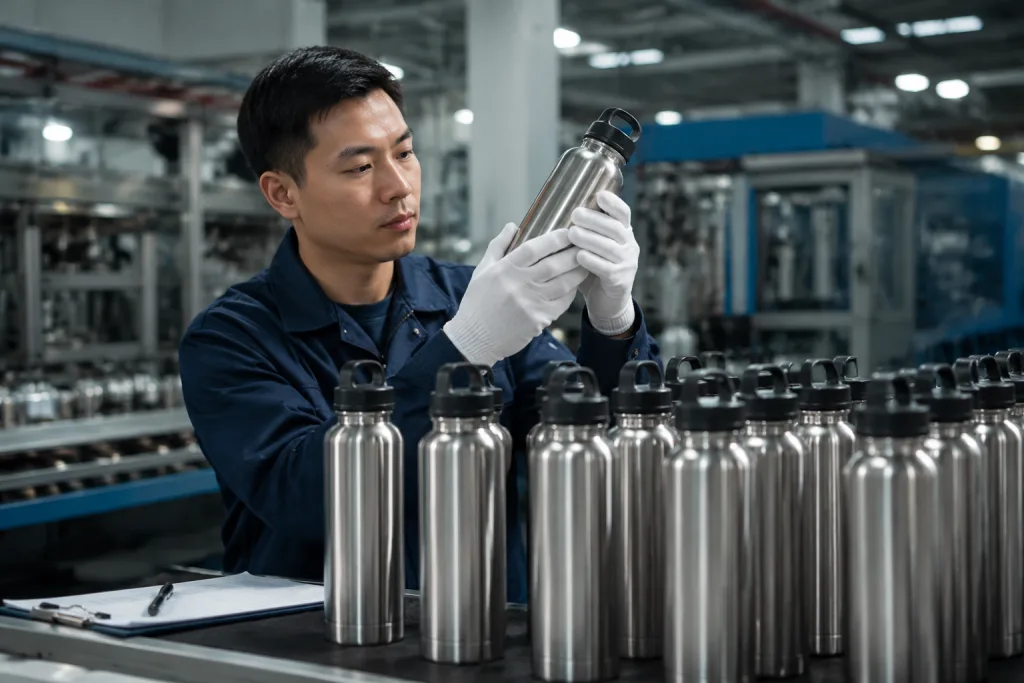
Ask for the inspection standard before you ask for the artwork proof. For retail and distributor drinkware, AQL 2.5 for major defects and AQL 4.0 for minor defects is common, but the real question is whether the supplier follows it on the floor. On first orders, I want a tighter check on leaks and decoration alignment, because those defects trigger chargebacks fast. If the product is going into Amazon FBA or warehouse distribution, carton dimensions and master pack consistency matter as much as the bottle itself. QC pulled one sample last month with a 2 mm print shift; the buyer flagged it immediately, and that saved a headache.
Ask how the factory handles changeovers. A line that switches between a custom growler and a compact canteen without cleaning and calibration will carry over residue, dust, or wrong torque. We ship more than one SKU a day, and the changeover sheet tells you who reset the torque wrench and who signed off. The best canteen manufacturer is usually boring in the best way: documented, repeatable, and not tied to one senior operator. We’ve seen this go sideways when the PO had a typo on the cap color code, and the line ran 800 pieces before anyone caught it.
- Incoming checks: stainless grade, gasket material, lid fit
- In-process checks: torque, leak, print position
- Final checks: appearance, capacity, carton count
- Traceability: lot number, shift, cavity, or mold code
Buying from China without surprises
I’ll keep the HTML untouched and rewrite only the prose to sound like a real sales engineer, with tighter numbers and a few factory-floor specifics.When you buy from China, the trade terms matter as much as the bottle itself. FOB only works if you know what is inside the quote: inner box, master carton, spare lid seals, test reports, and logo setup. We have seen a USD 1.85 quote turn into USD 2.40 once packaging and a thicker gasket get added. That is normal. Finding out after PO approval is the part that burns margin.
For a supplier outdoor canteen order, ask for lead time in working days, not sales talk. A plain canteen customized run usually takes 25 to 35 days after artwork approval; if we need new tooling or a different cap, plan on 40 to 50 days. On the line, a Zhejiang canteen supplier with real capacity should state 10,000 to 20,000 units per month for standard models without blinking. If they cannot give that number, the line is not stable.
Do not skip compliance. For North America and Europe, ask for REACH, LFGB where relevant for contact parts, and material declarations for stainless, silicone, and coatings. QC pulled a sample here with a 0.3 mm gasket mismatch once, and the buyer flagged it before packing started. If you need retail packaging for a canteen distributor program, lock barcode placement, FNSKU requirements, and carton marks before production. This is the wrong question to leave for later. After goods leave Hangzhou or any other Zhejiang port, you pay freight twice.
Commercial habit that saves money: lock the spec sheet, sample sign-off, and packing list format in one email thread before deposit.
Send your spec sheet for a factory review
We can check leak risks, MOQ, lead time, and decoration choices before production. Save the wrong batch before it starts.
Frequently asked questions
What MOQ should I expect from a canteen supplier outdoor canteen order?
For standard stainless models, MOQ is often 500 to 1,000 units per SKU and color. If you want a new lid, new mold, or special coating, MOQ can move to 3,000 units or more. A real canteen supplier should state the MOQ by decoration method too: laser engraving may be lower, while full-color printing or molded components usually push it up. In Zhejiang, many factories can handle mixed orders if the base body is the same, but your pricing will be better when you keep one body and vary only the logo or packaging.
How do I know if a canteen factory is actually stable?
Ask for three things: monthly output, defect handling, and lead time by order size. A stable canteen factory should tell you whether it runs 10,000, 20,000, or 50,000 units per month on your target model. Then ask how they test leaks, whether they track lot numbers, and what AQL they use. If they cannot explain incoming material control or shift-based QC, they are not ready for repeat distributor drinkware programs. A factory in Zhejiang with strong process control will answer quickly and in numbers.
Should I choose canteen custom printing or laser engraving?
Choose based on use, not preference. Laser engraving is better for abrasion resistance and outdoor use, especially on stainless bodies and custom canteen programs that will be washed often. Silkscreen is cheaper and works well for simple logos, but it needs adhesion testing and may wear faster. For canteen promotional campaigns with short life cycles, printing can be enough. For retail or distributor canteen lines, laser usually reduces returns. If you need full-color branding, expect more QC around alignment, fading, and edge lift.
What inspection standard should I ask for?
For first orders, ask for AQL 2.5 on major defects and 4.0 on minor defects at minimum. For leaks, I would push for 100% inspection on the first production run, then sample-based checks once the line is proven. Ask for the actual test method: inverted leak test, torque test, and drop test from 1.0 meter. A serious canteen manufacturer will also record cavity, shift, or batch codes so you can trace issues. That matters when you are buying customized drinkware for Europe or North America.
What lead time is realistic for a customized canteen order?
For a standard canteen customized order with existing tooling, expect 25 to 35 working days after sample approval and deposit. If you need a new lid, cap, or mold, 40 to 50 days is more realistic. Add extra time for compliance documents, packaging proofs, or Amazon FNSKU labeling. A canteen distributor should also plan buffer stock, because freight delays from China can add another 7 to 20 days depending on route. Zhejiang factories with strong planning can hit these timelines, but only if the spec is locked early.