Key Takeaways
- Typical MOQ starts at 1,000–3,000 pcs for a custom canteen; decoration-only jobs can run at 500 pcs.
- FOB pricing for a basic metal canteen often lands around USD 1.20–2.80 depending on material, finish, and cap.
- Standard lead time is 25–35 days, but molded caps, private tooling, and custom packaging can stretch it to 45–60 days.
- AQL 2.5/4.0, REACH, and drop-test requirements should be confirmed before production, not after sample approval.
If you are buying a supplier military canteen for retail, promotions, or field-use programs, the first surprise is that the bottle is not the expensive part. The cost sits in 5052 aluminum sheet, powder coating, tooling, accessory bags, and how many steps we run in-house. A plain 1 L canteen looks cheap at FOB, then jumps once you add a matte green finish, a screw cap with gasket, laser logo, and individual carton packing. We’ve seen buyers push back on a $0.18 cap-upgrade, then approve a $0.42 print fee without blinking. The math does not work that way.
In Zhejiang and across China, the better factories price these jobs by process, not by guesswork. That matters because a canteen custom order at 3,000 pcs behaves very differently from a 30,000 pc program. MOQ, coating thickness at 60-80 μm, and cap leak test results decide the quote fast. QC pulled the sample on one batch because the gasket was 1 mm off, and the buyer flagged it before shipment. If you know where the line slows down, you can buy a customizable canteen without paying for avoidable extras.
What Drives the Price
For a supplier military canteen, the price usually splits into five buckets: body material, closure system, decoration, packing, and compliance work. Aluminum is still the low-cost route for a lightweight military-style canteen. 304 stainless steel lifts the price, but it gives a better hand feel and holds up against dents on the line and in transit. Wall thickness matters too. A 0.4 mm aluminum body stays cost-efficient, while 0.5 mm to 0.6 mm stainless adds weight and raises the unit price.
The cap is where a lot of buyers miss the math. A basic PP cap with a simple gasket is cheap. A leak-resistant cap with a tether, silicone seal, and metal loop needs more tooling and more hand assembly. We once had a buyer flag a PO typo on the cap spec, and that single line changed the quote by 8%. If you want canteen customized branding through laser engraving, the per-unit cost can beat full-color printing, but the setup still has to be loaded into the machine.
Rule of thumb: a plain canteen supplier quote is one number; a custom drinkware quote with print, bag, and carton is another. Ask for itemized FOB terms so you can see whether the cost sits in the bottle or in the extras. QC pulled the sample on a 1.2 mm carton dent last month, and that kind of small defect is where margin disappears.
MOQ Tiers That Make Sense
I’ll keep the HTML structure intact and rewrite only the prose, with tighter factory-floor language and concrete MOQ detail.MOQ is not a slogan from sales; it is how we keep the line moving. On a canteen run, the first tier is usually 500–1,000 pcs for a stock body with a one-color logo. That fits a distributor test order or a promo drop. Once the buyer flags a private-color body, custom cap color, or a changed strap, the workable MOQ usually jumps to 3,000 pcs.
For a fully customized canteen with new tooling, 5,000 pcs is where the unit cost starts making sense. Smaller runs can be done. The math still hurts. On short orders, we often see higher setup fees because the screen frame, QC pull, and packing changeover still take the same time. If you run several accounts, one 10,000 pc order split by color or logo version is usually cleaner than three tiny POs with different typos on each one.
- 500–1,000 pcs: stock shape, single logo, simple carton.
- 1,000–3,000 pcs: canteen custom print, color box, basic accessory changes.
- 5,000+ pcs: private mold, custom cap, canteen customizable finishes, lower unit cost.
That is the line where a canteen vendor becomes useful or expensive. Planning decides it. Not the pitch.
Lead Times by Order Type
I’ll rewrite just the prose inside the existing HTML, keep the tags intact, and make it sound like a factory-side sales engineer wrote it.Lead time is where buyers get burned. A sample is usually 5–10 days if we already have the body tooling and the logo is a clean one-color print. A production run for customized drinkware usually lands at 25–35 days after deposit and sample sign-off. If you need new tooling, special packaging, or mixed colors, plan on 40–60 days from final approval. That is the real schedule; the math does not work any other way.
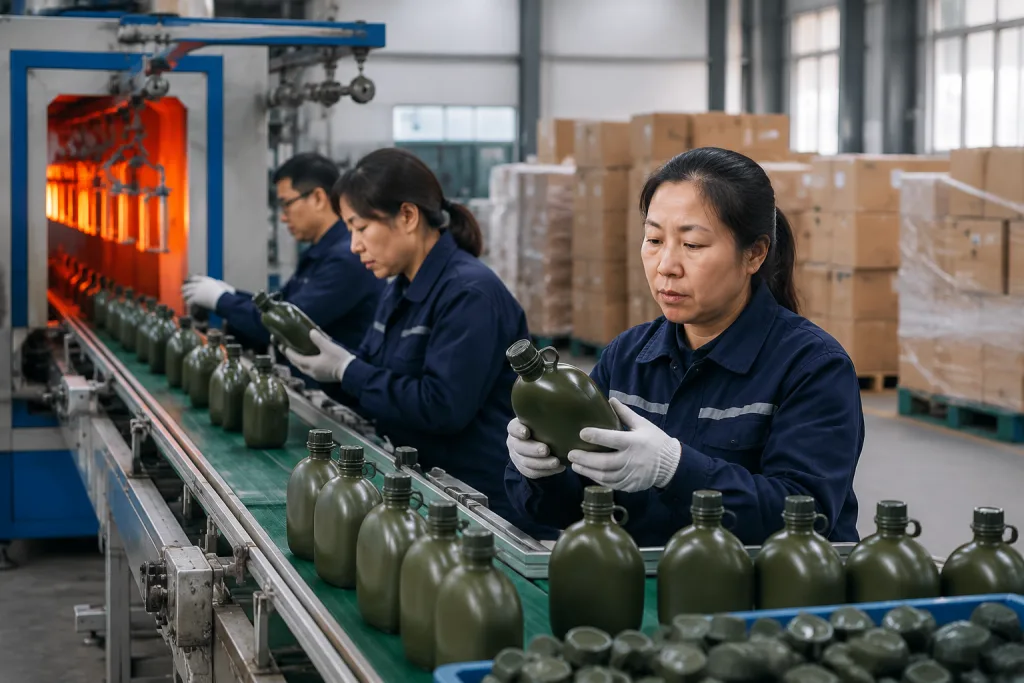
In Zhejiang, a serious canteen supplier will show you the queue on the floor: tube cutting, forming, welding, coating, printing, assembly, packing. We run that line every day, and coating is usually the choke point. Powder coat or a military matte finish can add 3–5 days. Camouflage or two-tone graphics can trigger one more proof round; QC pulled the sample at 0.5 mm off on a print register once, and the buyer flagged it before mass run. A custom growler job follows the same logic, but a military canteen usually moves faster because the shape is simpler.
Ask for lead time in three parts: sample days, mass production days, and transit days. FOB Ningbo or Shanghai may leave China on time, but ocean freight still adds 18–35 days to North America depending on the lane.
For a distributor drinkware program, that split matters more than the headline quote. We ship a lot of these programs, and the buyer who only chases unit price usually misses the real calendar.

Materials and Compliance
I’ll rewrite the three paragraphs in-place, keep every HTML tag intact, and tighten the language so it reads like a buyer-facing factory note with concrete compliance details.A military-style canteen is sold for utility, but buyers still ask the same three questions: is it safe, will it hold up, and can it clear customs. If the product touches drinking water, material control comes first. For stainless, we ask for 304 or 316 grade proof, not a sales line on the quote. For aluminum, check the inner lining spec and confirm the coating is food-safe. For plastic caps and accessories, get REACH-compliant resin declarations, and add ASTM or LFGB test reports when the target market asks for them.
A solid canteen manufacturer should hand over a test packet without being chased. We mean a material spec sheet, a migration or food-contact report, and a factory audit file if your chain store or importer wants it. BSCI helps when a retailer’s compliance team is involved. AQL 2.5 for major defects and 4.0 for minor defects is still the language we run on export inspections. If a canteen manufacturers list cannot speak that language, the buyer should move on.
Packaging compliance is not a side issue. For a custom drinkware set going into Amazon or retail, carton size, barcode position, and drop-test tolerance decide whether the shipment gets received cleanly or flagged at the warehouse. We’ve seen a weak inner tray turn a small carton save into claim fees on the first inbound. One PO typo on carton count can stop the line for a day. In China, the cleanest supplier military canteen jobs start with compliance set before the first sample is made.
How Customization Changes Cost
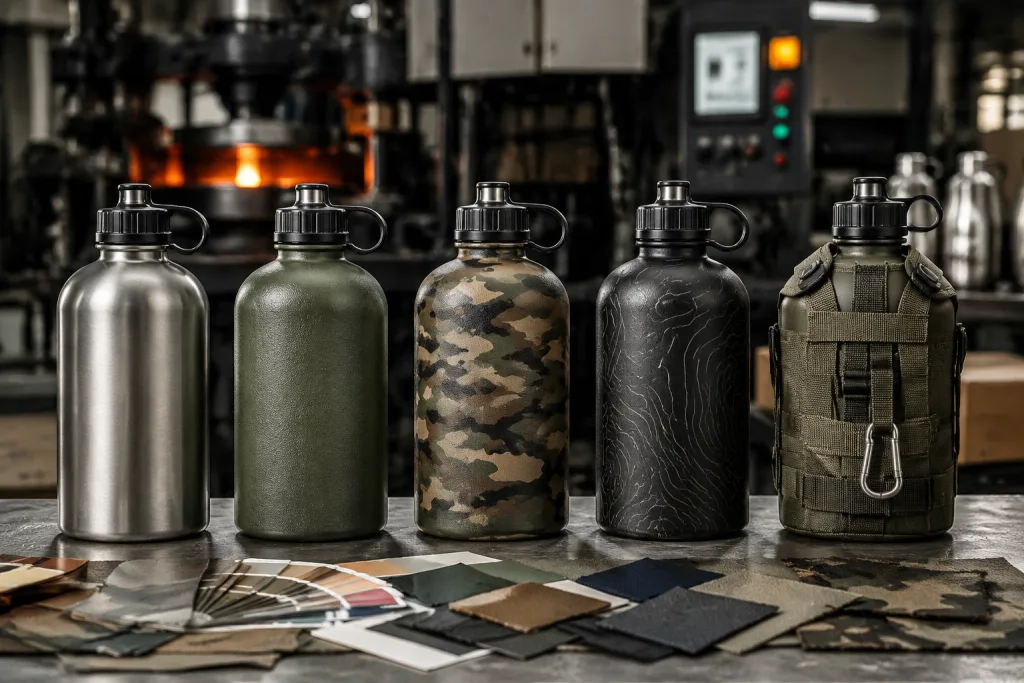
I’ll rewrite the section in-place, keep the HTML tags exactly as-is, and make the prose sound like a factory-side sales engineer wrote it.Customization is where a canteen customized order stops looking like a stock quote. Logo method is the first cost lever. One-color silk screen is the cheapest route we run, laser engraving stays clean and holds up, and full-wrap printing costs more because registration, curing, and rejection risk all go up. If you want a canteen promotional job with Pantone matching, expect a higher setup fee and a tighter MOQ than a simple stock-color print.
Finish is the second lever. Matte powder coating, rubber paint, and anodized looks all add process time on the line. A customizable canteen with strap, cover pouch, or clip does not just add part cost; it adds assembly labor and extra QC checks. QC pulled a sample last week for a 2 mm print shift, and that kind of miss is why a canteen vendor may quote USD 1.60 for a basic unit and USD 2.40 for what looks like the same bottle once you add the branding pack.
Practical buying note: if you want multiple SKUs, use one body shape and vary the decoration or accessory pack. That keeps tooling fixed and helps a canteen distributor control inventory. We’ve seen this go sideways when a buyer asks for three bodies, two cap styles, and one pouch; the math does not work, and freight climbs fast. For custom growler programs, the same logic applies, but the heavier wall and bigger cap push shipping cost up faster.
Buying Smart from China
I’ll rewrite the section in-place, keeping the HTML tags and structure unchanged while making the prose read like a factory-side sales engineer wrote it.If you are sourcing from China, don’t chase the lowest unit price before you check the factory setup. A real canteen plant in Zhejiang should show line capacity, daily output, and packing speed. We run a 12-station line, and a mid-size plant can often push 80,000–120,000 units per month across drinkware jobs, with canteen runs sharing capacity with thermos and bottle orders. That tells you whether your 8,000 pc order ships on time or sits behind another program.
Ask for FOB pricing, not vague ex-works wording, unless you control freight yourself. For North America and Europe, the gap between factory and port handling can be 8–12 percent of total landed cost. If the supplier military canteen job includes a custom carton, hangtag, and barcode, ask for pre-production artwork sign-off before the line starts. A canteen suppliers list is only useful if the factory can ship samples on time and pass inspection; we’ve seen buyers lose a week because the PO had the wrong carton size in mm.
Here is the clean filter: can they quote a stock sample in 24 hours, a decorated sample in 7–10 days, and production in under 35 days? If yes, you are probably dealing with a real canteen manufacturer. If not, you are talking to a middleman. This is the wrong question to ask if you only compare catalog prices. For most buyers, a direct canteen supplier in Zhejiang beats a layered canteen distributor model because you keep control over price, timing, and revision cycles; QC pulled one sample at AQL 2.5 last month just because the cap print was off by 1.5 mm.
Request a clear canteen quote today
Send your target price, logo file, and carton spec. We’ll map MOQ, FOB cost, and lead time without hiding the expensive steps.
Frequently asked questions
What is a normal MOQ for a supplier military canteen?
For a standard body with simple logo work, MOQ is usually 500–1,000 pcs. If you need private color, custom cap, or packaging changes, expect 1,000–3,000 pcs. A fully customized canteen with new tooling often starts at 5,000 pcs. That is the realistic range for a canteen factory in China if you want stable unit pricing and proper QC.
How much should I budget per unit?
A basic aluminum or steel military-style canteen often lands around USD 1.20–2.80 FOB depending on material, finish, cap, and packaging. Laser logo, matte coating, and retail carton can push it above USD 3.00. If you are comparing quotes from canteen manufacturers, make sure every line includes the same packing and test requirements.
How long does production usually take?
A sample can be ready in 5–10 days if tooling already exists. Mass production is usually 25–35 days after deposit and sample approval. With new tooling, custom packaging, or a busy coating line, plan for 40–60 days. Ocean transit from China to the US or Europe then adds roughly 18–35 days depending on route and season.
What compliance documents should I ask for?
Ask for food-contact or migration reports, REACH declarations for materials, and BSCI if your customer needs social compliance. For QC, ask the canteen supplier to use AQL 2.5 for major defects and 4.0 for minor defects. If you are buying for Amazon or retail, also request carton and barcode confirmation before shipment.
Can I order a canteen customized for retail and promotions?
Yes. A canteen promotional order can use one-color silk screen, laser engraving, custom carton, and even a private-color cap. The cleanest route is to keep the body shape fixed and customize decoration and accessories. That gives you a customizable canteen without paying for unnecessary tooling, and it keeps reorders faster for a canteen distributor program.