Key Takeaways
- A workable supplier list wine tumbler plan usually starts with 5 to 8 factories, not 30.
- For a 12 oz stainless wine tumbler, expect FOB China pricing around USD 1.20 to 3.40 depending on coating, lid, and decoration.
- A serious canteen factory or canteen manufacturer should quote wall thickness, steel grade, MOQ, and lead time in the first reply.
- QC should check 100% leak test on samples and AQL 2.5 for mass production, with carton drop and lid torque checks.
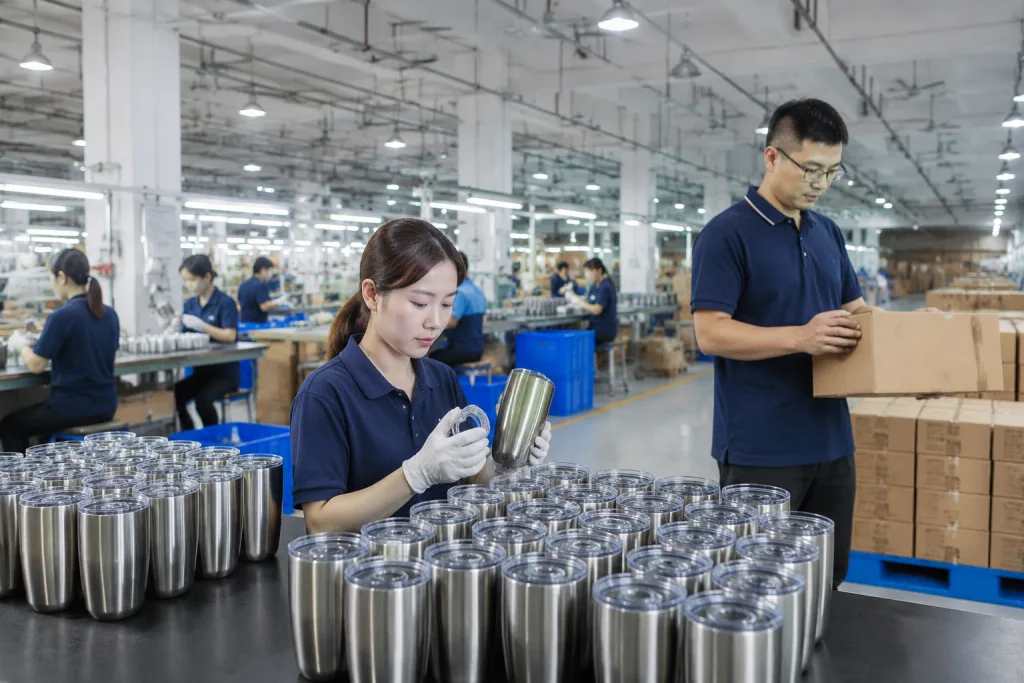
You do not need a giant supplier list wine tumbler spreadsheet to get burned. You need a short list with the right factories, the right tests, and the right questions. Most buyers start with a shape, a logo idea, and a target landed cost. That is not enough. If you are sourcing in China, especially from Zhejiang, the real risk sits in wall thickness, lid fit, coating adhesion, and whether the seller is a factory, a trading layer, or a canteen vendor playing factory.
Here is the cleaner way to buy: treat one order like a controlled run from inquiry to inspection. At BottleForge in Hangzhou, Zhejiang, we run about 600,000 units per month, with a typical MOQ of 1,000 pieces for a standard wine tumbler and 15 to 25 days lead time after sample approval. QC pulled the sample with calipers on the line, and that is the kind of detail your supplier list should carry, because the math does not work if the numbers miss your margin.
Start With One Real Order
I’ll rewrite the three paragraphs in a sharper buyer-supplier voice, keep the HTML intact, and make sure the language sounds like someone who runs orders on the line.Do not start with a broad market scan. Start with one real order: 12 oz double-wall stainless wine tumblers, powder-coated exterior, laser logo, 3 lid colors, and an FOB ceiling of USD 2.10. That line item knocks out weak canteen suppliers and generic drinkware traders fast. If you are planning a matching custom canteen or custom growler later, split it off. One SKU. One use case. One QC standard.
Write the brief in procurement language people on the floor can quote against. Put in material, capacity, finish, decoration, packaging, certification needs, and destination market. For Europe, ask for REACH and food-contact declarations. For North America, ask for LFGB if it applies, plus carton dimensions, FNSKU labeling if you sell on Amazon, and drop-test requirements. A solid canteen supplier in Zhejiang will send a structured quote in 24 to 48 hours. A weak seller sends lifestyle photos and asks, “what do you need?” The buyer flagged it, and that saves you days.
Include the end user in the brief too. A distributor drinkware program for hospitality is a different job from a promotional wine tumbler for an event agency. A custom drinkware pack for retail shelves needs tighter packing and barcode control than a one-off canteen giveaway. We’ve seen this go sideways when the PO said “gift box” and the carton spec never got written. If you can state the channel, the supplier list gets shorter and more useful.
Screen Factories Before Samples
I’ll rewrite the prose in place, keep the HTML exactly as-is, and tighten the language so it sounds like a factory-side sales engineer.Once the order is clear, screen the list by capability, not by homepage polish. A real canteen factory or canteen manufacturer should show welding method, vacuum leak test data, coating line type, and monthly output. Ask for 304 or 316 stainless steel options, the cup’s wall thickness, and whether the rim is rolled or straight cut. On our line, 0.5 mm to 0.7 mm is the normal range for wine tumblers; go thinner and QC starts finding dent marks after a drop test, and that is the wrong place to save a few cents.
Then price it like an engineer. A plain brushed 12 oz tumbler may land at USD 1.20 to 1.60 FOB if the MOQ is 1,000 to 3,000 pieces. Add powder coat, laser logo, gift box, and a better Tritan lid, and the number moves to USD 2.20 to 3.40. If a quote comes in far below that, something is off. We’ve seen it before: wrong steel grade, thin finish, or packaging that falls apart in transit. Sometimes it is not a factory quote at all.
Shortlist rule: keep 5 to 8 suppliers, and make sure at least 2 are real canteen manufacturers with export history in Zhejiang or wider China. You want a working list, not a crowd. Too many canteen vendors just add email noise and delay the PO. If you later branch into a customized canteen, a canteen customizable bottle, or a distributor growler program, you already have a tested base.
Demand Samples That Prove Reality
I’ll rewrite the section in-place, keep the HTML structure untouched, and make it read like a real sales engineer wrote it. Next I’m just transforming the prose, with specific factory-floor details and cleaner B2B language.Samples are where a supplier list wine tumbler project turns from spec sheet to something you can hold. Ask for pre-production samples with your exact decoration method, lid color, and packaging. Do not accept a stock cup and hope the bulk order matches. We once caught a buyer typo on the PO—“matt black” instead of “matte black”—and QC pulled the sample before it hit the photo room. For laser engraving, check contrast, depth, and whether the logo shifts after washing. For silk screen, ask for ink adhesion and rub testing. If you are choosing between decoration methods, compare them on the same sample run, not across two factories. On our line, laser usually wins for retail pieces that need a long shelf life, while screen print is the quicker pick for canteen promo runs.
Inspect three things first: lid fit, coating consistency, and thermal performance. A decent 12 oz tumbler should hold cold condensation control for hours and keep hot drinks acceptable for 4 to 6 hours, depending on fill level and room temperature. Ask the supplier to show the test method, not just throw out a number. We run a 65°C water test on the bench, and the result changes if the lid vent is open. If a canteen distributor says “24 hours hot,” ask what fill level they used and which lid went on it. That question saves headaches. Vague numbers do not ship well.
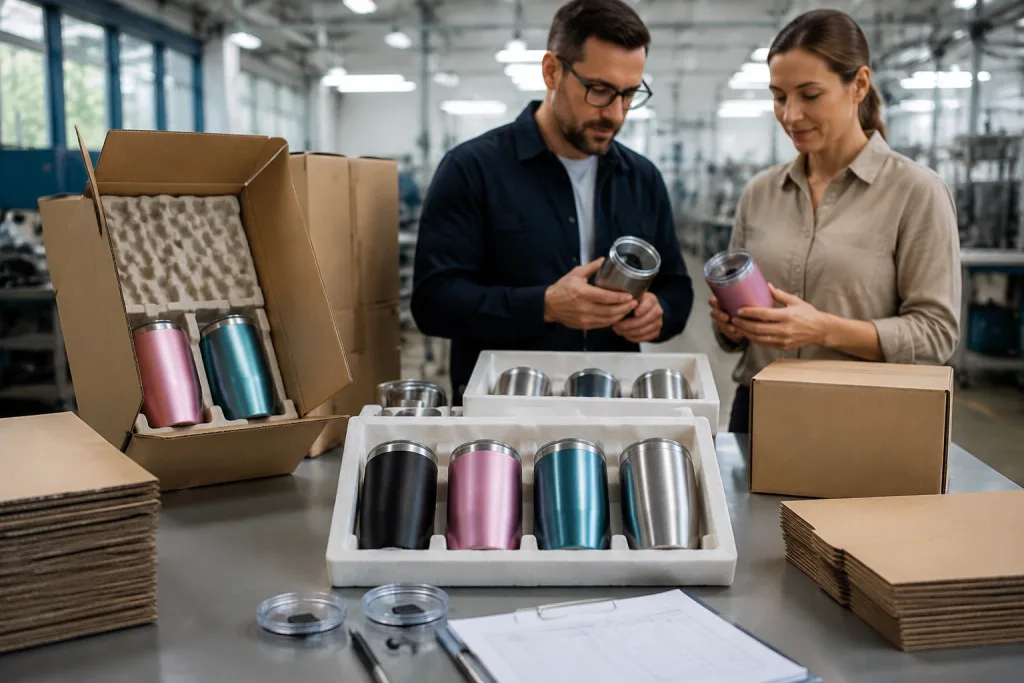
For custom drinkware orders, sample approval should also lock carton layout and inserts. A broken box can wreck a good tumbler. We saw it happen on a 2 mm thinner mailer, and the buyer flagged it after one pallet crush test. If you sell through distributor drinkware channels, make sure outer cartons survive warehouse handling. If you sell direct, make sure the retail box opens cleanly and the barcode scans on the first pass. Anything else is the wrong question to ask.
Lock QC Before Mass Production
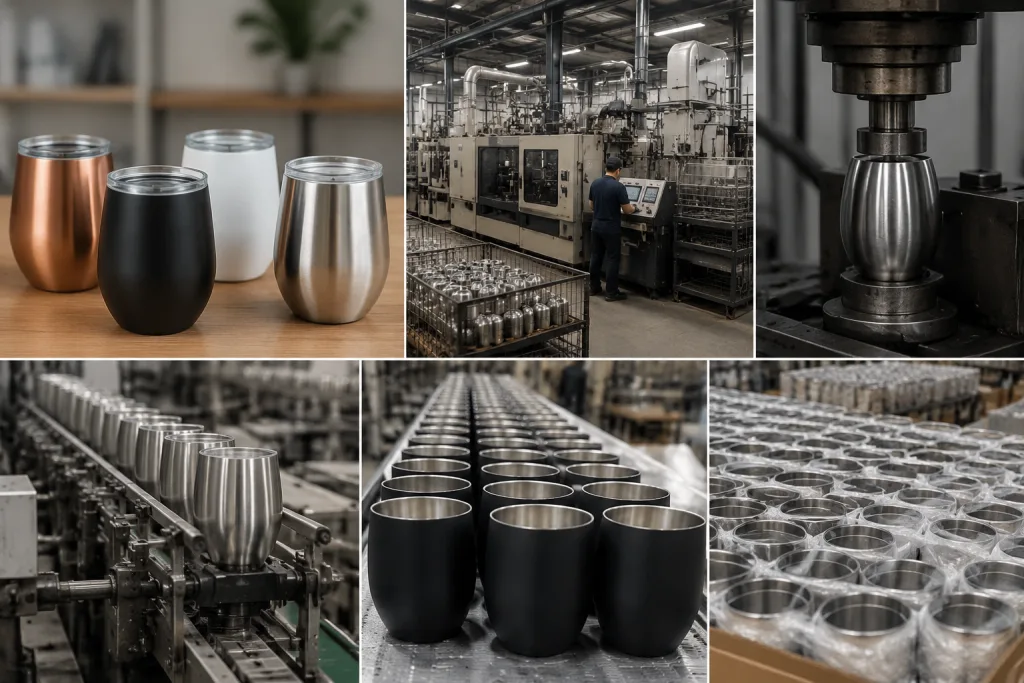
I’m rewriting the section in-place, keeping the HTML structure intact and sharpening the buyer language. Next I’ll tighten the QC points, add factory-floor specifics, and remove the AI-ish phrasing.Most problems show up after sample approval, because buyers stop asking hard questions. Don’t let that happen. We run a QC sheet with hard numbers: vacuum leak test at 0.3 bar, lid torque, logo placement within 1.5 mm, color delta-E, and carton drop test from 76 cm. For production, AQL 2.5 is the normal commercial start for major defects, but if the order is tied to a retail launch or distributor commitment, tighten the visual standard and keep one sealed golden sample on file.
For stainless wine tumblers, watch weld seam consistency and powder coat adhesion. A scratch on a promo sample is noise; a coating peel on a retail run turns into chargebacks. Ask for batch photos of the first 50 finished pieces and confirm the factory is running the same line that made the approved sample. Last month QC pulled a sample with a 0.8 mm lid gap, and the buyer flagged it before carton packing; that saved a mess. In Zhejiang, export factories that do real work usually hand over line records, batch photos, and carton counts without a fight. If they drag their feet, that tells you plenty.
Practical buyer rule: if the supplier cannot explain how they will stop mix-ups between lid SKUs, logo variants, and carton labels, do not place the order.
Check compliance early. Europe often wants food-contact declarations and REACH paperwork; North American buyers often ask about Prop 65, depending on the market. If you are building a canteen customized range for three regions, the paperwork must be standardised before production, not after shipment. We had one PO typo on a carton mark—“black” instead of “matte black”—and the line caught it only because the artwork sheet was checked against the sealed sample.
Plan Packaging And Logistics
I’ll rewrite the three paragraphs to sound like a real factory-side sales engineer, keep every HTML tag intact, and fold in concrete shipping details and buyer pushback.Packaging is part of landed cost, not decoration. A plain bulk pack can save USD 0.10 to 0.25 per unit, but a retail-ready inner box earns its keep when the buyer is filling a distributor canteen account or putting a beverage brand on shelf. We decide this early on the line: mailer box, gift box, or export master carton. If the item is going to Amazon, FNSKU labels, carton marks, and case-pack control are the basics. For a distributor growler program, pallet count and stack height beat fancy print every time.
Shipping terms change the whole supplier list. FOB China gives the cleanest comparison when you are checking canteen suppliers in Zhejiang and other parts of China. We ask for carton size, gross weight, and units per master carton, then our logistics team works out the cubic meters before freight is booked. Last month QC pulled a sample carton at 52 x 35 x 28 cm, and the buyer flagged a PO typo on the unit count before we loaded. That kind of detail matters more than a glossy brochure.
If you plan line extensions, ask how the factory handles a custom canteen, customizable canteen, or customized canteen family. One lid system across a wine tumbler, custom growler, and canteen promotional bottle can cut tooling waste on the next launch. We’ve seen this go sideways when a buyer wanted three shapes but expected one cap to fit all without testing. A supplier that builds programs, not isolated SKUs, saves money on the second order and the third.
Use The First Order To Build Leverage
I’ll rewrite the prose in-place, keep the HTML tags exactly as-is, and make it read like a factory-side sales engineer wrote it.Your first supplier list wine tumbler order is not just a buy. It is a live test of how the factory handles scale, corrections, and basic communication. We watch response time, sample match, and whether the supplier flags mistakes before you do. If they miss the quote by 4 days, send the wrong lid color, and hand over messy inspection records, the line is telling you something. A vendor that is casual at sample stage usually gets worse at shipment stage.
Once the order lands, compare the real numbers against your spec. If the defect rate stays under 1% and packaging damage is below 0.5%, you have a supplier worth keeping. If not, tighten the next PO or walk. We had a buyer flag a PO typo on lid code `L-02` last month, and QC pulled the sample before the box line started; that saved a full rework. The math does not work if you keep paying for errors. The goal is not the cheapest canteen distributor. The goal is a repeatable canteen supplier or canteen manufacturer in China that can scale with you. Zhejiang has enough line capacity that you do not need to accept sloppy execution.
That is how one trial order turns into a sourcing program. You start with a wine tumbler, then you build a dependable custom drinkware partner for custom canteen, customized growler, and distributor drinkware jobs. Keep the first order tight, and the rest of the range gets easier.
Build your wine tumbler supplier list now
Send your spec, target FOB, and order size. We’ll quote the right wine tumbler program from our Hangzhou, Zhejiang factory.
Frequently asked questions
How many suppliers should be on my wine tumbler shortlist?
Keep it tight: 5 to 8 suppliers is usually enough. If you have more than 10, you spend too much time comparing noise. Start with 2 true factories in Zhejiang or broader China, 1 backup canteen manufacturer, and 1 to 2 canteen distributors only if they add packaging or local service. For a standard 12 oz wine tumbler, ask each one for MOQ, lead time, decoration method, and FOB pricing. A good response should arrive in 24 to 48 hours with real numbers, not just catalog photos.
What is a normal MOQ for custom wine tumblers?
For a standard stainless wine tumbler, MOQ is often 1,000 pieces per design and color. Some canteen suppliers will accept 500 pieces, but the unit price usually rises by 10% to 25%. If you add special coating, custom gift box, or multiple lid colors, the MOQ can move to 3,000 pieces. For a first order, keep the spec simple: one body color, one logo method, one carton style. That gives you better pricing and a cleaner QC process.
What price should I expect from a China factory?
For a 12 oz double-wall wine tumbler, realistic FOB China pricing is usually USD 1.20 to 3.40 per piece. Plain brushed stainless with basic packaging sits at the low end. Powder coat, laser logo, better lids, and retail boxes push you higher. If a quote is far under USD 1.20, check wall thickness, steel grade, and whether the lid is actually included. In Zhejiang, a transparent canteen factory should break out these costs item by item, which makes supplier comparison much easier.
What QC checks matter most before shipment?
Start with leak testing, lid fit, logo placement, and carton damage. For production, many buyers use AQL 2.5 for major defects and keep a golden sample sealed on file. Also check wall thickness, coating adhesion, and whether the product matches the approved sample batch. For export orders, ask for batch photos, carton counts, and packaging specs before the goods leave the factory. If you sell customized drinkware in retail or distributor drinkware channels, this is where you protect margin.
Can I source wine tumblers and canteen products from the same supplier?
Yes, if the supplier is a real canteen manufacturer with proper tooling and export capacity. Many factories in Zhejiang can produce wine tumblers, custom canteen, customizable canteen, and custom growler lines under one roof, but not all can do each item well. Ask about monthly output, tool room support, and decoration lines. A factory that runs 600,000 units per month can usually handle mixed programs better than a small canteen vendor, but you still need to verify each product category separately.