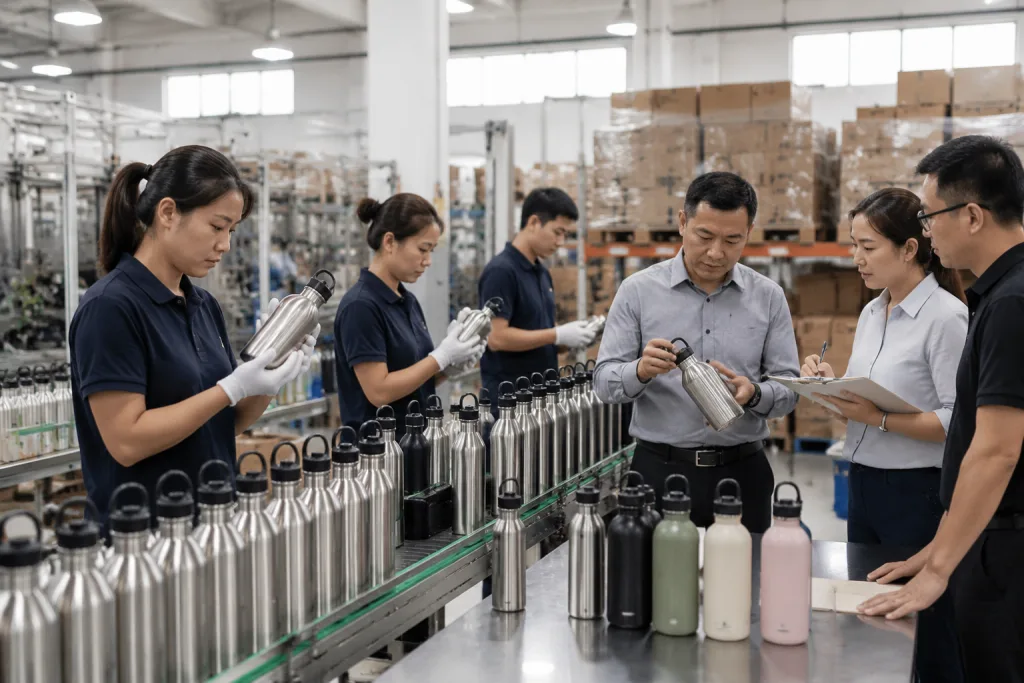
Key Takeaways
- A serious supplier list water bottles RFQ should specify 6 items: capacity, material, lid, logo, packaging, and test standard.
- For a typical canteen manufacturer in Zhejiang, MOQ starts at 500-1,000 pcs and lead time is often 20-35 days after sample approval.
- Sample approval should check wall thickness, leak test, odor, and logo durability before you release a PO.
- A clean bulk PO reduces disputes on carton marks, FNSKU labels, and AQL 2.5 / 4.0 inspection acceptance.
If you are building a supplier list water bottles project, the hard part is not finding names. It is filtering out suppliers that look fine on a directory page but cannot hold a spec, quote cleanly, or ship on time. We run into this all the time in Zhejiang: a listing looks polished, then QC pulls the sample and the coating thickness is off by 0.2 mm, or the PO says “logo on body” and leaves the size blank. In China, only a small share of drinkware suppliers can handle custom artwork, REACH paperwork, and repeat orders without drama.
The safe way to buy is to treat it like a production handoff: RFQ, sample, approval, bulk, then shipment. Simple. But the buyer flagged it because most expensive mistakes happen when someone skips a step or sends a vague PO. If you want custom drinkware, canteen customizable programs, or a custom growler line, write the line items, tolerances, and test standards before the canteen factory starts packing cartons; the math does not work any other way.
Start with the real buying brief
I’ll rewrite the prose tightly, keep the HTML structure intact, and make it sound like a factory-side sales engineer wrote it.Before you build a supplier list water bottles shortlist, write the brief like an engineer, not a marketer. We run quotes off the spec, not the mood. Put the exact bottle type on paper: canteen custom order, customizable canteen for retail, or customized drinkware for a campaign. If you are planning a canteen promotional run, the decoration method changes the whole quote. Silk screen and laser engraving do not behave the same, and a custom canteen with powder coat carries different risk points than a plain SUS304 body. QC pulled a sample last week and the buyer flagged the logo shift by 1.2 mm. That is the sort of miss that burns time.
Keep the first RFQ tight. A decent supplier can quote fast if you give:
- Capacity: 500 ml, 750 ml, 1,000 ml, or 64 oz
- Material: SUS304, SUS316, Tritan, PP, or glass
- Finish: matte powder coat, spray paint, brushed steel, or bare
- Lid: screw lid, sport lid, handle lid, or straw lid
- Logo: 1-color silk screen, 2-color print, laser logo, emboss, or deboss
- Packaging: bulk pack, color box, mailer, or Amazon-ready carton
If you skip these, the canteen supplier will send broad ranges and you will spend 3 days comparing numbers that do not match. We had a PO last month with “750ml” typed as “750 ml” in one line and “720ml” in another; the line stopped until the buyer fixed it. A good canteen vendor in Zhejiang usually replies with a spec sheet, unit price, MOQ, lead time, and sample cost in one message. That is the baseline. Anything less, and the math does not work.
Screen suppliers before asking price
I’ll rewrite the prose in place, keep the HTML structure untouched, and make it sound like a buyer-side supplier screen from a real factory desk.Do not open with the lowest price. Ask which canteen suppliers can actually build the product you need. On a real supplier list, water bottles are not the same: one factory runs only vacuum flasks, another only plastic hydration bottles, and a third is set up for custom growler or customized growler programs for brewery accounts. If you need a distributor drinkware line, ask straight away about mixed-SKU cartons, private label, and repeat replenishment.
Check the factory profile like a buyer who has been burned before:
- Monthly output: 300,000 to 800,000 units/month is normal for a mid-sized canteen factory in China
- Audit status: BSCI, SEDEX, ISO 9001, or Walmart/Target-style social compliance if needed
- Export markets: EU, US, UK, or Canada
- Testing: REACH, LFGB, FDA, ASTM, and food-contact documentation
- Engineering: sample room, mold team, and artwork support
In Zhejiang, we see solid canteen manufacturers that can do 500 pcs MOQ for stock items and 1,000 pcs MOQ for deeper customization. That does not make every factory a fit. We once saw a PO typo change “gasket” to “gadget” on the draft, and QC pulled the sample before it went out. A canteen distributor can work for fast trading, but if you need repeatable branded drinkware, a direct canteen manufacturer is usually safer on consistency and margin. If the supplier cannot explain wall thickness, valve structure, or gasket material, the math does not work.
Write the RFQ like a PO draft
I’ll rewrite the section in-place, keep the HTML structure untouched, and tighten the RFQ language so it reads like a factory-side sales note.The strongest RFQ reads like a PO draft. That pushes the supplier to quote the job as it will run on the line, not a soft guess. For supplier list water bottles sourcing, send SKU-level details so finance can compare apples to apples and QC can check the spec without chasing you for a second email. If you are buying canteen customized retail packaging, say it up front: blister insert, hanging tab, or e-commerce mailer.
A clean RFQ line set looks like this:
- Item name: custom drinkware / customized canteen / custom growler
- Capacity and dimensions: 750 ml, 275 mm height, 78 mm diameter
- Material thickness: 0.4 mm, 0.5 mm, or 0.7 mm body wall
- Color and coating: Pantone match, matte black, ocean blue, or raw steel
- Decoration area: 30 x 40 mm, 1-side logo, 360° print, or full wrap
- Carton spec: 24 pcs/carton, 8.5 kg gross weight, drop-test requirement
Ask for EXW, FOB Ningbo, and CIF if you need landed comparisons. For Chinese factories, FOB is usually the cleanest start. We ship better quotes when the buyer says sample cost separately from bulk unit price, because bundling it all together hides the real delta when you add a second logo color or switch from custom canteen to customizable canteen packaging. The buyer flagged this before on a 5000-pc order, and the math did not work.
One practical point: send artwork in vector format and confirm whether the supplier wants spot colors or CMYK. That cuts 2-3 sample cycles, sometimes from 18 days down to 12. For canteen promotional orders, that gap matters because the line does not wait for color corrections, and we have seen a PO typo on Pantone numbers turn into a wasted print screen.
Test samples like a warehouse buyer
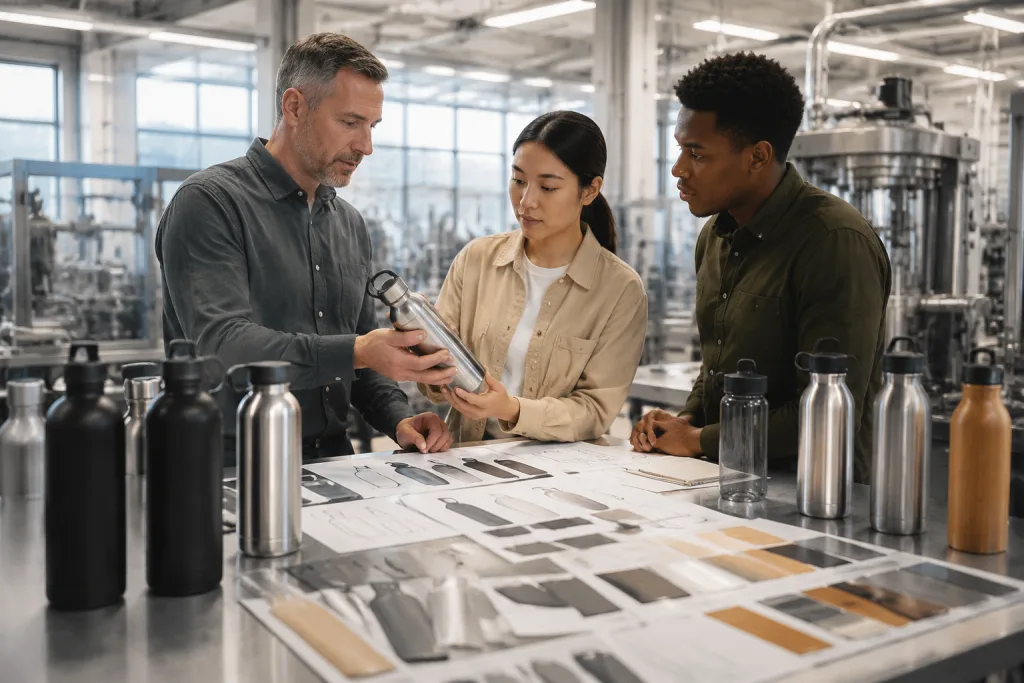
I’ll rewrite just the prose inside the existing HTML, keep every tag and list intact, and tighten it into a buyer-side factory voice with concrete floor details.Samples are where buyers either save cash or buy trouble later. The first piece off the bench is not a photo check. Open it, smell it, shake it, then treat it like field stock. We’ve seen a canteen customizable order pass visuals and still fail because the lid thread felt gritty, the rim coating chipped after 3 wipes, or the gasket softened after one wash cycle.
Use a simple sample checklist:
- Leak test: fill, invert, shake for 60 seconds
- Thermal test: if vacuum insulated, measure heat retention at 6 and 12 hours
- Drop test: 1 meter onto carton-cushioned concrete or wood
- Logo test: rub with cloth and mild detergent 20-30 times
- Fit test: lid torque, gasket seal, and opening resistance
- Compliance: request material declarations and REACH if selling in Europe
If you buy customized drinkware for Amazon or retail, check the actual dimension against your shelf or FNSKU plan. A 2 mm shift can wreck case packing. The math does not work. If you source from a canteen supplier or canteen vendors network rather than a direct factory, insist on a pre-production sample, not only a sales sample. Sales samples look clean; production samples tell you what the line can hold at MOQ 5,000 pcs.
In Zhejiang, the factories worth your time do not flinch at sample checks. They expect QC to pull the sample, measure it, and log the result. A supplier that argues about leak tests is usually the same one that will push back on claims later.
For a custom growler program, use the sample stage to confirm bottle mouth size, carbonation resistance, and closure torque. We run a torque wrench on the cap and track the reading in N·m. For distributor growler orders, that is not optional.
Lock the bulk PO details
I’ll keep the HTML structure intact and rewrite the prose to sound like a real sales engineer, with tighter PO language and a few factory-floor details.Once the sample is signed off, write the bulk PO with no wiggle room. This is where plenty of B2B drinkware orders slip. A good PO is not just quantity and price. It tells the line what to build, how to pack it, and which inspection gate you will hold us to.
Use PO line items such as:
- Product code and approved sample reference
- Material grade and thickness: SUS304 0.5 mm, Tritan, or PP
- Decoration method and artwork code
- Qty per SKU and acceptable over/under shipment range
- Packing format: individual polybag, inner box, master carton
- Inspection standard: AQL 2.5 major, 4.0 minor, or your own method
- Labeling: barcode, FNSKU, country of origin, or retail sticker
For most supplier list water bottles orders, we start at 500-1,000 pcs per SKU. At 3,000 pcs, pricing usually drops 8-15%; at 10,000 pcs, it moves again, depending on mold cost and decoration. A buyer once pushed for a “same as sample” PO with no thickness callout, and QC pulled the sample because the wall was 0.4 mm, not 0.5 mm. That is the wrong question to ask. If your mix includes custom canteen and customizable drinkware SKUs, lock the carton assortment rule before we run the first shift.
Also state whether the supplier must hold 2%-5% spare units for defects or replacement. Put it in the PO. We’ve seen a 3 mm lid scratch turn into a missed ship date because nobody agreed on replacement stock, and the buyer flagged it only after cartons were sealed.
Manage production, inspection, and freight
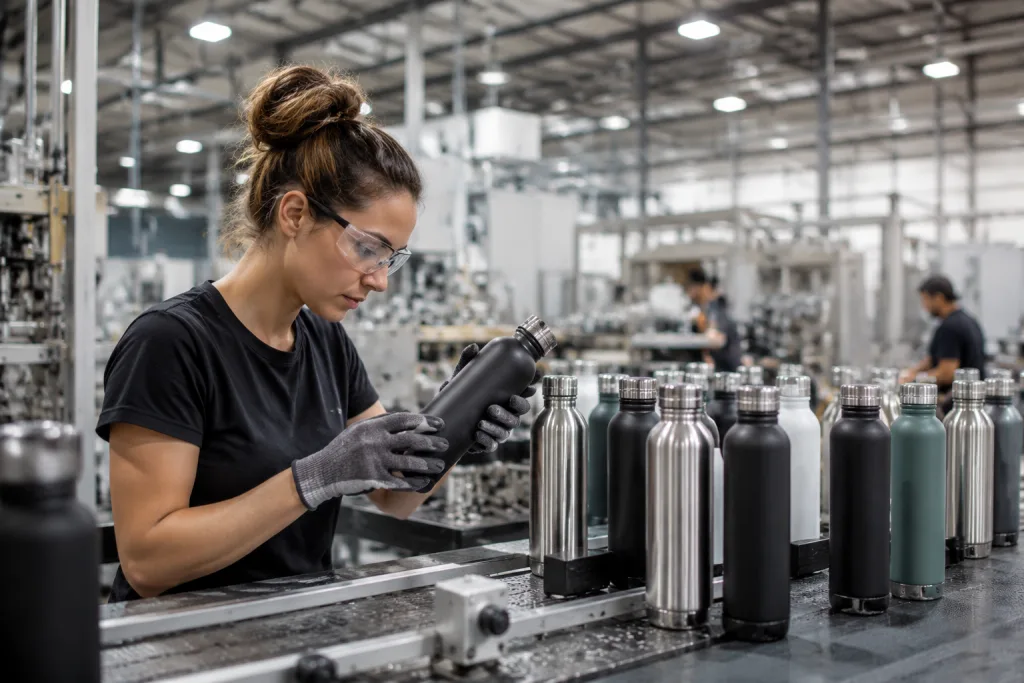
I’ll rewrite the section in-place, keeping the HTML tags and the structure intact while making the prose sound like a factory-side sales engineer.After PO release, stay close to the line. A canteen factory in Zhejiang should send pre-production photos, mid-line checks, and finished goods shots before booking space. For bulk orders, the usual lead time is 20-35 days after sample approval; if the bottle needs a new mold, add 25-40 days for tooling. If a supplier claims 7 days for a complex customized growler, the math does not work.
During production, ask for three checkpoints:
- Raw material check: steel certificate, resin batch, or glass lot
- Mid-line check: logo alignment, coating coverage, lid fit
- Pre-shipment inspection: carton count, AQL sampling, drop test, and barcode scan
For Europe and North America, freight planning matters as much as unit price. A 40HQ container from Ningbo or Shanghai can take a lot of volume, but poor carton sizing burns cubic meters fast. We’ve seen 24oz bottles cost an extra carton layer because the buyer accepted a bad master carton spec. Ask the supplier to optimize carton size, especially for distributor canteen and distributor drinkware programs with multiple SKUs. If you sell on Amazon, put FNSKU placement, suffocation warning, and carton labeling into the factory instruction sheet.
China sourcing is simple when the operations are disciplined. Zhejiang factories that ship to the US and EU every week know this. One missing carton mark can stop customs, and one bad gasket can sink a reorder. Treat freight, inspection, and carton specs as part of the product. Not an afterthought.
Plan the repeat order early
I’ll keep the HTML structure intact and rewrite the prose to sound like a factory-side sales engineer. Next I’m tightening the language, adding a few concrete production details, and cutting the AI-style phrasing.The first order is just the start. If the supplier list water bottles project works, map the repeat order while the first run is still on the line. That is how distributor drinkware accounts keep margin from drifting. The second PO should point to the same approved sample code, the same art file, and the same carton spec. No guessing.
Ask the canteen supplier about these before the first shipment leaves:
- Reorder MOQ: can they repeat at 300 pcs, 500 pcs, or 1,000 pcs?
- Color repeatability: can they hold Pantone within your accepted delta?
- Stock parts: lids, straws, gaskets, and spare seals
- Lead-time priority: can repeat jobs move into a 15-25 day window?
- Forecast support: can they reserve monthly capacity for the next 2-3 cycles?
This is where buyers get caught. A canteen manufacturer that knows repeat business will lock the tooling, keep the artwork file on the desk, and stop the line from wandering. We’ve seen a PO typo turn “500 pcs” into “50 pcs”; QC pulled the sample and the buyer flagged it before packing, which saved a mess. If you are building a canteen promotional or canteen distributors program, ask for a simple replenishment calendar. If you are building a canteen customized retail brand, ask for carton and product consistency reports so your listings do not jump between batches.
China factories that grow with you can repeat the same job cleanly. In Zhejiang, the good ones do not just ship one order and disappear; they hold color, tolerance, and packing tight enough that the third shipment still matches the first.
Send your RFQ for a clean factory quote
If you want supplier list water bottles pricing that you can actually buy against, send the spec sheet and we will quote MOQ, samples, and lead time clearly.
Frequently asked questions
What should be in a supplier list water bottles RFQ?
Your RFQ should include capacity, material, lid style, logo method, packaging, target quantity, and required test standard. For example: 750 ml SUS304 bottle, matte powder coat, laser logo, 500 pcs, FOB Ningbo, sample in 7 days, bulk in 25-30 days. If you sell in the EU, ask for REACH documents. If you need retail packing, specify carton count, barcode type, and whether FNSKU labels are factory-applied. The more exact you are, the more usable the quote.
What MOQ is normal for a canteen manufacturer?
For standard items, 500-1,000 pcs per SKU is common in China, especially with a canteen factory in Zhejiang. If the product needs a new mold, custom shape, or special lid, MOQ can move to 3,000 pcs or more. Many canteen manufacturers will reduce MOQ if you accept a stock body with custom decoration only. The real question is not just MOQ; it is whether the supplier can repeat the same quality at 3,000 or 10,000 pcs without changing the finish.
How much do custom drinkware samples usually cost?
Simple samples often run USD 20-80 per design, with freight extra. If you need a new mold, proofing cost can be much higher and may be partly refundable after bulk order. A customized canteen or custom growler with complex decoration may require 2-3 sample rounds. In China, the sample charge is usually separate from unit price, and a good canteen supplier will state whether the fee is credited back once you place the bulk PO.
What inspection standard should I use for bulk orders?
AQL 2.5 for major defects and 4.0 for minor defects is a common starting point for drinkware shipments. You can tighten that if the order is retail-facing or if the bottle has a complex lid, coating, or print registration. For canteen customizable and customized drinkware jobs, also require leak testing, lid torque checks, logo adhesion, and carton drop checks. If you are buying for Amazon, add barcode verification and carton label review before the goods leave the canteen manufacturer.
Is it better to buy from a canteen distributor or factory?
A canteen distributor can be useful if you need speed, mixed products, or a small first order. A direct canteen manufacturer is usually better for price control, repeatability, and custom tooling. If you are building a distributor canteen or distributor growler program, a trading partner may help manage multiple SKUs. If you need a stable branded line, especially from China or Zhejiang, go direct to the factory whenever possible and keep the distributor only as a backup source.