Key Takeaways
- A real supplier list vacuum flask decision starts with 6 specs: steel grade, capacity, lid type, insulation target, logo method, and carton test.
- For a 5,000-unit custom thermos order, FOB China pricing often moves by USD 0.35-1.20 per unit depending on print, coating, and lid tooling.
- A practical QC plan uses AQL 2.5 for appearance and AQL 4.0 for function, plus a 24-hour vacuum retention check.
- Outdoor retail buyers should ask for 12-18 hour hot retention; promo buyers usually accept simpler lids if the decoration and delivery are tight.
You are not buying a vacuum flask. You are buying the same lid torque, the same insulation curve, the same logo position, and cartons that still hold up after a 30-day ocean move. That is where a supplier list vacuum flask search goes off the rails. We see buyers collect ten names, ask for “best price,” then compare a finished sample against three loose claims and a carton photo.
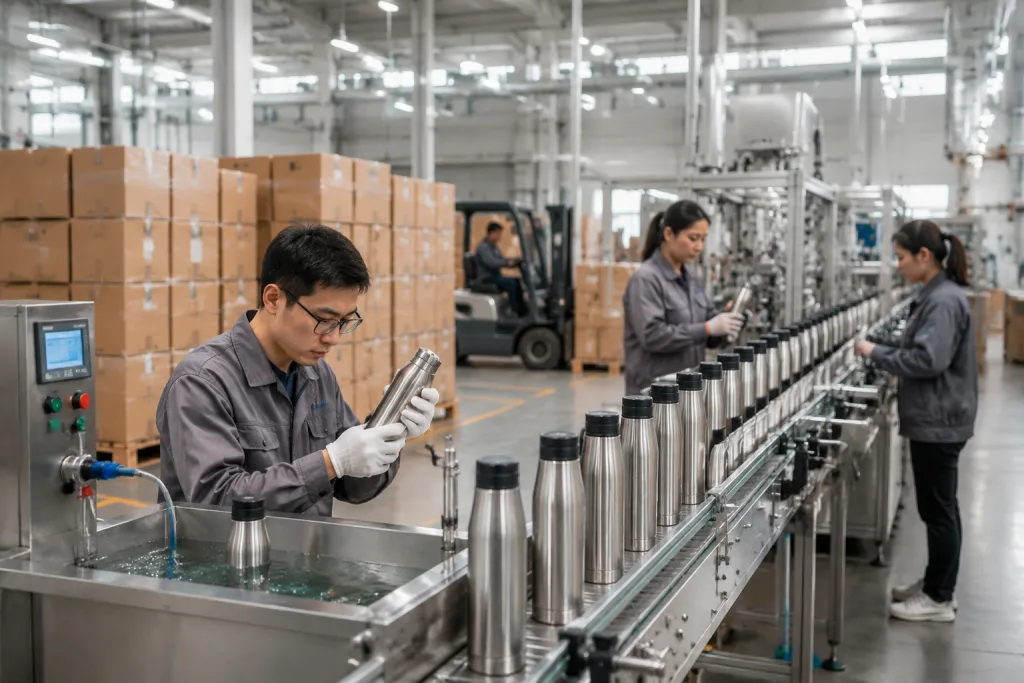
If you source for outdoor retail or a promo program, the filter has to be tighter. In Zhejiang and across China, the suppliers worth your time are the ones that can quote 304 or 316 stainless, keep a 12-month spare-parts program, and ship a bulk thermos order without the line stalling. At BottleForge Industrial in Hangzhou, our stainless thermos line runs 300,000 units per month, MOQ starts at 1,000 units for standard colors, and the usual lead time is 30-45 days after sample approval.
Start With The Use Case
I’ll rewrite the section in place, keep the HTML structure intact, and tighten the copy so it sounds like a factory-side sales engineer, not marketing text.A supplier list vacuum flask project gets manageable once you stop treating it like a generic bottle buy. Start with the use case: trail retail, corporate gifting, staff merchandise, or event giveaways. Each one changes the spec. An outdoor retailer usually wants a 500 ml or 750 ml stainless thermos with a screw lid, a powder coat that survives bag rub, and insulation numbers the sales team can stand behind. A promo brand cares more about a 1-color logo, fast turnover, and a lower landed cost. We’ve seen buyers mix those up, and the math does not work.
Write the brief like a buyer, not like a marketer. Define capacity, target retail price, lid style, target hot-hold time, and whether the order is a custom thermos or a stock-body, customized thermos decoration job. If you want a thermos custom build, say exactly which parts change. If only the logo and color change, that is a thermos customizable order, not a full tool project. On the line, a vague brief just turns into sample rounds and dead time; QC pulled one sample last month because the buyer flagged a missing lid spec on the PO.
A solid intake sheet includes:
- Capacity: 350 ml, 500 ml, 750 ml, or 1,000 ml
- Body steel: 304 or 316 stainless steel
- Inner wall thickness: typically 0.4-0.5 mm
- Outer wall thickness: typically 0.4-0.6 mm
- Target insulation: 12, 18, or 24 hours
That first page decides whether a thermos supplier can quote cleanly or just take a guess. We run quotes against those numbers every day, and a missing 0.1 mm on wall thickness can shift the cost more than the logo ever will.
Sort Suppliers By Factory Capability
I’ll keep the HTML structure intact and rewrite the prose to sound like a factory-side sales engineer, with concrete numbers and a few line-floor details.When you build a supplier list vacuum flask shortlist, do not rank by price first. Rank by factory capability. A real thermos factory should show monthly output, in-house test gear, decoration lines, and packing capacity. On our line, QC pulled a 24-hour leak test sample before lunch; that kind of control tells you more than a low quote. If a factory says it is a thermos manufacturer but outsources lid assembly, pad printing, and carton drop tests, your risk jumps. In Zhejiang, the stronger plants keep welding, leak testing, coating, and final assembly under one roof. That is how we ship faster when the buyer flags a revision on cap color or logo size.
Ask for proof, not slogans. A legitimate manufacturer thermos or manufacturers thermos partner should send production photos, material certificates, and a simple process map. We once saw a PO typo on a lid SKU turn into a 12-day delay because the supplier could not match the revised carton code. For export buyers, I want BSCI or SEDEX if the customer asks for it, plus REACH declarations for coatings and inks when Europe is involved. For North America, ask what they can support under FDA-related material expectations and whether they have ASTM-style testing references for drop or thermal claims. The exact certificates vary by market, but the discipline matters more than the logo.
Use this filter:
- Monthly capacity: 100,000 units or more for stable programs
- MOQ: 1,000-3,000 units for standard bulk thermos items
- Sample lead time: 5-10 days
- Mass production lead time: 30-45 days
- Decorating options: silk screen, laser engraving, UV transfer, powder coat
If a thermos factory cannot state these numbers clearly, it is probably a trader acting like a supplier thermos source. The math does not work, and we have seen that go sideways when the first container needs a reprint or a rushed top-up order.
Build A Comparable Quote Sheet
I’ll tighten the pricing language, keep the HTML intact, and make it read like a factory-side quote sheet note.The biggest mistake in a supplier list vacuum flask project is comparing quotes that do not describe the same product. One vendor may quote a 304 body with a PP lid, another a 316 inner wall and vacuum-sealed stainless cap, and both numbers look close. That is not a comparison. We run into this all the time. You need a quote sheet that makes every thermos supplier price the same build.
Keep the sheet short and precise. State capacity, steel grade, coating, insulation target, logo method, packaging, and whether you need a barcode label or FNSKU. If you sell through Amazon or retail distribution, the carton and master-pack details matter as much as the bottle. For a distributor thermos program, ask for retail-ready packaging, inner box count, and pallet pattern. For promotional thermos jobs, ask whether the factory can do mixed-color packaging or event-specific inserts without slowing the line. QC pulled a sample with a 2 mm lid gap last week, and that kind of miss will wreck your quote sheet.
Do not accept a “sample price” as your buying price. A sample can be USD 12 and the bulk thermos order can be USD 3.10. The quote only means something when the spec, logo, and carton are fixed.
Typical FOB China ranges for a 500 ml stainless vacuum flask:
- Plain stock body: USD 2.40-3.10
- Powder coat + one-color logo: USD 2.80-3.60
- Laser logo + upgraded lid: USD 3.20-4.20
- 316 inner wall or premium finish: add USD 0.35-0.90
This is where a practical supplier list vacuum flask spreadsheet saves you from false savings. The buyer flagged a PO typo on a 5,000 pcs order once, and the math did not work until we matched every line item.
Lock The Custom Details Early
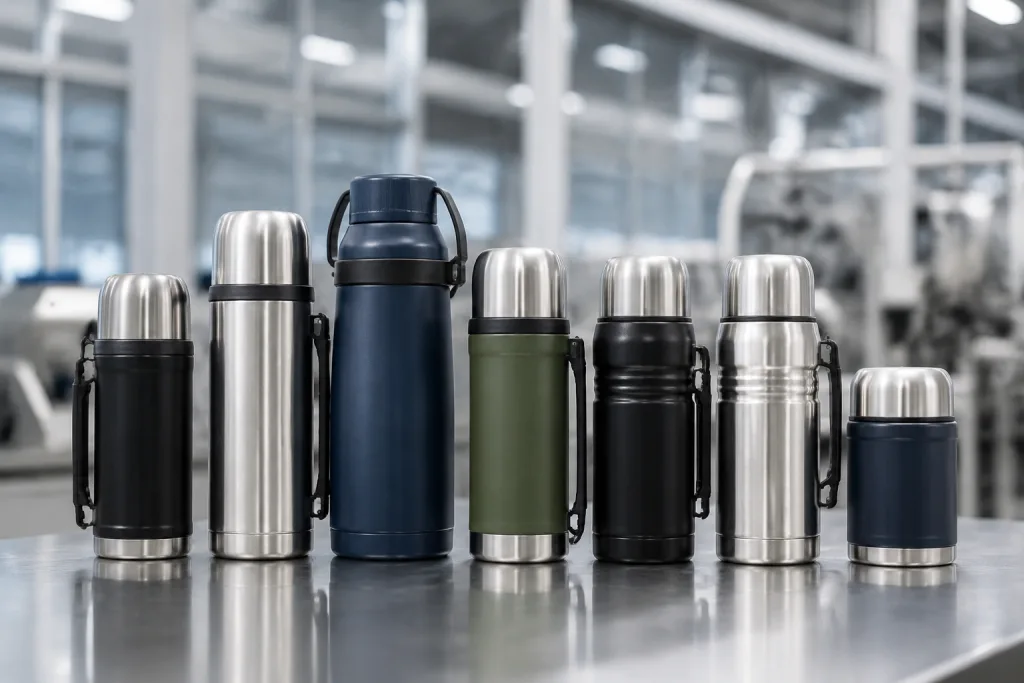
I’ll rewrite the section in place, keep the HTML exactly as-is, and tighten the sales-engineer voice while preserving the structure and numbers.Custom work is where delays pile up. We see it on the line all the time. If you want a custom thermos, settle early whether the change is cosmetic or structural. Cosmetic changes cover logo method, Pantone color, engraving position, and sleeve or box artwork. Structural changes mean a new lid, a different straw path, a handle mold, or cap geometry. Once tooling enters the job, add 20-45 days, and that can stretch further if the buyer keeps changing the drawing.
For outdoor retailers, I usually push a simple body with a durable powder coat and laser logo. For promotional thermos programs, a one-color screen print does the job if the budget is tight. If your brand sits at the premium end, ask for a brushed stainless finish or matte coating. It looks better, but only if QC pulled the sample after abrasion testing and the coating stayed intact after a few drops. That is the difference between a thermos custom job that moves and one that comes back.
Before approving samples, check these details:
- Logo size tolerance: within ±1.5 mm on print placement
- Color tolerance: Delta E target under 2.0 for brand colors
- Lid fit: no cross-threading after 30 open-close cycles
- Leak test: inverted for 24 hours at room temperature
- Odor check: no plastic smell after hot-water soak
A supplier list vacuum flask order gets easier when you lock these points before deposit. After first sample approval is the wrong time. We’ve seen a buyer flag a PO typo on logo height, and the rework burned 12 days.
QC The Order Like A Buyer
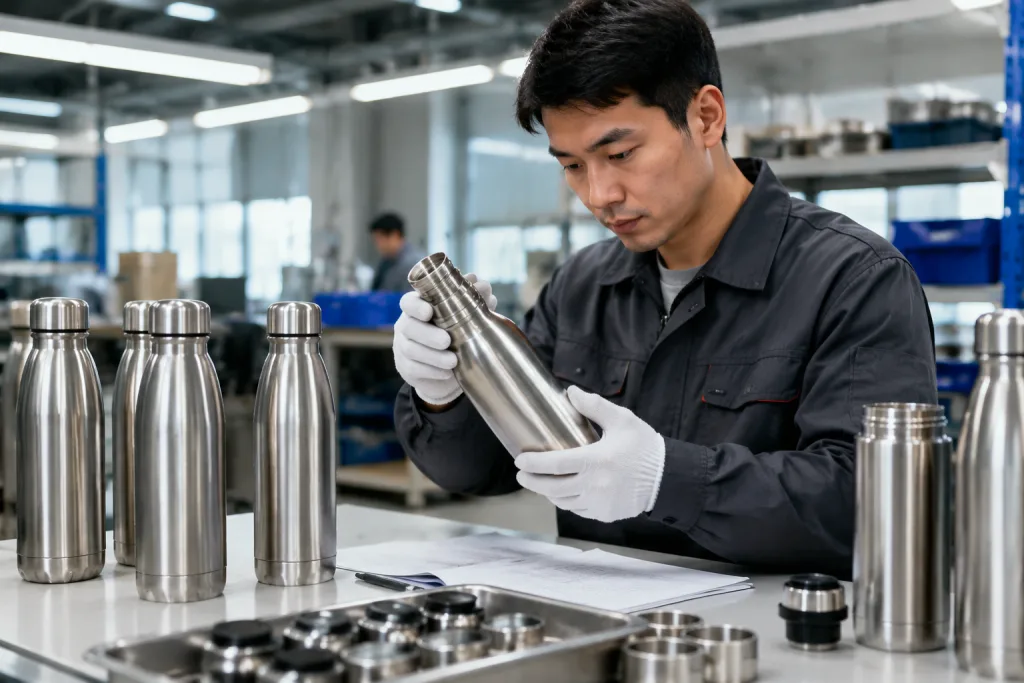
I’ll keep the HTML structure intact and rewrite the prose to sound like a factory-side sales engineer. I’m going to remove the AI-ish phrasing, add a few concrete shop-floor details, and keep the QC language sharp and practical.Good buyers do not wait for a warehouse surprise. They lock the QC plan before the first batch runs. For a stainless thermos order, we run AQL 2.5 on appearance and AQL 4.0 on function. That catches dents, print drift, lid misfit, and weak vacuum results without turning inspection into show business. If you are buying thermos bulk for several stores or distributors, ask for an in-line check at welding, a pre-pack inspection, and a final random inspection before loading. QC pulled the sample on a 500 ml run last month and flagged a 1.2 mm lid gap; that is the kind of miss you want before cartons are sealed.
Function testing should cover fill-and-hold, seal check, and drop samples. For a 500 ml bottle, we set a hot-retention target of 12 hours above 60°C in a 20°C room; some premium models hit 18 hours. Do not write 24 hours on every SKU. The math does not work on the line, and a thermos manufacturer promising that on every model is selling a story, not a bottle. We use a digital thermometer and a 1.5 m drop table for this check, and the buyer usually stops arguing after seeing the first failed sample.
Ask for the following on each order:
- Pre-production sample sign-off with photos
- Inline QC report every 5,000 units or per shift
- Final inspection report with defect photos
- Carton compression and drop-test result
- Spare gasket allocation at 0.5%-1.0% of order
If your thermos distributor network needs fast replacements, those spare parts save real time. A serious thermos suppliers network in China should treat gaskets, lids, and silicone rings as part of the order, not a bonus. We ship them that way, and we have seen the wrong question before: buyers fight over unit price, then lose two weeks because a $0.03 gasket was missing. That is the part nobody wants to explain to retail.
Plan Logistics And Reorder Logic
I’ll rewrite the section in place, keep the HTML exactly as-is, and tighten the prose so it sounds like a factory-side sales engineer wrote it.Once the samples pass, the real job is getting the carton out the gate without a surprise call from the forwarder. For most export programs, FOB China is the cleanest start because it splits product cost from freight and customs noise. If you need DDP, tell the supplier the destination label, carton mark, and pack count upfront. We’ve seen a 4 mm barcode print shift turn into a warehouse reject at loading, and that’s the wrong place to find it.
For a distributor thermos order, lock the reorder trigger before the first container leaves China. If sell-through is steady, there is no point reopening artwork, lid color, and carton specs every cycle. We run one approved sample, one spec sheet, and one reorder file. In Zhejiang, the suppliers who stay profitable ship repeat jobs like a production line, not like a quote desk.
Typical delivery flow looks like this:
- Day 1-3: brief and quote
- Day 4-10: sample production
- Day 11-15: approval and deposit
- Day 16-45: mass production
- Day 46-55: inspection, loading, and departure
That schedule fits most promo and outdoor runs. We had a buyer flag a PO typo on carton quantity at this stage, and it saved a bad reload. If your brand wants more custom parts, add time. If the build stays simple, a Zhejiang factory can move fast and still hold the basics.
Send your spec, get a real quote fast
We can quote your supplier list vacuum flask order with clear MOQ, FOB China pricing, and QC details from our Zhejiang factory team.
Frequently asked questions
How many suppliers should I shortlist for a vacuum flask project?
For a supplier list vacuum flask search, 4 to 6 serious factories is enough. More than that usually creates quote noise, not better decisions. Ask each one for the same spec sheet: capacity, 304 or 316 stainless, logo method, carton count, and target lead time. Then narrow to 2 samples. If a factory cannot quote a 1,000-unit MOQ, 30-45 day production window, and FOB China terms clearly, remove it. A good shortlist should include at least one Zhejiang factory and one backup supplier in China that can match the same tooling and QC standard.
What MOQ should I expect for a custom stainless thermos?
For a standard custom thermos or thermos customizable order, MOQ is usually 1,000 units for one color and one logo, sometimes 3,000 units for more complex decoration. If you want a new lid mold or a fully thermos customized structure, the MOQ may rise to 5,000 units because the factory needs to recover tooling and setup. For promotional thermos runs, some suppliers will offer 500 units, but pricing jumps and consistency often drops. A practical MOQ should match your sales velocity, not just your budget.
What is a fair FOB China price for a bulk thermos?
For a 500 ml bulk thermos in 304 stainless with powder coat and one-color logo, a fair FOB China range is often USD 2.80-3.60 per unit at 1,000-3,000 units. Laser engraving, upgraded lids, or 316 steel can push it to USD 3.20-4.50. If a quote is far below that, check the wall thickness, vacuum retention target, and packaging. Very low pricing often means thinner steel, weak lids, or undercounted packing costs. Always compare the exact same build before judging price.
How do I check if a supplier is a real thermos factory?
Ask for factory photos of welding, vacuum sealing, coating, and packing lines, plus a monthly output figure. A real thermos factory should know its own numbers: output, MOQ, sample lead time, and inspection process. For example, a good Zhejiang factory may run 300,000 units per month with 30-45 day production on standard orders. Also request material certificates, QC reports, and recent export cartons. If the supplier avoids direct questions or only sends marketing images, treat it as a trader until proven otherwise.
What QC checks matter most before shipment?
For a stainless thermos shipment, focus on leak test, lid fit, insulation performance, logo placement, and carton strength. Use AQL 2.5 for appearance and AQL 4.0 for function as a practical baseline. Require a 24-hour inverted leak test, random hot-water retention checks, and a drop test on packed cartons. Also confirm spare gaskets and lids at 0.5%-1.0% of the order. That small reserve matters when you are serving retailers or distributors and need replacements fast.