Key Takeaways
- Typical MOQ for a custom travel tumbler is 500-1,000 pcs, with 25-35 day lead times after sample approval
- Factory-direct pricing for a 16 oz stainless bulk travel tumbler usually starts around USD 2.10-4.80 FOB China
- Look for 0.5 mm-0.7 mm 304 stainless steel, PP lids, and vacuum performance tested to ASTM-style thermal expectations
- A real supplier list should include factory location in Zhejiang or China, monthly capacity, audit status, and decoration options
You do not need another polished supplier directory. You need a short list that shows which travel tumbler factory can hit your price, decoration, and delivery targets without turning every sample round into a delay. If you buy for a coffee brand or a corporate gift program, the questions stay simple: can they hold 12 oz or 16 oz to spec, can they print a logo that still looks clean after 1,000 dishwasher cycles, and can they ship FOB without surprise charges on the invoice?
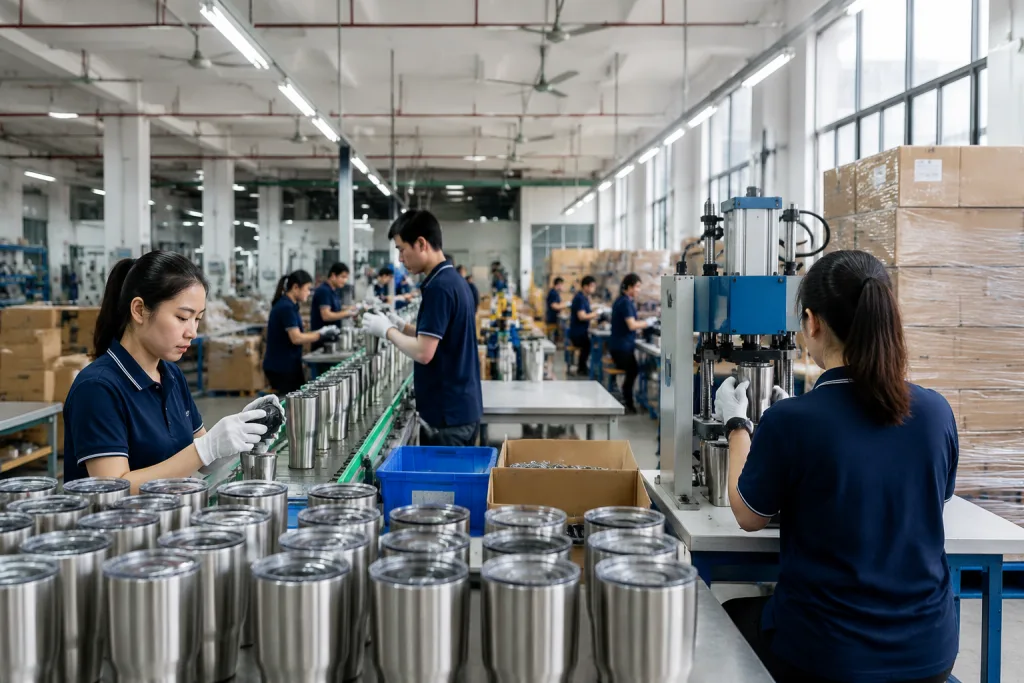
That is where a practical supplier list travel tumbler filter pays off. In Zhejiang and across China, plenty of factories look the same on paper, but the gap shows up in wall thickness, lid fit, vacuum performance, and how they handle AQL 2.5 inspection. We run this every week: one buyer flagged a 0.4 mm wall variance, QC pulled the sample, and the quote got fixed before production. A solid factory direct partner gives you a clear quote, a realistic MOQ, and monthly capacity in numbers; a weak one sells a cheap bulk coffee tumbler and vanishes when the color drifts or the lid leaks.
What buyers really need
I’ll rewrite the section in place, keep the HTML structure intact, and tighten the sales-engineer tone with concrete factory-floor detail.If you are building a supplier list travel tumbler shortlist, stop starting with “who has the nicest brochure.” Start with the commercial basics. For a coffee brand, the tumbler is part product, part packaging, part repeat purchase signal. For a corporate buyer, it has to land on time, look clean out of the carton, and stay sealed in a client’s bag. We run the leak check on the line with dyed water. That test tells you fast.
A workable checklist is short:
- Capacity: 12 oz, 16 oz, 20 oz, or 24 oz depending on cup holder and use case
- Material: 304 stainless for most bulk coffee travel mug programs; 316 only when the spec really needs it
- Lid: sliding, flip, or screw lid with silicone seal
- Logo method: silkscreen, laser engraving, UV print, or wrap print
- Packing: individual box, gift box, or mailer for coffee mug promotional products
In Zhejiang, a good factory will ask for your target retail price before it recommends a structure. That is the right question. A coffee mug factory direct quote only matters if the unit lands where your margin works. The buyer flagged a PO typo on a 20 oz run last month, and we had to reprint 5,000 cartons because the carton code was wrong. For most brands, a bulk coffee tumbler with a 0.6 mm inner wall, powder coating, and a one-color logo is the cleanest buy. The math does not work if you try to make every piece a gift set.
How to read a supplier list
I’ll rewrite the section in-place, keep the HTML exactly as-is, and make the prose sound like a factory-side sales engineer wrote it. I’m preserving the heading structure and list tags, while tightening the wording and adding a few concrete shop-floor details.A real supplier list is not a name dump. It should let you sort by capability. When a buyer asks for a supplier list travel tumbler file, we check whether each factory can answer five things without dodging: MOQ, lead time, monthly output, decoration methods, and test reports. If they cannot, they are a reseller or a trading desk, not the source you want.
Use this filter:
- Factory status: coffee mug manufacturer, coffee mug factory, or coffee mug OEM manufacturer
- Capacity: at least 200,000-500,000 units/month for stable programs
- Audit: BSCI, ISO 9001, or equivalent social/compliance coverage
- Test files: REACH, food contact declarations, and lid material declarations
- Commercial terms: FOB Ningbo or FOB Shanghai are common for Zhejiang export factories
You also want to know whether they do coffee mug private label work or only stock items. A factory that handles coffee mug customizable projects well will show logo placement, Pantone matching tolerance, and packaging options up front. We run a 6-color pad print line, and QC pulled the sample once because the buyer flagged a 1.2 mm logo shift; that is the sort of detail that matters. If they keep saying “no problem” and stay vague, the math does not work. In China, the gap between a sample shop and a real production partner is process control, not talk.
Ask for the same data on every supplier: MOQ, lead time, finish, carton size, and defect rate target. If the answers do not line up, the list is not ready.
Spec points that change price
I’ll rewrite the prose in place, keep the HTML and list structure untouched, and tighten the pricing language so it reads like a factory-side sales note.Most buyers stare at the logo and miss the shell. That is where the money moves. On bulk travel tumblers, price shifts fastest with steel grade, vacuum wall structure, lid style, and coating method. A plain 16 oz cup with powder coat and a stock lid usually sits around USD 2.10-3.20 FOB. Add a handle, a push-button lid, or a full-wrap print, and the quote jumps to USD 3.80-5.50 quickly.
Pay attention to these spec details:
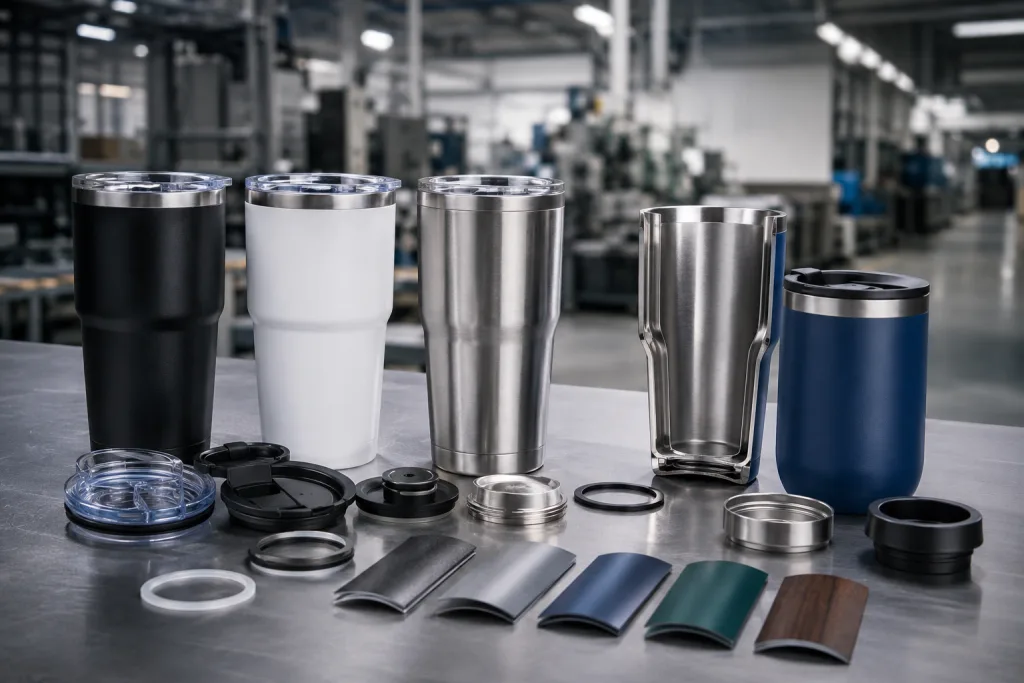
- Wall thickness: 0.4 mm trims cost, 0.5 mm is the normal build, 0.7 mm feels heavier in hand
- Seal: gasket fit drives leak rate more than any graphic on the cup
- Finish: matte powder coat hides scuffs better than glossy paint on the line
- Base: an anti-slip silicone ring helps on desk use and in the car
- Boxing: retail boxes can add USD 0.15-0.60 per unit, depending on print and insert
We see this go sideways when buyers request custom samples and change three specs at once. The quote moves, then they blame the factory. That is the wrong question to ask. Lock the body structure first, then print, then packaging. If you are ordering custom tumblers for corporate gifting, keep the cup standard and put the budget into presentation and branding. That math works better.
Sample review checklist
I’ll rewrite the section in place, keep the HTML exactly as-is, and tighten the language so it reads like a factory-side sales engineer wrote it.Do not sign off on a sample just because it looks good on a desk. Test it like a cup that will ride in a bag, go through dish soap, and hit the floor. A proper bulk travel mug sample check covers leak behavior, heat hold, logo wear, lid action, and car cup holder fit — no shortcuts.
Run this checklist:
- Fill with 95°C water and check exterior temperature after 10 minutes
- Invert for 5 minutes and look for drips around the lid and sip opening
- Shake for 30 seconds with 200 ml water inside
- Wash by hand and inspect logo wear after 10 cycles
- Measure actual capacity against the claimed 12 oz or 16 oz specification
If your supplier is serious, they will send a sample from the same tooling and the same finish line we run for production. We’ve seen buyers get burned by a “special sample” that turns into a different wall thickness on mass production; the math does not work. A good factory in Zhejiang knows that trick dies fast once QC pulls the first article and checks the spray finish against the signed sample.
Practical note: For promotional runs, a coffee mug promotional products order can live with a simpler lid and softer thermal numbers. For retail brands, the sample bar should be tighter. If you plan Amazon or DTC sales, check label fit, carton drop resistance, and whether the barcode sticker lands cleanly on a 38 mm flat panel — we ship that wrong once, and the buyer flags it immediately.
MOQ, lead time, and terms
I’ll rewrite the section in-place, keep the HTML structure, and make the copy sound like a factory sales engineer wrote it.The fastest way to burn a week is to open with 10,000 pcs before you know the real MOQ. On our line, a one-color logo often starts at 500 pcs, while custom gift boxes or mixed SKUs usually move the floor to 1,500-3,000 pcs. I’ve seen buyers push for “trial volume” and then get stuck on artwork changes after QC pulled the first sample.
A workable range looks like this:
- MOQ: 500-1,000 pcs for standard custom, 3,000 pcs for deeper customization
- Sample time: 5-10 days after artwork and color confirmation
- Mass production: 25-35 days after sample approval
- Capacity: a strong Zhejiang plant should support 300,000+ units/month on mainstream SKUs
For terms, most direct factory deals are quoted FOB, with EXW for local pickup and CIF for simple destination quotes. FOB is the cleanest number when you build a supplier list travel tumbler sheet; it keeps the factory price separate from freight, and that math actually works. If a supplier hides packing cost, tooling, or inland trucking, the buyer flagged it for a reason—you do not have a real comparison.
How to compare suppliers side by side
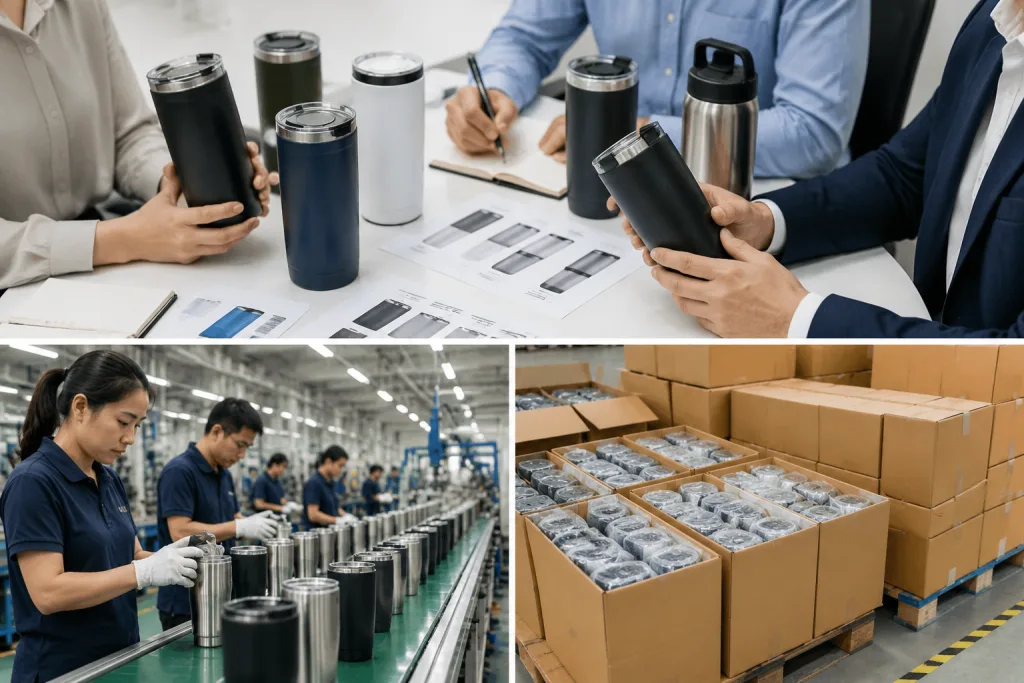
I’m rewriting the section in-place, keeping the HTML structure and tightening the language so it sounds like a buyer-side factory note. Next I’ll preserve the list fields, add a few concrete shop-floor details, and trim the salesy phrasing.Build the comparison grid on facts, not brochure talk. A coffee mug supplier directory only works when every row uses the same fields. You are not buying a slogan. You are buying a line.
Use a simple scorecard:
- Material: 304 or 316 stainless, BPA-free lid parts
- Decoration: silkscreen, laser, UV, heat transfer, or emboss/deboss
- Compliance: REACH, LFGB if needed, food-contact declarations
- Quality: AQL 2.5 for major defects, no leak target, color tolerance
- Commercial: FOB price, tooling fee, sample fee, MOQ, lead time
The lowest quote often loses on total cost. We’ve seen a coffee mug manufacturer save a buyer $0.12 a piece on paper, then burn it back with rework, leak claims, and replacement freight. On our side in Zhejiang, QC pulled the sample straight from the line and tagged the bad lids by cavity number; that is the sort of control that matters. Whether they call themselves a coffee mug factory or a coffee mug oem manufacturer is not the point. Process is.
If you are sourcing adjacent drinkware, keep the program lined up. A bulk coffee tumbler order can sit next to a bulk travel mug or a bulk coffee travel mug when the price bands differ, but the schedule should stay tight. We’ve seen this go sideways when one PO said 15 days and the next said 25 days; logistics hates that. Pick one arrival window and keep it.
Build your tumbler supplier shortlist now
Send your spec sheet, target price, and MOQ. We’ll help you turn a messy supplier list into a clean factory comparison.
Frequently asked questions
What should a supplier list travel tumbler include?
At minimum, each supplier entry should show factory name, location, MOQ, unit price, monthly capacity, lead time, decoration options, and compliance documents. For a real sourcing decision, add 304 or 316 stainless grade, lid material, and whether the plant is in Zhejiang or another part of China. If the file does not show FOB terms and sample time, it is not ready for procurement. A usable list usually has 5-10 factories, not 50 random names.
What is a normal MOQ for a custom travel tumbler?
For most coffee brand and corporate-gift programs, a normal MOQ is 500-1,000 pcs for a standard body with one logo color. If you want custom packaging, multiple colors, or a special lid, plan for 1,500-3,000 pcs. A coffee mug custom made project can go lower only if the factory already has a stock model and you are changing decoration only. Zhejiang factories often give better MOQs on repeat orders.
How much does a bulk coffee tumbler cost?
A plain 16 oz bulk coffee tumbler usually starts around USD 2.10-4.80 FOB China depending on steel thickness, lid type, coating, and print method. Laser engraving is often cheaper than full-color wrap on a large run, but a premium lid can push cost up quickly. Add USD 0.15-0.60 for retail-style packaging. Freight is separate, so compare FOB pricing before you judge a supplier.
What quality checks matter most for coffee mug bulk orders?
Leak testing, thermal retention, logo adhesion, and carton drop testing matter more than a glossy sample photo. Ask for AQL 2.5 inspection and a food-contact declaration. For stainless travel tumblers, check for 0.5 mm to 0.7 mm wall thickness, lid seal fit, and odor-free PP parts. If you are selling in North America or Europe, also ask for REACH or LFGB-related documentation where applicable.
Should I use a coffee mug distributor or a factory direct supplier?
If you need speed and only a small quantity, a coffee mug distributor can be fine. If you need control over margin, decoration, and packaging, coffee mug factory direct is usually better. A factory in China or Zhejiang can usually offer sharper pricing, clearer tooling control, and more stable repeat production. For private label or promotional programs, factory direct wins unless you need a very mixed, low-volume assortment.