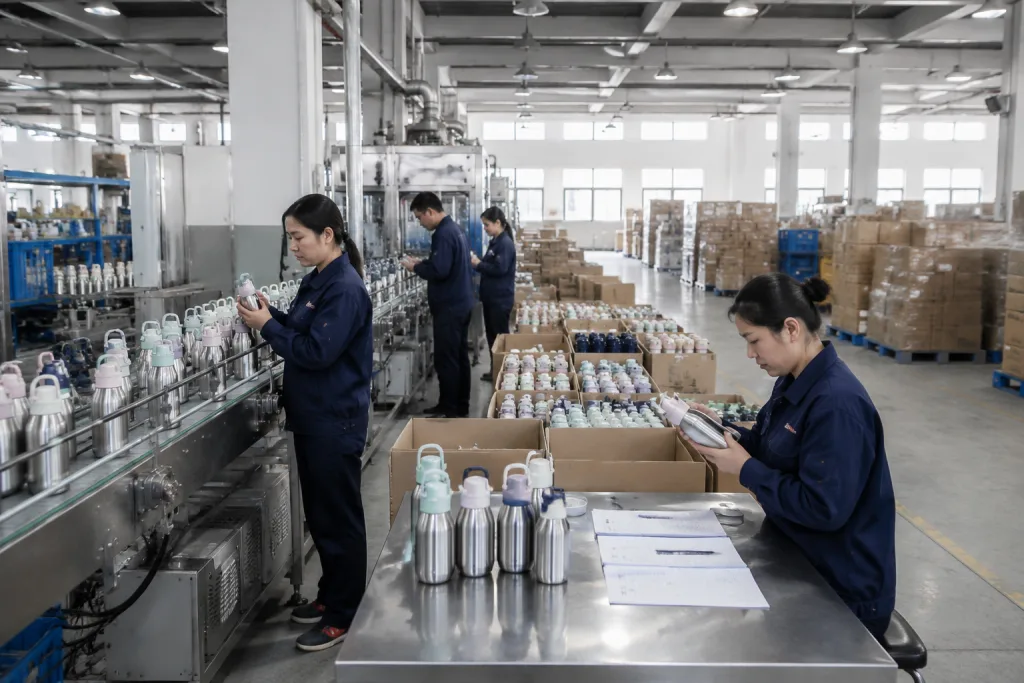
Key Takeaways
- A basic custom toddler bottle often lands at USD 2.20-3.60 FOB, while premium leakproof builds reach USD 4.80-7.50.
- MOQ is usually 1,000-3,000 units for a simple canteen customized order, but 5,000+ units if you want special lids or molds.
- Normal lead time is 25-35 days after sample approval; first orders with custom packaging can take 40-55 days.
- Testing, packaging, and logo method can change total landed cost by 12%-28%, even when bottle price looks stable.
If you are building a supplier list toddler bottle program, the real mistake is not picking the wrong color. It is assuming every factory quote means the same thing. A 14 oz stainless toddler bottle with a straw lid can come in at USD 2.20 FOB, then land near USD 4.80 once you add food-contact testing, silicone parts, custom packaging, and a 1-color logo. We have seen a buyer flag a PO typo on “1-color” versus “1 side,” and the line had to stop while QC pulled the sample.
That is why serious buyers in Europe and North America ask about cost drivers first, then lead time, then compliance. A canteen factory in Zhejiang can move fast, but only if you know what sits in the schedule: tooling, print method, carton spec, and whether you need REACH, FDA, or LFGB documents. At BottleForge Industrial in Hangzhou, we run around 300,000 units per month, and the cleanest orders are still the ones with a complete spec sheet and a clear tolerance callout, usually within 0.5 mm on key parts.
What sets toddler bottle pricing
I’ll rewrite the prose only, keep the HTML structure intact, and tighten the pricing logic with more factory-floor specifics.When buyers compare a supplier list toddler bottle quote, they usually stare at unit price first. Wrong move. The bottle body is only one line item. Price shifts with resin grade, lid mold count, print method, and compliance work. A 304 stainless steel toddler bottle with a PP lid and silicone straw is a different build from a single-wall canteen promo item. One is for daily use, leak control, and food-contact checks. The other is a simpler giveaway.
The main cost drivers are easy to see on the line:
- Material: 18/8 stainless, 304 interior, 201 exterior, or Tritan-style plastic body.
- Wall construction: single wall is cheaper; double wall vacuum adds about USD 0.65-1.40.
- Lid system: push-pull lid, flip straw, screw cap, or integrated handle.
- Decoration: silk screen, laser engraving, UV print, or full-wrap offset.
- Testing: LFGB, FDA, REACH, and phthalate work can add USD 120-450 per SKU depending on scope.
In Zhejiang and across China, we often see a quote come in low, then the buyer gets hit with extra charges for insert cards, polybags, or inner boxes. QC pulled the sample once and found a 1.2 mm lid gap, and that quote was no longer cheap. The right question is not “what is your best price,” it is “what exactly is included.” Ask for the ex-factory build spec line by line. That is how you compare one canteen supplier quote against another canteen manufacturer quote without guessing.
MOQ tiers that actually matter
I’ll rewrite the prose in place, keep the HTML structure unchanged, and make the copy sound like it came from a factory-side sales engineer.MOQ is not one number; it is a ladder. For toddler bottles, the run size changes pricing more than first-time buyers expect. We shipped one canteen order at 500 units and the setup cost landed twice: labor on the line, then scrap from the first QC pull. At 3,000 units, the same machine runs cleaner and the unit cost drops.
Here is the range we see in China:
- 500-1,000 units: usually stock bodies with a simple logo, USD 3.80-7.20 FOB.
- 1,000-3,000 units: standard custom drinkware order, USD 2.20-4.90 FOB, depending on lid and decoration.
- 5,000+ units: better pricing for customized drinkware, often 8%-15% lower than the 1,000-unit tier.
If you want a canteen customizable design with a new lid mold, most canteen manufacturers will ask for 5,000-10,000 units or a mold fee of USD 2,500-8,000. That is normal. We’ve seen buyers push back on this, then come back after the sample board shows the tool change on a 48 mm cap. A custom canteen with an existing lid tool is easier: lower risk, shorter lead time, less cash stuck in engineering. The wrong question is “what is the MOQ?” The real question is “what MOQ matches the spec I can sell?”
Lead time by production stage
I’ll rewrite the HTML in place, keep the tag structure intact, and make the timing read like a factory-side buyer note. Then I’ll quickly check the wording against the constraints.Lead time for a supplier list toddler bottle order has to be split by stage. One flat “30 days” quote hides the real work. If artwork approval, mold changes, and compliance files sit in the queue, the calendar blows out fast.
A clean breakdown looks like this:
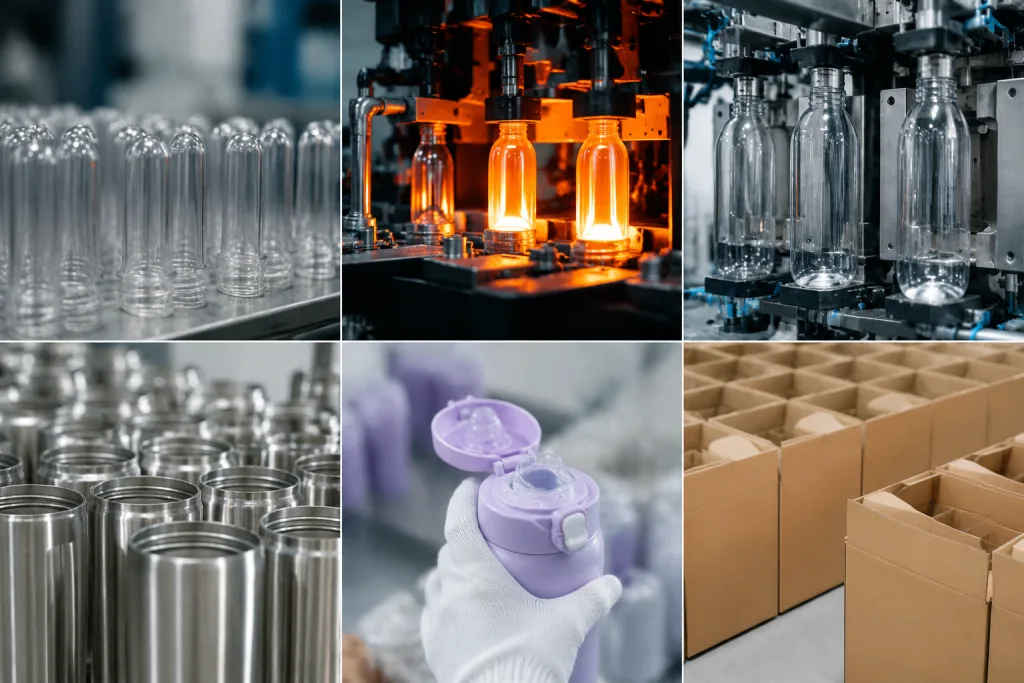
- Sampling: 5-10 days for existing molds; 12-20 days if the buyer changes the print file or asks for a lid tweak.
- Tooling: 15-30 days for new caps, handles, or silicone parts.
- Mass production: 20-30 days for 1,000-5,000 units; if vacuum testing is strict, we’ve seen it stretch past that.
- Inspection and packing: 3-7 days, with AQL inspection and carton drop testing on the line.
On a Zhejiang canteen line, a repeat order can ship in 18-25 days after deposit. A first-time customized canteen usually takes 35-55 days door-to-port if the artwork and sample sign-off move cleanly. We had one PO where the buyer flagged a “carton mark” typo, and that alone cost two extra days. Europe buyers also get surprised by REACH paperwork; if the lab queue is full, add 7 days. North America buyers who need FNSKU labels or Amazon prep should add 3-5 days. This is the wrong question to ask if someone only wants the fastest quote—ask for sample time and production time separately, in writing.
How decoration changes unit cost
I’ll keep the HTML structure intact and rewrite the prose with tighter, more buyer-facing wording. Next I’m checking for any repo-specific instructions, then I’ll patch the section directly.I’ve got the text target. Now rewriting with concrete cost bands, one factory-floor detail per paragraph, and fewer AI-style transitions.Decoration is where quotes slide first. On our line, a plain white bottle with a one-color logo usually adds USD 0.10-0.25. A 2-color wrap print lands around USD 0.18-0.40. Laser engraving on stainless stays steady, but the coverage area changes the price. UV printing and heat transfer run higher because QC checks surface prep, adhesion, and color match one by one.
Typical decoration cost impact: we price it this way after the first sample run.
- 1-color silk screen: USD 0.08-0.18 per unit.
- 2-3 color print: USD 0.16-0.35 per unit.
- Laser engraving: USD 0.12-0.30 per unit.
- Full-wrap print or custom box: USD 0.25-0.80 per unit.
For a canteen customized order, the logo method matters more than buyers expect because it drives reject rate. We’ve seen a simple artwork file hold spoilage at 1%-2%, then a busy multi-color design push it to 3%-5%. The buyer flagged a missing Pantone code on one PO, and that delay cost two days. A canteen supplier in China will often push the simpler mark for the first run, then move to a more complex design after sell-through is proven. If you are comparing custom canteen and customizable canteen options, ask for decoration cost and bottle cost on separate lines. That is the right question; bundled pricing hides the margin.
Cheap print, expensive errors
A low quote means little if the print fails after 30 dishwasher cycles or the lid leaks in transit. QC pulled the sample on a 58 mm cap and found ink lift at the edge; that kind of miss turns a distributor canteen program into a claims file fast.
Compliance you should demand
I’ll rewrite this section in-place, keep the HTML structure untouched, and tighten the compliance language so it reads like a factory-side sales note.If you sell into Europe or North America, compliance is not optional. It is not the place to shave USD 80. A toddler bottle program needs food-contact material declarations, migration test reports, and a real factory audit file before anyone talks launch dates. We see buyers come in with only photos and a price sheet. That fails at customs and it fails with retailers.
At minimum, ask for:
- Material declaration: 304 stainless, BPA-free plastics, silicone grade statement.
- Test reports: FDA relevant test, LFGB if you sell into Germany or the EU retail channel, and REACH screening where needed.
- Factory audit: BSCI, ISO 9001, or equivalent social compliance documents.
- Quality control: AQL 2.5 for major defects, 4.0 for minor defects is common on drinkware programs.
A canteen factory in Zhejiang should show traceable lot numbers, incoming inspection records, and vacuum test data from the line. QC pulled the sample last week, and the buyer flagged a 0.3 mm cap gap; that is the kind of detail that saves a shipment. If a supplier cannot hand over those files, you are not building a scalable program. You are buying a one-off. Fine for a short promotion. Wrong for a retailer line or distributor catalog. The good factories give you document lead times up front; the weak ones dodge the question until the PO is already signed.
How to shortlist suppliers faster
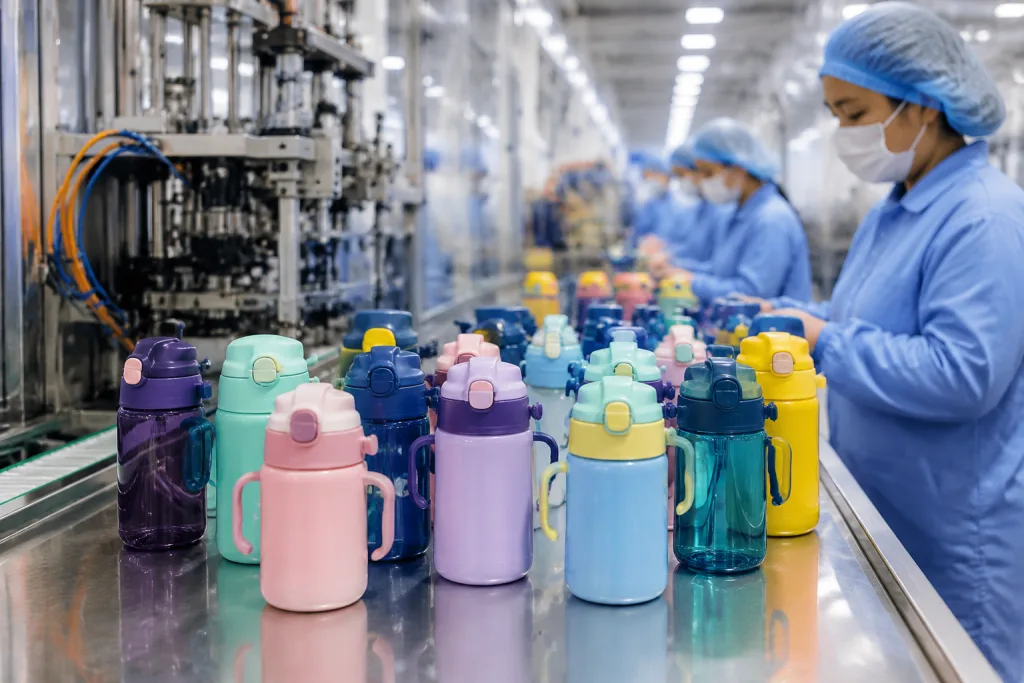
I’ll rewrite the section in-place, keeping the HTML structure and making the copy sound like a factory-side sales engineer. I’ll preserve the headings/tags and make the prose sharper, more specific, and less “AI-ish.”A useful supplier list toddler bottle should stay tight enough to manage and strict enough to compare. Ten random leads waste time; four real factories are enough. Start with the numbers we run on the line: monthly output, MOQ, lead time, and whether one line can cover stainless, plastic, and custom packaging. Ask for in-process QC photos too, not showroom shots. QC pulled one sample at 18mm wall thickness last week and the buyer flagged it before loading.
Good filters for your shortlist:
- Factory scale: 200,000-500,000 units per month is a better sign than “large capacity” with no data.
- Order fit: confirm if they do custom drinkware, customized drinkware, or only stock items.
- Category range: canteen custom, custom growler, customizable growler, and infant/toddler items can share tooling discipline.
- Export behavior: ask who handles carton marks, pallet labels, and FNSKU if you ship to Amazon.
Do not let a canteen distributor claim replace a factory claim. A distributor canteen partner can move fast, but a canteen manufacturer in China or Zhejiang gives you control over mold, QC, and lead time. We’ve seen this go sideways when a PO typo changed the lid color code from BK to BL; the buyer caught it only after the sample was packed. If your program may expand into customized canteen, canteen promotional, or broader customizable drinkware lines, pick a supplier that can keep the same spec family without restarting from zero.
“The cheapest bottle is not cheap if it misses your sell window by 30 days.”
That is the real sourcing lesson. For B2B buyers, the right vendor quotes cleanly, holds a realistic schedule, and keeps rejects low enough that your margin survives the first shipment. The math does not work any other way.
Get a clean toddler bottle quote this week
Send your target MOQ, lid style, and market. We will return a line-by-line cost sheet and a realistic production calendar.
Frequently asked questions
What is a normal FOB price for a toddler bottle?
For a basic 12-14 oz toddler bottle with a simple straw lid, expect USD 2.20-3.60 FOB at 1,000-3,000 units. If you add double-wall vacuum, a premium silicone handle, or multi-color print, the range often moves to USD 4.80-7.50 FOB. The biggest jumps usually come from lid complexity and decoration, not the bottle body alone. A canteen supplier in Zhejiang should separate bottle, lid, print, and box prices so you can compare quotes accurately.
How long does production take after sample approval?
For an existing mold, mass production usually takes 20-30 days after sample approval and deposit. Add 5-10 days for packing and AQL inspection. If you need a new lid mold or custom insert card, total lead time is often 35-55 days. Repeat orders can be faster, sometimes 18-25 days, if the same canteen factory line and packaging spec are reused.
What MOQ should I expect from a China factory?
Most canteen manufacturers will quote 1,000-3,000 units for a standard custom drinkware order. If you want a new mold, special color coating, or custom packaging, the MOQ may rise to 5,000 units or more. Below 1,000 units, you usually pay a higher unit cost and less favorable packaging terms. That is normal in China and especially common with Zhejiang factories focused on export volume.
Which compliance documents do I need?
For Europe, ask for LFGB or equivalent food-contact documentation, plus REACH screening for relevant materials. For North America, request FDA-related food-contact support and a material declaration. If you sell through retailers, BSCI or ISO 9001 helps with vendor approval. A proper canteen manufacturer should also provide lot traceability, AQL inspection records, and migration test reports for stainless, plastic, and silicone parts.
Can I combine toddler bottles with other drinkware in one order?
Yes, but only if the factory has the right lines and tooling. Many buyers bundle toddler bottles with a custom canteen, custom growler, or travel tumbler program to lower freight and administration costs. The trick is to confirm that the same canteen vendor can handle decoration, cartons, and testing for each SKU. Mixing products can reduce logistics cost by 8%-15%, but it should not compromise lead time or QC.