Key Takeaways
- A useful supplier list thermos flask should filter by MOQ, not just catalog size; 3,000 pcs is a common export starting point.
- For stainless thermos, 18/8 body steel and a 0.4-0.5 mm wall are more predictable than vague “premium” claims.
- Lead time is usually 25-35 days after sample approval, with 7-12 days for sampling from a Zhejiang factory.
- FOB China pricing for a 500 ml custom thermos typically starts around USD 2.40-4.80 depending on decoration and lid complexity.
If you are building a supplier list thermos flask for outdoor retail or a promo program, the bad news is simple: most “supplier lists” are just lead lists. They tell you who exists, not who can hold a real production spec, hit your decoration standard, and ship on time. The real question is not which thermos looks good online. It is which thermos supplier can keep vacuum performance stable, pass REACH, and repeat the same result on the second order without blowing up your forecast.
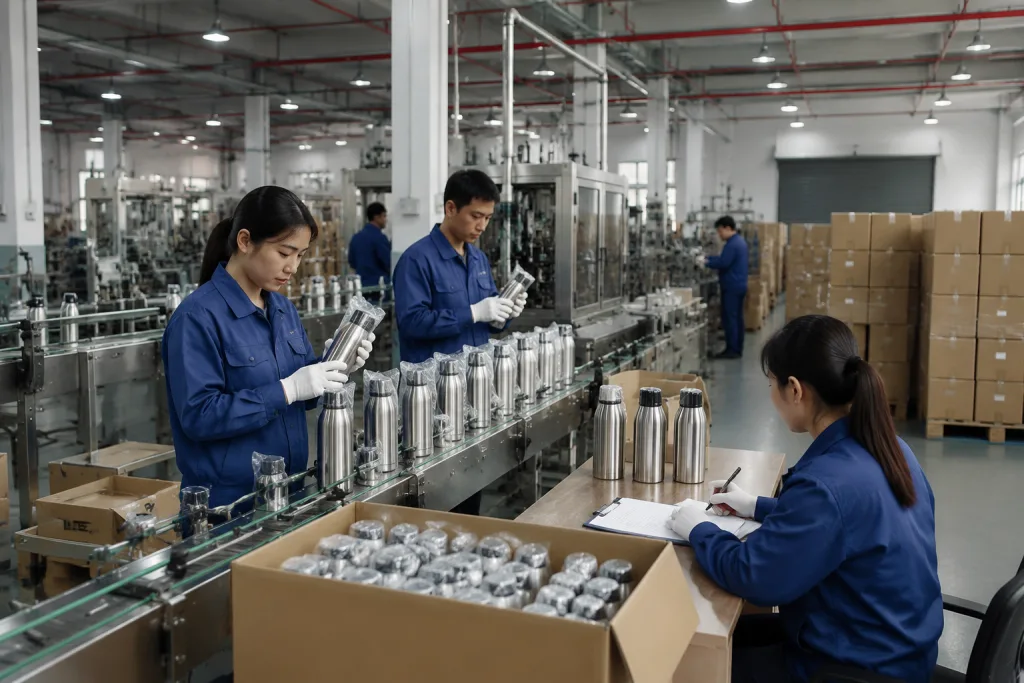
At BottleForge in Zhejiang, we see the same pattern every week. Buyers start with a broad thermos factory search, then cut the list after they compare 0.4 mm wall thickness, 18/8 stainless, MOQ, and logo method. That is the right move. One buyer once sent a PO with “304” in the spec and “201” in the price line, and QC pulled the sample immediately. A good supplier list thermos flask is a filter, not a directory, and China has plenty of solid factories if you ask the right questions early.
Start with the sales channel
I’ll rewrite the section in a sharper supplier-facing tone, keep the HTML intact, and make sure each paragraph has a concrete factory-floor detail.The first decision is not color or logo placement. It is where the thermos will sell. An outdoor retailer needs drop-test survival, stable insulation, and a carton that still looks clean after pallet handling. A promotional brand usually cares more about unit cost, print area, and whether the mug fits a campaign box. Mix those briefs, and you end up paying for features nobody buys or shipping a weak spec that gets returned after the first season.
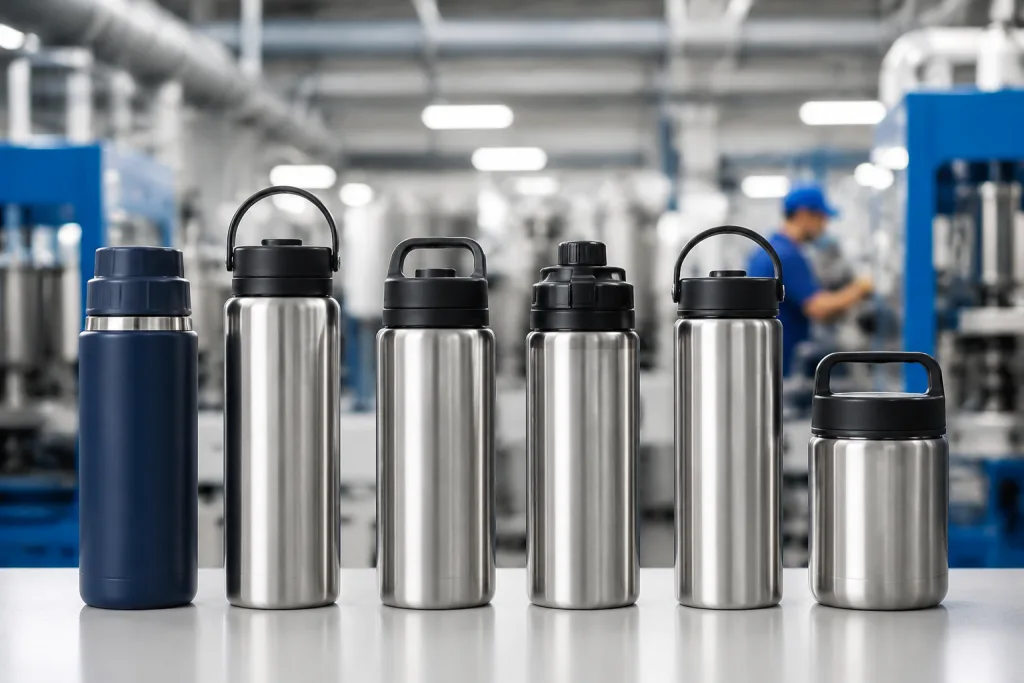
For outdoor retail, we would shortlist a stainless thermos with double-wall vacuum construction, 18/8 inner and outer steel, and a lid that still feels solid after 200 open-close cycles. On the line, we check lid torque with a small hand gauge, and the buyer often asks for a cheaper cap after seeing the first quote. For promotional thermos runs, you can trim spec detail and put more budget into branding. That usually means a straight-body shape, a lower-cost PP or bamboo lid, and a wider silkscreen panel. A distributor wants easy replenishment; a brand owner wants the same bottle across three campaigns. Those are different jobs.
Before you compare suppliers, write the channel in one sentence: bulk thermos for retail sell-through or custom thermos for promotion. That one line saves weeks of sampling. QC pulled the sample on a 2 mm lid gap before it left packing, and that is the kind of issue you want caught early. In Zhejiang, factories handle both every day, and the best thermos flask proposal is the one that fits the sales math, not the prettiest rendering.
Check the steel and vacuum spec
I’ll rewrite this section to sound like a factory-side sales engineer, keep the HTML exactly as-is, and tighten the claims with concrete shop-floor details.Stainless thermos buyers get distracted by paint and print, then miss the basics. Steel grade, wall thickness, and vacuum quality decide whether the flask ships clean or comes back with complaints. For export orders, 18/8 stainless steel is the default we quote for the inner wall, and often the outer wall too. On our line, 0.4-0.5 mm body thickness is the usual range when the buyer wants a fair balance of weight, dent resistance, and unit cost.
If a supplier says “food-grade stainless” but refuses to name the grade, that is a red flag. Ask straight whether the cup uses copper coating, silver plating, or another heat-reflective layer in the vacuum chamber. Those details change heat retention, scrap rate, and the price sheet. A 500 ml thermos with basic vacuum build may stay above 60°C for 8-10 hours; a better unit can do more, but we need test data from the lab, not a brochure.
- Ask for ASTM or ISO test references when the factory quotes retention claims.
- Request salt-spray or corrosion test data if the bottle has painted outer surfaces.
- Confirm lid material, because a PP lid with a loose gasket can sink an otherwise solid thermos customized for retail.
If you compare thermos manufacturers in China, ask for cross-section photos or a pre-production sample. QC pulled the sample, checked the weld ring under a gauge at 0.02 mm, and that tells you more than a sales deck ever will. A real thermos factory in Zhejiang should show vacuum seam consistency and insulation test results without drama.
Match decoration to margin
I’ll rewrite the section in place, keep the HTML exactly as-is, and make the copy sound like a factory-side sales engineer wrote it.Decoration is where a lot of custom thermos jobs go off track. Pick the wrong branding method and you can add USD 0.35 per unit, then still end up with a mark that looks tired after a few wash cycles. The choice comes down to the finish, logo size, and how many colors are in the artwork. Silkscreen is still the low-cost route for a one-color logo. Laser engraving costs more at the start, but on brushed stainless it gives a cleaner mark that holds up better. UV printing can carry more color, though it needs tighter control on the line and is not the first pick for thermos bulk runs.
If the order is for distributors thermos resale, pick a decoration method that makes reorders painless. One-color laser on a matte body is easy to repeat across three seasons without chasing new artwork fixes. For thermos promotional orders, buyers often push for louder branding, but abrasion still decides the winner. We’ve seen backpacks chew up a glossy print in 2 weeks, while a deeper laser mark stayed readable after the same abuse.
Factories in Zhejiang often quote a blank bottle first, then list logo work, packaging, and color matching as separate lines. That is normal. A clean quote shows the base bottle price, logo setup fee, print unit cost, and packaging upgrade on separate rows. If a supplier hides those numbers, the math does not work. QC pulled a sample last month with a 1.2 mm logo shift, and the buyer flagged it before shipment. Compare suppliers thermos offers on the same basis, or you end up chasing margin that was never real.
Price the full landed unit
I’ll rewrite the HTML in place, keep the tag structure unchanged, and tune the prose to sound like an export-sales engineer wrote it.Do not compare supplier list thermos flask quotes by unit price alone. A FOB price of USD 2.60 can turn into USD 4.20 once you add decoration, custom inserts, and a stronger carton. We run this math on the line every week. The real number is landed cost per sellable unit. If you ship to a U.S. warehouse or a European distributor, add transit packaging, palletization, and the compliance file the importer wants.
For a 500 ml stainless thermos, a plain bulk thermos quote usually sits around USD 2.40-3.10 FOB China. Add laser engraving, a color box, and a better lid, and the number moves to USD 3.50-4.80. That can still work if the margin is there. If the buyer flags a low-cost campaign item, this is the wrong question to ask; simplify the body shape and keep the standard lid mold instead of opening a new tooling job. QC pulled the sample, and the 1.2 mm wall held up fine.
“A cheap thermos can get expensive if it leaks, prints badly, or misses ship date by 20 days.”
For brands sourcing from a manufacturer thermos partner in China, ask for an option table: blank, one-color print, laser, gift box, individual carton. We had a PO typo once where the carton size was listed as 12 pcs instead of 24 pcs, and it changed the whole packing count. A clean option table makes it easier to compare a thermos vendor in Hangzhou against suppliers in other parts of Zhejiang and keeps the deal grounded.
Set the MOQ and timing now
I’ll rewrite the section in place, keeping the HTML tags and the heading intact, and I’ll tighten the sales-engineer tone with concrete MOQ and timing details.MOQ is not a slogan; it is how we keep the line moving. If your supplier list thermos flask mixes factories with different MOQs, you are not comparing the same job. For a custom stainless thermos, 3,000 pcs per color or per logo version is a normal export ask. We have run 1,000 pcs for a buyer once, and the unit price jumped because the silk-screen frame, carton print, and packing changeover still had to happen.
Lead time needs a hard number. On our line, samples take 7-12 days, first-order production approval takes 15-20 days, and bulk production takes 25-35 days after deposit and artwork sign-off. A buyer once flagged a PO typo on the logo file name, and that cost us 2 extra days before QC pulled the sample. If a factory says 12 days for a fully custom order, ask how they handle print curing, vacuum test, and carton drying; the math does not work unless they are skipping checks.
This is a supply chain call, not a shopping exercise. If you need distributors thermos replenishment every quarter, keep the same bottle shape, lid stock, and packaging spec alive across runs. If it is a one-off promotional thermos job, a higher MOQ can still make sense when it cuts the landed cost by 8%-12%. Zhejiang suppliers usually move faster when the forecast is locked and the artwork is final; we ship cleaner when the buyer stops changing the lid color on the last day.
Inspect QC like a buyer, not a tourist
I’ll rewrite this section in-place, keep the HTML tags untouched, and tighten the language so it reads like a factory-side QC note from an export sales engineer.Quality control is where a lot of buyers stop buying the story and start asking for the report. A real thermos factory should state the inspection plan in plain language. For export orders, ask which AQL level they use for appearance and function. AQL 2.5 for major defects and 4.0 for minor defects is a common reference point, and the PO or QC agreement should spell it out.
Ask for leak testing, vacuum retention testing, and dishwasher exposure if your market calls for it. If the supplier says the bottle is “safe” but cannot show REACH paperwork for Europe or migration test support, move on. For North America, buyers usually ask for material, coating, and food-contact documents. That stack of paper is not exciting, but it saves a distributor thermos network when the buyer flags a claim.
At BottleForge in Zhejiang, we run 120,000 units a month across stainless drinkware, so we see how a 0.2 mm lid-thread miss turns into a pallet of complaints. QC pulled one sample last month and the gauge told the story: the cap still fit, but the seal line was walking. This is the wrong question to ask: “Does it look fine?” The better move is pre-production samples, mid-line inspection, and final random inspection before balance payment.
Build a shortlist that can reorder
I’ll rewrite the prose only, keep the HTML tags intact, and make it sound like a real factory-side sales engineer wrote it.A supplier list thermos flask should not stop at one sample order. It should leave you with a factory partner who can take the second PO without starting over. That means stable molds, repeatable decoration, packing specs on paper, and one contact who answers when you ask for a change. We have seen reorders slip when the buyer flagged a tiny logo shift and nobody could confirm the old file. For outdoor retail, that keeps the shelf stable in peak season. For promotion, it keeps the shipping window from blowing up.
The shortlist should have three layers. First, one thermos factory with the best price and enough line capacity. Second, one thermos supplier that is stronger on decoration or packaging. Third, one backup manufacturer thermos source in China or in Zhejiang for risk control. Ten names is noise. Three good ones are enough. On our line, we keep a 500 ml body sample, a cap sample, and one carton spec matched before we quote the second order.
Use the same questions on every factory. Can you hold this mold for 12 months? Can you match the same Pantone on the second order? Can you ship 10,000 units in 30 days if the campaign moves? Can you support custom thermos packaging without pushing the MOQ too high? If the answer is yes, you have a real supplier list thermos flask. If not, you have leads. The math does not work any other way.
Shortlist your thermos suppliers with confidence
Send your target capacity, logo method, and MOQ. We will help you compare factory options in Zhejiang and China without wasting sample rounds.
Frequently asked questions
What is a realistic MOQ for a custom stainless thermos?
For most export projects, 3,000 pcs per color or per logo version is a realistic MOQ. Some factories in Zhejiang can quote 1,000-2,000 pcs, but the unit price often rises by 15-30% because setup costs do not shrink. If you need multiple lids, multiple print colors, or gift packaging, the effective MOQ can climb further. Ask whether the MOQ applies to blank body, printed version, or packed finished goods, because those are not the same number.
How much should a 500 ml thermos cost FOB China?
A basic 500 ml stainless thermos usually starts around USD 2.40-3.10 FOB China. Add laser logo, matte coating, or a better lid, and you may reach USD 3.50-4.80. If you want premium packaging or special surface effects, budget higher. The final number depends on stainless grade, lid mold, vacuum process, and order volume. Always compare the full quote, not just the bottle price, because cartons and decoration can move the total by 20% or more.
What certifications should I ask a thermos supplier for?
For Europe, ask for REACH support and material declarations. For retail accounts, ask about food-contact compliance, migration testing, and factory audit status such as BSCI if your buyer requires it. For performance claims, request retention test data and the method used, ideally aligned to a recognized lab standard. If the supplier is in China and exports regularly, they should be able to provide these documents without weeks of delay. If they cannot, that is a signal to move on.
Is laser engraving better than silk screen on stainless thermos?
It depends on the market. Laser engraving is more durable and usually looks sharper on brushed stainless, so it is a good choice for outdoor retail and higher-end custom thermos orders. Silk screen is cheaper for simple logos and better for promotional thermos runs where unit cost matters most. In practice, laser may add USD 0.20-0.60 per unit while silk screen may be lower, especially on larger orders. Choose based on abrasion risk, logo complexity, and reorder consistency.
How long does production usually take in China?
For a standard stainless thermos order, sampling often takes 7-12 days. After sample approval and deposit, mass production usually runs 25-35 days. If the order needs new tooling, special packaging, or complex decoration, add time. Shipping from Zhejiang to your port or warehouse is separate. A factory with good line control can keep repeat orders faster because molds, lids, and packaging are already set up. Always build a buffer if your launch date is fixed.