Key Takeaways
- For custom tea bottles, set AQL at 2.5 major / 4.0 minor and define leak testing at 100%
- A serious Zhejiang canteen manufacturer should state steel grade, wall thickness, gasket material, and coating process before quoting
- Expect realistic MOQ from 1,000-3,000 pcs per SKU for custom drinkware with logo and color work
- Bulk lead time is usually 30-45 days after sample approval, not after the first email
A supplier list tea bottle search looks easy until 3 pre-production samples pass on the desk and the 5,000 pcs bulk order acts like a different product. Lids leak after a 95°C hot-fill test. Infuser baskets show rust at the spot weld after 24 hours in salt spray. Powder coating chips near the shoulder where the bottle rubs the conveyor rail. We’ve also seen a 5-layer carton look fine beside the packing line, then collapse after two days of inland trucking from Yongkang to Ningbo.
You do not need a 60-row spreadsheet of canteen suppliers. That is the wrong question to ask. You need 8 to 12 canteen manufacturers who can tell you where the risk sits and how they control it before cutting steel or ordering powder. From our Zhejiang factory floor, a useful RFQ pushes the canteen factory to lock material grade, lid tolerance in mm, AQL 2.5 inspection points, lead time at 12 days vs 18 days, and rework rules before production starts; last month QC pulled a sample because the PO said “matte black” but the approved swatch was semi-gloss black.
Your supplier list is too polite
I’ll rewrite the section in-place, keeping the HTML tags and structure intact while tightening the prose and adding the factory-floor details you asked for.Most buyer spreadsheets hide the real risk. They show company name, contact, quoted FOB price, MOQ, and maybe a certification box. That is not enough for a supplier list tea bottle project because tea bottles mix heat, liquid sealing, metal contact, and branding decoration. A weak canteen supplier can look clean on paper and still ship a line that comes back at 6% in retail.
When you ask canteen vendors for a quote, force the details out. Ask whether they are a trading company, a canteen manufacturer, or a mixed setup with outsourced coating and logo work. None of those models is wrong, but the control points change. We’ve seen a buyer flag a PO typo on `Pantone 186 C` versus `Pantone 186 U`, and that one letter sent the whole color job sideways. If a canteen vendor outsources powder coating, they need to name the coating line, tell you how they check color drift, and say who pays rework when the approved target misses `Delta E 2.0`.
For a normal stainless steel tea bottle with infuser, we usually see workable buying conditions around `1,000 pcs` per color for simple laser logo, `3,000 pcs` for full custom color, and `5,000 pcs` if you need a private mold lid. In Zhejiang, China, our drinkware lines run about `450,000` stainless units a month across thermos bottles, tea infuser bottles, and travel tumblers, but that number means nothing if the order file is messy before the line starts. QC pulled the sample on a `0.8 mm` gasket once and the leak test failed at the cap, not the bottle.
Do not rank canteen distributors by price first. Rank them by how fast they answer the hard questions: material traceability, gasket grade, coating adhesion, leak-test method, and AQL acceptance. The best canteen distributors do not promise the moon. They tell you where the spec is thin. That is the question to ask.
Failure one: wrong steel assumptions
I’ll rewrite the prose to sound like a factory-side sales engineer, keep the HTML intact, and make the steel spec much more concrete.The first failure is plain and costly: the buyer writes “stainless steel tea bottle” and assumes every quote means the same build. It does not. One canteen factory may price 201 stainless for the shell, 304 for the liner, and 316 for the infuser basket if the target landed cost is tight. If tea, lemon slices, or herbal infusions touch the inner wall, we run 304 stainless steel on the contact surface as the floor, not the upgrade. For baskets that sit in salty drinks or strong citrus, 316 is the safer call.
Ask for the material stack line by line. A clean spec reads like this: inner liner 304 stainless steel, outer shell 201 or 304 stainless steel, infuser basket 304 or 316 stainless steel, lid PP or Tritan, gasket food-grade silicone, all food-contact parts meeting LFGB or FDA. If the buyer flagged Europe, we check REACH and the German LFGB sensory side; for North America, we confirm FDA food-contact status and whether ASTM or CPSIA review applies for kids’ channels. QC pulled the sample on a 58 mm lid once because the PO said “food grade” and nothing else. That kind of shorthand causes trouble.
Wall thickness needs a number too. A lot of tea bottles sit at 0.4-0.5 mm stainless sheet before forming. Go thinner and the shell dents in drop tests or carton compression; go thicker and the math stops working on FOB and gross weight. For a 500 ml double-wall tea bottle, we usually quote 0.4 mm inner and 0.5 mm outer material, then check after vacuum and drop testing on the line.
The mistake is not choosing 201 or 304. The mistake is letting the customized quote hide the call. Your custom canteen file should name every food-contact material, not just the sales label.
Failure two: lids pass samples only
I’ll keep the HTML intact and rewrite the four paragraphs with tighter, buyer-facing language, adding concrete factory details and removing the AI-ish phrasing.Leakage is where a lot of supplier list tea bottle jobs turn into warranty claims. The pre-production sample is usually hand-built by our best technician, but bulk lids go through the line with time pressure, and a gasket that is just 0.2 mm softer or harder than the sample can change the seal. We have seen that go sideways on the first carton.
Write the test into the PO, not just “no leaking.” For screw lids, we run 100% air-pressure or water leak testing at the factory, then random hot-water inversion checks at final inspection. A workable check is 90°C water at 90% capacity, lid closed, bottle inverted for 30 minutes, then inspect the gasket seat and thread for seepage. For vacuum tea bottles, add thermal retention testing: fill with 95°C water and record the temperature at 6 hours and 12 hours in a 20°C ± 2°C room.
The gasket is usually the problem part. Your canteen customizable spec should call out silicone hardness, often Shore A 50-60 for drinkware lids, and it should reject visible flash, tearing, odor, or deformation after hot-water exposure. If the lid uses a push-button or flip mechanism, ask for cycle testing. We normally push for 3,000 open-close cycles for retail, and more if the bottle is sold as outdoor gear. That is the right question to ask.
For distributor drinkware and distributor canteen programs, leakage has to sit in the critical defect column under AQL. One leaking unit can stain cartons, labels, and the units next to it. QC pulled the sample once after a buyer flagged a PO typo on the gasket spec, and the whole carton was at risk. On our QC sheet, this is not a cosmetic issue. It is a shipment stop.
Failure three: decoration fails first
I’ll rewrite the section in-place, keep the HTML exactly as-is, and tighten the language so it sounds like a factory-side sales engineer wrote it.Brand owners usually chase logo size and miss the layer under it. Tea bottles get handled wet, washed every day, tossed into bags, and scraped by keys or a laptop edge. The decoration goes first, and the buyer sees it at once, even if the bottle still holds water.
For custom drinkware, match decoration to use case. Laser engraving stays sharp on 304 stainless steel, but the mark is metal-tone only, no full-color art. Silkscreen works for a one- or two-color logo and keeps unit cost down, but ink choice and cure time have to be right. Heat transfer and water transfer handle more complex graphics, yet seams and curved shoulders are where the line gets messy. Powder coating gives stronger shelf appeal, and we run it with pretreatment, coating thickness, and bake temperature under control.
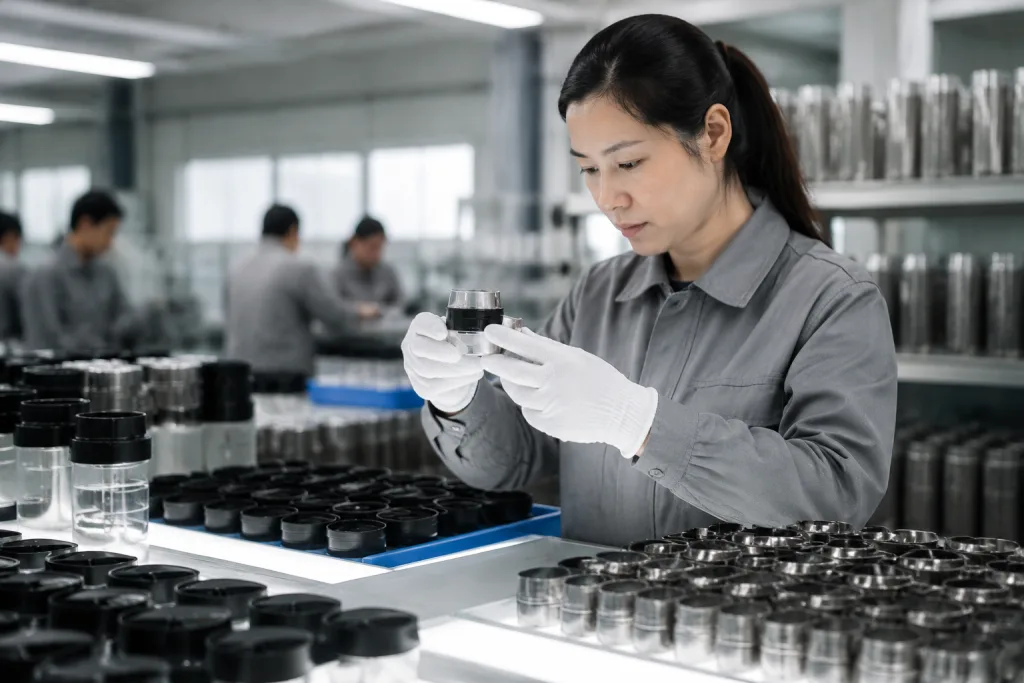
Your RFQ should ask for coating thickness, adhesion test, and abrasion test. On our line, powder coating usually sits at 60-80 microns, and cross-hatch adhesion should land at 4B-5B depending on the substrate and coating system. For printed logos, ask for 3M tape testing after curing and a rub test of 500 cycles with a dry cloth or alcohol-soaked cloth if the bottle will see heavy use. QC pulled a sample once where the ink held on the first tape pull and failed on the second. That is the kind of miss you want to catch before shipment.
Canteen promotional orders are where the trouble shows up fast because the buyer wants lower price and faster delivery in the same PO. If you need 10,000 pcs for a campaign and the logo must match a corporate color, approve the golden sample and lock the artwork file, logo position tolerance, and acceptable color deviation. We’ve seen a buyer flag a PO typo on the logo code, and that one digit pushed the whole run off-brand. A canteen promotional bottle that lands two shades off is not “close enough.” It sits in the warehouse.
Failure four: cartons are under-specified
I’ll rewrite the section in place, keep the HTML tags intact, and tighten the copy so it sounds like a factory-side sales engineer wrote it.Packaging gets discussed last. That is when claims start. A tea bottle can pass factory QC and still land with dented shoulders, rubbed coating, crushed gift boxes, or barcodes that the scanner will not read. The bottle itself is not fragile like glass, but the lid rim and coated body take abuse fast once the cartons start moving on pallets and in the container.
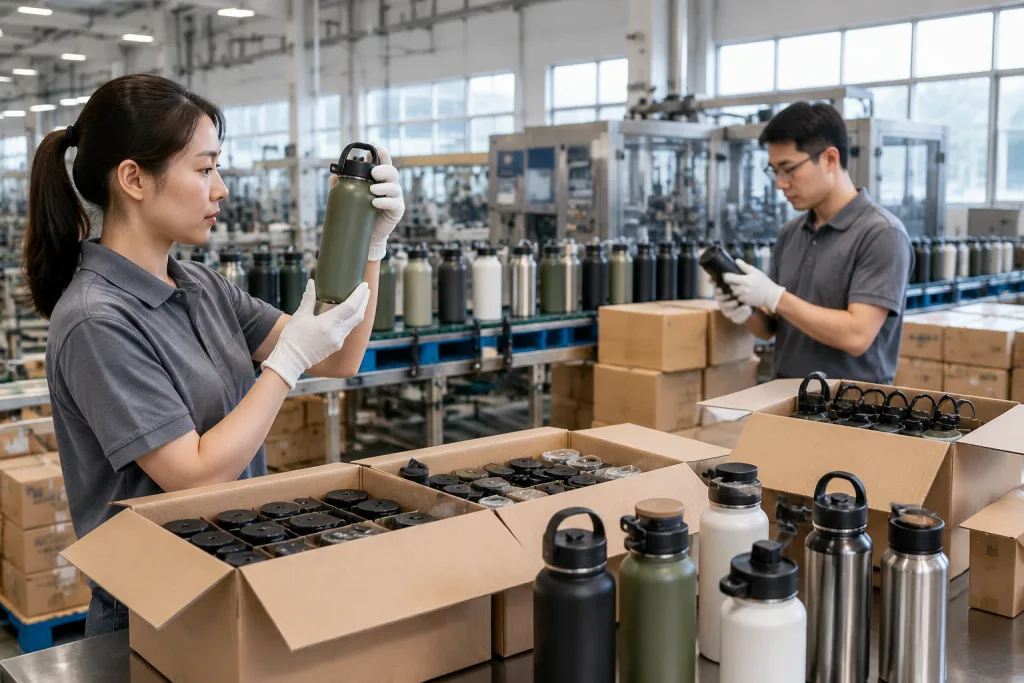
For export from China, do not accept “standard export carton” as a real spec. Ask for carton size, gross weight, ply count, burst strength or edge crush target, inner bag material, divider layout, and the drop-test plan. We run 5-ply master cartons on a lot of stainless drinkware jobs, because a 3-ply box starts giving trouble once gross weight goes past 12 kg. If the buyer wants retail-ready packing, spell out the gift box board thickness and say whether the bottle needs an inner paper sleeve or a molded pulp tray. The math does not work if you leave that open.
Amazon-style and marketplace orders need tighter control. If your distributor growler or customizable drinkware order needs FNSKU labels, suffocation warnings, carton marks, or mixed-SKU carton rules, put it on the purchase order. We have seen a PO typo on a label field turn into a full rework at the packing table. The buyer flagged it after the cartons were sealed. A missed barcode costs more than upgrading the carton spec.
For long ocean moves to Europe or North America, humidity is part of the packing job. Ask whether cartons get desiccants, whether each bottle is bagged, and whether printed inserts go in only after full curing. QC pulled the sample once and found ink transfer on a matte powder-coated bottle after a 38-day sea leg. It looked fine on the line. It looked bad in the customer’s hand.
Failure five: audits become paperwork
I’ll keep the HTML intact and rewrite the four paragraphs with tighter, buyer-facing language, specific factory details, and fewer AI-style transitions.Certifications help, but they do not replace process control. A tea bottle factory can show ISO 9001, BSCI, Sedex, LFGB reports, or FDA-related test reports. Good. Still ask which item was tested, which material batch was pulled, and whether the report covers your lid, gasket, paint, and infuser basket. We’ve seen a report pass on a straight tumbler and fail to tell you anything about a curved tea bottle. Different mold. Different risk.
Social compliance matters for European and North American buyers, especially for larger retailers. BSCI or Sedex can screen a factory, but it will not tell you whether the lid gasket is seated right on the line. QC pulled the sample and found a 0.6 mm gap on the seal ring; the audit file never mentioned it. Quality audits and social audits answer different questions. Put both on the supplier list tea bottle scorecard. Otherwise the math doesn’t work.
Write AQL terms into the purchase order. Use inspection level II, AQL 0 for critical defects, 2.5 for major defects, 4.0 for minor defects. Define critical defects as leakage, unsafe sharp edges, broken lid mechanisms, contaminated interiors, wrong food-contact material, or missing mandatory labeling. Major defects can include obvious dents, serious coating chips, wrong logo position beyond ±2 mm, poor assembly, or failed barcode scanning. Minor defects may include tiny cosmetic specks within an agreed viewing distance. One buyer once typed “AQL2.5 major 4 minor” with no space; we had to send it back.
For China production, book inspection when at least 80% of goods are packed and 100% are produced. If you inspect too early, you are only checking the best cartons. If you inspect too late, rework can push your vessel date. A practical Zhejiang export schedule leaves 3-5 days between final inspection and container loading. We run this with a tape measure at the packing table and a carton count sheet on the clipboard, not guesswork.
Make suppliers quote the same bottle
I’ll rewrite the four paragraphs in place, keeping the HTML structure and the original headings intact, while tightening the sales tone and adding a few factory-floor details.The cleanest way to compare canteen manufacturers is to stop the guessing. Send one RFQ sheet with exact capacity, dimensions, steel grade, lid type, infuser spec, coating, decoration, packaging, test requirements, certification needs, target market, Incoterm, and annual volume. If you send five canteen vendors a loose brief, you will get five different products dressed up as quotes. QC pulled the sample on our line after a 0.8 mm wall check, and the buyer flagged a missing lid gasket note on the PO.
For a custom growler, customized growler, or customizable growler, add mouth diameter, beer or carbonated-use restrictions, handle strength, and pressure expectations. For a tea bottle, add infuser hole size, basket depth, lid heat resistance, and whether loose-leaf tea must stay inside when the bottle is tilted. For canteen custom outdoor programs, define whether the product must fit bicycle cages, car cup holders, school bags, or military-style field kits. This is not the place to be vague; the math does not work.
FOB Ningbo or FOB Shanghai is common for Zhejiang factories. For early costing, ask for EXW and FOB separately if you want the local trucking, carton rate, and export handling broken out cleanly. Payment terms are often 30% deposit and 70% before shipment for new buyers, with changes after order history. Bulk sample approval usually takes 7-12 days after artwork confirmation, and mass production commonly runs 30-45 days after deposit and approved pre-production sample. We ship faster when the buyer keeps the cap art code, carton mark, and inner box typo off the revision loop.
A good supplier list tea bottle file should not reward the cheapest canteen factory automatically. It should show which canteen suppliers hold tolerances, document materials, call out risk, and ship the same bottle they sampled. That is how you turn a supplier list into a buying tool instead of a price trap. We’ve seen this go sideways when a 500 ml bottle lands at 520 ml and nobody checked the fill line.
Send us your tea bottle RFQ for teardown
We will review your spec, flag weak points, and quote realistic MOQ, lead time, testing, and FOB China pricing.
Frequently asked questions
What should I ask every tea bottle supplier before adding them to my list?
Ask for their factory role, not just their product catalog. Confirm whether they are a canteen manufacturer, trading company, or distributor canteen partner. Then request steel grade for inner liner, outer shell, infuser, and lid components; gasket material and hardness; coating process; decoration method; MOQ; sample lead time; bulk lead time; export port; and recent test reports. For custom drinkware, also ask for AQL terms and whether leakage is tested at 100% or only by random sampling. A serious China supplier should answer these points in writing. If they only reply with “best price, good quality,” keep them low on your supplier list tea bottle scorecard.
What MOQ is realistic for a customized tea bottle order?
For a customized canteen or tea bottle with an existing mold, realistic MOQ is usually 1,000 pcs per SKU for laser engraving or simple one-color printing. If you need a custom powder-coated color, expect 3,000 pcs per color because coating line setup and color changeover create waste. If you need a private mold lid, special infuser, or unique bottle body, MOQ can move to 5,000-10,000 pcs, plus tooling cost. Some canteen distributors advertise 100-300 pcs, but those orders are usually stock items with limited logo options and higher unit prices. For B2B retail or promotional programs, 1,000 pcs is a more practical starting point.
How do I compare prices from canteen suppliers fairly?
Force every canteen supplier to quote the same specification. A USD 3.20 FOB tea bottle may use 201 outer steel, thinner walls, basic carton, and no 100% leak test. A USD 3.85 FOB quote may include 304 inner steel, 60-80 micron powder coating, better gasket control, and a 5-ply carton. Ask each supplier to break out capacity, material, coating, logo, packaging, testing, Incoterm, and lead time. Also compare defect responsibility. If one canteen vendor includes rework before shipment and another charges extra after inspection failure, the cheaper quote may be false economy.
Which tests matter most for tea bottles with infusers?
Start with food-contact material testing, leakage testing, thermal retention if double-wall vacuum insulated, coating adhesion, logo rub resistance, and carton drop testing. For the infuser, inspect weld quality, burrs, hole consistency, and corrosion resistance after hot-water exposure. For lids, run hot-fill inversion testing at around 90°C and check gasket deformation. If you sell in Europe, request LFGB or relevant food-contact testing plus REACH consideration. For North America, FDA food-contact positioning is common. Use AQL 0 for critical safety and leakage defects, 2.5 for major defects, and 4.0 for minor defects unless your retailer requires tighter limits.
Should I buy through canteen distributors or directly from a factory?
Both can work. A direct canteen factory usually gives better control over materials, tooling, production timing, and rework decisions. That helps when you are building a canteen customized or customized drinkware program with strict color, packaging, and compliance rules. Canteen distributors can be useful for smaller orders, mixed SKUs, or local service in your market. The tradeoff is that technical answers may be slower because they must check with the factory. If your annual volume is above 10,000-20,000 pcs per model, direct factory communication in China is usually worth the effort. For smaller promotional runs, a strong distributor may be more efficient.