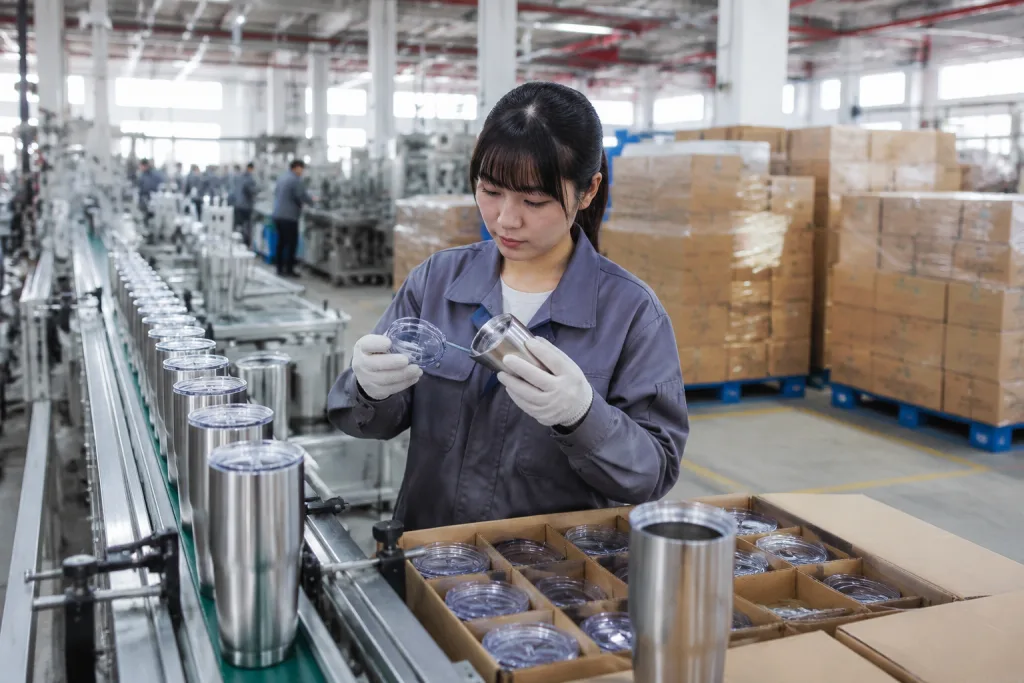
Key Takeaways
- A realistic supplier list insulated tumbler quote starts with 6 core PO line items, not just unit price.
- Most custom drinkware projects need 7-15 days for samples and 25-35 days for bulk after approval.
- A fair MOQ for a decorated insulated tumbler is often 500-1,000 pcs, but special finishes can push higher.
- Ask for AQL 2.5 inspection, REACH declarations, and packing specs before you approve a canteen customized order.
If you are building a supplier list insulated tumbler buyers can actually use, the hard part is not finding names. The hard part is telling a real canteen factory from a trading middleman, then turning a vague inquiry into a quote you can line up item by item. In Zhejiang and across China, the gap shows up fast in wall thickness claims, coating wear, and whether the line can hold a logo位置 without the MOQ jumping from 500 to 5,000.
For a B2B buyer, an insulated tumbler is not just a product. It is a packaging spec, a compliance file, a freight problem, and a margin check. Work it in order from RFQ to sample to bulk, or the math does not work. We’ve seen that go sideways more than once. BottleForge Industrial in Hangzhou, Zhejiang runs 120,000 units per month with a 25–35 day lead time after sample approval, and that matters when QC pulled the sample at 2mm seam alignment and your distributor order has to ship on time, not someday.
Start With the RFQ You Can Compare
I’ll rewrite the prose to sound like a factory-side sales engineer, keep the HTML intact, and preserve the headings and list structure.Your RFQ decides whether suppliers can quote cleanly. If you send only “need insulated tumbler,” the numbers are garbage. We run into this all the time: the buyer flags the price, then the sample on the line turns out to be a different build. A usable RFQ should pin down capacity, material, insulation style, lid type, finish, logo method, packing, and destination port. For a supplier list insulated tumbler search, that level of detail is what lets you compare a canteen supplier in Zhejiang against another canteen manufacturer in China without guessing what they skipped.
Use the same structure for every vendor. Ask for:
- Capacity: 12 oz, 16 oz, 20 oz, or 30 oz
- Material: 18/8 stainless steel, or 201 if you are buying a low-end promo line
- Wall spec: 0.4-0.5 mm inner and outer wall is common for retail-grade tumbler work
- Finish: powder coat, brushed, spray paint, or bare steel
- Logo: silk screen, laser engraving, or full wrap print
- Packing: bulk pack, white box, color box, or gift set
If you leave out one item, the quote drifts. A canteen promotional order and a customizable drinkware retail order are not the same job, even if the silhouette looks close. The first can chase a low FOB; the second needs tighter finish control and carton drop strength. We’ve seen this go sideways on a 3,000 pcs PO where the buyer forgot to ask for master carton size, and the freight bill wiped out a 7% unit-price win. A distributor canteen buyer should ask for carton quantity, master carton size, and CBM too.
One habit saves time: request every supplier’s quote in the same table. If one canteen vendor sends only a unit price and another sends a full breakdown, the cheap number is usually the wrong number. QC pulled the sample, checked the lid fit at 0.3 mm tolerance, and the hidden cost showed up fast.
Screen the Supplier List Properly
I’ll keep the tags exactly as-is and rewrite the prose to sound like a buyer-facing sales engineer, with concrete shop-floor details and cleaner trade language.Now trim the list. A real factory usually comes back fast on tube thickness, lid fit, and print tolerance; generic sales copy takes longer. A trading company can still work, but you need to know who owns tooling, lab testing, and late-delivery risk. If you search for a canteen factory or canteen manufacturers in China, ask for a Zhejiang address, a short production video, and current export papers without excuses.
Ask for these before you go further:
- Business license and export registration
- BSCI or similar social compliance if your chain requires it
- REACH statement for coating and contact materials
- ISO 9001 if they claim process control
- Recent inspection records, ideally AQL 2.5 for general defects
Do not get fooled by a long logo wall or a polished website. A solid canteen supplier should tell you the vacuum seal spec and the daily output on your size, usually in pieces per day. If they say they are a canteen distributor and a factory, ask for the workshop photo and the machine list. A distributor setup can work for a promo run, but for retail or Amazon, the carton drop test and color consistency matter. We’ve seen that go sideways when the buyer skipped the basics.
Practical rule: if a supplier cannot explain sample cost, tooling cost, and packing cost in two minutes, leave the name off your final list.
In Zhejiang, you will find plenty of capable plants, but they do not all fit the same program. A custom growler line needs different weld control and lid torque than a slim tumbler. A canteen distributor may quote from three canteen vendors; you still need one source of truth for specs, QC sign-off, and the PO. The math does not work any other way.
Request Samples That Prove Reality
I’ll rewrite just the prose inside the existing HTML, keep every tag and list structure intact, and make it read like a factory-side sales engineer wrote it.Samples are where the sales talk stops. For a custom canteen or customizable canteen project, ask for three sample types: blank sample, decorated sample, and pre-production sample if the order is big enough. On a normal run, sample lead time sits at 7-15 days. If a factory says same-day custom samples for complex coating and laser work, I’d push back. QC pulled the sample too fast, and it was usually a stock piece with a rushed logo.
Tell the supplier exactly what you will test. For insulated tumbler work, we run this list:
- Heat retention or cold retention check
- Lid leak test after 10-20 shake cycles
- Logo abrasion test
- Paint adhesion and scratch resistance
- Drop test from 80-100 cm on corner and base
Do not treat a sample like a gift item. Treat it as the control for the bulk run. If you are buying customized drinkware for retail, check the rim finish, lid fit, and coating thickness with calipers. We’ve seen a 0.2 mm lid gap turn into a full carton of leak claims. If the coating chips after one week in transit, your wholesale margin is gone. On a canteen customized line with powder coat, the base and shoulder must show even coverage; thin spots there usually come back as rust complaints.
For a canteen custom or custom drinkware launch, ask for sample photos and a signed sample seal. Old-school? Maybe. It saves arguments later. If your buyer in North America wants a custom growler or customizable growler version, confirm the wall weight and lid system before you approve tooling. We had a PO once with the lid spec typed as 86 mm instead of 68 mm. The buyer flagged it before mold work started. An experienced canteen manufacturer will call out the limit first instead of promising the whole world.
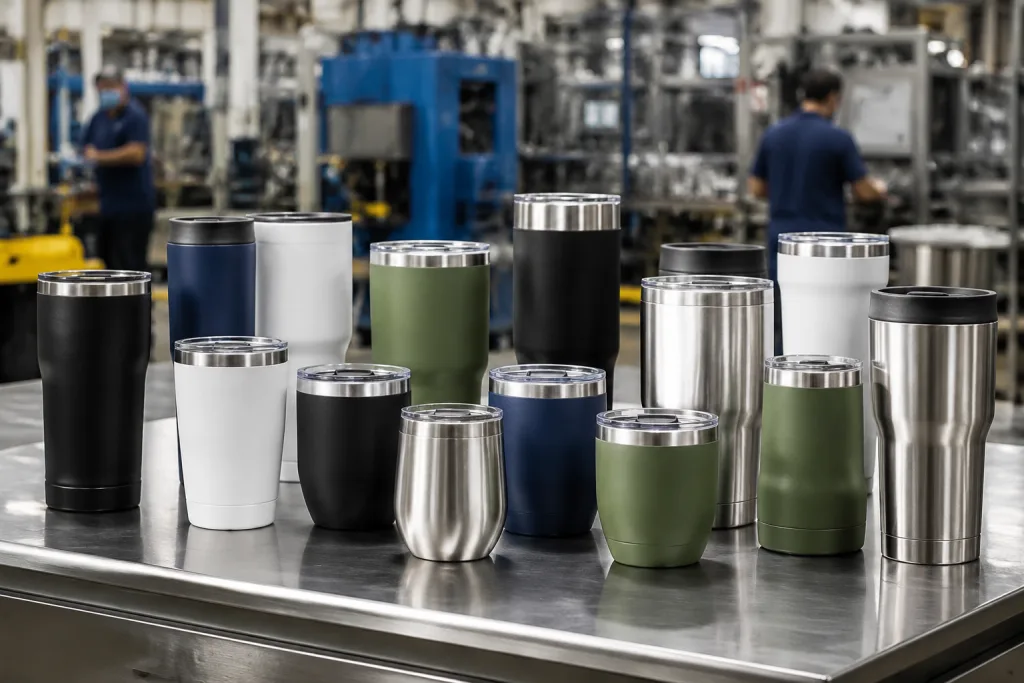
Put the PO on Paper Line by Line
I’ll keep the HTML structure intact and rewrite the prose to sound like a factory-side sales engineer, with concrete PO details and cleaner buyer language.Once the sample is signed off, the purchase order has to get tight. A PO is not just quantity and unit price. It is the sheet that saves you when the ship date slips, the carton art changes, or the logo lands 8 mm off center. For a supplier list insulated tumbler order, write each line clearly so the factory cannot bury assumptions in one lump sum.
Use these PO lines:
- Item name, capacity, and material grade
- Logo method and placement
- Color code or Pantone reference
- Packing method and carton count
- Inspection standard, usually AQL 2.5
- Payment terms, often 30/70 or 50/50 for first orders
- Incoterm: FOB Ningbo, FOB Shanghai, or EXW as agreed
A good PO also says what happens if the supplier changes the lid or box. We have seen a 2 mm lid change push a leak test from pass to fail and throw off the shelf look. If you are buying from a canteen supplier in China, do not leave “same as sample” hanging there without a drawing number or photo. QC pulled the sample, checked the lid gasket, and that is the level of detail that keeps the line honest.
For distributor drinkware programs, add outer carton marks, FNSKU if the order goes to Amazon, and whether pallets are required. For retail orders, state inner box art, barcode size, and drop and compression test targets. If you buy a canteen promotional run for events, the PO can stay simple, but the finish and logo size still need numbers. The buyer flagged a PO typo on carton count once; the math did not work, and we all burned a day fixing it.
Check Bulk Production Before It Slips
I’ll rewrite the prose in place, keep the HTML structure untouched, and make it sound like a shop-floor sales engineer wrote it.Bulk production is where a good supplier proves it can actually ship. On a real canteen line, we check the first 5%-10% of output, then QC pulls another sample at mid-run. For an order above 3,000 pcs, ask for line photos, a short video, or a mid-run check. A Zhejiang factory should take that in stride. If they push back, the process is probably not clean enough for export.
Watch these points during bulk:
- Logo placement stays aligned on every carton batch
- Coating tone matches across two or three shifts
- Lid fit holds on random pull samples
- Vacuum holds after assembly on each lot
- Box crush and drop resistance still pass before shipping
If you are sourcing customized canteen or customized drinkware for a brand launch, ask for in-line inspection records and final QC photos. AQL 2.5 is a normal start for general defects, but logo shifts and leak issues need tighter control. We’ve seen that go sideways fast. For a canteen distributor program, pay for a pre-shipment inspection; one mixed carton can trigger returns across several accounts. We had a buyer flag a PO typo once—`1,000` became `10,000` on the box mark—and the rework cost more than the inspection.
Lead time needs to stay real. For a first custom order, 25-35 days after sample approval is standard for most insulated tumbler jobs. Complex packaging or a special coating adds 5-10 days. If a canteen vendor says 12 days for a decorated insulated tumbler with custom color and gift box, ask how many units they run per month and whether they are quoting stock, not production. On our line, the carton sealer and pad printer tell the truth faster than the sales pitch.
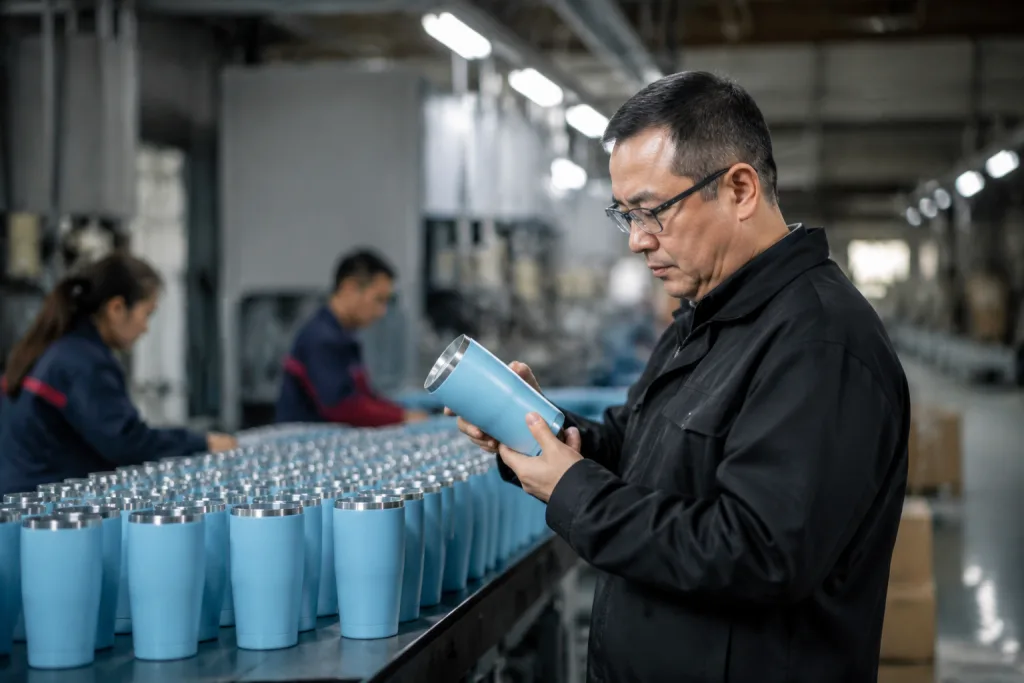
Compare Total Cost, Not Unit Price
I’ll rewrite the prose inside the HTML only, keep every tag and list structure intact, and strip out the AI-ish phrasing while adding a few concrete factory details.The lowest quote is often the one with a hole in it. On a supplier list insulated tumbler program, compare landed cost, not just FOB. We’ve seen a buyer get USD 2.35 FOB on paper, then pay for a 72g carton, a 3% breakage buffer, and one extra drop test, and the gap vanished. A canteen supplier worth keeping will show the numbers line by line.
Build your comparison sheet around total spend:
- Unit price
- Logo or mold cost
- Sample fees
- Packaging upgrade cost
- Inspection and test fees
- Freight estimate
- Failure allowance or rework risk
A good canteen distributor still helps when you need mixed SKUs. For repeat orders, direct factory pricing from a canteen manufacturer or canteen factory in China usually gives you tighter control. We run this comparison with one quote format for every buyer, same carton size, same test basis, same incoterm. The math does not work any other way. A 6% price gap matters; a 6% gap that hides a 12% packing or freight hit does not.
Buyers often ask whether to choose a custom growler, customizable growler, or insulated tumbler for a campaign. Wrong question first. The channel decides it. Growlers sell on lifestyle value; tumblers move faster in gift, retail, and distributor drinkware programs. If the end customer wants broader use, a tumbler is the safer custom drinkware pick. If the story needs a niche angle, a canteen custom format can work. Either way, QC pulled the sample at AQL 2.5, and the supplier list should be built on that kind of proof, not sales talk.
Lock the Relationship for Reorders
I’ll keep the HTML structure intact and rewrite the prose to sound like a real factory-side sales engineer, with concrete reorder details and tighter wording.The best sourcing result is not a one-off PO. It is a reorder path that runs on the same spec every time. After the first batch passes, we keep the approved sample, signed spec sheet, and QC photos in one folder. Then the second PO lands cleanly, and the line does not waste a day relearning your standard. If nothing changes, sample confirmation often takes 3-5 days, not 12.
Set a simple supplier scorecard:
- Quote accuracy
- Sample approval speed
- Bulk defect rate
- On-time shipment rate
- Responsiveness on artwork and paperwork
If you run a canteen promotional program, this scorecard keeps the job from drifting. If you buy for distribution, it shows which canteen vendors deserve volume and which ones should stay on backup. The wrong question is “who is cheapest?”—the math does not work if a lid batch fails at packing. In Zhejiang and across China, capacity is rarely the issue; consistency is. We have seen a 120,000-unit-a-month plant miss on finish because it kept changing lid suppliers, while a smaller factory with stable control held the same 304 stainless spec and passed AQL 2.5.
For custom drinkware buyers, the repeat order is where margin improves. You already have the final artwork, carton count, and shipping rhythm, so we ship faster with less back-and-forth. If the supplier keeps the same finish and lid seal, you avoid rework on the next PO. That is the real value of a disciplined supplier list insulated tumbler process.
Send your RFQ and compare real supplier quotes
We can quote direct from our Zhejiang factory, share sample photos, and build a clean spec sheet for your custom drinkware order.
Frequently asked questions
What should I ask in an RFQ for an insulated tumbler?
Ask for capacity, steel grade, wall thickness, lid type, finish, logo method, packing, destination port, and target quantity. For a real comparison, include your expected MOQ, which is often 500-1,000 pcs for a basic decorated tumbler and higher for special coatings. Also ask for sample lead time, bulk lead time, and whether the quote is FOB Ningbo, FOB Shanghai, or EXW. If a canteen supplier cannot quote on the same basis, the number is not comparable.
What is a normal MOQ for a custom tumbler order?
For many decorated insulated tumbler orders, MOQ is 500 pcs for a straightforward print or laser job, and 1,000 pcs or more for special color or gift box packaging. If you want a canteen customized finish, unique lid, or full-wrap print, the MOQ may move to 3,000 pcs. A canteen factory in Zhejiang may offer flexibility on repeat orders, but first-run MOQs are usually higher because setup cost is real.
How long do samples and bulk orders usually take?
Sample lead time is commonly 7-15 days, depending on logo method and coating. Bulk production after sample approval is often 25-35 days for standard insulated tumblers, with another 5-10 days if you add special packing or complex artwork. A canteen manufacturer that promises much faster than that should explain whether the item is stock or truly customized drinkware.
How do I check if a supplier is a real factory?
Ask for the factory address, production video, daily or monthly output, compliance documents, and recent QC records. A real canteen factory should be able to discuss tooling, vacuum sealing, and inspection without vague answers. If they say they are a canteen distributor, that is not automatically bad, but you need to know whether they control production. In China, many trading teams work well; you just need to verify the actual manufacturing source.
What quality standards should I request?
Request AQL 2.5 for general inspection, and ask for REACH declarations if your market needs them. If your retailer or platform requires it, add carton drop tests, leak tests, and coating adhesion checks. For custom drinkware or customized canteen programs, ask for signed golden samples and artwork approval. If you are selling in North America, also confirm packaging labels, barcode placement, and whether your FNSKU needs to go on the unit box or master carton.