Key Takeaways
- For a usable supplier list hydration flask, compare at least 4 items: MOQ, lead time, decoration method, and test reports.
- Typical factory MOQs run from 500 to 3,000 pcs; sample lead time is usually 5-10 days and mass production 25-40 days.
- A real canteen manufacturer should show REACH, LFGB or FDA food-contact support, AQL inspection terms, and monthly capacity.
- FOB pricing for basic stainless hydration flasks commonly starts around USD 2.10-4.80 depending on steel grade, coating, and logo method.
If you are building a supplier list hydration flask for retail, corporate gifts, or marketplace sales, the hard part is not collecting names. It is cutting out the weak ones before they burn a season. A solid list shows who can hold your target price, who can clear REACH and food-contact checks, and who still picks up when you need a re-order in 45 days.
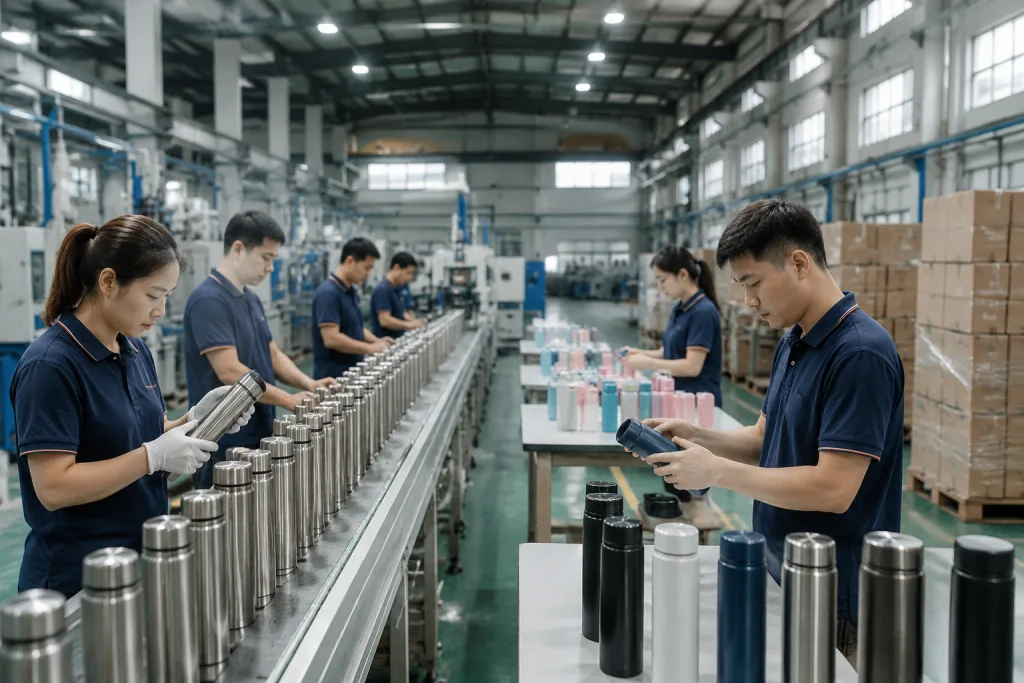
Most buyers start with “a canteen factory” or “customizable drinkware” and get ten offers that do not match up. One supplier quotes FOB Ningbo at $2.10, another comes in at $3.80 with laser engraving, and a third says yes to everything while running no real QC. We’ve seen that go sideways. In Zhejiang and across China, the suppliers that matter are the ones that can show capacity, tolerances, and export discipline—our line checks wall thickness at 0.8 mm before we pack a carton.
Start with the sales channel
I’ll rewrite the prose in place, keep every HTML tag and number intact, and tighten it so it reads like a factory-side sales engineer wrote it.Before you build your supplier list hydration flask, lock the sales channel first. A hydration flask for Amazon needs a different setup than a canteen promotional item for an event distributor or a premium custom drinkware line for a brand launch. On marketplace channels, we watch carton count, FNSKU labeling, and how many color breaks the line can tolerate. On retail or wholesale, the checklist shifts to repeatability, barcode consistency, and outer carton strength.
That sounds obvious, but buyers skip it all the time and ask every canteen supplier the same question. Then they get quotes for a 500 ml double-wall bottle, a 750 ml powder-coated canteen customized for branding, and a budget single-wall custom canteen that does not fit the channel. The math does not work. We had a buyer flag a PO typo on carton size last month, and the sample on the line looked fine until QC pulled it against the marketplace spec. Start with channel, target price, and order pattern. A distributor drinkware program with quarterly reorders needs a different supplier than a one-off distributor canteen order for 20,000 pcs. Once those three items are set, the list gets shorter fast.
If you are a canteen distributor or canteen vendor, ask one more question: do you need fast restock or design freedom? Fast restock points to a canteen factory with stable tooling and 30-day lead time. Design freedom points to a canteen manufacturer with in-house coating, printing, and assembly lines. We run both types in Zhejiang, but they are not the same animal. One keeps the line moving. The other lets you change the cap, the finish, and the logo placement without starting over.
Check capacity before price
I’ll rewrite the section in place, keep the HTML structure intact, and strip the AI-style phrasing while adding a few concrete factory-floor details.Price matters, but capacity pays the bills in peak season. A canteen supplier running 50,000 pcs a month may work for a niche label, but it will miss the mark on an 80,000 pcs distributor launch with fixed ship dates. At BottleForge Industrial in Hangzhou, we run 300,000 units a month across steel bottles, tumblers, and hydration flasks; our standard MOQ is 500 pcs for stocked structures and 1,000-3,000 pcs for new custom canteen projects. The number on the quote means less than what the line can actually ship.
Ask for the real production chain. Does the body get formed in-house on the tube drawing machine? Is powder coating done on our line or pushed to a subcontractor? Are the lids molded in the same plant, or bought from outside canteen vendors? A factory that controls welding, polishing, and leak testing usually gives fewer surprises than a reseller wearing a supplier badge. We’ve seen this go sideways when a buyer flagged a 12-day slip on a PO typo—proof beats promises.
- Capacity: monthly output, not estimated output
- Lead time: sample, tooling, and mass production separately
- Line ownership: in-house or subcontracted
- Reorder stability: same color, same lid, same coating batch
For most buyers, the right supplier list hydration flask set has one large canteen manufacturer, one flexible canteen supplier, and one backup canteen distributor. That mix keeps the math sane without tying you to one plant. QC pulled the sample, checked the gasket fit at 0.2 mm, and the wrong question was never “who is cheapest?”
Choose the body and lid spec
I’ll keep the HTML untouched and rewrite the copy to sound like a factory-side sales engineer, with tighter phrasing and a few concrete shop-floor details.Hydration flasks are not all the same, even when the photos look close. The body spec drives cost, weight, and how the buyer reads the product in hand. For stainless steel, we run 201, 304, and 316 on the line. If you are building a canteen customizable program for Europe or North America, 304 is the practical baseline. 316 is the corrosion-resistance play, but the material bill jumps about 15-25%.
Wall structure matters too. A single-wall canteen customized for hiking is cheaper and lighter, usually 0.4-0.6 mm steel, but it will not hold temperature. A double-wall vacuum flask uses two shells, a vacuum gap, and usually 0.4-0.5 mm inner and outer walls. That adds cost and adds one more vacuum check at the machine, but that is what most buyers mean by a serious hydration flask. For colored finishes, powder coating or spray paint changes the hand feel; QC pulled the cross-hatch sample at 600 mm tape pull, and if the coating fails abrasion, the line stops.
Lid choices that change the order
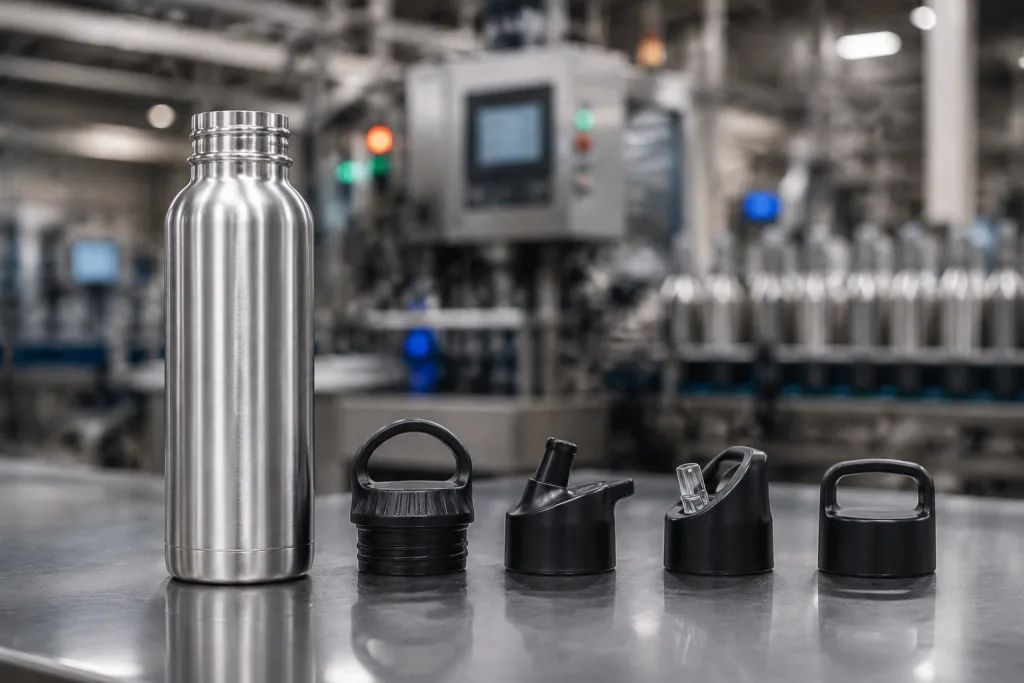
The lid is where a lot of customized drinkware projects go sideways. A screw lid with PP and silicone is simple and cheap. A flip-top or push-button lid adds assembly time and more leak complaints. If you need a customizable growler or custom growler style product, the gasket seat and handle load matter more than the body finish. If you need a canteen promotional item, cost, print area, and logo visibility usually win. The buyer flagged a PO typo once on a 28 mm cap thread, and we had to remake the mold insert.
Ask your canteen manufacturer for the gasket material, leak-test standard, and drop-test result. If the supplier cannot state the thread spec or silicone shore hardness, they are not ready for a serious buyer list. This is the wrong question to ask if you only want a cheap quote; the math does not work when the lid fails at 1 m drop and the carton comes back wet.
Compare decoration methods honestly
I’ll rewrite the prose in place, keep the HTML exactly as-is, and make it sound like a factory-side sales engineer.Logo decoration looks cosmetic until it starts moving price, durability, and MOQ. Screen print is still the lowest-cost choice for a simple one-color logo on a custom canteen or customized canteen. Laser engraving runs cleaner on stainless steel, holds up through washing, and suits premium custom drinkware, but it exposes bare metal and does not fit every coated surface. Heat transfer and UV printing handle multi-color artwork, though poor surface prep pushes scrap up fast.
For a supplier list hydration flask, compare decoration by repeatability, not by mockup. A canteen manufacturer in Zhejiang may quote $0.18 for one-color silkscreen, $0.35 for laser engraving, and $0.55-$0.90 for full-color UV on a custom drinkware body. QC pulled a 50-piece sample last week, and the UV line showed two chipped logos after a simple tape test. That spread is normal. What is not normal is a canteen supplier that prices every method almost the same and still promises the same lead time. The math does not work.
Buyer rule: if the decoration method changes logo size, curing time, or scrap rate, it changes the real landed cost. Treat it as a production call, not an art call.
If your program includes a canteen customizable gift line, ask for artwork approval on the real sample, not a render alone. We have seen PO typos knock a logo from 38 mm to 83 mm, and nobody catches that on a PDF until the line is already running.
Demand test reports and QC terms
I’ll rewrite the section in-place, keep the HTML tags untouched, and make the copy sound like an export sales engineer wrote it.You do not need every certificate on earth. You need the right set for the market. For Europe and North America, ask for REACH support, food-contact compliance, and material declarations for the body, lid, and gasket. If the bottle is sold as food-safe in the US, buyers usually ask for FDA paperwork from the canteen supplier. For sports or outdoor lines, drop-test, leak-test, and thermal-retention data matter. We’ve seen this go sideways when a canteen factory talks big but cannot show a recent test report.
QC has to be written down. AQL 2.5 for major defects and 4.0 for minor defects is standard for consumer drinkware, and premium orders often need tighter limits. Define a leak in mm of seepage, define a logo defect, and define a color shift in Delta E terms. If the supplier says “normal inspection,” the math does not work. Ask for pre-shipment photos, carton markings, and 1-in-500 random re-test records. The buyer flagged a PO typo once, and that saved a bad shipment.
In China, especially Zhejiang, solid canteen manufacturers know export buyers want a clean paper trail. A serious canteen vendor should show incoming material checks, in-process inspection, and final packing verification. QC pulled the sample, checked the cap torque, and logged the result. If they cannot explain those steps in plain English, your supplier list is not ready.
Build a shortlist that can reorder
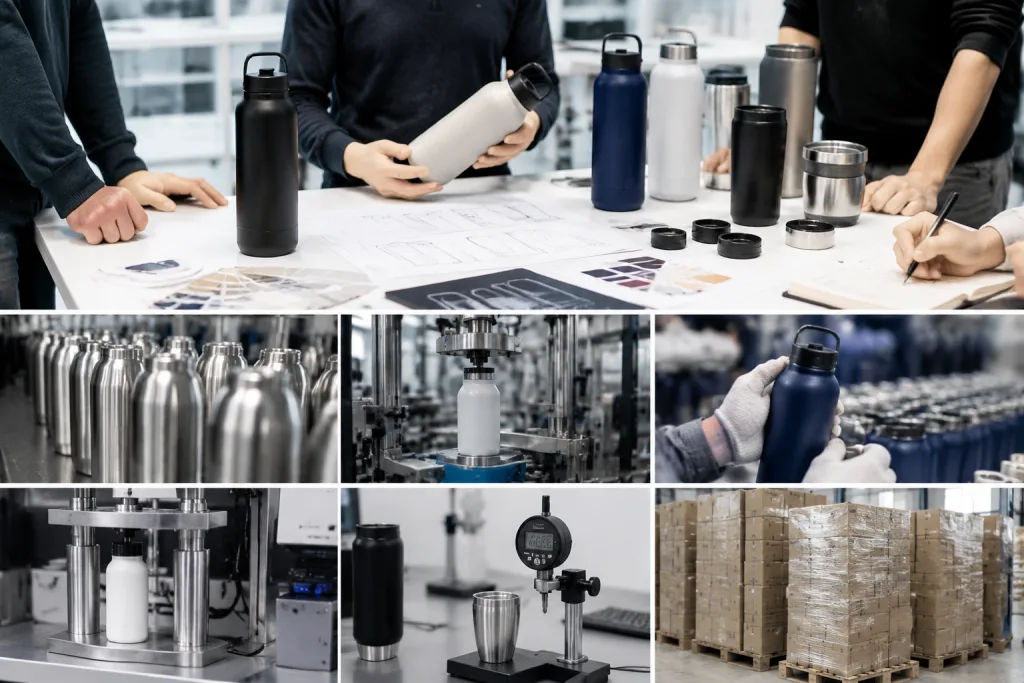
I’ll rewrite the section in-place, keep the HTML exactly as-is, and tighten the prose so it reads like an export sales engineer wrote it.The best supplier list hydration flask is not the longest one. It is the one that survives the second order. We run shortlist work in three slots: one primary canteen manufacturer, one backup canteen supplier for price pressure, and one canteen distributor or trading partner for fast market response. That setup saves you when a mold is down, a coating batch drifts, or the vessel booking slips by 12 days.
Keep the list usable. Put factory location, monthly output, MOQ, sample time, lead time, payment terms, and who owns the design in the same line. If you are sourcing a custom growler or customizable growler alongside hydration flasks, group them by lid family and steel spec so the same tooling can carry more than one SKU. We have seen this cut sample rounds by 20-30% when the buyer flagged a lid mismatch or a 0.5 mm neck difference.
- Primary source: stable price, larger capacity, strict QC
- Backup source: flexible MOQs, faster revisions
- Channel source: packaging and compliance support
The point is simple: a custom canteen program should be built for repeat orders, not just the first PO. If a canteen promotional item moves, the supplier list has to hold the same finish, the same carton count, and the same print position. That is where a disciplined China sourcing plan pays off — and the math does not work if the second shipment comes in with a new shade or a typo on the packing list.
Build a cleaner flask supplier list now
Send your target price, MOQ, and artwork. We’ll map the right canteen manufacturer, sample path, and export spec for your order.
Frequently asked questions
What MOQ should I expect for a hydration flask supplier list?
For a standard stainless hydration flask, expect MOQ around 500 pcs for a stocked body and lid combo, 1,000 pcs for a custom canteen with logo, and 3,000 pcs or more if you want a new color, new lid, or new mold. Some canteen manufacturers in Zhejiang can split orders by color, but the unit price usually rises if you go under 1,000 pcs. Sample lead time is usually 5-10 days; mass production is often 25-40 days depending on coating and packing.
How do I compare canteen manufacturers and canteen suppliers?
Start with evidence, not promises. A real canteen manufacturer should show factory capacity, machine list, QC records, and test reports. A canteen supplier or canteen distributor may still be useful, but you need to know whether they control production or only source it. Compare FOB price, MOQ, monthly capacity, lead time, and decoration options. If one quote is $2.40 and another is $3.10, check whether the cheaper one includes printing, leak testing, and export cartons before you decide.
Which materials work best for custom drinkware in Europe and North America?
304 stainless steel is the usual baseline for custom drinkware because it balances cost, corrosion resistance, and acceptance in the market. 316 is better for higher corrosion resistance but usually adds 15-25% to material cost. For lids, PP, Tritan, and silicone are common, but each needs proper food-contact support. If you are buying a canteen customizable line, ask for REACH and material declarations for every component, not just the body.
What decoration method is best for a customized canteen?
It depends on the target price and lifetime use. Screen printing is cheapest for a simple logo, usually around USD 0.18-0.30 per piece. Laser engraving is stronger for premium custom canteen orders and usually costs more, around USD 0.35-0.60. UV printing works when you need color detail, but it adds process risk and may raise the scrap rate. For a canteen promotional order, screen print is often enough; for retail, laser engraving usually feels more durable.
What QC checks should I require from a canteen factory?
At minimum, require leak testing, drop testing, coating adhesion checks, carton compression checks, and AQL-based final inspection. Common buyer targets are AQL 2.5 for major defects and 4.0 for minor defects. Ask for the exact defect definition, sample size, and a pre-shipment photo set. A good canteen factory in China should also be able to provide batch traceability, carton labels, and recent test reports for food-contact compliance.