Key Takeaways
- A 304 stainless hip flask usually needs 0.6–0.8 mm wall thickness and a leak test on 100% of units or you will see seam failures
- For a factory in Zhejiang, MOQ is often 500–1,000 pcs, with 20–35 days lead time after sample approval
- A proper supplier list should screen for REACH, food-contact compliance, and AQL 2.5/4.0 inspection discipline
- Logo defects, cap plating issues, and odor contamination are the three most common QC failures on customized drinkware
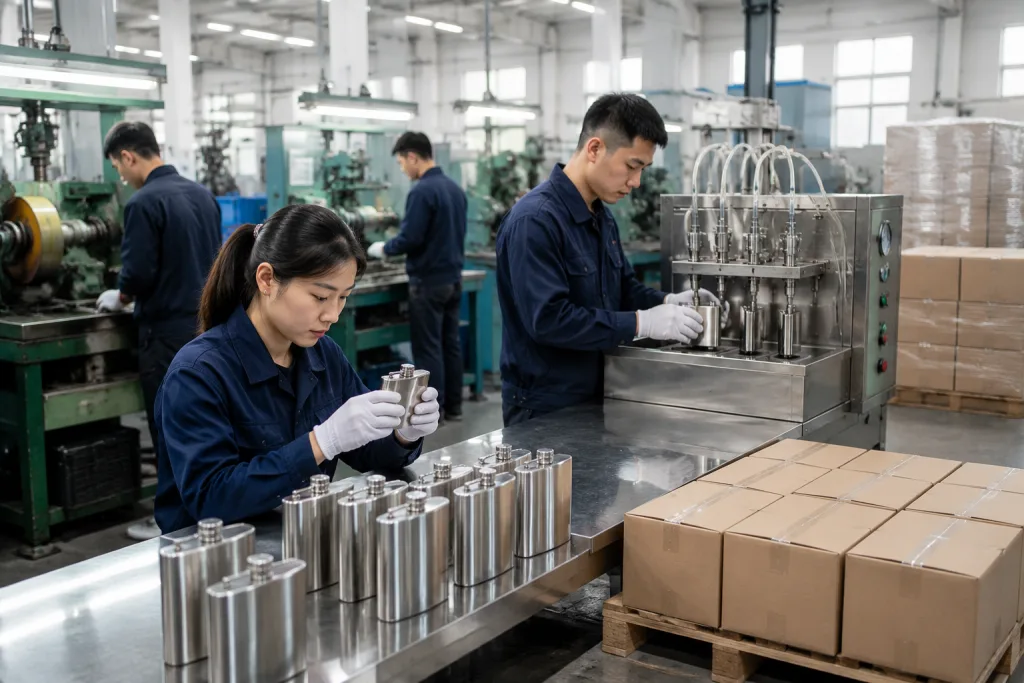
When you search for a supplier list hip flask, you are not looking for inspiration. You are trying to avoid a bad run: seam leaks, crooked laser logos, plated caps that chip in transit, and a quote that looks cheap until the carton reject rate lands on your desk. That is the real job. A hip flask is small, but on the line it behaves like a precision part. If the supplier does not control welding, polishing, sealing, and packing, you pay for rejects twice. We have seen a 2.5% leak issue turn into a 12-day delay because QC had to pull every tenth piece and recheck the seams.
We make drinkware in Zhejiang, China, and the pattern is steady: buyers who spell out failure points get cleaner results than buyers who only ask for a sample photo. A proper supplier list hip flask should screen for canteen manufacturer capability, metal thickness, finish consistency, and QC discipline. If you also source canteen custom lines, customizable drinkware, or a custom growler program, the sourcing logic stays the same. The difference is that hip flasks punish weak process control faster than most other custom drinkware. One buyer once sent a PO with “matte sliver cap” typed in it, and the buyer flagged it only after the sample was already on the bench.
Where hip flasks usually fail
I’ll rewrite the prose in place, keep the HTML intact, and tighten it so it sounds like a real factory-side sales engineer wrote it.The cheapest hip flask is usually cheap in the wrong spots. We see the body seam fail first. If the deep-draw or welded seam is too thin, pinholes show up under hot-fill or when cartons take a temperature swing in export transit. The cap is next. A loose hinge, undersized gasket, or sloppy stopper thread turns into leakage complaints after one use. Finish failure follows: brushed surfaces pick up swirl marks, mirror polish scratches in packing, and powder coating chips when the carton stack goes too high.
For a supplier list hip flask, ask the factory to name the control points, not just the style. A canteen factory that really handles custom canteen work will give you wall thickness, sealing method, and packing spec straight away. If they cannot tell you whether the body is 0.6 mm or 0.8 mm, the math does not work. They are quoting a photo, not a production line. QC pulled a sample once and the buyer flagged a 1.2 mm seam variation; that kind of miss is why we push back early.
- Body thickness: 0.6 mm minimum for budget runs, 0.8 mm for better dent resistance
- Leak test: 100% air or water test at the line, not random pull checks only
- Cap fit: torque and gasket spec should be documented
- Surface: reject visible scratches under 300–500 lux lighting
How to screen supplier capability
I’ll rewrite the section in-place, keep the HTML unchanged, and tighten the sales-engineer tone with concrete factory details and fewer generic phrases.You do not need twenty canteen suppliers. You need a short list that can hold spec and ship on time. Start with factory basics: monthly capacity, in-house polishing, welding or forming, and whether logo decoration runs on-site or gets sent out. A real canteen manufacturer in China should tell you if the line runs 50,000 units per month or 200,000 units per month, and where the choke point sits. That matters more than brochure photos.
Ask for export documents, not just product shots. If the supplier already ships to Europe or North America, they should know REACH, LFGB or FDA requirements where relevant, carton drop tests, and master carton labeling. For distributor drinkware buyers, this is the wrong question to skip, because one missing compliance file can hold a PO for 12 days instead of 3. A good canteen distributor or canteen vendor will show the factory name, the process chart, and which steps they control inside the plant. We’ve seen this go sideways when the buyer only got glossy catalog pages.
Good suppliers answer process questions fast. Weak suppliers answer style questions fast.
For a customizable canteen or customized drinkware program, ask for three samples: plain body, logo sample, and packed sample. QC pulled the sample off the line and checked the print edge, the box fit, and the carton count, because that is where the real problems show up. On one PO, the buyer flagged a typo in the shipping mark and the whole carton label had to be redone. That is the kind of detail that tells you whether the supplier list is usable or just noise.
Spec the metal, not just the style
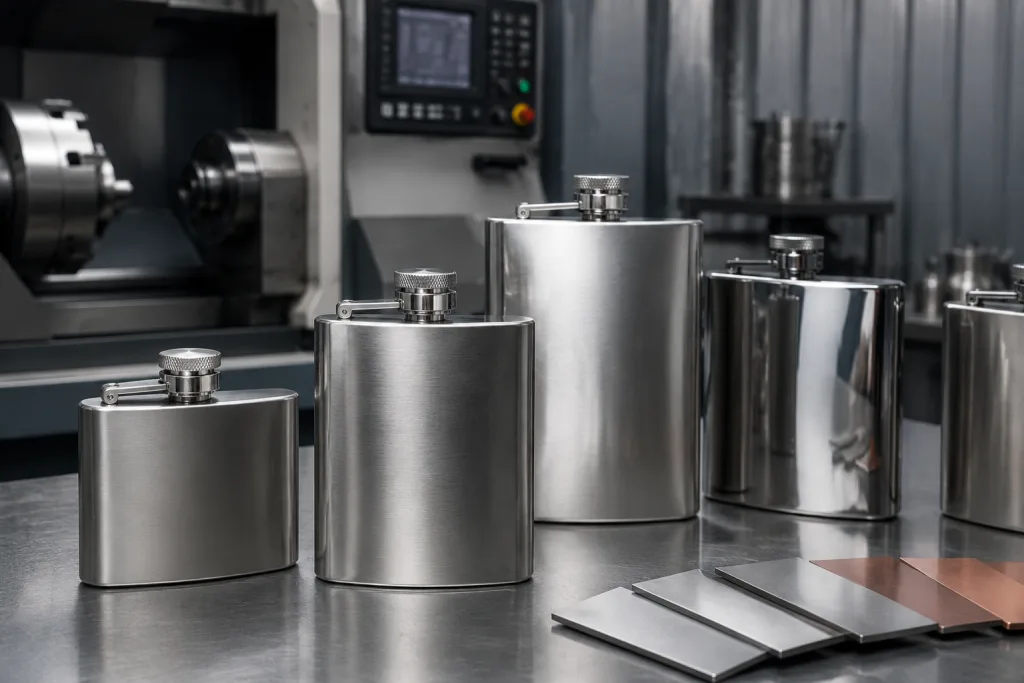
I’ll rewrite the prose to sound like a real factory sales engineer, keep the HTML structure intact, and preserve the exact heading plus list tags.Hip flasks are small. Bad metal choices still cost money. For most export orders, we run 304 stainless steel on the body. If the buyer wants a premium badge or a 3–5 year replacement cycle, 316 is the cleaner spec, but the price jumps fast and the math does not work for standard custom drinkware. On entry programs, we ask for 0.6 mm wall thickness at minimum; 0.8 mm gives better rigidity, and QC pulled fewer dent claims in carton drop checks.
Finish spec matters too. Brushed panels need the grain direction matched side to side, or the seam shows up on the line. Mirror polish needs a gloss target, because one buyer flagged a “shiny” sample that looked flat under retail LEDs. For canteen customized or customized canteen items with laser logo, we set engraving depth and contrast before production. Too shallow, and the mark fades after a few weeks of handling; too deep, and you get heat tint around the logo. For painted or coated versions, ask for cross-hatch adhesion testing and a salt-spray target if the stock sits in a humid warehouse. We’ve seen that go sideways in 12 days vs 18 days.
- Recommended body: 304 stainless steel, 0.6–0.8 mm
- Premium option: 316 stainless steel for higher corrosion resistance
- Logo control: laser depth, print color, or silk-screen alignment must be sampled
- Surface control: define acceptable scratch, dent, and polish marks before mass production
Leak testing is not optional
I’ll keep the HTML tags exactly as-is and rewrite only the prose with tighter, more specific factory-floor language. Then I’ll do a quick pass to make sure the section still reads like a buyer-facing supplier note, not generic copy.Most hip flask returns have nothing to do with the logo. They come from leaks. A flask can look fine on the line and still fail after 3 hours in a hot truck or after the cap has been opened and closed 20 times. We run a real leak test for this reason. At minimum, the factory should do 100% water fill or air pressure testing before packing. Random checks do not cut it on a sealed cavity with a threaded closure.
Ask what gasket material is in the cap. Food-grade silicone is the usual spec for export orders. If the gasket is too soft, it squeezes out. If it is too hard, the cap never seats right. For customized growler or customizable growler programs, the failure mode is the same, just with a bigger body. QC pulled the sample, and the math was clear: a weak closure fails on the bench long before it reaches the port. A careless vendor will blame shipping. That is the wrong question to ask.
If you want fewer surprises, ask for a pre-production test pack: 20–30 units filled, inverted, shaken, and held for 24 hours. That is cheap insurance against a container claim, and we have seen it save a shipment when one buyer flagged a loose cap on the first round.
Branding defects cost more than you think
I’ll rewrite the section in-place, keep the HTML structure intact, and make it read like a real export sales engineer wrote it.Logo defects are not cosmetic. A silk-screen print shifted by 1.5 mm turns a private label run into scrap. A laser mark sitting too close to the seam looks sloppy, even if the flask holds liquid fine. We’ve seen a buyer reject a 3,000-piece order over that. Decoration belongs in the spec sheet, not in a side note. If your canteen promotional plan includes gift sets, the print has to survive retail shelves and distributor handling.
For supplier list building, ask who runs decoration in-house. Silk screen, pad printing, laser engraving, and heat transfer fail in different ways, and the line needs different controls for each one. A canteen supplier with export experience should give you logo size, safe zone, and file format before PO. A canteen manufacturer working on canteen promotional programs should also state the color tolerance and whether Pantone matching is realistic on stainless steel. We had a buyer flag a PO that said “exact Pantone on all finishes”; that math does not work.
- Ask for: artwork placement drawing with dimensions
- Define: one Pantone target and one acceptable delta range
- Check: logo edge clarity under normal retail lighting
- Verify: decoration survives alcohol wipe and abrasion tests
MOQ, cost, and lead time reality
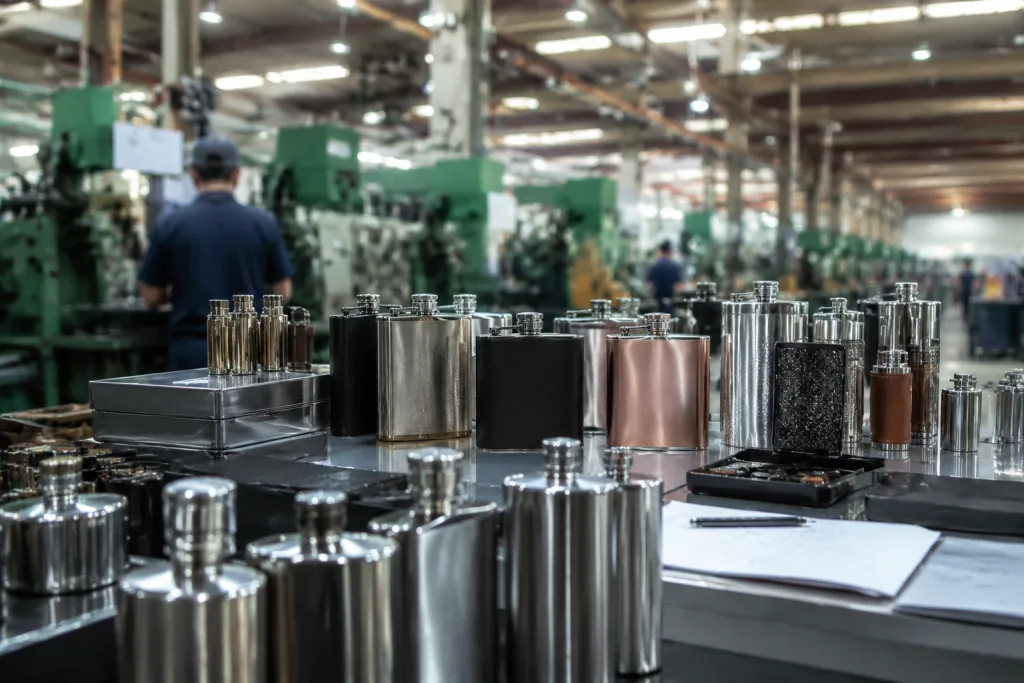
I’ll keep the HTML exactly as-is and rewrite only the prose, with tighter sales-floor language, concrete numbers, and no AI filler.For a standard hip flask from a Zhejiang factory, the market is usually simple. MOQ is commonly 500 to 1,000 pcs per color or per logo setup, based on whether we run silk screen, laser engraving, or UV print. Lead time is often 20 to 35 days after sample approval and deposit. If you need a new mold, cap tooling, or special packaging, add 15 to 25 days. We’ve seen buyers ask for a full custom run in 7 days. The math does not work. That usually means stock with your logo, not a true made-for-you order.
On price, basic stainless steel hip flasks often land around USD 1.20 to USD 2.80 FOB China, depending on size, finish, and decoration. A 6 oz flask with brushed surface and laser logo sits in one bucket; a mirror finish with gift box and plated cap sits in another. If you are buying for a distributor canteen or distributor drinkware program, compare landed cost, not unit price. Carton count, inner tray thickness, master carton edge crush, and FNSKU labeling all hit margin. QC pulled a sample last month and found one loose cap in a 24-piece inner box. That one box issue would have blown retail readiness.
The right supplier list is not the longest one. It is the list with the fewest open questions. In China, especially Zhejiang, the factories that quote clearly also pack clearly. We ship that way because the line has to answer for it later.
Shortlist better hip flask suppliers now
Send us your spec, target price, and artwork. We’ll quote the failure points, not just the product.
Frequently asked questions
What MOQ should I expect for a supplier list hip flask order?
For most Zhejiang factories, expect 500–1,000 pcs per design or color. If you add a new cap style, gift box, or multi-color logo, MOQ can rise to 1,500 pcs because setup time and scrap risk increase. For stock shapes with simple laser engraving, some canteen suppliers will quote 300 pcs, but the price usually rises 15% to 30%. If you are building a canteen customized range, ask whether MOQ is tied to one artwork or one packing spec, because factories often count those separately.
How do I check if a canteen manufacturer is real?
Ask for factory address, export history, monthly output, and in-house process photos with date stamps. A real canteen manufacturer should state capacity in units per month, such as 50,000 or 200,000, and explain whether welding, polishing, and decoration are in-house. Request an audit document, BSCI if available, and sample inspection records. If the supplier only sends catalog images and avoids process questions, they are acting like a trader, not a factory. That is fine if you want a canteen vendor, but you should price and control it that way.
What QC points matter most for customized canteen or hip flask orders?
Leak testing, cap torque, logo placement, and surface damage are the main ones. For hip flasks, I would specify 100% leak testing, AQL 2.5 for critical appearance defects, and AQL 4.0 for minor cosmetic issues. Measure wall thickness at three points and set a minimum of 0.6 mm for standard runs. For canteen customizable programs, confirm that the artwork still passes after polishing or coating. Most failures happen after decoration, not before it.
Can I source hip flasks and custom growler items from the same supplier?
Sometimes, yes. A canteen factory that handles stainless forming, sealing, and decoration can often manage both hip flasks and custom growler programs. The overlap is in metal forming, gasket control, and branding. The difference is volume and closure complexity. Growlers usually need heavier gauges and larger leak-control surfaces. If a supplier already handles customizable growler and custom drinkware orders for export, they are more likely to understand packaging, drop testing, and carton labeling for both lines.
What documents should I ask for before paying a deposit?
Ask for a quotation with FOB terms, a signed sample approval sheet, material spec, and packing spec. For Europe and North America, request compliance declarations such as REACH where relevant, and food-contact documentation if the flask is intended for direct contact with beverages. If you are importing through Amazon or retail channels, also request carton dimensions, net/gross weight, and barcode labeling support. Good canteen suppliers in China usually provide these without drama. If they cannot, that is a warning sign before production begins.