Key Takeaways
- A basic stainless canteen often lands at USD 2.20-2.90 FOB China, while decorated insulated versions can reach USD 6.00-8.50
- Most custom canteen orders start at 1,000 pcs MOQ; complex cap or mold changes can push MOQ to 3,000 pcs
- Typical production lead time is 18-28 days, plus 5-12 days for sea freight or 3-7 days by air
- A supplier list canteen should be judged on AQL 2.5 inspection, REACH compliance, and monthly capacity above 200,000 units
If you are building a supplier list canteen, do not start with logo ideas. Start with cost structure. A plain 500 ml stainless canteen at a China FOB price of USD 2.20 is a different buying decision from a powder-coated, laser-engraved version at USD 3.85 or a double-wall insulated custom growler at USD 6.40. The real question is unit cost, lead time, and whether the shipment misses the booking window.
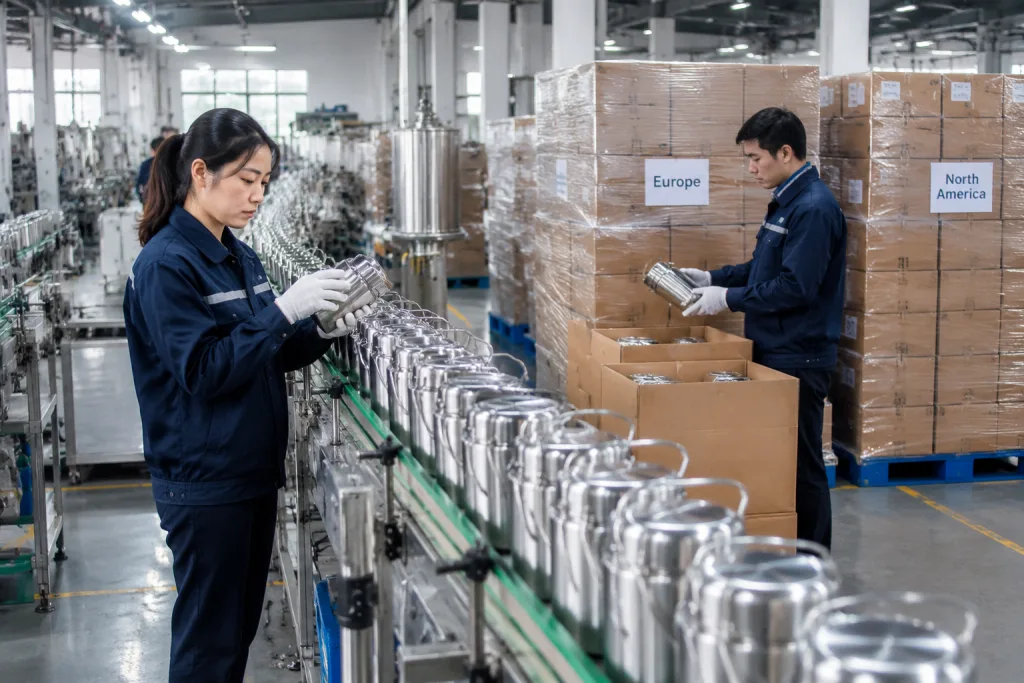
Buyers in Europe and North America usually need three things at once: a clean supplier list, predictable production windows, and enough room for canteen custom requests without wrecking margin. That is where a Zhejiang canteen manufacturer with real monthly output matters. At BottleForge Industrial in Hangzhou, we run around 300,000 units per month, with standard MOQ starting at 1,000 pcs and normal lead time of 18 to 28 days after sample approval. QC pulled the sample on the line last week and measured the cap thread at 28 mm; if you are comparing canteen suppliers, use those numbers as your benchmark, not marketing language.
What actually drives canteen cost
I’ll rewrite this section in-place, keep the HTML structure intact, and tighten the sales-engineer tone with more concrete factory detail and cleaner pricing logic.When buyers ask for a supplier list canteen quote, the bottle body is rarely the main cost. Material drives most of it. Single-wall stainless steel 304 at 0.5 mm lands cheaper than 18/8 stainless at 0.6 mm, and both sit below a double-wall insulated build. The lid comes next: a plain PP screw cap is low cost, while a flip lid, silicone seal, or straw system adds parts, more assembly time, and more leak checks on the line. Surface finish changes the number too. A bare brushed body is cheap; matte powder coating, UV print, or gradient spray adds labor and scrap. We run into this every week, and the buyer flagged it on a 2,000 pcs PO because the finish note was vague.
Decoration eats margin fast. One-color silkscreen on a flat body runs clean. Full wrap CMYK printing, laser engraving, or a debossed logo takes longer and pushes the quote up. On a 500 ml custom drinkware order, we’ve seen USD 2.35 FOB with one-color print, USD 2.95 with laser marking, and USD 3.40 once a color box and barcode label are added. That math is the part buyers miss. If you are comparing canteen manufacturers in China, ask for body, cap, print, packaging, and carton as separate lines. QC pulled the sample twice last month because the print file had a 1 mm shift, and that kind of thing shows up in cost fast.
- Material: 304 stainless, 201 stainless, aluminum, or Tritan-style body
- Thickness: 0.4-0.8 mm body gauge changes hand feel, dent risk, and scrap rate
- Decoration: silkscreen, laser, UV print, or wrap label
- Packaging: bulk, white box, retail box, or Amazon-ready set
MOQ tiers that make sense
I’ll rewrite the section in-place, keep the HTML exactly as-is, and make the prose sound like a factory-side sales engineer wrote it.MOQ is where a canteen supplier list starts paying for itself. A real factory should quote more than one route. For a plain canteen promo item with one logo and a stock cap, 500 to 1,000 pcs is normal if we already have the base body on the shelf. For a fully custom canteen with a special lid color, a new powder coat, or a molded handle, 3,000 pcs is the number we usually put on the table because the setup cost needs volume to make sense. If somebody throws out 200 pcs for a complex build, the math does not work; the buyer flagged it once, then the hidden cost showed up in tooling, decoration, and carton art.
In Zhejiang, we run MOQ in practical tiers. Under 1,000 pcs, you are paying for speed and a clean line changeover. From 1,000 to 3,000 pcs, you can still hold a decent unit price on custom drinkware without tying up too much cash. Above 5,000 pcs, the price can drop 8-15 percent if the artwork, cap, and color stay fixed. We saw this on a 1,200 pcs sample order last month: QC pulled the sample, found the lid color off by 1.5 mm, and the buyer asked for a rerun. That is why canteen distributors place a test order first, then scale once sell-through is proven. Chasing the lowest sticker price is the wrong question; match the MOQ to turnover and warehouse space, or the stock sits.
Ask the factory whether the MOQ is tied to the body, the lid, the print method, or the carton. Those are not the same thing, and they hit your cash exposure in different ways.
Lead time and shipment reality
I’m rewriting the section to sound like a factory-side sales engineer, keeping the HTML intact and tightening the lead-time math. I’ll preserve the list structure and existing numbers, then push in a few concrete shop-floor details so it reads lived-in.Lead time beats the quote on most canteen orders. We’ve seen a factory promise 15 days, then lose the launch because sample sign-off dragged, cartons sat in the packing room, or the booking got pushed back at the forwarder. For standard stock bodies with logo printing, 18-28 days is the real production window. If you want a new cap color, custom sleeve, or a gift box, plan on 28-40 days. Sea freight to Europe or the East Coast of North America adds 5-12 days; air freight runs 3-7 days if you pay to protect the launch date. The math does not lie.
Pre-production is where schedules slip. Sample making usually takes 3-7 days, and a second revision adds another 3-5 days. QC pulled one sample with a 0.3 mm print offset last month, and the buyer flagged it before mass run, which saved us from rework. A solid canteen manufacturer in China should spell out the line like this: sample on day 5, sample approval by day 8, mass production start by day 10, inspection on day 26, shipment on day 30. “About three weeks” is a weak answer. For distributor drinkware programs, that gap decides whether you hit shelf before peak season or walk in late.
- Simple logo order: 18-28 days production
- Custom lid or coating: 28-40 days production
- Sea freight: 5-12 days depending on route
- Air freight: 3-7 days but much higher landed cost
What a real supplier list should include
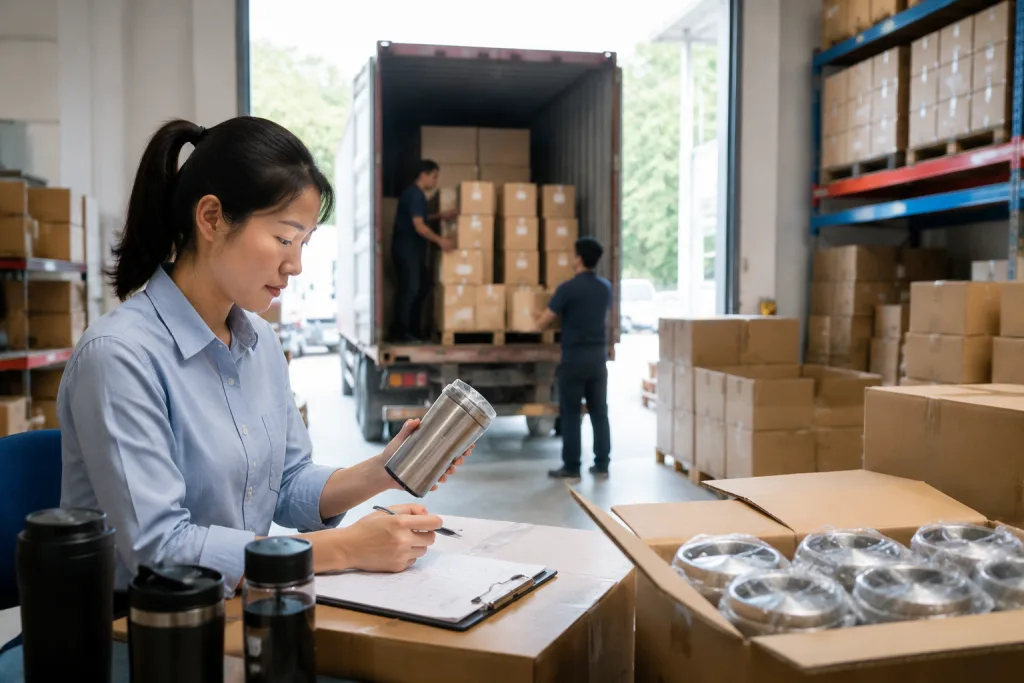
I’ll rewrite the prose in place, keep the HTML exactly as-is, and tighten it so it reads like a factory-side sales note with concrete buying signals.A supplier list canteen is not a phonebook. It should be a filtered shortlist with production facts. We want canteen suppliers that can show monthly capacity, export history, compliance files, and a QC routine the line actually follows. For Europe, ask for REACH and food-contact declarations. For North America, ask for FDA-related material statements, plus ISO 9001 and BSCI or equivalent social audit records. If the seller cannot show an AQL 2.5 table, they are not ready for serious B2B volume.
Your list should split canteen vendors into three buckets: stock-capable, customization-capable, and export-capable. Stock-capable means they can ship in 7 days. Customization-capable means they can handle canteen custom finishes and packaging, which we confirm with a 1,000 pcs test run on the line. Export-capable means they can manage carton markings, FNSKU, pallet labels, and freight paperwork without making your forwarder chase fixes. If a canteen vendor cannot support barcode placement or carton count accuracy, they are not ready for retail or marketplace business. We have seen this go sideways from one typo on a PO. This is where a Zhejiang supplier usually has an edge: more factories here already work FOB terms, container planning, and repeat export docs.
To keep the list useful, record four numbers for each factory: MOQ, sample lead time, mass-production lead time, and monthly output. If the canteen supplier cannot answer those in one call, they are not supply-chain ready. QC pulled the sample, and the caliper read 0.8 mm wall thickness instead of 1.0 mm, which is the kind of gap that kills a quote fast.
Pricing by build type
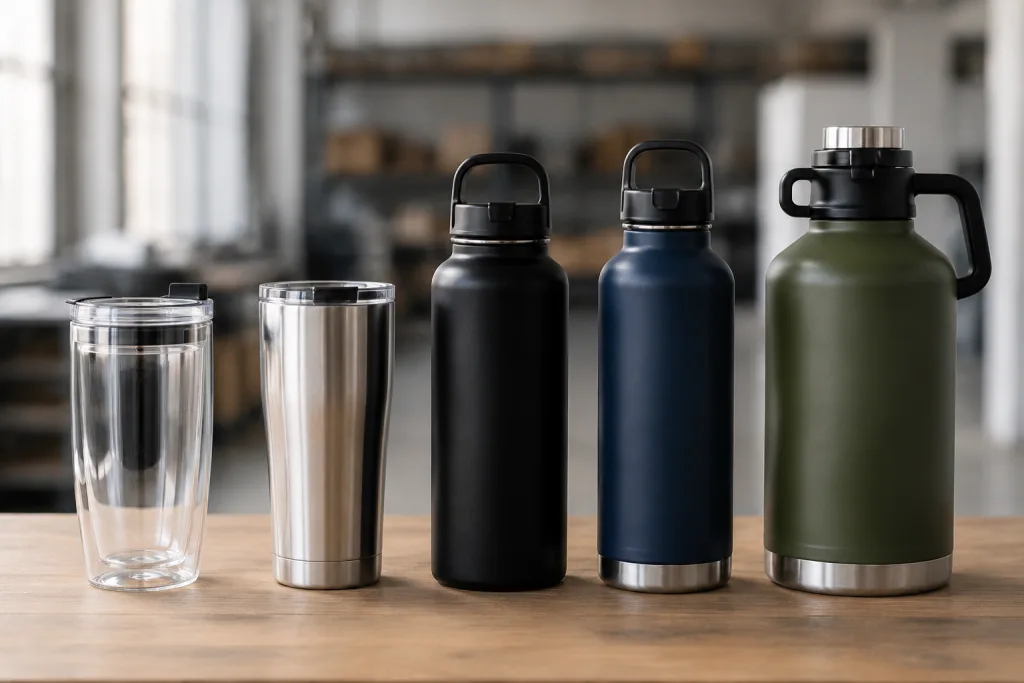
I’ll keep the HTML untouched and rewrite only the prose, tightening the pricing logic with more concrete factory-floor language and fewer generic phrases.Buyers often line up quotes without seeing they are comparing different build types. A single-wall aluminum custom canteen with basic print can sit around USD 1.45-2.10 FOB China. A 304 stainless single-wall canteen custom build usually lands in the USD 2.20-3.20 range, depending on logo method and cap. Move to a double-wall insulated canteen customized for premium retail, and you are usually in the USD 4.80-7.50 range. Add a custom drinkware gift box, insert, and shrink wrap, and landed cost climbs even when the factory quote stays flat on paper.
The low quote is often the wrong question. Lower-grade 201 stainless can trim 10-15 percent off unit price, but QC ends up spending more time on weld checks and surface marks. We run this every week on the line. A canteen distributor usually pays a bit more for 304 stainless because fewer defects mean fewer returns and less after-sales noise. If you are sourcing a custom growler or customizable growler alongside canteen items, the same rule holds: cap system, insulation, and coating drive the price, not the body shape alone. For the first order, keep the product mix tight; the math gets messy fast when you mix three lid styles in one PO.
Practical buying rule: compare landed cost per sellable unit, not ex-factory price per piece. A USD 3.10 canteen with 3 percent defect risk can cost more than a USD 3.25 unit with 0.5 percent rejects.
How to buy without slowing launch
I’ll keep the HTML structure intact and rewrite the prose to sound like a factory-side sales engineer, with sharper sourcing detail and fewer AI-style transitions.If your launch date is fixed, buy the simplest version that still carries your brand. One body size. One lid. One logo method. One carton spec. Every extra variable can add 5-7 days, and we’ve seen a “small” lid swap push a PO from 12 days to 18 days because the cap mold was already tied up. For canteen promotional campaigns, the cleanest route is usually a stock body with one-color print and a standard mailer or retail box. For retail or distributor canteen programs, split the rollout: one launch SKU first, then a second phase once sell-through is clear.
Work with the factory on a written approval chain. Approve artwork, sample, carton mark, and pre-shipment photos before mass shipment. We run pre-production checks with a 0.5 mm caliper, and QC pulled a sample last month because the print sat 1.2 mm off center. Request AQL 2.5 inspection for major defects and AQL 4.0 for minor cosmetic issues if the product is budget-led. If you are buying from China into Europe or North America, confirm HS code assumptions, carton dimensions, and outer carton count early. The math does not work if the buyer flags the carton count after booking; that is where freight, duty, and warehouse fees start moving.
For a long-term supplier list, keep one backup canteen manufacturer in Zhejiang and one outside the region. That gives you cover when raw material pricing shifts, coating lines fill up, or one vendor slips a week because the powder coat oven is booked. We’ve seen this go sideways when a PO typo changed the lid color code on day 18. Good sourcing is not about a perfect supplier. It is about having a working system when the first line gets tight.
Get a cleaner canteen quote in 24 hours
Send your size, logo method, and target MOQ. We will return a practical China FOB quote, lead time, and packaging option from Zhejiang.
Frequently asked questions
What is a normal MOQ for a custom canteen?
For most custom canteen projects, 1,000 pcs is a realistic starting MOQ if you use an existing body and standard lid. If you want a new cap color, special finish, or unusual packaging, MOQ often moves to 3,000 pcs. For stock-based canteen custom printing, some China factories can do 500 pcs, but the unit price is usually 10-20 percent higher. A serious canteen supplier should tell you whether the MOQ is driven by decoration, tooling, or carton requirements.
How much should I budget for a supplier list canteen order?
For a basic 500 ml stainless canteen, budget roughly USD 2.20-2.90 FOB China. A better-finished customized canteen with one-color print or laser logo usually sits around USD 2.90-3.80. Premium insulated builds can reach USD 4.80-7.50, depending on coating, lid, and packaging. If you need color boxes, barcode stickers, or FNSKU labels, add another USD 0.20-0.60 per unit. Freight is separate, and for Europe or North America it can change landed cost by 8-25 percent.
How long does production usually take in China?
A standard custom drinkware canteen order usually takes 18-28 days after sample approval. If the lid, coating, or packaging needs development, plan on 28-40 days. Sample making often takes 3-7 days, and a revision can add another 3-5 days. Sea freight to Europe or North America can add 5-12 days depending on the route. A good canteen factory in Zhejiang should give you a timeline by stage, not just one vague estimate.
What compliance documents should I ask for?
For Europe, ask for REACH-related material declarations and food-contact support documents. For North America, ask about FDA-related material statements and whether the factory can support your testing file. Also request ISO 9001, BSCI, or comparable audit records if you need retail or distributor compliance. On the production side, ask for an AQL inspection plan, carton drop-test method if relevant, and packing list accuracy. Good canteen manufacturers in China should be able to send these without hesitation.
How do I choose between a canteen supplier and canteen vendor?
Use the factory when you need stable volume, consistent QC, and lower unit cost. Use a canteen vendor when you need fast sourcing, mixed product lines, or smaller test orders. For repeat programs, a direct canteen manufacturer usually gives better control over lead time and packaging. For one-off seasonal runs, a vendor or distributor can be faster, but you may pay more and lose visibility on the actual production line. If you are building a supplier list canteen for long-term purchasing, include both types, then rank them by MOQ, lead time, and defect rate.