Key Takeaways
- Most flask failures come from 4 points: lid seal, surface finish, weld integrity, and decoration adhesion.
- For 500 ml stainless flasks, a realistic MOQ is 3,000 units and lead time is 25-35 days after sample approval.
- AQL 2.5 for critical defects and 4.0 for minor defects is a practical baseline for export QC.
- FOB China pricing for standard vacuum flasks often starts around USD 2.10-4.80 depending on steel grade, lid type, and decoration.
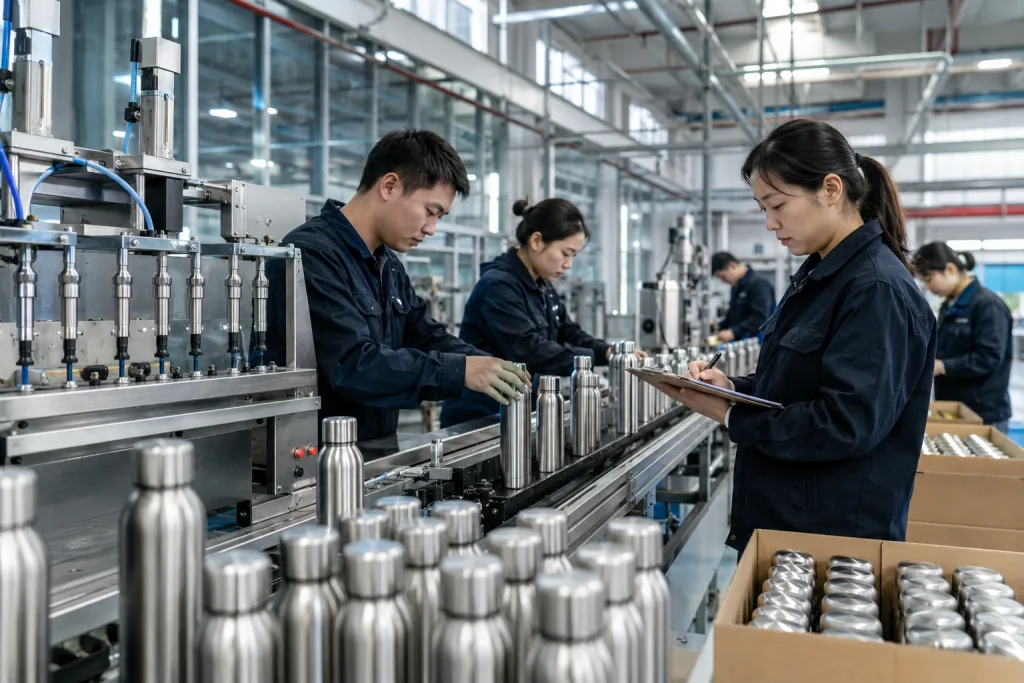
A supplier hydration flask looks simple until you ship 5,000 units and 3% come back with leaking lids, dented bodies, or print that peels after the first wash. We see it on the line every season. That is where buyers find the gap between a canteen manufacturer and a real canteen factory with process control, not just a catalog. In Zhejiang, QC pulled the sample, the sample passed, then mass production exposed the weak spots.
If you are buying custom drinkware for retail, corporate gifting, or distributor channels, spec for failure modes first and price second. The right canteen supplier will tell you where a canteen customizable design breaks, how to test it, and which tolerance to lock before PO release. We’ve had buyers push back on a $0.12 unit increase, then lose more than that on rework and claims. The math does not work.
Where the flask usually fails
I’ll rewrite the section in place, keeping the HTML tags and the technical terms intact while making the prose sound like a factory-side sales engineer.The first mistake is thinking the body is the product. It is not. A supplier hydration flask usually fails at the interface: cap threads, silicone gasket, hinge pins, powder coat edges, and the vacuum seam. We have seen a 0.5 mm thread mismatch turn into a leak claim after a 12-day transit. If you buy a customized drinkware program without checking those points, you are buying a future claim.
We split failures into four buckets. Critical means leakage, contamination, or unsafe use. Major means dents, crooked graphics, or lids that do not close cleanly. Minor means cosmetic noise that annoys retail buyers but does not break function. QC pulled the sample, and the cap sat 1.2 mm high; that goes straight into the major file. A solid canteen distributor should speak this language with you before quoting. Otherwise the math does not work.
For stainless models, specify 304 inner and outer walls unless the price target forces a downgrade. Wall thickness usually runs 0.4-0.6 mm; if you go too thin, you save grams and lose dent resistance. On a 500 ml custom canteen, a body under 0.4 mm is asking for trouble in transit and in end-user hands. We ship these every week, and the line does not forgive thin walls.
Rule of thumb: if a defect can make the flask leak, treat it as a critical defect in the contract, not a warranty note.
Lid and seal failures
I’ll rewrite the prose in place, keep the HTML exactly as-is, and tighten it up with factory-floor detail and sharper buyer language.The lid is where most canteen custom projects go wrong. Threads are cut too shallow, torque drifts from one station to the next, and the gasket is either too soft or not seated flat. We’ve seen a lid pass one hot-fill check, then fail after five cycles because the silicone crushes unevenly. On the line, we measure closing torque with a torque tester; eyeballing fit is how leaks get missed.
For export runs, call out the silicone grade, gasket cross-section, and closure cycle target in the PO. A clean target is 3,000-5,000 open-close cycles for a retail flask and 10,000 for a commuter model. If the design uses a flip lid or straw lid, add a hinge endurance test and a 1.2 m drop onto plywood. That sounds strict. The math works, though—cheaper than replacing a full campaign after the buyer flags it.
- Leak test: 60 minutes inverted at room temperature and 45°C hot-fill
- Torque tolerance: keep closure variation within ±15%
- Seal compression: target consistent contact around the full circumference
- Cycle test: 3,000 minimum for standard retail, 10,000 for premium
If the buyer wants a customizable canteen with multiple lid options, approve each lid separately. QC pulled the sample on a 0.3 mm gasket mismatch before packing. A lid can sink the whole flask line if you treat it as a small part.
Body dents and vacuum loss
I’ll rewrite the four paragraphs in-place, keep the HTML exactly as-is, and make the copy sound like a real factory sales engineer wrote it.The vacuum chamber is what makes the flask work, and it is also where bad process shows up late. We see a body look clean on the outside and still lose insulation because the seam weld wanders, the evacuation step is weak, or the second draw misses the spec by 0.2 mm. Once vacuum is gone, there is no cheap repair.
Ask for insulation performance in writing. For a typical 500 ml stainless flask, a fair target is 6-8 hours hot retention above 60°C and 12-18 hours cold retention below 10°C, depending on fill temp and room conditions. “Long-lasting insulation” is not a spec. Ask how they test: water fill, ambient 20-25°C, lid closed, reading at 6 and 12 hours. QC pulled a sample on our line last month and the buyer flagged the data sheet because the test method was not stated.
For distributor drinkware programs, packing matters too. A body can pass leak check and still arrive dented if the carton is thin or the tray insert lets the flask move 8-10 mm in transit. We often add edge guards and double-wall mailers for e-commerce orders out of Zhejiang. It is not fancy, but it cuts claims. The math works.
For a custom growler or customizable growler with larger volume and thicker walls, the same problem gets worse because the shoulder and base take more abuse in transit. Bigger does not mean safer. We have seen 64 oz units arrive with a flat spot on the base after a 1.2 m drop test, and that is the wrong question to ask if someone assumes size alone protects the product.
Print that peels or rubs off
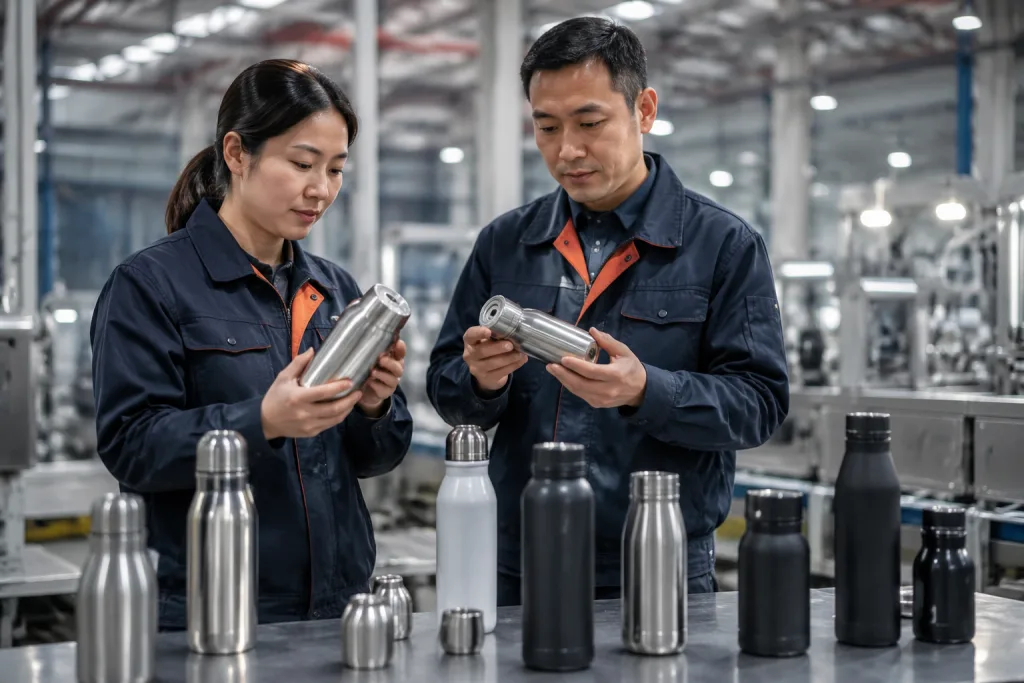
I’ll rewrite the section in-place, keep the HTML structure unchanged, and tune the copy to sound like a shop-floor sales engineer.Decoration failures are easy to prevent and easy to miss until the first customer complaint lands. A canteen customized with screen print, laser engraving, or heat transfer carries different failure points. Screen print can crack on a curved wall. UV print scratches fast if surface prep is weak. Powder coat chips at the rim when masking is sloppy.
Match the decoration method to the job. For a premium retail flask, laser engraving is usually the toughest choice. For a canteen promotional run, screen print keeps the price down, but we still ask for an adhesion test and a rub test. On our line, we run 50 double-rub cycles with alcohol for ink-based decoration and expect a cross-hatch result of 4B or better on coated surfaces. The buyer once pushed back on 30 cycles; the math does not work.
If you sell through canteen distributors or a distributor canteen channel, packaging and print have to survive warehouse handling, not just sample photos. Ask for master carton drop tests and rub tests after abrasion. We have seen a clean pre-shipment sample come back marked after one cross-country truck ride. QC pulled the sample at 1.5 m drop height, and the print held only after the carton was re-taped.
- Laser engraving: permanent mark, slower setup
- Screen print: lower cost, higher risk on curved bodies
- Powder coat: good hand feel, needs tight edge masking
- UV print: vivid color, needs strict surface prep
Materials and compliance checks
I’ll rewrite the three paragraphs in-place style, keep every tag and number intact, and make it sound like a factory-side sales engineer wrote it.If you are buying from a canteen supplier in China, especially Zhejiang, do not take material claims on voice. Ask for the material certificate, REACH paperwork, and, where the market needs it, FDA food-contact declarations. On the shop floor, we check the laser-marked steel stamp before packing. For stainless steel, 304 is the workhorse; 316 fits harsher use but pushes cost up. For plastic lids, PP and Tritan-type materials are common, but the lid has to match the temperature range and contact time. We have seen buyers skip that point and then flag a lid that warped at hot-fill test.
A good sourcing file should list the steel grade, thickness, silicone spec, ink or coating system, and carton strength. If the order is for Europe, ask for REACH and, if needed, LFGB testing. For North America, keep ASTM-related internal tests on file for drop and thermal performance even if the buyer does not ask on day one. QC pulled one sample last month because the silicone ring was 0.3 mm under spec. A canteen vendor that cannot turn out test reports fast is not built for repeat orders.
Typical FOB pricing from a Zhejiang factory for a standard 500 ml stainless custom drinkware flask sits around USD 2.10-4.80, depending on finish and decoration. MOQ is often 3,000 units for one color and one logo; lead time is usually 25-35 days after sample approval. We run those numbers on the line every week, and they do not move much unless the buyer adds a special coating or a packed gift box. A real canteen manufacturer should state them straight, because the math does not work any other way.
How to spec the order
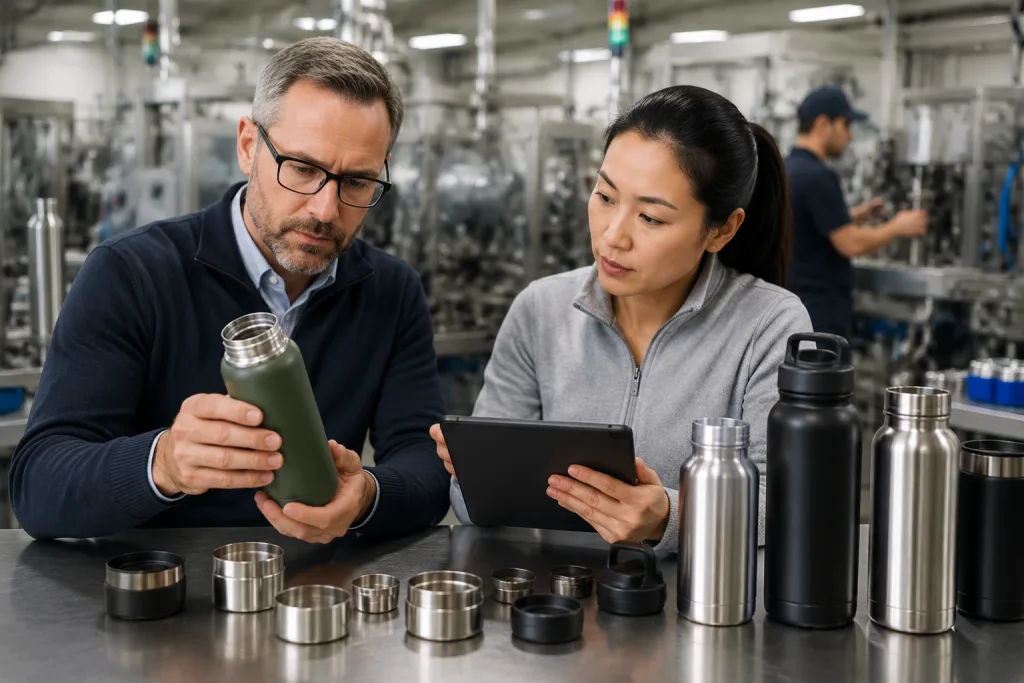
I’ll keep the HTML intact and rewrite only the prose, with tighter factory-floor language and specific spec details. Next I’m patching the section directly, then I’ll return the cleaned HTML only.Good orders are boring. That is the point. We want a drawing, material spec, decoration method, packaging spec, and QC plan. The more “creative” the purchase order is, the more room there is for production interpretation. If you are dealing with a canteen distributor or canteen supplier who says “same as sample,” push back. Samples are examples, not contracts; the line will follow what is written on the PO, not what a buyer remembers in email.
Use measurable requirements. State capacity tolerance, usually ±5% for volume. State weight tolerance, especially when retail pricing depends on how solid the flask feels in hand. State finish gloss or matte level if your brand position matters. For a customized canteen, define which part is printed, where the logo starts and ends, and whether the lid color must match Pantone or only come close. We once saw a buyer flag a 2 mm logo shift because the art file was loose. That kind of gap turns into rework fast.
Contract fields worth fixing before deposit:
- Capacity and tolerance
- Wall thickness and steel grade
- Leak test and drop test method
- AQL level: 2.5 critical, 4.0 major/minor is common
- Packaging style and carton drop standard
If you are sourcing custom drinkware for retail or distributor drinkware programs, one more thing matters: spare parts. Ask whether gaskets, lids, and straws can be supplied separately. We run into this all the time after shipment, when a buyer needs 500 lids for a 10,000-unit order and the math just does not work if spares were never planned. A canteen manufacturers team that supports spare parts is easier to live with than one that vanishes after the container leaves.
What a serious factory should show you
I’ll rewrite this section in place, keeping the HTML exactly as-is and tightening the prose so it reads like a factory-side sales engineer wrote it.Do not buy on price alone. Ask what the canteen factory can prove. A serious factory in Zhejiang or anywhere else in China should show real output numbers, QC points, and batch traceability. If they say the volume is high, ask for units per month, number of lines, and how many inspectors cover incoming materials, in-process checks, and final inspection. That is a fair question.
At BottleForge Industrial, a drinkware line can run over 400,000 units per month across several flask and bottle models. Sample lead time sits around 7-10 days, and mass production takes 25-35 days depending on decoration. We had a buyer flag a PO typo on the carton mark once, and QC pulled the sample before the line ran. Those numbers matter because they tell you whether the supplier can handle a reorder, not just a trial PO.
Look for process proof, not sales talk:
- Incoming steel and lid component inspection
- Vacuum retention testing by batch
- Final AQL inspection with photo records
- Carton compression and drop checks
- Traceable batch codes on cartons or units
That is what separates a canteen manufacturer from a canteen vendor. One ships a box. The other repeats the same result. We run the line to hit both.
Send your spec, get a cleaner flask quote
Share capacity, lid type, decoration, and target market. We will map the failure points, then quote the right custom drinkware build.
Frequently asked questions
What is a realistic MOQ for a supplier hydration flask?
For most stainless steel supplier hydration flask programs, a realistic MOQ is 3,000 units per design and one decoration method. If you want multiple lid colors or multiple logos, the MOQ often rises to 5,000 units because the factory must split materials and setup time. For a simple stock-body custom canteen with one-color print, some Zhejiang suppliers can discuss 1,000 units, but the unit price usually rises by 12-20%. For a premium custom growler or vacuum growler, the MOQ may be 2,000-3,000 units because the tooling and packaging are heavier.
How do I avoid leaking lids in production?
Lock the lid spec before mass production. Ask for gasket material, thread profile, and closure torque, then require a 60-minute inverted leak test on finished samples and random production units. A good benchmark is 0 leaks in the first 50 units for pilot runs and an AQL plan with critical defects at 2.5. If you are buying canteen customizable models with flip lids, add a hinge-cycle test of at least 3,000 cycles. The problem is usually not the flask body; it is the lid stack-up and inconsistent assembly.
What price should I expect from a canteen factory in China?
For a 500 ml stainless steel custom drinkware flask, FOB China pricing often sits around USD 2.10-4.80 depending on steel grade, finish, lid type, and print method. A plain brushed body with one-color print is near the low end. A powder-coated body, laser logo, and upgraded lid pushes higher. If the offer is far below that range, check whether the wall thickness is too thin, the steel is 201 instead of 304, or the decoration is simplified. A Zhejiang canteen supplier should explain the cost stack clearly.
Which compliance documents should I request?
For Europe, ask for REACH and, where relevant, LFGB test support for food-contact materials. For the US, keep material declarations and internal test records aligned to FDA food-contact expectations and thermal performance claims. If the item includes coatings or inks, request the actual test report for the finish, not just the metal. A serious canteen manufacturer or canteen supplier should also provide batch traceability, material certificates, and packing lists that match the PO. If you are a canteen distributor, these files help when retailers ask for documentation after delivery.
Can I source promotional and retail models from the same vendor?
Yes, but do not assume the same build works for both. A canteen promotional product may prioritize cost, print speed, and 5,000+ unit volume. A retail custom canteen needs better packaging, tighter QC, and more durable decoration. You can use one canteen vendor for both if they can separate specs clearly. For example, a promo model might use screen print and basic cartons, while a retail model uses laser engraving, shrink sleeve, and carton drop testing. The vendor should quote them separately so the quality expectations do not blur.