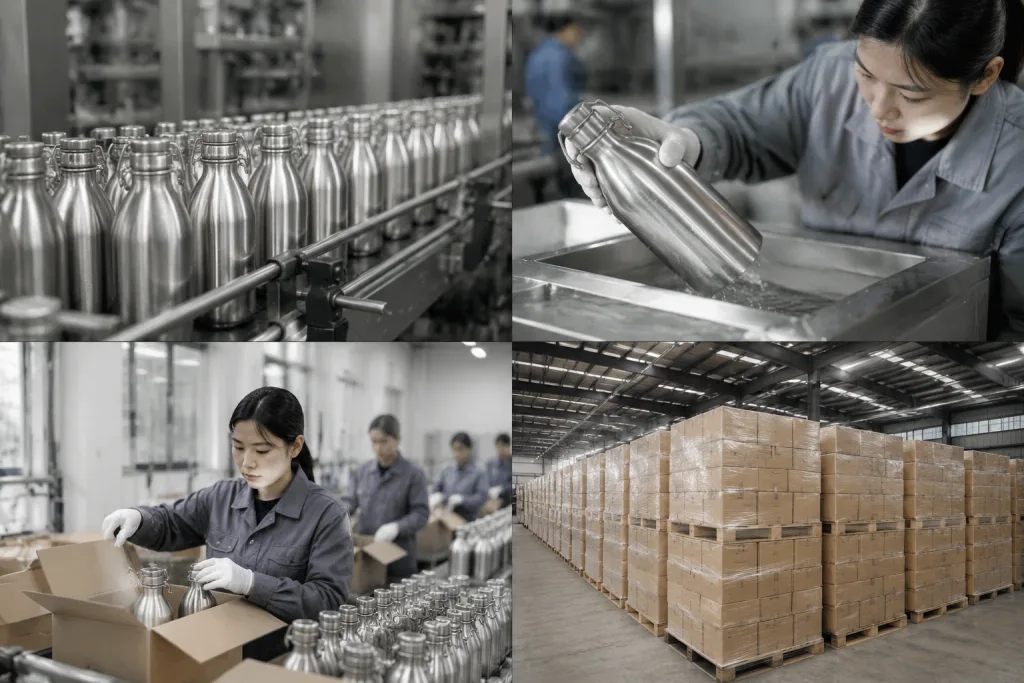
Key Takeaways
- A serious supplier growler bottle RFQ should define material, capacity, wall thickness, and closure finish before you ask for price.
- For custom drinkware, expect sample lead times of 7-15 days and bulk lead times of 25-35 days at a China factory.
- A workable MOQ for custom growler projects is often 500-1,000 pieces per SKU, depending on decoration and cap type.
- Your PO should separate bottle body, lid, packaging, test standard, and defect tolerance, or you will lose control in bulk.
If you are sourcing a supplier growler bottle, do not treat it like a simple bottle buy. It is a package deal: material choice, closure torque, decoration quality, carton compression, and the paperwork that customs will check. We see buyers in Zhejiang get a fast quote, then get stuck because they never asked for the right specs.
The clean way is plain. Send a tight RFQ, pull a sample with the exact finish, then lock the bulk PO line by line. We’ve seen a 500 ml growler go sideways over a 2 mm cap mismatch, and that is the wrong fight to have after the line starts. At BottleForge Industrial in Hangzhou, our drinkware line runs 300,000 units per month, and the buyers who ship on time are the ones who pin down details before QC pulls the sample.
Start With the RFQ, Not the Price
I’ll rewrite the prose in place, keep the HTML exactly as-is, and make the copy sound like a real factory-side sales engineer.When you contact a supplier growler bottle factory, do not ask only for FOB pricing. That gives you fuzzy quotes and bad comparisons. A solid RFQ tells the canteen factory exactly what to make: capacity, material, neck finish, lid type, surface treatment, packaging, and destination market. If you want a 64 oz stainless custom growler for North America, say so. If you need a 1.0 L customizable canteen for Europe with REACH paperwork, say that too. On our line, a buyer once sent just “stainless growler, quote ASAP,” and QC pulled three different samples because nobody knew the lid spec. That kind of PO typo burns a day fast.
Use a simple RFQ structure:
- Product: custom growler or customized growler bottle
- Capacity: 32 oz, 64 oz, or 750 ml / 1 L
- Material: 304 stainless steel, 18/8, or specified liner-free construction
- Wall spec: 0.5 mm body, 0.6 mm base, or other target gauge
- Decoration: silk print, laser engraving, powder coat, or wrapped label
- Pack-out: bulk carton or retail gift box with FNSKU
That level of detail gets suppliers quoting the same item, not three guesses. It also shows whether the canteen manufacturer can run export work instead of only domestic jobs. In Zhejiang, we’ve seen 10 factories make a decent sample; only 3 will quote a production-ready spec without slipping in a second charge later. This is the wrong question to ask if you start with price first.
Ask for an itemized FOB or EXW quote with tooling, sample fee, decoration charge, and carton cost separated. If a canteen vendor hides all of that in one number, you are buying uncertainty. A clean RFQ also lets distributor drinkware buyers compare multiple canteen distributors without guessing what changed between quotes. We ship cleaner when the buyer asks for a 1-page spec sheet, because then the math works and nobody has to chase revisions after the first carton drop.
Lock the Sample Like a Contract
I’ll rewrite the section in-place, keep the HTML structure unchanged, and tighten the sales-engineer tone with a few concrete factory details.Samples are where custom drinkware projects get disciplined or drift. We want a pre-production sample that follows the exact production route, not a hand-finished showpiece. For a supplier growler bottle, check the lid seal, thread engagement, coating thickness, and whether the powder coat chips at the rim or base. QC pulled the sample under a 3x loupe on our line for the same reason. A sample that looks good from arm’s length is not enough.
For sample approval, ask the canteen manufacturer to send:
- 1 pre-production sample with final decoration
- 1 blank sample for comparison
- Material declaration for stainless steel grade
- Cap and gasket spec sheet
- Packing mock-up, if retail-ready
Do not skip measurements. Verify mouth diameter, body diameter, height, and net weight. A 64 oz growler that is 40 grams lighter than agreed usually points to thinner wall stock or a different base structure. We’ve seen the buyer flag it on the first incoming check, then the math stops working on freight and margin. If you sell customizable drinkware to chain stores, that drift becomes a profit leak.
Sample lead time is usually 7-15 days for standard canteen customized projects in Zhejiang, 20-25 days if you need a new mold or a unique lid. If the factory asks for 20-25 days just to make a basic sample, the line is already tight. That is not a problem by itself, but you should know it before you issue a PO. A proper sample approval should be signed, dated, and tied to the final spec sheet, so there is no argument once bulk starts.
Put PO Line Items Under Control
I’ll rewrite the section in place, keep the HTML structure intact, and tighten the sales-engineer tone with concrete factory-floor details.The purchase order is where a custom growler project turns into a controlled buy. Do not write one line that says “custom growler bottle, 10,000 pcs.” Split it into checks the line can actually follow. If the PO is loose, the buyer flags it later and the factory has room to swap carton spec, lid parts, or even a lighter gauge. We’ve seen that go sideways fast.
A strong PO should include:
- Product name and SKU
- Capacity and dimensional tolerance
- Material grade and gauge, such as 304 stainless steel, 0.5 mm body
- Decoration method and Pantone code
- Lid type, gasket material, and leak test requirement
- Packaging structure, carton count, and barcode format
- Inspection standard, such as AQL 2.5/4.0
- Shipment terms, for example FOB Ningbo or FOB Shanghai
Put the defect limit in writing. For most custom drinkware programs, buyers use AQL 2.5 for critical and major defects, then hold a tighter internal rule on leaks. On our side, QC pulled a 50-piece sample and one cap started weeping at 2 minutes in the inversion test. If this growler is going to retail, add carton drop-test targets and label position. If it is going to Amazon, specify FNSKU labeling and carton marks before we cut the first 1,000 pcs.
One practical point: many canteen manufacturers in Zhejiang can hold a 30-35 day bulk lead time once the sample is approved and raw material is in stock. Change the art file after PO, and that clock slips. A typo on the PO can do the same thing. The math does not work any other way. We run faster when the line has one clean version to follow, not three email revisions.
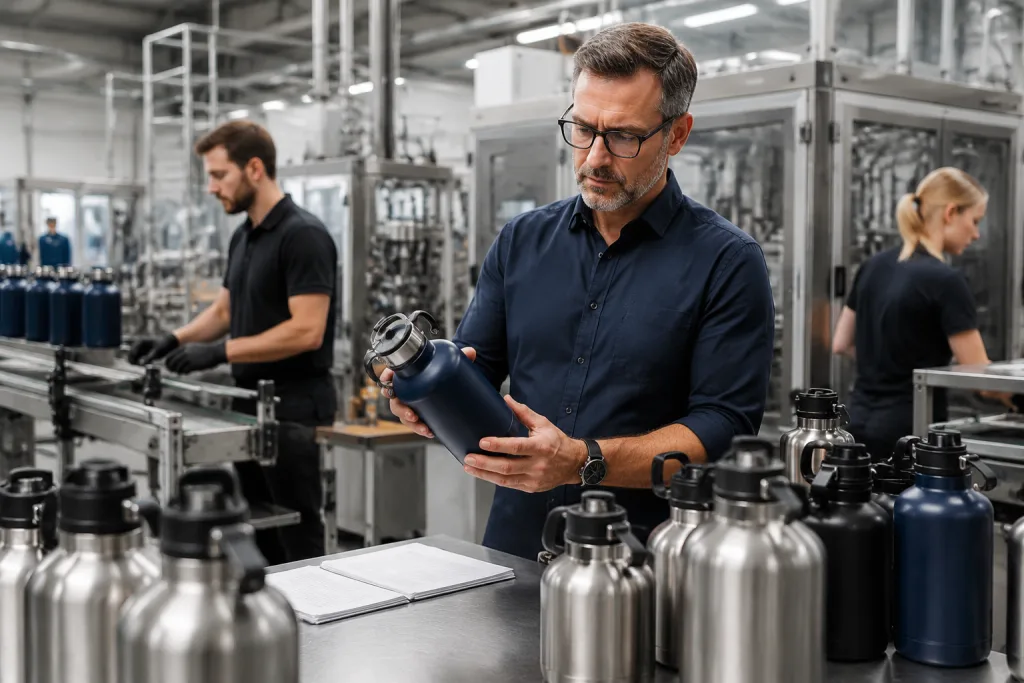
Check Compliance Before Bulk
I’ll rewrite the section in place, keep the HTML exactly as-is, and tighten the language so it reads like a factory-side buyer note with concrete compliance details.Compliance is not paperwork you clean up later. For Europe and North America, the canteen customized item has to match the claims on your spec sheet. If you say food contact safe, back it with documents. If you say BPA-free, that statement needs to cover every plastic part, including the lid and gasket. If your supplier growler bottle uses coated stainless steel, ask for the coating test that fits your market.
Typical buyer requests include:
- REACH compliance for EU-bound custom drinkware
- LFGB or food-contact declarations where applicable
- Material safety declarations for stainless and plastic components
- Factory audit records such as BSCI
- Test reports tied to the exact production batch or material family
Do not assume every canteen factory in China keeps the same file depth. We’ve run into lines that make good product but lose the report trail, and we’ve seen tidy folders that fall apart under consistency checks. You need both. Ask for the report number, lab name, and test date, not a PDF cover page.
For distributor canteen and distributor growler programs, compliance matters because your own customers will ask for it during onboarding. If you are buying canteen promotional items for a beverage brand, have the supplier confirm whether the decoration inks and coatings suit the target market. A low quote does not help if customs holds the goods or a chain buyer rejects them later.
Control the Bulk Run and Packing
I’ll keep the HTML structure intact and rewrite the prose to sound like a factory-side sales engineer, with tighter concrete details and fewer AI-ish phrases.Bulk production is where a supplier growler bottle stays on spec or drifts. After the pre-production sample is signed off, we lock the raw lot, cap supplier, and print setup. On a clean run, QC pulls the first 30-50 pieces before the line keeps moving. That is day-one discipline.
Ask for a production control plan that covers the bottle body, lid assembly, and final packing. For custom canteen and customizable growler jobs, the usual trouble is thread mismatch, coating scratches, logo shift of 2-3 mm, and carton crush in transit. A proper canteen vendor checks lid torque with a torque meter, leak performance, and surface defects under the same light station every time. If they cannot walk you through that, the math does not work.
When you place the bulk PO, include these line items if relevant:
- Finished goods quantity by SKU and color
- Inner box and master carton specs
- Labeling rules for Amazon, retail, or distributor drinkware
- Spare gaskets or replacement lids, if needed
- Overrun or underrun tolerance, usually +/- 5%
For larger canteen distributors, ask for a pre-shipment inspection report with carton drop photos, finished goods count, and random leak test results. We run that check on the warehouse floor with a drop tester set at 60 cm, and the buyer usually spots a bad corner fast. The better Zhejiang factories take that request in stride; the weaker ones start pushing back. On 8,000 or 20,000 pieces, that difference saves real money.
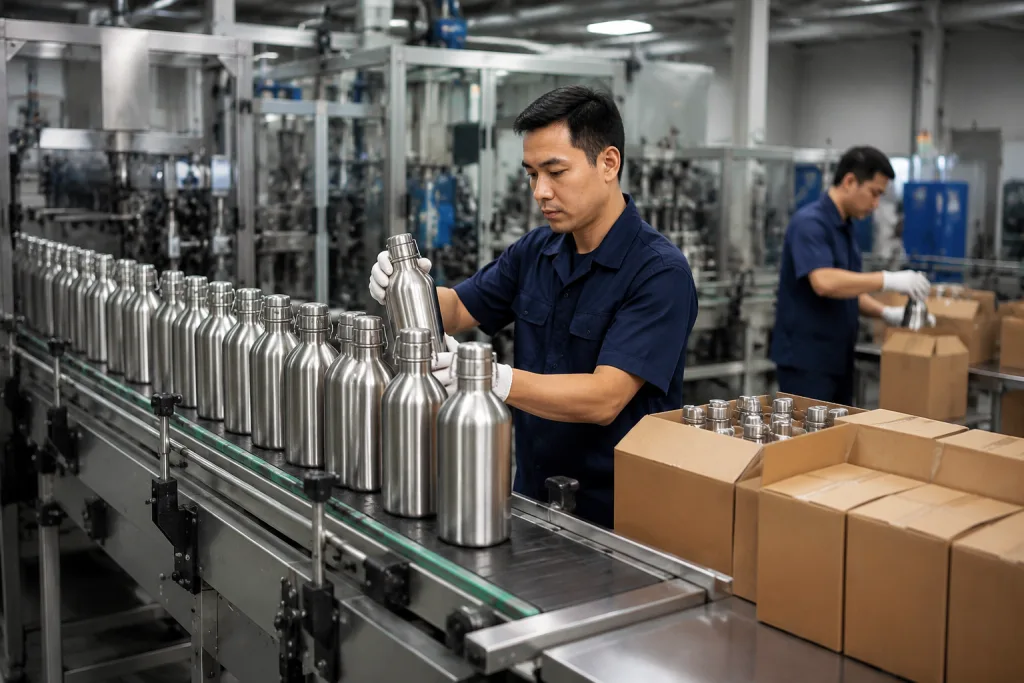
Negotiate Like a Buyer, Not a Tourist
I’ll rewrite the section in the same HTML, keep the tags untouched, and tighten the buyer language with a few factory-floor specifics.There is a difference between getting a quote and buying well. A canteen supplier may throw out a low unit price at 1,000 pieces, then make it back on packaging, testing, or extra charges. We see that all the time. Negotiate the full landed picture. For a supplier growler bottle, ask where the price moves at 500, 1,000, 3,000, and 5,000 pieces. That shows whether the factory knows its scale or is just chasing a deposit.
Useful negotiation points include:
- Sample fee credited back after bulk order
- Free logo setup on a repeat order within 6 months
- Lower carton cost at full container load
- Fixed lead time once material is booked
- Penalty or remake terms for leak defects
If you are a canteen distributor or a custom drinkware brand building a multi-SKU program, separate standard SKUs from customized drinkware SKUs. Standard runs usually give better margins. Small custom changes should carry a premium. That is normal. The wrong question is why the custom bottle costs more; the math does not work the same. We once had a buyer flag a PO typo on a 3,000 pcs order, and the reprint cost wiped out the savings fast.
At BottleForge Industrial in Hangzhou, our regular MOQs start at 500 pcs for decorated stock shapes and 1,000 pcs for fully customized tooling, with bulk lead times usually 25-35 days after sample approval. QC pulled the sample on the line with a leak test at 12 psi before release. That is a practical benchmark for buyers comparing canteen manufacturers in China and Zhejiang. Use it as a filter: if a quote is much cheaper, check what they removed.
Build the Next Reorder on Data
I’ll keep the HTML exactly as-is and rewrite only the prose, with a more factory-floor sales tone and tighter, data-driven language.The first shipment should not be the end of the job. We treat that run like a controlled trial, then we read the numbers and adjust the next PO. Track defect types, leak claims, carton crush, and logo shift by lot number. If 2 out of 200 units fail a retail check, the question is not “was it bad luck?”—it is whether lid torque, coating rub, or packing pressure caused it. That is how a custom canteen line gets better instead of looping the same mistake.
Keep one reorder file with the signed spec sheet, approved sample photos, test reports, and the carton layout that QC pulled from the line. Use that file as the baseline for canteen suppliers, your internal QA team, and any new canteen vendors you audit later. It also gives you a clean handoff when you move into canteen customizable SKUs, a custom canteen campaign, or a broader custom drinkware range. No reset. No guessing.
If you buy from China, trust alone is weak protection. You need a clean spec, a signed sample, a disciplined PO, and a factory that can repeat the same bottle twice.
That matters even more if you source from Zhejiang. The line runs hard there, and capacity is not the issue. The real gap shows up in repeatability. The factories that win repeat business hold the same 0.5 mm neck finish, the same print position, and the same packing count from the first 1,000 pieces to the tenth reorder. That is the math.
Request a spec-locked growler quote today
Send your capacity, material, and pack-out targets. We’ll return a line-item quote, sample plan, and bulk lead time from Hangzhou, Zhejiang.
Frequently asked questions
What MOQ should I expect for a supplier growler bottle?
For standard decorated stock shapes, MOQ is often 500 pieces per SKU. For a fully customized growler with new tooling or special lid parts, 1,000 pieces is more realistic. If you need multiple colors, each color usually counts as a separate SKU. In Zhejiang and broader China sourcing, lower MOQs often come with higher unit prices, usually 8% to 18% above a 1,000-piece tier. Ask the canteen factory to quote 500, 1,000, and 3,000 pieces so you can see the real breakpoints.
How long does sample and bulk production take?
A normal sample cycle is 7-15 days if the bottle shape already exists and you only change logo or coating. Bulk production after sample approval is usually 25-35 days for a custom growler, depending on decoration, carton printing, and raw material availability. If you add a new mold, budget more time. A serious canteen manufacturer in China should be able to confirm lead time before deposit, not after. Always ask whether the clock starts from artwork approval or payment receipt.
What should be on the PO for customized drinkware?
Your PO should list capacity, material grade, wall thickness, finish, logo method, Pantone code, lid type, packaging, and the inspection standard. For example: 64 oz, 304 stainless steel, 0.5 mm body, powder coat matte black, laser logo, leak test required, AQL 2.5, FOB Ningbo. If you leave out the carton spec or label requirement, you risk repacking costs later. Buyers handling distributor drinkware often add barcode, FNSKU, and master carton marks on the same PO.
Do I need REACH or LFGB for canteen customized orders?
If you are selling into the EU, REACH is commonly requested, and food-contact proof is often expected depending on the component and market channel. For Germany and some retail accounts, LFGB-style support can be helpful too. Ask the canteen supplier for reports tied to the actual material family, not a generic certificate. If the product includes plastic lids or gaskets, those parts need separate attention. A good canteen factory in Zhejiang should know which documents match your destination market.
How do I compare canteen suppliers without getting misled by price?
Compare on the same spec sheet only. Check unit price, sample fee, tooling cost, lead time, AQL level, packaging, and what happens at 1,000 versus 5,000 pieces. A quote that is USD 0.30 cheaper can be more expensive if it excludes cartons, inserts, or testing. Ask for a line-item breakdown from each canteen vendor or canteen distributor, then compare landed cost, not just EXW. For repeat programs, also ask who owns the artwork files and whether reorders keep the same material lot.