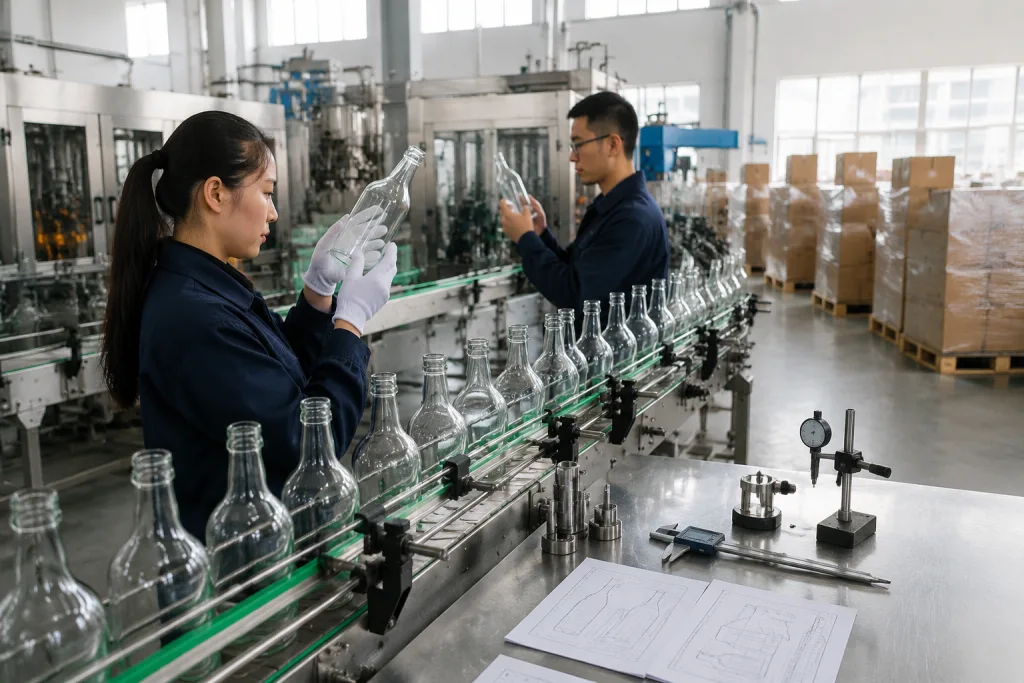
Key Takeaways
- MOQ for a custom glass bottle usually starts at 3,000-5,000 units, with sample lead time around 7-10 days and mass production at 25-35 days
- A 1 mm change in wall thickness can move weight by 8-15% and change both breakage risk and freight cost
- For export, ask for REACH, LFGB, and drop-test data; for retail bundles, target AQL 2.5 on major defects and 4.0 on minor defects
- Decoration can add USD 0.12-0.80 per unit depending on silk screen, decal, frosting, laser, or full-color packaging
If you are sourcing a supplier glass bottle, the first mistake is treating glass like a commodity. It is not. Wall thickness, closure fit, decoration method, and pack-out all hit landed cost, breakage rate, and complaint rate. On our line in Zhejiang, we quote by spec for a reason: a 250 ml soda-lime bottle with a 3.2 mm wall and screen print is a different job from a 750 ml borosilicate infuser bottle with a leakproof bamboo lid. QC pulled the sample, and the difference showed up at once.
Smart buyers read the spec sheet line by line. You are buying consistency, transit survival, and margin. If you are a distributor canteen buyer, a canteen factory sourcing manager, or a brand owner building customized drinkware, this guide shows what each spec means in practice, what to push back on, and where a factory in Zhejiang can save you money without cutting quality. The buyer flagged a 1 mm wall note on a PO once; the math did not work.
Start With Bottle Geometry
I’ll rewrite the prose in-place, keep the HTML structure untouched, and make it sound like a factory-side sales engineer.The first line on a spec sheet is capacity, body diameter, height, and mouth finish. Read it carefully. A 500 ml bottle at 65 mm diameter can sit cleanly in your carton grid; push it to 72 mm and you start paying for dead space. For a supplier glass bottle order, geometry decides freight, shelf fit, and how the bottle feels in hand. We run this check on the line before we quote, because a neck that is too wide or a shoulder that is too flat makes sealing and vibration tests harder.
Capacity can mislead if you skip the fill line. A bottle sold as 500 ml often has an overflow capacity of 520-540 ml, with a working fill closer to 480-500 ml. Ask the factory for both numbers. Our Zhejiang glass shop usually sends CAD drawings and neck finish drawings within 24 hours. On one PO, the buyer flagged a 500ml typo with no space before the unit, and that small detail saved a bad print run. If you are comparing a custom canteen or custom growler program, this is where the split shows up fast: wide mouths fill faster and wash easier, but they need a stronger closure and tighter carton dividers.
- Check overflow capacity, not just nominal capacity.
- Confirm neck finish: 28 mm, 38 mm, or wide-mouth.
- Ask for body diameter if you need retail shelf packing.
- Request a 2D or 3D drawing before sample approval.
Wall Thickness Drives Risk
I’ll rewrite the prose in-place, keep the HTML exactly as-is, and tune the language to sound like a factory-side sales engineer.Wall thickness is where a buyer either protects margin or loses it. A 2.0 mm wall on a small glass bottle can look sharp on the shelf, but if the line runs fast or the carton spec is weak, breakage climbs. We usually see a 3.0-3.5 mm wall land better for export drinkware. On a premium customized drinkware program, the extra glass gives a better hand feel and helps retail sell-through, but every extra 100 grams adds freight. On ocean freight, that is acceptable. On air freight, the math gets ugly fast.
Do not take a quoted weight at face value. Ask for ±5% on weight and thickness, and ask how the factory checks it — manual gauge or automated inspection. QC pulled the sample on one order last month and found 0.4 mm swing at the shoulder, which is where bottles crack first. A canteen manufacturer in China with a stable line should give you even wall distribution, not a polished sample that only survives the photo shoot. If your brand sells a canteen promotional pack or a distributor drinkware assortment, thin shoulders are where we see the first claim. I would take the heavier bottle. Chasing a 2% margin and paying for replacements later is the wrong trade.
Practical rule: if the bottle ships by parcel instead of pallet, increase wall thickness or upgrade the carton spec before you touch decoration.
Material Choice Changes Use
I’m rewriting the section in-place, keeping the HTML tags and list structure intact while tightening the sales-engineer voice. After that I’ll return only the HTML.Glass is not one material in buyer terms. Soda-lime is the default for everyday beverage bottles because it keeps unit cost down and runs well on high-volume lines. Borosilicate is the better pick when the buyer flags hot-and-cold filling or an infuser lid that sees 90°C water. Flint glass gives a cleaner look for premium retail. Amber and green help when the drink needs light protection. In China, a factory may quote all four, but the finish control is not the same across each body type.
Match the material to the use case, not the mood board. A campus promo order usually wants lower unit cost and a 25-35 day lead time. Hospitality buyers care more about clarity, weight in hand, and whether the bottle looks expensive on the table. If you are buying as a canteen distributor or growler supplier, ask what the bottle will hold: still water, carbonated drinks, cold brew, or juice. This is the wrong question to skip. We’ve seen thermal stress cracks show up after dispatch, not during QC, and that is when the math stops working.
- Soda-lime: best for price-sensitive custom drinkware and bulk orders.
- Borosilicate: better for thermal shock and hot-fill use, especially around 90°C.
- Amber/green: better for light protection on drinks that sit under retail lights.
- Flint: better for premium shelf presentation and clearer product display.
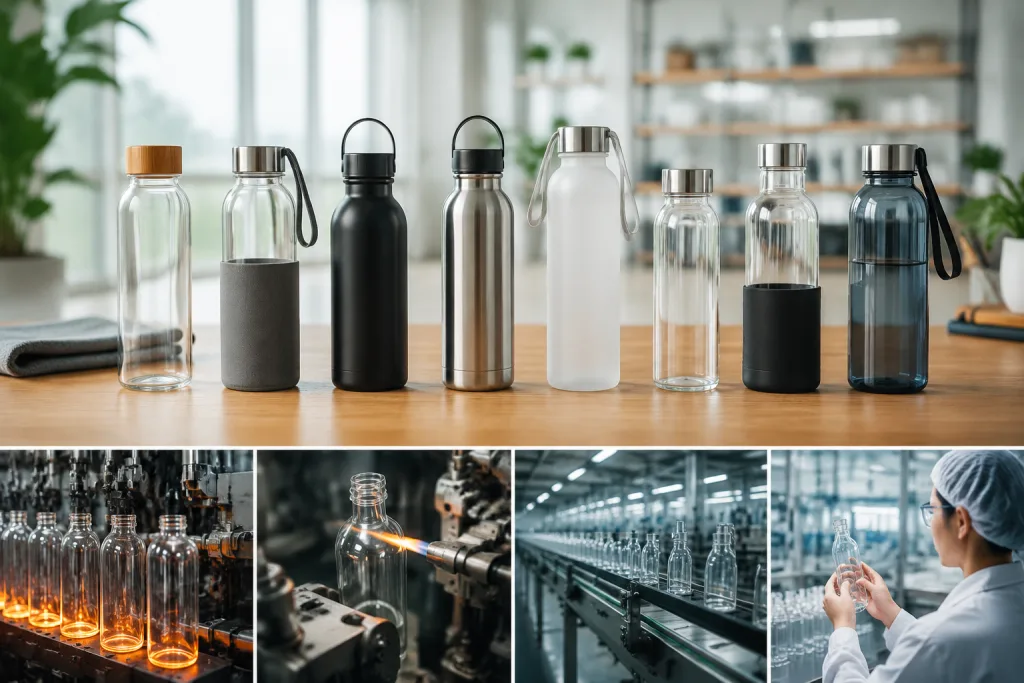
Closure Fit Is Non-Negotiable
I’ll keep the HTML exactly as-is and rewrite only the prose, tightening the sales-engineer tone and adding a few concrete shop-floor details.A bottle that leaks once is a failed bottle, even if the glass is clean and the print looks sharp. Closure fit is the line item buyers skip, then QC pulls the sample and finds trouble. You need the neck finish, thread type, gasket material, and torque range on the drawing. For a supplier glass bottle program, a 38 mm closure on a growler-style bottle behaves nothing like a 28 mm closure on a slim custom canteen. If you plan to sell a customizable canteen or customized canteen in retail packs, the lid must close the same way after 200 open-close cycles, not just on first assembly.
Ask the factory to test closures with water, carbonated liquid, and inverted storage. We run that on the line with a 2 Nm torque driver, and the buyer flagged it fast when a cap backed off after a 1.2 m drop test. If they say the bottle is suitable for carbonation, ask for pressure data or a written internal leakage test. A decent Zhejiang factory will hand that over without drama if they do export work every week. For a canteen factory or canteen manufacturers serving North America, I would also ask whether the gasket is food-grade silicone and whether the lid survives 50 dishwasher cycles. This is where a canteen custom project wins reorder business, and where a canteen promotional item gets returned.
Decoration Affects Margin
I’ll rewrite the section in-place, keep the HTML exactly as-is, and tighten the sales-engineer tone while preserving the structure.Decoration is not just branding; it is process risk. Silk screen printing fits one or two colors and usually adds USD 0.12-0.35 per unit. On our line, the squeegee angle and curing tunnel setting decide whether the logo stays sharp after 50 washes. Frosting gives a premium tactile feel and often lands around USD 0.20-0.50 depending on coverage. Decal transfer, laser engraving, and hot stamping each solve a different job. If you are a canteen distributor building a retail range, print consistency beats flashy effects. If you are a brand owner launching customized growler or custom growler programs, the decoration has to survive washing, rubbing, and pallet movement. We've seen that go sideways when the buyer picked a nice effect and skipped the abrasion test.
For glass, ask how the print is cured and whether the ink meets REACH or LFGB requirements. A factory in China can quote a clean white print, but if adhesion fails after carton friction tests, that cheap print turns into a claim. QC pulled one sample last month with edge lift after the rub test, and the buyer flagged it before mass production. Check the packaging art too if the bottle will sell as customized canteen or customized drinkware in gift boxes. I’ve seen a retail box add USD 0.28 and save the sell-through because the shelf look carried the order.
- Silk screen: best for volume and simple logos.
- Decal: best for detailed artwork.
- Frosting: best for premium tactile effect.
- Laser engraving: best for permanent marking on caps or metal parts.

QC Must Follow Export Rules
I’ll rewrite the section in place, keep the HTML exactly as-is, and tighten the language so it sounds like a factory-side sales engineer.Quality control for glass is not guesswork. We run a written QC plan: incoming inspection, in-process checks, and final random inspection. For export orders, we usually set AQL 2.5 for major defects and 4.0 for minor defects, unless the buyer asks for tighter limits. Major defects are cracks, chips, leaks, and print shift the customer will spot at once. Minor defects are things like small bubbles that do not affect use but can still get a carton rejected at retail. A straight answer beats fake zero-defect talk. We’ve seen that story go sideways more than once.
For Europe and North America, ask for the compliance pack that matches the market: REACH for chemical safety, LFGB where needed, and food contact declarations if the bottle has coatings or printed surfaces. If you sell on Amazon or through retail chains, carton marking needs to be right too. We check FNSKU placement, master carton marks, and drop-test packaging for e-commerce shipment. On our line in Zhejiang, QC pulled the sample against a 24-point checklist, and stable runs can hold rejection under 1.5% once the mold and spray process are settled.
Good export QC is boring. If the factory shows a defect log, keeps the AQL record clean, and can send batch photos without scrambling, that is the supplier you want.
MOQ, Pricing, and Lead Time
I’ll keep the tags intact and rewrite both paragraphs in a more field-tested sales tone, with tighter numbers and a few shop-floor details.Price only works when you line it up with MOQ and lead time. A plain clear glass bottle with one-color print usually sits around USD 0.55-0.95 FOB China at 3,000 units; once you add a thicker wall, a custom closure, or a more involved shape, the number moves to USD 1.20-2.50 FOB. New molds are a different bill. Tooling can run USD 2,000-8,000, sometimes more if the neck finish or shoulder shape is tricky, and that cost needs to be spread across the order. We run this math on the line every week. A Zhejiang factory may turn out 200,000-500,000 units a month, but your order still lives or dies on mold status, decoration method, and pack-out count.
Lead time is usually clean if you ask for it in writing: sample lead time 7-10 days, pre-production approval 3-5 days, and mass production 25-35 days after deposit and sample sign-off. The buyer flagged a PO typo on one run because the packing spec said 24 pcs/carton in one place and 20 pcs/carton in another; that kind of mistake burns a week fast. For replenishment stock, that schedule matters more than shaving USD 0.03 off the unit price. If a factory stays vague, the line is either full or the team is not export-ready. Ask for milestones. We’ve seen this go sideways when the supplier promised “fast” and missed the pre-production sample by 6 days. Zhejiang factories that keep repeat buyers are the ones that quote a little high, then ship on the date they wrote down.
Send your spec sheet for a fast quote
We can review your drawing, confirm MOQ, and return a realistic FOB price with lead time from our Zhejiang production team.
Frequently asked questions
What MOQ should I expect for a supplier glass bottle?
For most export programs, expect 3,000-5,000 units per color or design. If you need custom mold work, the practical MOQ may rise to 10,000 units or more to justify tooling. Standard stock shapes can be lower, sometimes 1,000-2,000 units, but once you add custom logo, special cap, or printed packaging, the order becomes a real production run. A Zhejiang factory that handles both canteen custom and customized drinkware can usually split MOQ across colors only if the decoration process allows it.
How do I compare glass bottle prices fairly?
Compare on the same spec: capacity, weight, wall thickness, closure, decoration, inner carton, and master carton size. A bottle at USD 0.68 FOB may actually be more expensive than one at USD 0.82 FOB if the cheaper bottle needs extra inserts, breaks more in transit, or uses a weaker lid. Ask for a unit cost breakdown and a landed-cost estimate to your warehouse. For distributor drinkware, the carton efficiency can change freight by 8-12% on a full container.
Can I use a glass bottle for hot and cold drinks?
Yes, but only if the glass type and process support it. Borosilicate is better for thermal shock than standard soda-lime glass. If you plan hot-fill or temperature swings, ask for thermal shock test data, often around 120°C difference for borosilicate products and much less for ordinary glass. Do not assume a custom canteen or custom growler is safe for hot liquids just because it looks sturdy.
What quality checks should I ask for before shipment?
Ask for full visual inspection, leak testing, closure torque checks, carton drop tests, and random sampling under AQL 2.5 major and 4.0 minor. If you use printed logos, request adhesion or rub testing. For export to Europe and North America, also ask for REACH, LFGB if relevant, and food-contact declarations. A good canteen supplier will give you batch photos, defect counts, and packing photos before the balance payment.
Is a custom glass bottle better than other custom drinkware options?
It depends on the use case. Glass is stronger on taste neutrality, premium appearance, and sustainability messaging, but it is heavier and more fragile than many alternatives. If your audience wants retail-ready customizable drinkware with a premium look, glass is usually the right choice. If your channel is sports, travel, or school, a canteen manufacturer may steer you toward lighter constructions. For a canteen promotional campaign, glass works best when the carton and handling are controlled.