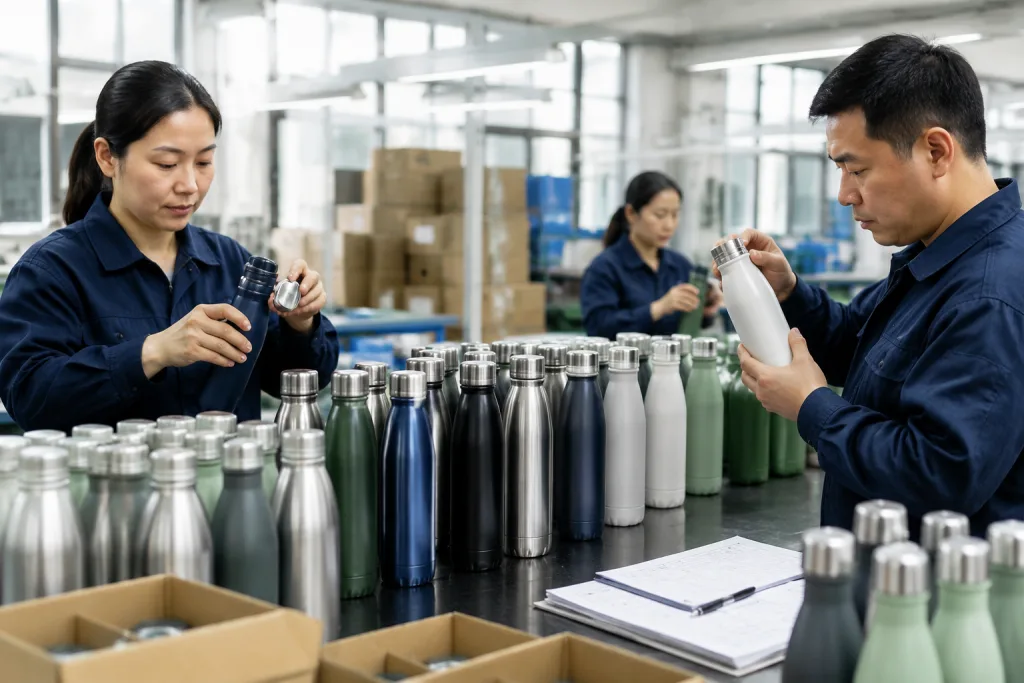
Key Takeaways
- Start RFQs with capacity, steel grade, lid type, decoration method, packing, and target FOB port to avoid 15-25% quote swings.
- A realistic custom thermos sample timeline is 7-12 days for stock mold decoration and 25-35 days for new tooling.
- For bulk thermos production, plan 35-45 days after deposit and artwork approval at 3,000-10,000 pcs MOQ.
- Use PO line items for AQL, REACH/LFGB/FDA, spare lids, carton marks, FNSKU labels, and pre-shipment inspection.
If you search for a supplier directory vacuum flask, you are not shopping for another glossy catalog. You need a factory thermos partner that quotes within 24 hours, holds logo position within ±1 mm on the rotary jig, passes EU or North American compliance, and does not turn a launch into 18 days of chasing half-answers.
Outdoor retailers and promotional brands buy differently, but the sourcing steps stay close: define the bottle, request a quote with artwork, approve samples, lock the purchase order, inspect bulk goods under AQL 2.5, then ship. BottleForge Industrial is based in Hangzhou, Zhejiang, and we see one mistake on 7 out of 10 new RFQs: buyers ask for a custom thermos price before they define the lid, coating, carton, and decoration that drive the cost. Wrong question first. Last month QC pulled a sample because the PO said “matte black” while the artwork file named “BK gloss,” and that tiny mismatch cost 3 days on the line.
Start with the directory shortlist
I’ll rewrite the HTML in place, keep the tag structure intact, and tune the copy to sound like a factory-side sales engineer.A supplier directory vacuum flask listing is only a starting point. Treat it like a phone book, not a quality certificate. The first screen should split trading companies, light assembly shops, and real thermos manufacturers. A real plant can talk through vacuum brazing, copper plating, wall thickness, leak testing, and lid material without bouncing every question to another desk.
For outdoor retail, you need drop resistance and stable insulation. For promotional thermos orders, you need logo position, carton marks, and ship dates that hold. Those are different jobs. Do not send one lazy RFQ to 20 thermos suppliers and expect clean pricing.
Use a short directory check sheet before you ask for a formal quotation:
- Factory identity: business license name, export license, and whether they are a thermos manufacturer or reseller.
- Production scope: stainless vacuum flask, travel tumbler, sports bottle, powder coating, laser engraving, silk screen, and packing line.
- Audit status: BSCI, ISO 9001, Sedex, or customer audit reports within the last 24 months.
- Compliance support: FDA, LFGB, REACH, California Prop 65, ASTM packaging requirements where needed.
- Capacity: monthly units, normal MOQ, peak season lead time, and accepted Incoterms such as FOB Ningbo or FOB Shanghai.
At our Zhejiang plant, a normal stainless thermos MOQ is 3,000 pcs per color for standard molds, and monthly output sits around 450,000 units across vacuum bottles and tumblers. That is the number to ask for. QC pulled the sample from line 3 last week and the buyer flagged a 2 mm logo shift, so “large capacity, best quality” is not an answer. Keep moving.
Build the RFQ around cost drivers
I’ll rewrite the section in-place, keep the HTML exactly as-is, and make the copy sound like a factory-side RFQ note with tighter cost-driver detail.The RFQ is where most custom stainless thermos projects turn clean or turn messy. A supplier thermos quote is not worth much if you write only “500 ml black bottle with logo.” The factory has to guess steel grade, lid build, coating, packing, test standard, and shipping terms. One guess off, and the price drifts. We see that on the line all the time.
For a bulk thermos RFQ, write the bottle like a process sheet, even if the buyer is a brand team. Capacity alone does not cut it. A 500 ml flask can be slim, wide-mouth, handled, cup-lid, push-button, or tea-filter style. Each version changes tooling, lid parts, gasket weight, polishing hours, and carton size. QC pulled a sample last week and the lid swap alone moved the cost by 0.18 USD.
Your RFQ should include these purchase line assumptions:
- Item: 500 ml double-wall stainless vacuum flask, 18/8 stainless steel inner, 18/8 or 201 outer depending on price point.
- Wall thickness: inner 0.4 mm, outer 0.5 mm typical for mid-market retail; confirm if you need heavier gauge.
- Finish: powder coating, spray painting, electro-polished stainless, or matte raw steel.
- Decoration: one-color silk screen, laser engraving, heat transfer, water decal, or full-wrap print.
- Packing: white box, kraft box, retail gift box, hang tag, barcode, FNSKU, master carton marks.
- Terms: MOQ, EXW or FOB, target port, payment terms, sample fee, tooling fee, and inspection level.
If you are comparing thermos manufacturers in China, ask every supplier to quote the same build: same steel, same lid, same coating, same carton, same AQL. Otherwise the cheapest supplier thermos price may be hiding copper plating removal, thinner coating, or a lighter lid. That is not negotiation. It is a different product. We’ve seen this go sideways when the PO said “matte black” and the buyer flagged a gloss sample two days later.
Price the quote line by line
I’ll rewrite just the prose inside the same HTML tags, keeping the structure and numbers intact while making it read like a factory-side sales engineer wrote it.Once the quotes land, do not look at unit price alone. A custom thermos order carries several cost lines, and supplier directories seldom spell them out. Ask for a line-by-line commercial offer so you can match the proforma invoice and the purchase order without surprises.
A workable PO draft for a customized thermos program looks like this:
- Product unit: 3,000 pcs, 750 ml stainless vacuum flask, powder coated, FOB Ningbo, USD 4.85 per pc.
- Logo charge: laser engraving on one side, included for one position; second position USD 0.12 per pc.
- Sample fee: USD 80 for stock mold sample with custom logo, refundable after bulk order above 5,000 pcs.
- Tooling: USD 1,200-3,500 if private lid, custom body mold, or proprietary handle is required.
- Packing: kraft gift box USD 0.28 per pc; retail color box USD 0.45-0.70 depending on paper and printing.
- Testing: third-party LFGB or FDA food-contact report charged at actual cost, commonly USD 280-650 per material set.
Outdoor buyers watch steel grade and insulation first. Promo buyers usually chase logo cost and ship date. Both need the carton cube. We’ve seen a bottle that was USD 0.18 cheaper lose the deal because it shipped 20% more air; the math does not work once freight hits the dock.
For distributor thermos programs, ask the factory to quote at 3,000, 5,000, 10,000, and 20,000 pcs. Price usually drops when coating colors stay under control and cartons stay standard. Split 10,000 pcs into six colors and five logo versions, and the line treats it like six small jobs. QC pulled the sample on a 3-color run last month because the PO typo changed one lid code, and the factory had to stop and recheck the whole batch.
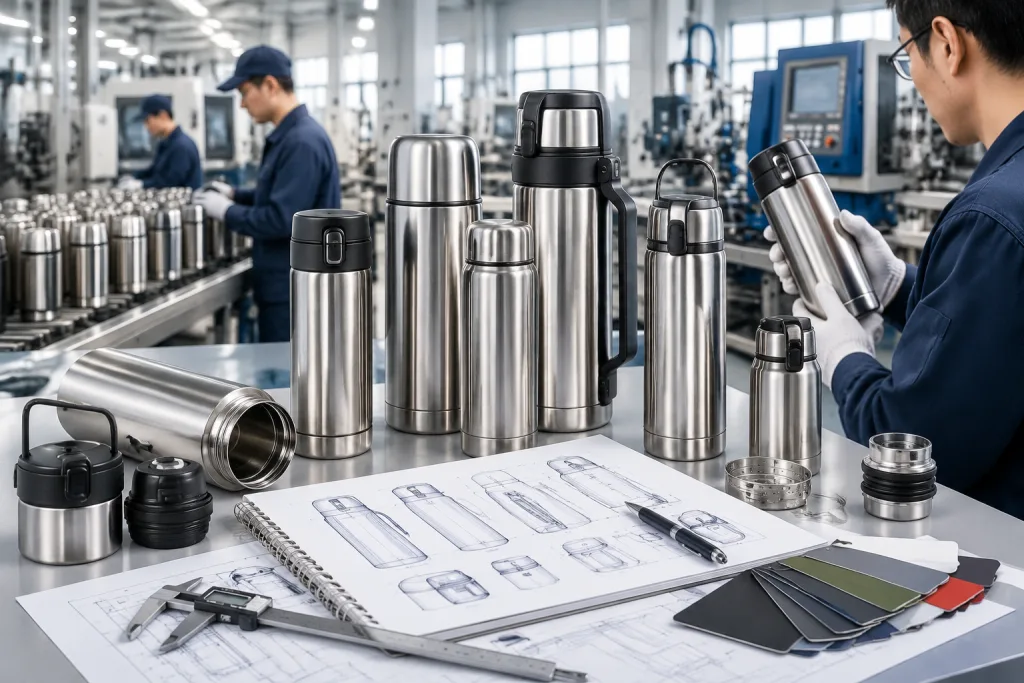
Approve samples without rushing
I’ll rewrite the section in place, keep the HTML exactly as-is, and tighten the sales-engineer tone with specific factory details and numbers.A sample is not a souvenir. It is the physical contract for your thermos customized order. If you approve a bottle with a weak lid, a rough seam, or a logo sitting 4 mm off center, you have already set the bar for the whole order.
For stock-mold custom thermos samples, we run 7-12 days after artwork confirmation. For a new lid, new body shape, or private mold, tooling trial samples usually take 25-35 days. A buyer once pushed for a 3-day sample on a new mold; the math does not work, and what comes back is usually a close lookalike, not the real thing.
Your sample PO or sample approval sheet should record:
- Sample ID: model number, capacity, lid type, finish, Pantone color, and decoration file version.
- Insulation test: fill with 95°C water, hold 6 hours at 20°C room temperature, and record a target above 60°C.
- Leak test: upside down for 30 minutes, horizontal roll test, and lid open-close cycle check.
- Logo check: size in mm, distance from base, color tolerance, and approved proof photo.
- Handling notes: smell, lid thread feel, drinking comfort, coating grip, and cup-holder fit if relevant.
Do not approve from photos alone unless the order is low risk. Powder coat texture, lid feel, gasket smell, and edge polishing need hands on the line, not a WeChat image. QC pulled a sample once where the lid passed leak test but the silicone odor stayed after 24 hours; that lot would have gone sideways in North America and Europe. I would rather lose 3 courier days than ship a promotional thermos with a logo that scratches off after 20 rubs.
Lock the bulk PO clearly
I’ll rewrite the section in-place, keep the HTML exactly as-is, and tighten the prose so it reads like a factory-side sales note.After sample approval, the bulk PO should close every open door. Loose POs cause disputes fast, because the buyer reads the sample one way and the factory reads commercial tolerance another way. We see this go sideways when the PO says “as approved” but leaves out the revised lid print or the 18g weight target. Put the key terms on the PO, not buried in email.
A clean thermos manufacturer PO should include product specification, approved sample reference, quantity by color, unit price, Incoterm, port, payment schedule, production lead time, inspection standard, packaging, carton marks, spare parts, and document requirements. For example: 30% deposit, 70% balance after passed inspection and before shipment; 40 days production after deposit and final artwork; FOB Ningbo; AQL 2.5 major / 4.0 minor, general inspection level II. QC pulled the sample against a 1.0 mm gap gauge before we released the line.
For thermos distributors, add SKU-level requirements. If the order covers 12,000 pcs across four colors, list each color as a separate PO line. Put barcode, FNSKU if you sell through fulfillment channels, inner box label, master carton label, and pallet requirement on the same sheet. The buyer flagged a PO once because the carton mark had one typo; the math does not work when the warehouse charges relabeling.
Also define spare parts. A supplier thermos program with 10,000 bottles should normally include 1-2% spare lids or gaskets if the lid design is complex or if you sell replacement parts. We ship spare silicone rings with the run because air-freighting 300 lids later costs more than the parts. One simple note on the PO saves that mess.
China factories move fast once the deposit lands. Good. Bad PO files turn that speed into rework, especially when the artwork revision is still floating around. Before deposit, freeze the artwork, color standard, carton layout, and inspection checklist. We run this every week in Hangzhou: tight schedule is fine, five different assumptions in one PO is not.
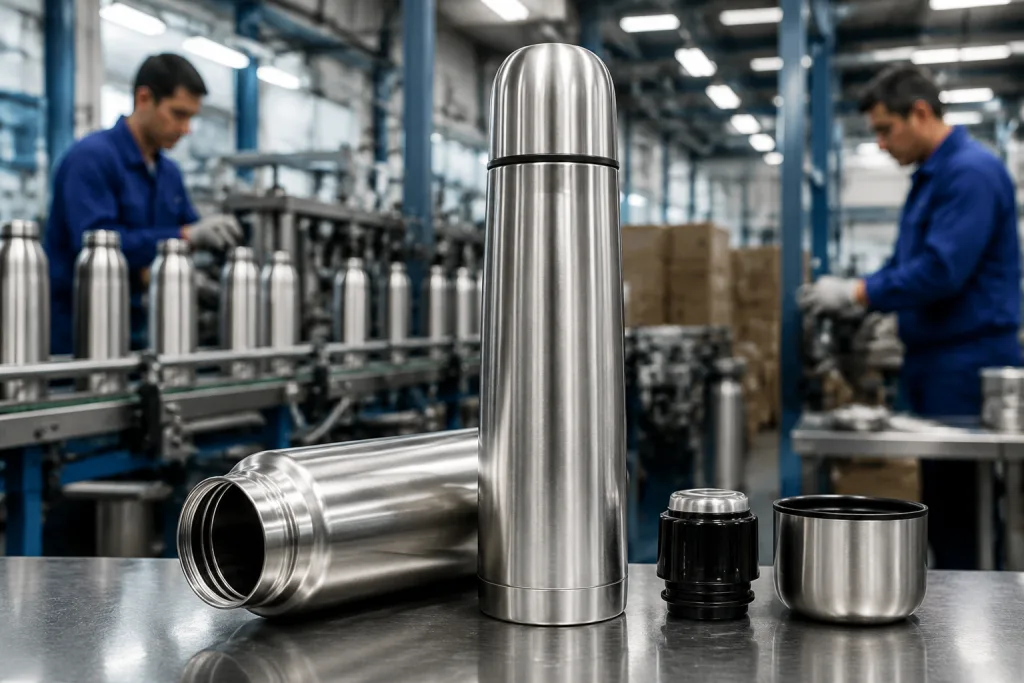
Inspect before the container moves
I’ll rewrite the section in-place, keep the HTML structure unchanged, and tighten the language so it reads like a buyer-facing sales engineer note.Pre-shipment inspection is non-negotiable on a first order with any thermos supplier. It is cheaper to catch coating scratches, carton errors, or lid leakage in China than after the cartons land in Rotterdam, Hamburg, Los Angeles, or Toronto. We run this with a third-party inspector or the buyer’s own China QC team, but the checklist has to be locked before the line starts. One wrong PO note can cost a week.
For stainless vacuum flasks, the inspection needs to cover appearance, dimensions, capacity, weight, coating adhesion, logo durability, leak resistance, insulation performance, smell, carton drop condition, barcode scan, and packing ratio. On a 1,000-piece order, AQL 2.5 for major defects and 4.0 for minor defects is standard for promo and retail drinkware. Critical defects stay at zero tolerance: sharp edges, leaking lids, wrong food-contact material, or contamination that should never pass QC.
Common defect classifications:
- Critical: leaking under normal use, metal burr near the mouth, wrong material touching the beverage, broken glass liner if applicable.
- Major: logo wrong size, heavy coating chip, lid cannot close, insulation failure beyond the agreed limit, wrong barcode.
- Minor: small dust point in coating, slight carton scuff, minor color shade difference within approved tolerance.
If you are buying thermos promotional goods for a dated campaign, add an inline inspection at 20-30% production. Waiting until 100% completion gives you fewer moves. We’ve seen coating adhesion fail because the pre-treatment bath was off, and the fix is simple if you catch it early: adjust pretreatment and baking temperature before the whole batch runs. Once all cartons are sealed, you are left with discount, rework, or a late shipment.
Ask for production photos, but do not mix that up with inspection. A factory thermos partner should accept written standards, because vague words like “premium quality” cause fights later. This is the wrong question to ask. The buyer flagged it on one PO: the spec said “nice finish,” the carton label said “normal grade,” and nobody could defend the gap.
Ship with documents ready
I’ll rewrite the section in place, keep the HTML exactly as-is, and tune the prose to sound like a factory-side sales engineer with a few concrete shipping details.Shipping is where a lot of first-time thermos supplier orders lose days. The goods pass inspection, but the commercial invoice carries the wrong HS code, the carton marks do not match the packing list, or the buyer assumes stainless vacuum flasks need less paperwork than a carton of gloves. They do not. Customs still wants clean docs.
For FOB shipments from China, your PO and booking sheet should list ready date, port, forwarder contact, shipping marks, carton dimensions, gross weight, net weight, and the document cut-off. We usually print carton specs in mm and weight in kg on the packing list, then QC checks the outer carton sample against the booking. HS code handling depends on the destination, so confirm it with your broker before the factory prints anything. Using last year’s code from another market is the wrong question to ask.
Your final document pack should include commercial invoice, packing list, bill of lading instructions, certificate of origin if needed, test reports, inspection report, and product photos. For Amazon-style or distributor warehouse receiving, add FNSKU labels, suffocation warnings for polybags if used, pallet labels, and carton count by SKU. We have seen a PO typo on the pallet label cause a week of back-and-forth at the warehouse.
When the first shipment lands, keep a receiving scorecard. Track carton damage percentage, barcode scan rate, lid complaints, coating returns, and insulation complaints for the first 60-90 days. We run that check with the buyer after the first container, and it shows fast where the line was tight and where it slipped. The second PO should not repeat the first one; it should have cleaner carton specs, tighter artwork control, and fewer surprises. That is how a directory lead turns into a steady thermos manufacturers account.
Send us your thermos RFQ before you shortlist suppliers
BottleForge will review specs, MOQ, decoration, testing, and FOB assumptions so your stainless thermos quote is comparable before sampling starts.
Frequently asked questions
How do I compare suppliers from a supplier directory vacuum flask search?
Start by asking whether they are a factory, trading company, or hybrid exporter. Request a business license, audit report, product test reports, and production photos from the vacuum welding, coating, and packing areas. Then send the same RFQ to each supplier: capacity, steel grade, lid type, finish, logo, packing, MOQ, FOB port, and AQL standard. A serious thermos manufacturer should answer within 24-48 hours with specific assumptions. If one quote is 20% lower, ask what changed: steel grade, copper plating, coating thickness, carton, or inspection level.
What MOQ should outdoor retailers expect for custom stainless thermos orders?
For standard molds, a realistic MOQ is usually 3,000 pcs per color or per logo version. Some China suppliers accept 1,000 pcs for simple laser engraving on in-stock bottles, but the unit price is higher and color choice is limited. For private mold customized thermos projects, expect 10,000 pcs or more, plus tooling from about USD 1,200 to USD 8,000 depending on body and lid complexity. If you need four colors, ask whether the MOQ is per color or total order; that detail changes your cash plan quickly.
How long does sampling and bulk production take?
For a stock mold custom thermos with laser engraving or one-color silk screen, sampling normally takes 7-12 days after artwork approval. Powder coat color matching can add 3-5 days if you need a specific Pantone target. New mold or private lid sampling usually takes 25-35 days. Bulk production for 3,000-10,000 pcs is commonly 35-45 days after deposit, sample approval, and final artwork. Peak season before summer retail and Q4 promotional orders can add 10-15 days, especially for coating lines.
Which compliance tests matter for Europe and North America?
For Europe, ask for LFGB food-contact testing and REACH declarations for coatings, inks, silicone, and plastic parts. For North America, FDA food-contact compliance is common, and California Prop 65 may apply depending on your sales channel. Outdoor retailers may also request BPA-free declarations and heavy metal testing for paint. The test report should match the material set used in production, not a similar bottle from three years ago. Budget USD 280-650 per material group for common third-party testing in China.
What should be written into the thermos bulk PO?
Write the PO like a production instruction, not only a price agreement. Include model number, capacity, steel grade, lid material, finish, Pantone color, logo method, artwork version, quantity by SKU, unit price, Incoterm, port, payment terms, lead time, packing, carton marks, barcode or FNSKU rules, and inspection standard. Add AQL 2.5 major / 4.0 minor unless your company has another standard. Reference the approved sample by date and sample number. If you need spare lids, list 1-2% spare parts as a separate PO line.