Key Takeaways
- For toddler bottles, start with 3,000-5,000 pcs MOQ per color if you need custom mold colors or silicone parts
- PP, Tritan, 304 stainless steel, and glass each fit different toddler age ranges and retail channels
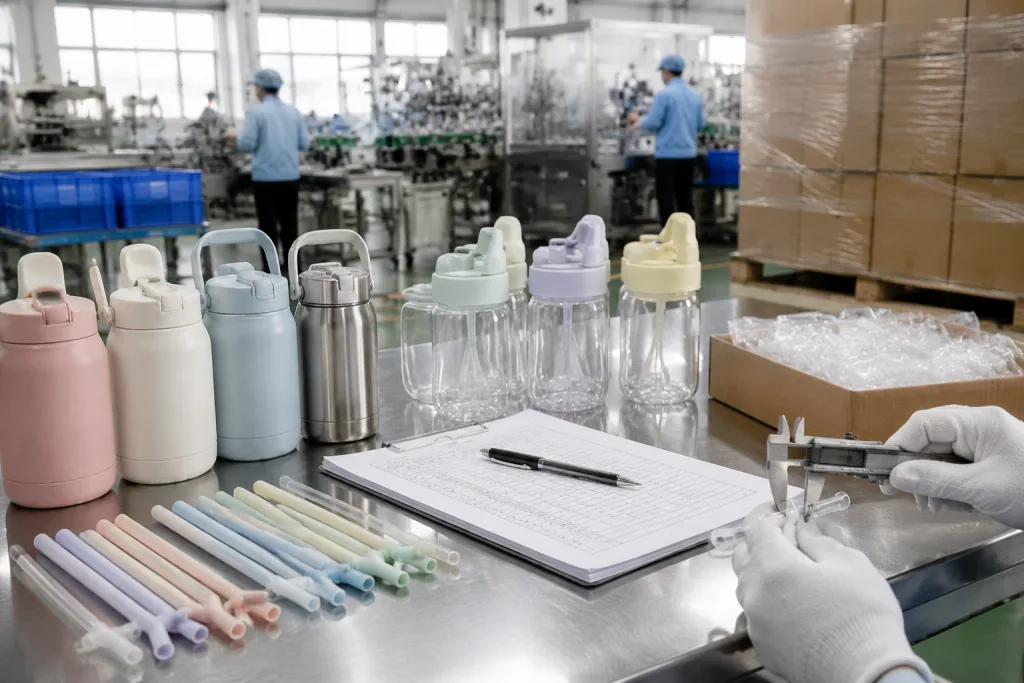
- AQL 2.5/4.0 inspection should include leak, bite valve pull, drop, print adhesion, and odor checks
- BottleForge’s Zhejiang line can produce about 420,000 drinkware units/month with 35-50 day OEM lead times
A supplier directory toddler bottle search looks simple until you open 30 tabs and every listing says “food grade,” “OEM,” and “fast delivery.” That is not enough for procurement. You need a factory that can hold a valve tolerance at 0.2 mm, pass REACH or ASTM checks, print your logo cleanly, and ship 5,000 units without turning the first order into a complaint file.
We manufacture custom drinkware in Hangzhou, Zhejiang, and we see the same mistake from new buyers: they compare toddler bottles by unit price only. A USD 0.18 cheaper lid gets expensive fast if the straw leaks at 3% in AQL inspection; QC pulled that sample on the line last month, and the buyer flagged it before carton packing. Use the head-to-head specs below to separate a real canteen manufacturer from a trading page with nice photos.
Directory Listings Versus Factory Reality
I’ll rewrite the section in place, keep the HTML exactly as-is, and tighten the language so it sounds like a factory-side sales engineer wrote it.A supplier directory toddler bottle page is a lead source, not a qualification result. Directories usually show photos, claimed certifications, rough MOQ, and a contact form. They rarely show the two things that decide whether your order works: process control and the exact bill of materials. One listing may say “Tritan toddler bottle” and then switch to a cheaper copolyester once you ask for FOB Ningbo. Another supplier will show a silicone straw on the page, then run two hardness grades between the sample room and the line.
When you shortlist from China, ask for a factory-level spec sheet before you talk about discounts. It should state resin grade, stainless steel grade, silicone shore hardness, wall thickness, lid structure, gasket count, carton drop standard, and test scope. We had a buyer flag a PO typo on the lid code once, and that saved a bad run. If the supplier cannot send this within 24 hours, you are looking at a trading layer, not a canteen factory.
For toddler bottles, the gap between “customized drinkware” and “a logo on stock goods” is where deals go sideways. Stock logo work can run at 500-1,000 pcs, which fits a canteen promo order if you want speed over control. True OEM with custom color, molded lid, private packaging, and barcode control usually starts at 3,000-5,000 pcs per SKU. We run 35-50 days after sample approval for a normal China production slot, plus 25-35 days ocean transit to Europe or North America. The math does not lie.
Do not approve a supplier because the directory badge looks clean. Approve them because the material, tooling, QC, and export paperwork match your sales channel.
Head-To-Head Toddler Bottle Specs
I’ll rewrite the prose in place and keep the HTML structure untouched. Then I’ll do a quick pass for the banned filler and the requested factory-floor detail in each paragraph.Here is the working comparison we use when a buyer asks for a toddler bottle in plastic, stainless, glass, or a hybrid build. The right call depends on the child’s age band, retailer test specs, and how much print or mold work you need; we once had a buyer flag a typo on a PO from “350ml” to “300 ml” and the line caught it before sampling.
| Spec | PP Bottle | Tritan Bottle | 304 Stainless Bottle | Glass Sleeve Bottle |
|---|---|---|---|---|
| Typical FOB China | USD 1.20-1.90 | USD 2.10-3.60 | USD 4.20-6.80 | USD 3.20-5.50 |
| MOQ for custom color | 3,000 pcs | 3,000-5,000 pcs | 2,000-3,000 pcs | 3,000 pcs |
| Weight | 55-90 g | 85-130 g | 180-260 g | 220-320 g |
| Common capacity | 250-400 ml | 300-450 ml | 300-500 ml | 250-350 ml |
| Wall thickness | 1.2-1.8 mm | 1.5-2.2 mm | 0.4-0.5 mm steel | 2.0-2.5 mm glass |
| Best use | Value retail | Clear premium line | Insulated range | Eco-focused channel |
PP is the low-cost choice, but it scuffs faster and can look tired after a few dishwasher runs. Tritan gives you a clearer body and cleaner shelf look for gift sets; on one shift we ran a 65 mm lid and the QC gauge caught a shallow vent mark, which is the kind of thing that matters on premium orders. Stainless steel costs more, yet it supports vacuum insulation, powder coat, and laser logos without drama. Glass reads clean and eco-friendly, but the sleeve thickness and breakage claim need blunt wording; the math does not work if a buyer expects glass pricing with PP-level abuse resistance.
If your supplier shortlist mixes canteen makers with general plastic injection shops, split them fast. A drinkware factory runs lid torque, gasket compression, and straw flow rate; a general molder may only check outer size with a caliper. We’ve seen this go sideways at 2,000 pcs MOQ when QC pulled the sample and found a 1.3 mm seal lip that looked fine on paper but leaked under shake testing.
Use-Case Fit By Sales Channel
I’ll rewrite the prose in place, keep the HTML exactly as-is, and tune it to sound like a buyer-facing sales engineer with more concrete factory detail.A distributor drinkware buyer and a baby retail brand do not need the same toddler bottle. If you sell through supermarket promotions, we usually quote a USD 1.80 FOB PP bottle with one-color silkscreen, hang tag, and 12 pcs inner carton. If you sell through a premium online channel, Tritan or stainless with custom packaging, FNSKU label, and a tighter color palette is the better fit. School programs are different. There, leak control and drop resistance beat decoration every time.
For a canteen distributor building a year-round catalog, stainless toddler bottles are usually the safest anchor SKU. They support repeat orders, seasonal colors, and matching adult items such as a custom canteen, custom growler, or travel tumbler. We have run the same coating line for toddler bottles, sports bottles, and growlers with matched Pantone calls, and that saves setup time. One buyer pushed for a mixed pallet plan, but the math did not work once QC checked carton count and breakage risk.
For canteen promotional work, do not over-engineer. A promotional toddler bottle for a family event may only need BPA-free PP, a simple flip straw, and a one-color logo. MOQ can stay around 1,000-3,000 pcs if you use existing molds. For retail, we go the other way: better lid tooling, barcode accuracy, and stronger master cartons. We have seen this go sideways when a PO typo put the wrong UPC on 8,000 pcs, and the buyer flagged it before ship.
European buyers should also check REACH, LFGB where relevant, and migration test reports from a recognized lab. North American buyers should ask about FDA food-contact compliance, CPSIA tracking labels if children’s product rules apply, and ASTM-related mechanical safety concerns. A canteen customized for toddlers is not just a smaller adult bottle. The mouthpiece, handle gap, cap tether, and removable parts need review as child-use components, and we check them against a 0.5 mm feeler gauge on the line.
Customization Options Worth Paying For
I’ll rewrite the section in-place, keeping the HTML tags and the given numbers intact, and tighten the wording so it sounds like a factory-side sales engineer.Customization is where buyers burn cash if the method does not fit the bottle. We run silkscreen for simple logos on PP or Tritan, usually USD 0.05-0.12 per color depending on coverage. Heat transfer gives full-color graphics, but we still pull an adhesion test on curved toddler bodies. Laser engraving holds up on stainless steel and gives a clean permanent mark, though it will not give retail color punch. Powder coating adds USD 0.35-0.80 per unit on small toddler stainless bottles, depending on finish and masking.
A canteen customizable program should spell out what changes without new tooling. Body color, lid color, straw color, logo, packaging, insert card, and carton marks are normal. A new handle shape, cap thread, valve geometry, or anti-choke part usually means tooling. For a toddler lid, a small injection mold can cost USD 3,000-8,000; a more complex multi-part lid can run USD 12,000-25,000. That math works at 30,000 pcs. It does not work at 2,000 pcs.
At BottleForge in Zhejiang, we ask buyers to sign off three physical samples before mass production: appearance, leak-test, and pre-production with production materials. QC pulled the sample on a 5 mm lid gap once, and that saved a bulk complaint. It adds 5-8 days, but it stops the common mess where the sales sample looks fine and the carton order feels off.
Customized canteen projects also need color discipline. Pantone on plastic and powder coat will not match exactly because the substrates throw light back differently. For controlled brand colors, Delta E under 1.5-2.0 is a workable target, but some promo orders accept more. Put that in the purchase order before the line starts. We have seen this go sideways when the buyer flagged it after packing.
Quality Checks Buyers Should Demand
I’ll rewrite the prose inline, keep the HTML exactly as-is, and tune the voice toward a buyer-facing factory note with sharper inspection detail.For toddler bottles, AQL checks need to go past scratches and carton count. We run AQL 2.5 for major defects and 4.0 for minor defects on most distributor canteen orders. Critical safety defects stay at zero tolerance. The checklist should cover leak testing after 30 minutes inverted, cap open-close testing for 500 cycles on sampled units, bite valve pull testing, straw fit check, odor check after a warm-water fill, print adhesion by 3M tape test, and a 1.0 m drop test on full bottles.
For stainless bottles, ask for vacuum performance testing if the item is insulated. A toddler insulated bottle should hold water above 45°C after 6 hours when filled at around 95°C, depending on capacity and cap design. Do not compare that with a larger adult bottle; the smaller volume drops heat faster. For plastic bottles, check stress whitening around hinges and handle points after repeated opening. We’ve seen that crack path turn into a claim fast on low-cost molds.
A canteen manufacturer should show incoming material control, in-process inspection, and final random inspection records. If they only send one final QC photo set, push back. That is the wrong question to ask if you need traceability. A real canteen factory in China knows the resin batch, silicone supplier, powder coating batch, and packing line date. I’ve had a buyer flag a typo on a PO three months later, and that batch code was the only thing that saved the claim file.
For Amazon or marketplace orders, add packaging checks: FNSKU placement, suffocation warning on polybags where required, carton weight under the warehouse limit, and scannable barcodes after shrink wrap. One pallet with a wrong label can stall a shipment for 12 days vs 18 days on the next recheck, and the math does not work for margin. A good distributor drinkware shipment can still sit at the warehouse if the label scans fail.

Pricing, MOQ, And Lead Time
I’ll rewrite the section in-place, keep the HTML unchanged, and tune the copy to sound like a supplier-side sales engineer with concrete factory details and cleaner pricing language.Compare price only at the same spec, not from directory thumbnails. Ask each canteen vendor for FOB Ningbo or FOB Shanghai on the same capacity, material, lid structure, logo method, packaging, carton count, and test requirement. If one quote comes in 18% lower, check what was cut: test report, silicone grade, wall thickness, or carton spec. Cheap quotes usually have a reason. We run this check on the line all the time.
For normal toddler bottle programs, the working ranges are 500-1,000 pcs for stock-color logo orders, 3,000 pcs for custom plastic color, 2,000-3,000 pcs for stainless color coating, and 5,000 pcs or more for custom lid combinations. Our Hangzhou, Zhejiang team usually quotes 7-10 days for sampling with existing molds, 20-35 days for new tooling, and 35-50 days for mass production after deposit and sample approval. Peak season before back-to-school adds 7-14 days. QC pulled the sample at 0.2 mm over the wall spec once, and that PO got pushed back a week.
For first orders, 30% deposit and 70% before shipment is the normal term. Bigger canteen distributors with repeat volume may get 30/70 against bill of lading copy or limited credit after several clean shipments. We’ve seen buyers push for loose terms on order one, then ask why the factory will not lock the schedule. That is the wrong question to ask. Cash terms do not replace QC control.
If your project also covers a customized growler, customizable growler, or adult custom drinkware line, bundle the RFQ. Shared coating, shared packaging board, and one carton plan can cut unit cost by 3-8%. Still, do not force toddler bottles and growlers into one supplier if the line is strong in steel and weak in child-use lids. The math does not work. Capability fit beats a neat spreadsheet every time. A typo on the PO can cost more than the savings.
Shortlisting From A Supplier Directory
I’ll rewrite this section in-place, keep the HTML exactly as-is, and tighten the sales-engineer voice with sharper, more concrete sourcing language.Use a supplier directory toddler bottle search as a filter, not a hunch. We run a scorecard here: BSCI or ISO 9001 audit status, child-product test records, export history into your market, MOQ, tooling capability, material traceability, and whether the factory shares inspection standards before you ask. Cut points for vague “eco material” claims, no street address, product photos that do not match the line, or a quote that lands with no spec sheet.
Ask five direct questions before you request samples. What is the exact material grade? Which parts touch liquid? What is the MOQ per color and per lid color? Which lab will test this for my market? What defect rate did you record on the last similar order? Good canteen suppliers answer with numbers. Weak canteen vendors answer with adjectives. We saw one PO typo turn “lid” into “lead”; QC pulled the sample and the buyer flagged it fast.
For a first production run, keep the SKU count tight. Two colors and one lid style are enough to test demand. If that order clears inspection and sells through, then expand into matching canteen customized items, adult bottles, or a distributor growler range. That is the right math; loading five colors on day one just ties up cash and slows the line.
BottleForge Industrial is based in Hangzhou, China, close to Zhejiang’s stainless, plastic, coating, and packaging supply chain. That location helps when a toddler bottle needs a new gasket trial on Monday, a revised color chip on Wednesday, and a pre-production check before Friday. A directory can point you to suppliers; the real safeguard is comparing the details before you sign the purchase order.
Send us your toddler bottle RFQ for review
Share capacity, material, logo method, target market, and quantity. We will return a practical MOQ, FOB quote, and testing path.
Frequently asked questions
What MOQ should I expect for a custom toddler bottle from China?
For stock molds with a printed logo, expect 500-1,000 pcs if the supplier has inventory and standard colors. For a real customized drinkware order with custom body color, lid color, silicone straw, and retail packaging, plan on 3,000-5,000 pcs per SKU. Stainless toddler bottles can sometimes start at 2,000 pcs per color because coating lines are more flexible than plastic injection color changes. New lid tooling changes the equation: even if the factory accepts 3,000 pcs, the tooling cost may only make sense if your forecast is 20,000-30,000 pcs over 12 months.
Is Tritan or stainless steel better for toddler bottles?
Tritan is better when you want a clear body, lower weight, and a retail price below many insulated options. A 350 ml Tritan toddler bottle often lands around USD 2.10-3.60 FOB China depending on lid design and packaging. Stainless steel is better for durability, powder coating, insulation, and premium positioning, but it commonly costs USD 4.20-6.80 FOB for toddler sizes. For children under 3, pay close attention to cap parts, straw pull force, and cleaning access. Material alone does not make the product safe or reliable.
Which tests should a toddler bottle supplier provide?
At minimum, ask for food-contact testing for your market, such as FDA-related documentation for the United States or REACH/LFGB where relevant in Europe. For child-use items, also discuss CPSIA, ASTM mechanical concerns, small parts risk, and labeling obligations with your compliance team. On factory QC, require leak testing, 1.0 m drop testing, bite valve pull checks, cap cycle tests, odor checks, and print adhesion tests. For final inspection, AQL 2.5 major and 4.0 minor is a practical baseline, with zero tolerance for safety-critical defects.
How do I compare canteen suppliers from a directory fairly?
Send the same RFQ sheet to every canteen supplier: capacity, material grade, wall thickness, lid structure, logo method, packaging, carton quantity, test requirement, Incoterm, and target delivery date. Ask for FOB Ningbo or FOB Shanghai so freight assumptions do not distort the comparison. Then compare MOQ, tooling cost, sample time, production lead time, audit status, and defect controls. A quote that is 10-20% cheaper is not automatically better. Check whether the canteen vendor removed testing, downgraded packaging, or quoted a different silicone or plastic grade.
Can I build a toddler bottle and adult drinkware range together?
Yes, and it can reduce cost if the supplier has the right equipment. A coordinated custom drinkware range can share powder coat colors, logo artwork, packaging board, inserts, and container loading. Buyers often combine toddler bottles with sports bottles, a custom canteen, or a customized growler line. The risk is capability mismatch. A factory strong in adult stainless bottles may not be careful enough with toddler lids, straws, and child-use testing. Start with 1-2 toddler SKUs, confirm inspection results, then extend into adult distributor canteen or distributor growler items.