Key Takeaways
- Polypropylene bottles typically land at USD 0.85-2.40 FOB China at 3,000-10,000 pcs
- Use PP for lightweight canteen promotional orders, not premium heat-retention programs
- Ask for LFGB, FDA, REACH, and migration reports before approving a canteen supplier
- A serious Zhejiang factory should quote tooling, MOQ, AQL, lead time, and carton specs clearly
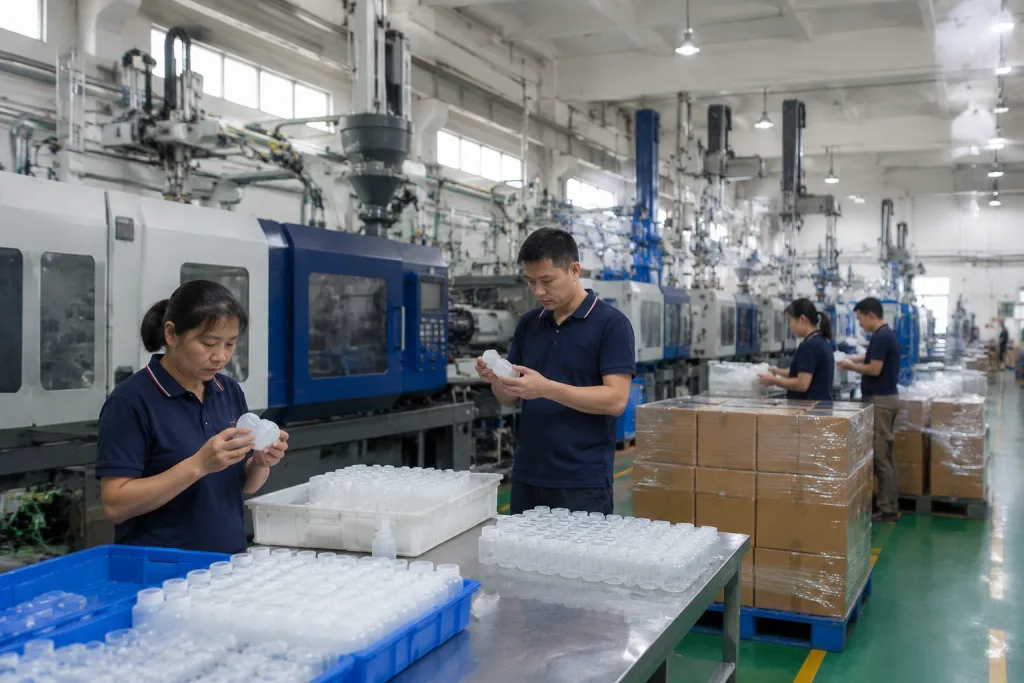
A supplier directory polypropylene bottle search can throw back 30 canteen suppliers in one afternoon, but the useful data is thin. Every page says food-grade PP, fast logo printing, and export experience. The real job is spotting the factory that runs PP injection and blow molding in-house, not a trading page using borrowed photos; we once saw the same 600 ml sports bottle photo on 7 supplier profiles, down to the scratch beside the flip lid.
If you buy custom drinkware for retail shelves, campus projects, outdoor giveaways, or distributor stock, PP looks tempting because it is light, cheap, and hard to crack. Fair. But “Which PP bottle supplier is cheapest?” is the wrong question to ask. We compare PP against Tritan-style copolyester, stainless steel, and glass by use case, landed price, compliance risk, and logo limits before quoting; on the line, a 0.3 mm wall-thickness change can decide whether a 5,000 pcs order passes drop testing or comes back with split shoulders.
What PP bottles actually compete with
Polypropylene, written as PP on most POs, is a semi-flexible food-contact plastic we run often for drinkware. It shows up in school bottles, sports squeeze bottles, hiking canteens, and low-cost promo jobs because it survives drops better than a brittle clear bottle. A supplier directory polypropylene bottle listing should not be sorted by FOB price alone. You are buying the resin grade, the cap fit, the print method, and the test route; last month QC pulled a 650 ml PP sample with a 0.35 mm parting-line flash on the shoulder, and that mattered more than the USD 0.04 price gap.
Use this head-to-head before you send drawings to a canteen vendor. We see buyers ask for “the cheapest plastic bottle” on page 1 of the RFQ, then flag odor, wall clarity, or carton crush on page 6 of the PO.
| Option | Typical FOB China price | Best use case | Main weakness |
|---|---|---|---|
| PP bottle | USD 0.85-2.40 | Schools, gyms, canteen promotional campaigns under tight landed-cost targets | Lower clarity and weaker premium feel on retail shelves |
| Copolyester bottle | USD 1.80-4.20 | Retail sports bottles and transparent custom drinkware where the wall must look clean | Higher material cost and less room for promo pricing |
| Stainless canteen | USD 3.80-9.50 | Outdoor and corporate gift programs needing a durable canteen customized line | Heavier cartons and slower production, often 18 days vs 12 days for a simple PP run |
| Glass bottle | USD 1.60-5.00 | Office, wellness, home goods, and buyers who care more about feel than drop survival | Breakage risk and carton weight, especially above 12 kg per master carton |
PP wins when the buyer needs volume, color flexibility, and impact resistance at low unit cost. It loses fast if the brief calls for crystal-clear walls, hot coffee performance, or a premium retail shelf presence. This is the wrong question to ask: “Can PP look like Tritan?” The math does not work, and we have seen this go sideways after the buyer approved a Pantone chip but expected glass-like transparency from the first T1 shot.
At BottleForge Industrial in Hangzhou, Zhejiang, we recommend PP when the program is price-sensitive, under 750 ml, and needs 3,000-50,000 units with fast color matching. We run the first color check under a D65 light box, then confirm cap torque on the line before packing. For a custom growler, customized growler, or distributor growler program, PP is rarely our first choice unless the product is cold-water only and meant for light outdoor use.
Spec table for faster shortlisting
Supplier directories help with first-pass sourcing, but they hide the specs that cause claims later. We’ve seen 2 factories list the same 650 ml PP sports bottle: one ran 1.2 mm body walls with a silicone gasket, the other ran 0.8 mm walls and an untested PE plug. Same photo. Different headache. QC pulled the thinner sample with a digital caliper, and the buyer flagged cap seepage after a 30-minute upside-down leak test.
Use this table when you shortlist a canteen supplier or canteen vendors from China. Do not compare catalog photos only; that is the wrong question to ask.
| Spec point | Acceptable for PP | Better buying target | Why it matters |
|---|---|---|---|
| Wall thickness | 0.9-1.1 mm | 1.2-1.5 mm | Helps the bottle keep shape after drop tests and carton compression |
| Cap seal | PE plug | Food-grade silicone gasket | Cuts leakage risk, especially on screw caps packed 24 pcs per carton |
| Temperature range | 0-80°C claimed | 0-100°C tested | Reduces deformation complaints from hot-water filling |
| MOQ | 1,000 pcs stock color | 3,000 pcs custom color | Matches normal resin batching, color mixing, and line setup |
| Logo method | Sticker or pad print | Silkscreen, heat transfer, in-mold label | Controls rub resistance, shelf look, and repeat-order consistency |
| Testing | Food-grade claim | FDA/LFGB migration report | Gives your forwarder and customs broker usable paperwork |
For custom canteen work, ask each canteen factory to quote the same package: bottle body resin grade, cap material, gasket material, carton size, gross weight, HS code, testing cost, mold cost if any, and AQL inspection level. We run into this every month: one PO says “PP bottle,” another says “food grade bottle,” and the math doesn’t work when carton weight is missing. Ask for the carton mark layout too; a 1-letter typo on a PO can delay warehouse receiving by 2 days.
Our Hangzhou production partners in Zhejiang can run about 180,000-240,000 plastic drinkware units per month depending on mold allocation. A normal PP customized drinkware order is 3,000 pcs MOQ per color, 7-10 days for pre-production samples, and 25-35 days for mass production after sample and artwork approval. If the buyer changes the Pantone after resin mixing, we usually lose 3-5 days because the line has to clear the hopper, clean the grinder, and recheck color under a D65 light box.
Where PP wins and loses
PP wins when the buyer is fighting carton count, not chasing a luxury hand feel. It is light, usually 55-110 g for a 500-750 ml bottle, so the warehouse team moves more units per pallet. A 500 ml PP bottle may pack 100 pcs per export carton, while a stainless bottle may be 24-50 pcs depending on shape. We run 5-layer K=A export cartons for these jobs, and the buyer usually notices the difference when 8,000 pcs need to land in regional warehouses or event kits.
PP also works well for canteen customizable colors. Pantone-matched resin is usually practical from 3,000-5,000 pcs per color if the color is not too translucent. Molded-in color beats surface coating because there is no paint layer to chip off after the bottle rubs against lunch boxes in a school bag. On the line, QC checks the resin chip against the Pantone book under a D65 light box before mass production. For student bottles and gym giveaways, this is where PP earns its keep.
The weak points are real. PP looks slightly cloudy next to copolyester, even when the mold is polished clean. It can hold odor if users leave orange juice overnight, milk tea with sugar, or protein powder residue inside for 2-3 days. It is not ideal for boiling water, carbonated drinks, or alcohol. If your claim is premium hydration, PP is the wrong material to pretend with; we have seen this go sideways when a buyer expected stainless-steel weight from a 68 g plastic bottle.
There is also a branding limit. Silkscreen on PP is economical, but adhesion depends on surface treatment. We normally specify flame treatment or corona treatment before printing when the logo must survive 3M tape testing and 50 dishwasher-style wash cycles. QC pulled the sample last month because one logo edge lifted after the tape pull, even though the artwork file looked fine. Heat transfer can look cleaner, but it adds USD 0.18-0.45 per unit and needs curved-surface control within about 1 mm. In-mold labeling is clean for large volumes, but tooling and setup make more sense above 20,000 pcs.
PP is a smart material for practical canteen customized projects. It is a weak material for pretending to be premium when the buyer really wants a gift-box retail product.
Compliance questions buyers should ask
I’ll keep the HTML intact and rewrite the four paragraphs with sharper, more buyer-facing language, plus a few concrete factory details.For Europe and North America, compliance comes before price talk. If a canteen supplier says “food grade, no problem” but cannot send a current test report, we treat that as a green light to walk away. You do not need every report before quotation, but you do need to know what the line has already passed and what still needs testing for your SKU.
For PP bottles, ask for FDA 21 CFR food-contact support for the US, LFGB or EU 10/2011 migration testing for the EU, and REACH/SVHC screening where it applies. If the bottle is for children, add CPSIA and ASTM F963 checks in the US, and EN 71 for certain promotional items in Europe. For cap paints, inks, or coatings, heavy metal testing matters. For silicone gaskets, ask for separate food-contact confirmation; the gasket is not covered just because the bottle body report looks clean.
A professional canteen manufacturer should accept third-party inspection under AQL. We usually run AQL 2.5 for major defects, AQL 4.0 for minor defects, and zero for critical defects. On the line, QC pulled the sample and checked leak performance with inversion and pressure tests, because a screw cap that fails after 30 minutes upside down is a problem, not a detail. Flip straws and push-pull caps need tighter checks; users do not close them the same way twice.
If you buy through a supplier directory, ask whether the listed company is the legal manufacturer, export agent, or sales office. In Zhejiang and across China, all three setups are normal. That is the wrong question to skip. A direct canteen factory gives faster engineering answers; a trading office may source more styles; a weak vendor gives you a PO typo, a late sample, and no one to own the fix.
Branding options compared honestly
I’ll rewrite the section in-place, keep the HTML structure untouched, and tighten the sales tone so it reads like a factory-side answer.Custom drinkware is often sold like every decoration process gives the same result. It does not. The right method depends on PP surface energy, logo detail, order size, and how the bottle gets used on the line or in school canteens. We’ve seen a buyer push for full-color print on a rough body, then the sample came back patchy. That was the wrong question to ask.
| Decoration | MOQ fit | Cost add | Best for | Watch point |
|---|---|---|---|---|
| Silkscreen | 1,000+ pcs | USD 0.05-0.18 | One or two-color logos | Needs surface treatment |
| Pad print | 1,000+ pcs | USD 0.06-0.20 | Small curved logos | Limited print area |
| Heat transfer | 3,000+ pcs | USD 0.18-0.45 | Full-color artwork | Film alignment and abrasion |
| In-mold label | 20,000+ pcs | Project-based | Retail graphics | Longer setup and higher tooling |
| Embossed mold logo | 5,000+ pcs | Tooling USD 300-1,500 | Permanent brand mark | Not flexible for artwork changes |
For canteen custom work, we usually start with silkscreen unless the artwork needs gradients or photo detail. Keep logo height under 70 mm on a 650 ml cylindrical bottle unless the body has a flat panel. Ask the factory for a print jig photo during sampling. If QC pulled the sample and the holder is off by even 1 mm, that same error can show up as 2-5 mm drift in mass production.
For a distributor handling several end customers, don’t lock into special tooling too early. Stock molds with custom color and logo are safer. Once one SKU moves 10,000-30,000 pcs a year, then a private mold, custom canteen shape, or cap upgrade starts to make sense. We’ve quoted PP drinkware molds at USD 2,000-8,000 for simple builds, and the number climbs fast when the buyer adds a special lid, handle, or a 3-part cap. The math doesn’t work any other way.
Directory RFQ checklist
I’ll keep the HTML intact and rewrite the prose to sound like a factory-side sales engineer, with tighter RFQ language and more concrete buyer-floor detail.Weak RFQs usually get weak quotes. If you send “please quote 500 ml PP bottle with logo,” the supplier will guess the spec or throw back the cheapest version to catch your eye. Then the buyer flags soft walls, loose caps, bad logo adhesion, or cartons that split after two pallet moves. We’ve seen that mess on the line.
Send a controlled RFQ. Put capacity, target unit price, order quantity, destination port, compliance market, artwork file, packaging style, and target delivery date in one sheet. If you are comparing canteen suppliers, lock the same assumptions: FOB Ningbo or FOB Shanghai, 3,000 pcs and 10,000 pcs price breaks, individual polybag or no polybag, 1-color silkscreen logo, and standard export carton. That is the right question to ask.
A clean RFQ for a supplier directory polypropylene bottle job might read: 650 ml PP sports canteen, food-grade PP body, silicone gasket, leakproof screw cap, Pantone 286C body, white 1-color logo 55 mm wide, EU market, LFGB test required, 5,000 pcs and 20,000 pcs pricing, FOB Ningbo, AQL inspection, delivery within 35 days after approval. QC pulled the sample, checked the cap torque, and that kind of brief tells a canteen manufacturer you know what you want.
Ask for photos of resin bags, injection machines, assembly line, printing area, leak testing, and packed cartons. If your customer needs social compliance, ask for BSCI, ISO 9001, or Sedex status up front; a factory that exports every week knows the paperwork and the extra cost. For Amazon-style distributor drinkware, add carton drop test, FNSKU labeling, master carton barcode, and keep carton weight under 15-18 kg where possible. We ship those cases, and the buyer usually catches the carton limit too late.
Do not hide your target price if it is real. If your landed cost target needs FOB below USD 1.20, say it plainly. Then the China factory can suggest a thinner wall, stock cap, fewer print colors, or simpler packaging. A vague price game burns 3-5 days on both sides, and the math does not work.
How BottleForge evaluates fit
I’ll rewrite the section in-place, keep the HTML intact, and tune the copy to sound like a real sales engineer from the factory floor.We do not push PP into every drinkware program. As a canteen maker and export team in Hangzhou, Zhejiang, we map the bottle to the buyer’s channel first. A campus bookstore, a camping distributor, a promo agency, and a retail chain should not buy the same build just because all four ask for 650 ml.
For low-cost canteen promo runs, we look for stock molds that are already on the line, plain colors, and clean logo control with the pad printer. For distributors that need repeat orders, we check resin supply, mold ownership, spare cavity backup, and whether the cap can stay unchanged for 12-24 months. If the brief points to premium custom drinkware or a customizable growler, we usually steer the buyer toward stainless steel, double-wall vacuum, or a different bottle category. The math does not work otherwise.
Our normal PP project flow is simple: confirm specs in 1-2 working days, quote FOB China with 3,000/5,000/10,000 pcs breaks, make samples in 7-10 days, run mass production in 25-35 days, and support third-party inspection before shipment. For one urgent stock-color order, QC pulled the sample at 2.1 mm wall thickness and we still needed time to fix a cap typo on the PO. Custom color resin and printed packaging take real production time. Anyone promising full custom PP bottles in 7 days at 10,000 pcs is either using stock parts or skipping controls.
If you are building a supplier shortlist from a directory, send us the same spec table you send everyone else. We will tell you where PP fits, where a customizable canteen needs another material, and where your target price creates quality trouble. That is the fastest way to keep a cheap sample from turning into an expensive shipment.
Send your PP bottle spec table for review
We will check MOQ, material fit, logo method, compliance path, and FOB China pricing before you commit to a supplier shortlist.
Frequently asked questions
What MOQ should I expect for a custom polypropylene bottle?
For a supplier directory polypropylene bottle project, expect 1,000 pcs only when you accept stock color and simple logo printing. For real custom canteen work with Pantone body color, 3,000 pcs per color is a more realistic MOQ. If you need custom cap color plus body color, many canteen manufacturers will ask for 5,000 pcs. Private molds usually make sense from 10,000-20,000 pcs, unless you are willing to absorb tooling of about USD 2,000-8,000. Below those quantities, the setup, color purging, print jig work, and inspection cost become too high per unit.
Is polypropylene safe for food-contact drinkware in Europe and the US?
PP can be safe for food-contact drinkware, but you need documentation, not verbal assurance. For the US, ask for FDA food-contact compliance support. For Europe, request EU 10/2011 or LFGB migration testing from an accredited lab. If the bottle includes silicone, color masterbatch, ink, or coating, those materials may need separate checks. For children’s items, discuss CPSIA, ASTM F963, and relevant small-parts or chemical requirements. A serious canteen supplier in China should explain which reports exist and which tests must be run for your exact SKU.
Can PP bottles be dishwasher safe?
Some PP bottles can tolerate dishwasher-style washing, but you should be careful with the claim. PP has better heat resistance than many low-cost plastics, but cap parts, gaskets, printing ink, and deformation risk all matter. We normally test at 70-80°C wash exposure before approving a dishwasher-safe claim. If the body is thin, around 0.8-1.0 mm, it may deform faster. For printed logos, request adhesion testing after 30-50 wash cycles. If dishwasher safety is a core retail claim, build the test into sampling and do not rely on catalog text.
How do I compare canteen suppliers from a directory?
Send the same RFQ to every canteen vendor and compare line by line. Ask for body material, wall thickness, cap material, gasket material, unit weight, MOQ, lead time, logo method, testing reports, carton size, and FOB port. Then request sample photos or videos showing leak testing and printing setup. If one canteen factory quotes USD 0.95 and another quotes USD 1.45, the difference may be wall thickness, resin grade, gasket quality, or inspection control. A good comparison uses specs first and price second.
When should I choose stainless steel instead of PP?
Choose stainless steel when your program needs premium feel, hot or cold retention, long service life, or gift packaging. A PP custom canteen may cost USD 0.85-2.40 FOB China, while a stainless vacuum bottle often runs USD 3.80-9.50 depending on capacity, steel grade, lid design, and coating. For outdoor retail, corporate gifts, and customized growler programs, stainless usually supports a higher selling price and better perceived value. PP is better for lightweight, low-cost, high-volume distribution where insulation is not required.