Key Takeaways
- Start with 304 stainless inner wall, 201 or 304 outer wall, and 0.45-0.55 mm body gauge for most retail thermos bulk programs
- MOQ is usually 1,000 units per SKU for standard custom thermos orders and 5,000-10,000 units when new lid tooling is required
- Laser engraving suits outdoor retail; silk screen and powder coating suit promotional thermos campaigns with larger logo areas
- Ask for AQL 2.5/4.0 inspection, REACH or LFGB food-contact files, and 24-hour temperature retention test records before deposit
If you buy for an outdoor retail chain or a promotional brand, a stainless thermos is not just a bottle with a logo. You are locking in wall thickness, vacuum performance claims, lid tooling, carton drop strength, compliance files, and whether the line can match the same powder coating on unit 30,000 as it did on the approval sample. QC pulled a 750 ml matte black sample last month with a 0.18 mm coating build difference near the shoulder, and the buyer flagged it before we packed.
Asking for the cheapest FOB quote first is the wrong question to ask. Start with four calls that change the real cost: product architecture, customization method, compliance level, and delivery model, each tied to a sample approval sheet with lid torque, carton kg, and barcode position marked in mm. BottleForge Industrial builds in Hangzhou, Zhejiang, and exports from China with a normal MOQ of 1,000 units per SKU and monthly stainless capacity around 480,000 units.
Decide the flask architecture first
Seven out of ten sourcing mistakes we see start with a thin RFQ: “500 ml stainless thermos, logo, best price.” A stainless vacuum flask manufacturer cannot quote that honestly from one line. First lock the architecture: straight or cola body, 304 or 201 shell mix, heat-retention target, screw lid or push-button lid, powder coating or spray paint. On our line, the first thing engineering checks is the 2D drawing against the neck ID with a digital caliper, because a 0.6 mm lid mismatch becomes a leak complaint later.
For outdoor retailers, we run 304 stainless steel on the inner wall because it touches coffee, tea, juice, and salt-heavy sports drinks. 201 on the outer wall works for cost-sensitive promotional thermos orders, say 3,000 pcs for a trade show, but 304 outer wall is safer for premium retail, coastal markets, and dishwasher-resistant claims. A practical wall thickness range is 0.45-0.55 mm for the body shell. Going thinner can save USD 0.08-0.18 per unit, but QC pulled samples from a 0.38 mm trial and found dents after one 60 cm carton drop. The math doesn't work if the buyer later asks for gift-box presentation.
Capacity also changes the manufacturing risk. A 350 ml coffee flask, 500 ml hiking flask, and 1,000 ml expedition flask need separate tooling; the vacuum cycle and lid torque are not shared. Larger bottles need stronger base welding and tighter vacuum consistency, or the bottom seam becomes the weak point. If your claim is 12 hours hot and 24 hours cold, ask the thermos factory to test at 95°C starting water temperature, 20°C ambient room temperature, and record results at 6, 12, and 24 hours. We use a K-type probe and log sheet at the inspection table. Do not accept “keeps hot all day” as a test method.
The trade-off is not complicated. A slim flask looks sharper on a retail shelf, but a 45 mm mouth is easier to clean and fill with ice than a 36 mm mouth. A cup lid adds perceived value, but it adds leak points and can push carton height from 42 cm to 48 cm, which changes pallet loading. A push-button lid sells well, but we need extra leak testing at 8 kg pressure, while a screw lid is cheaper to control. The right manufacturer thermos partner should push back on the brief here; we have seen this go sideways when a buyer picked the prettiest shape before checking cleaning access.
Match customization to sales channel
I’ll keep the HTML intact and rewrite the prose to sound like a factory sales engineer, with tighter channel-specific wording and a few concrete shop-floor details.A custom thermos for outdoor retail plays by different rules than a custom thermos for a trade show giveaway. Retail buyers usually push for repeatable color, abrasion resistance, barcode placement, and box presentation. Promo buyers care more about logo size, sample speed, and landing under a fixed campaign budget. We run those orders on different lines, and the buyer usually spots the difference right away.
Laser engraving is the cleanest choice for a premium custom thermos. It cuts through the coating and exposes stainless steel, so the mark does not peel. It works on powder coated, painted, and brushed surfaces. The tradeoff is color: laser usually comes out silver, dark grey, or tone-on-tone depending on the finish. If the brand needs a Pantone-matched red logo, silk screen or heat transfer is the right call. QC pulled one sample at the 5th station last week because the logo was 2 mm off-center, and that is the sort of miss that kills a retail program.
Silk screen printing fits one- to three-color logos and flat or mildly curved areas. For a larger wraparound graphic, heat transfer or water transfer gives fuller coverage, but you should price in more rejects. A 360° design on a tapered flask is doable, but the alignment window has to be agreed before sample sign-off. For promo thermos orders, we set logo position tolerance at ±1.5 mm and check color against Pantone under D65 light, not under random office lighting. A buyer once flagged a PO typo that read 1500 pcs as 150 pcs; the math did not work, and neither did the budget.
Powder coating is a strong retail finish when the coating layer is 60-80 microns and passes a cross-hatch adhesion test. Spray painting can be cheaper and smoother, but it scratches faster. For a distributor thermos line that gets reordered season after season, we prefer powder coating because batch consistency is easier to hold when you place repeat POs with the same thermos manufacturer in Zhejiang, China. We also watch the line with a 0.2 mm gauge on the cap fit, because a loose cap turns into a complaint fast.
- Outdoor retail: powder coating plus laser logo, color box, retail barcode.
- Corporate gifting: silk screen logo, kraft box, delivery in 25-35 days after sample approval.
- Events: standard stock color, one-color print, MOQ 1,000 units, fastest route.
Separate real factory from trader
I’ll rewrite the section in-place, keep the HTML intact, and make the wording sound like it came from a factory-side sales engineer.The words thermos supplier, thermos vendor, and thermos manufacturer get used loosely in China. That is not a problem by itself. Some trading companies know their business. Still, if you are building a repeat bulk thermos program, you need to know who runs welding, vacuuming, polishing, coating, and final packing. A thermos quote with no factory visibility gets messy fast when a buyer flags a leak claim.
Ask straight questions. How many vacuum sealing lines are on the floor? What is the daily output per line, 8,000 pcs or 12,000 pcs? Is powder coating in-house, or does it move out after welding? What AQL level do you use on final inspection? Can the factory show BSCI, ISO 9001, or Sedex audit files? Can you see a production schedule with your PO number after deposit? A real stainless thermos factory answers these without running around.
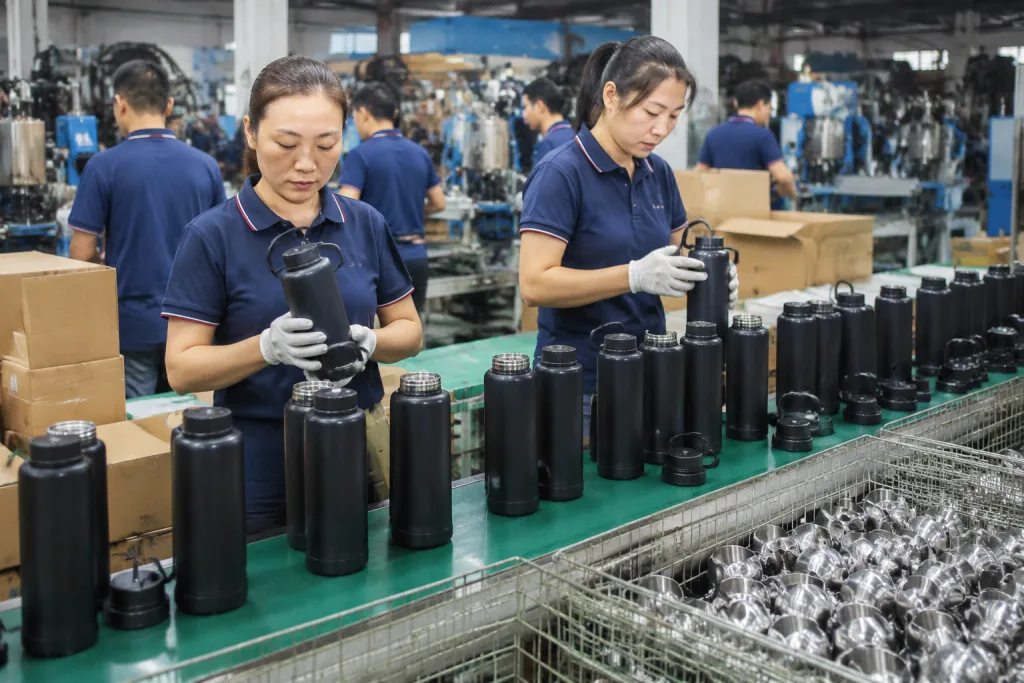
At BottleForge Industrial in Hangzhou, Zhejiang, our stainless thermos flow runs from incoming steel inspection and tube cutting to water expansion, welding, vacuum brazing, polishing, coating, logo work, assembly, leak testing, and carton drop checks. QC pulled the sample on a 1.2 mm wall tube last week and the weld bead held. Our normal lead time is 30-40 days after deposit and approved pre-production sample for custom logo programs. New mold or special lid jobs usually need 55-70 days.
Price shifts once you separate factory work from trading markup. A 500 ml double-wall stainless flask can land at USD 3.20-5.80 FOB Ningbo or Shanghai, depending on steel grade, lid, coating, packaging, and order volume. If one thermos quote comes in 18% lower than the rest, the math does not work unless something changed: 201 inner steel, thinner gauge, lower vacuum yield, or cheaper coating. Cheap is fine when it is specified on the PO. Hidden cheap is where we’ve seen this go sideways.
Do not ask, “Are you a factory?” Ask, “Which production steps do you own, and which steps are subcontracted?” That is the right question.
Build compliance into the quote
I’ll rewrite the section in place, keep the HTML exactly as-is, and tighten the language so it sounds like a factory-side sales engineer.For Europe and North America, compliance is not a PDF you ask for after packing. It belongs in the RFQ. A stainless vacuum flask manufacturer serving outdoor retailers should be ready for LFGB, EU food contact rules, REACH, California Proposition 65 when it applies, and FDA food-contact expectations in the United States. If the flask is for children, check CPSIA and ASTM before you price it. We’ve seen that go sideways on a PO that forgot the age grade.
The weak points are not the stainless steel body alone. Lids, silicone gaskets, plastic straws, coatings, inks, adhesives, and even carton ink can trigger a fail. If you are buying a thermos custom design with a soft-touch coating or a colored plastic lid, ask for recent test reports from SGS, Intertek, TUV, or BV. “We passed last year” is weak if the pigment lot changed or the lid tooling was swapped by 0.3 mm.
A useful compliance line in your PO should name the target market, the standards, and when documents are due. Example: “Product must meet EU food contact and REACH requirements; supplier to provide valid test reports before mass production.” That wording makes the thermos supplier check materials before we run the line. One typo can bite here; we once saw “REACH” written as “RECH” on a buyer draft, and the buyer flagged it immediately.
Inspection needs the same level of detail. We run AQL 2.5 for major defects and 4.0 for minor defects on most distributor thermos orders. Leakage, sharp edges, contamination, and missing safety warnings should be zero tolerance. QC pulled the sample from the line, not just the golden unit, and that is the right call. For a 500 ml flask, a 12-hour hot retention result above 55-60°C from a 95°C start is a fair target, depending on mouth diameter and lid build.
Carton testing matters too. For export from China, a master carton with 24 units may weigh 10-15 kg. Use 5-ply corrugated cartons for heavier flasks and run a 76 cm drop test on edges, corners, and faces if the goods will move through parcel networks or FBA-style handling. The math does not work if the carton survives in the lab but splits on first-mile loading.
Understand MOQ and price levers
I’ll rewrite just the prose inside the existing HTML, keep the tag structure intact, and make it sound like a factory sales engineer wrote it.MOQ is not a sales slogan. It comes from coating line setup, logo fixtures, carton printing, steel buying, and changeover time on the line. For a standard stainless vacuum flask, 1,000 units per SKU is a workable starting point for one-logo customization. If the buyer asks for a custom Pantone powder coat, we usually see 2,000-3,000 units per color because powder loss and booth cleaning eat material and labor.
New tooling changes the math. A new bottle body mold normally needs 8,000-15,000 units to spread the cost cleanly. A new plastic lid tool can run USD 2,000-8,000, depending on sealing structure, sliders, and food-grade resin spec. We had one buyer push for a fresh lid at 2,000 units, and the math did not work. In that case, we tell them to keep the existing lid and put the budget into finish, packaging, or product photos.
FOB price moves on more than capacity. 304 stainless versus a lower grade can shift the unit price by USD 0.15-0.45. Powder coating can add USD 0.25-0.60 over basic paint. Laser engraving may add USD 0.08-0.25, based on mark size and cycle time. A retail color box can add USD 0.18-0.55, while a rigid gift box can add USD 0.80-1.80. QC pulled one sample last week because the box insert was 2 mm short, which would have made the bottle rattle in transit. These are normal numbers in Zhejiang and other China production hubs, but exchange rate, steel price, and order size still move the final quote.
Payment terms are another lever. For a new buyer, 30% deposit and 70% before shipment is standard. Larger distributor programs with repeat orders may get balance after inspection or against copy BL. If a supplier offers soft terms on the first PO, check where the risk went. Usually, it sits in the unit price.
The cleanest RFQ includes target quantity, destination country, Incoterm, required test standard, packaging, logo artwork, and launch date. A thermos bulk quote built on that list is faster to compare and less likely to change after sample approval. We once received a PO with the wrong lid code by one digit, and that small typo delayed the first carton by 6 days. That is why we ask for the full spec set up front.
Plan sampling before mass production
I’ll rewrite the section in-place, keep the HTML intact, and tighten the language so it sounds like a factory-side sales engineer.Sampling should answer factory questions, not just produce a nice photo for management. A proper pre-production sample checks body shape, lid fit, coating color, logo size, carton layout, barcode scan, and insulation performance. For a custom thermos, we usually quote 7-10 days for a plain sample if the body is already on the shelf, and 10-15 days for a logo-plus-color sample. New coating, a fresh lid tool, or custom packaging can stretch that to 20-25 days. We run this every week, and the buyer always flags the same thing first: “show me the fit, not the render.”
Approve samples with written tolerances. Photos alone cause trouble later. For color, give us the Pantone code and the acceptable delta E if your brand team needs it. For logo, lock down height, width, distance from the bottle base, and the angle to the lid opening. For packaging, confirm EAN or UPC barcode size and whether retail labels, FNSKU labels, suffocation warnings, or country-of-origin marks are needed. QC pulled one sample last month because the PO had “left side” typed where “front side” was meant.
For outdoor retailers, we ask buyers to test the sample like a user, not like a presenter. Fill it with hot water, leave it upside down for 30 minutes, put it in a backpack, open and close the lid 50 times, then check whether the gasket moves. A lab report matters, but a simple bench test with a 500 ml flask and a torque screwdriver often catches the bad lid thread or loose seal first. This is the wrong question to ask if someone says, “Can we skip the manual test?” We’ve seen that go sideways.
Mass production should not start from a vague “looks good.” Use a signed sample or a sample approval sheet with the key points listed. The thermos factory should keep one approved sample, and you should keep one. During production inspection, compare the line output against that reference. That matters on matte finishes, where a 3-5 gloss point shift shows up fast on a retail shelf. The buyer flagged it once on a 1,000-piece order, and the whole pallet had to be rechecked.
If timing is tight, do not skip pre-production sampling. Cut artwork revisions or choose an existing color instead. Skipping sample control may save 7 days, but it can turn into one full container of goods that only clears at a discount. The math doesn’t work.
Choose logistics by selling model
I’ll rewrite the prose in place, keep the HTML structure intact, and make it read like a real factory-side export note with concrete logistics details.Choose the delivery model before you lock carton artwork. A distributor thermos program going to one warehouse can run on standard export cartons and normal pallet stacking. A promotional thermos order split across 300 event locations needs tougher inner packing, clear carton marks, and fewer loose parts. For an e-commerce launch, we ship with scannable barcodes, master carton dimensions, and sometimes FNSKU labels before the goods leave China.
For FOB, most Zhejiang buyers book Ningbo or Shanghai. That gives you control of the freight forwarder, sailing schedule, and destination charges. EXW looks cheaper on paper, but then your side handles local trucking, export declaration, and port handoff. DDP works for smaller promo orders, but the math does not work unless duty, VAT, and importer of record are clear from day one.
Lead time is not just factory days. A normal thermos promo order usually needs 7-15 days for samples, 30-40 days for mass production, and 3-7 days for inspection and loading, then ocean freight on top. To the US West Coast, we see about 18-25 days port to port; to Northern Europe, 30-40 days is common, route and congestion depending. Air freight saves a campaign, but on a 500 ml stainless flask it can add USD 1.50-4.00 per unit, and we have seen that blow up a tight PO fast.
Packaging sits inside logistics cost. A 500 ml flask in a color box may load 24 units per master carton, while a 1,000 ml flask usually drops to 12 units. If you pay volumetric weight by air or courier, the box can cost more than the bottle. Ask your thermos vendor for carton size, gross weight, and CBM before you approve the pack plan; QC pulled one sample last month because the outer carton was 2 mm short of the spec and the buyer flagged it.
The best thermos supplier relationship is boring in the right way: clear samples, stable production, honest inspection reports, and cartons that land without surprises. That is what you buy from a stainless vacuum flask manufacturer, not just stainless steel shaped into a bottle.
Send your flask brief for a practical factory quote
Share capacity, logo artwork, market, quantity, and deadline. We will return a clear FOB quote, MOQ, sample plan, and compliance notes.
Frequently asked questions
What MOQ should I expect from a stainless vacuum flask manufacturer?
For an existing stainless thermos body with your logo, 1,000 units per SKU is a realistic MOQ in Zhejiang and many other China production areas. If you need a custom Pantone powder coating, expect 2,000-3,000 units per color because the coating line setup creates waste. New lid tooling usually needs either a tooling fee of USD 2,000-8,000 or a commitment of 5,000-10,000 units. For thermos bulk programs with several colors, ask whether the factory will allow a combined MOQ, such as 3,000 units total split across 3 colors. Some will, but only if the same body and lid are used.
How do I compare FOB prices for custom thermos orders fairly?
Compare the same specification, not just the same capacity. A 500 ml thermos custom quote should state inner steel grade, outer steel grade, wall thickness, lid material, coating type, logo process, packaging, test requirements, and Incoterm. One supplier may quote USD 3.45 FOB using 201 outer steel and spray paint, while another quotes USD 4.20 with 304 outer steel and powder coating. Both can be valid, but they are not the same product. Also ask for carton dimensions and gross weight because freight can change landed cost by 5-12% on bulky drinkware.
Which logo method is best for outdoor retail stainless flasks?
For outdoor retail, laser engraving on powder coating is usually the safest choice. It is durable, clean, and does not peel after abrasion. The downside is limited logo color. If your design requires exact Pantone colors, silk screen printing works well for one- to three-color logos, especially on straight bottle sections. Heat transfer is better for full-wrap artwork but has higher setup risk and should be tested for adhesion. For a retail customized thermos, request a cross-hatch adhesion test and a rub test before mass production. For promotional thermos giveaways, silk screen often gives the best balance of cost and speed.
What inspections should I require before shipment?
Use AQL 2.5 for major defects and 4.0 for minor defects, with zero tolerance for critical issues such as leakage, sharp edges, contamination, wrong logo, or unsafe packaging. Inspection should check appearance, coating defects, logo position, lid assembly, gasket fit, carton marks, barcode scans, and random leak testing. For insulation, pull samples from mass production and test with 95°C water at 20°C ambient temperature for 6, 12, and 24 hours. If your order is 10,000 units or more, consider both during-production inspection and final random inspection. It is cheaper to catch a coating problem at 30% production than after packing.
Can a manufacturer support both retail and promotional thermos programs?
Yes, but you should separate the specifications. Retail programs usually need stronger packaging, consistent color, barcode control, better finish durability, and compliance documents ready before shipment. Promotional programs often need faster production, lower cost packaging, and flexible logo placement. A capable thermos manufacturer can run both, but the quote should not be identical. At BottleForge Industrial in Hangzhou, Zhejiang, standard custom logo orders usually run 30-40 days after approved sample, while urgent stock-color promotional runs can sometimes ship faster. If you need repeat seasonal retail supply, prioritize process control over the lowest first-order price.